Cultural landscape
A cultural landscape is a landscape that is or has been shaped by human activity.
74 articles
If you look around when you are out, you will find many interesting plants. Norway has several distinct habitats — forest, mountain, coast, wetland, cultural landscape — and each has its own plant community. In the high mountains the plants are vulnerable because they grow very slowly. In the forest there are both tiny and very tall plants. Along the coast the plants have adapted to salt, sea spray and flooding.
A habitat is an area that is fairly uniform ecologically — in soil, temperature, precipitation, and which species live there. Even though we divide nature up, everything is connected.
Norway is one of the most forested countries in Europe. The forest type varies a great deal:
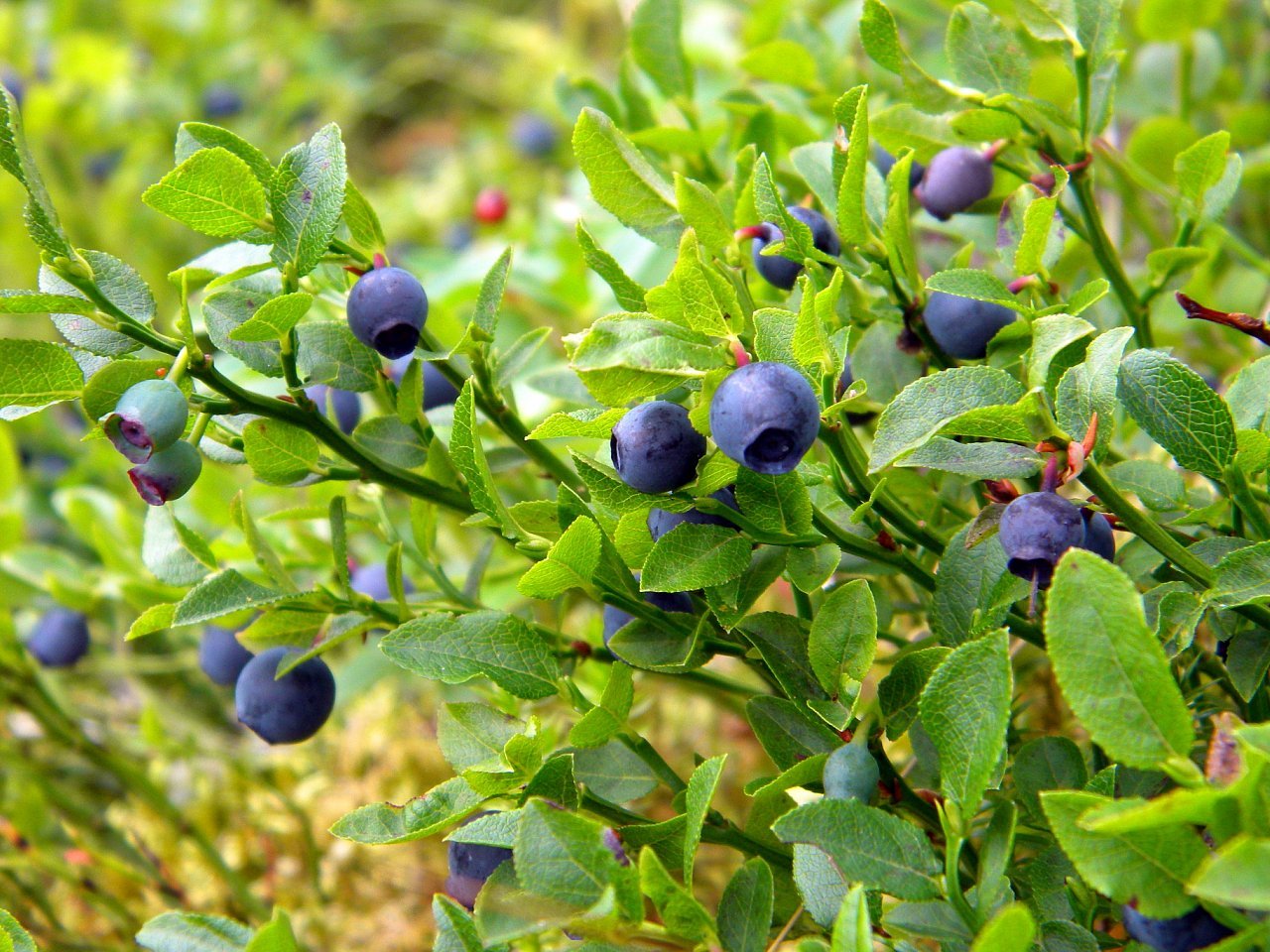
The plant life in the forest is rich and varies with soil moisture and access to light. Bilberry, lingonberry, heather, spruce seedlings, dry moss and forest-floor species are classics.
Above the tree line (varies from ~600 m in the north to ~1200 m in the south) lie the low-arctic and alpine zones. The plants here are small, slow-growing, and extremely vulnerable to trampling. Lichen can need 20–50 years to grow back after damage.
Classics: crowberry, stiff sedge, alpine woodrush, dwarf birch, moss campion, sundew, cloudberry.
Plants — all articles → (many species are documented in the category)
The coastal vegetation tolerates salt, sea spray and flooding. The plants often have a thick leaf layer with wax to hold on to water, or special salt-excretion mechanisms.
Classics: wrack, kelp, sea kale, sea onion, sea campion. On the salt meadows: salt-tolerant species such as sennegrass, saltmarsh bulrush, sea sandwort.
Aquatic plants, marsh vegetation, bog species:
Conditions all of its own: arctic climate, permafrost, short growing season. The plants are adapted to survive with 8–9 months under snow and 3–4 months of growth. Many are small, often cushion-shaped to minimise wind loss.
Grazing areas, old farm landscapes, hay meadows. Many of Norway’s most species-rich areas are shaped by human use — these plant communities depend on people continuing to use the land. When the haymaking or grazing use disappears, the plant community disappears too.
Almost all animals depend on plants:
Cone → squirrel → fox
But the reality is more complicated. The squirrel eats cones from many tree species, plus nuts, fungi, and occasionally eggs and chicks. The fox does not only eat squirrels — also mice, birds, eggs, fruit, berries.
What we get is a food web — complex connections in which each species affects many others. Changes in one part of the web can send ripple effects through the whole system.
More about animals and tracks →
Plants in the mountains, and lichen in particular, are vulnerable to human impact. Trampling by many walkers on the same path can destroy plant communities for decades.
Practical considerations:
The Outdoor Recreation Act (friluftsloven) and allemannsretten → · Sustainability →
Many wild plants and fungi are edible — and a large part of the Norwegian harvesting tradition. But:
Food from nature — fungi → · Food from nature — wild plants → · Historical use of useful plants →
Practical aids:
For learning in the field: bring a hand lens and a field guide. Learn one plant at a time, sit down with it, feel the leaves and stem, smell the sap of a broken stem (carefully — some are poisonous).
Text: Snuitide (2022), revised 2026.
Key resources: Artsdatabanken · Norsk botanisk forening · Norsk institutt for naturforskning (NINA)
A cultural landscape is a landscape that is or has been shaped by human activity.
Forest covers about 37% of Norway's land area and is, after the mountains, the habitat we have most of (Kvammen et al.
When we are out on a tur and want to take a break, we often head for water; large lakes with open views, small still glittering tarns, surging rivers or trickling streams.
In 2015, NINA published a report summarising results from national and international research on the effects of access and friluftsliv in vulnerable areas.
An overview of all the plants and mushrooms Snuitide has written about — from wild growth and edible plants to poisonous species and mushroom checking.
Midway between the North Cape and the North Pole, far to the north, lies the Svalbard archipelago. The name Svalbard comes from Old Norse and means 'cold edge'.
The sea covers about 70% of the Earth's surface. The first living organisms arose in the sea around 3.5 billion years ago.
The mountains are a harsh habitat. As is also the case on Svalbard, the summer in the mountains is short and cool, and the winter is long and cold with a great deal of snow.
66 entries