Plants & Nature
Sundew
Tags: Carnivorous plant Description: Sundew has sticky, reddish threads on its leaves. At the tip of each thread sits a viscous droplet resembling dew, especially when the sun shines on them.
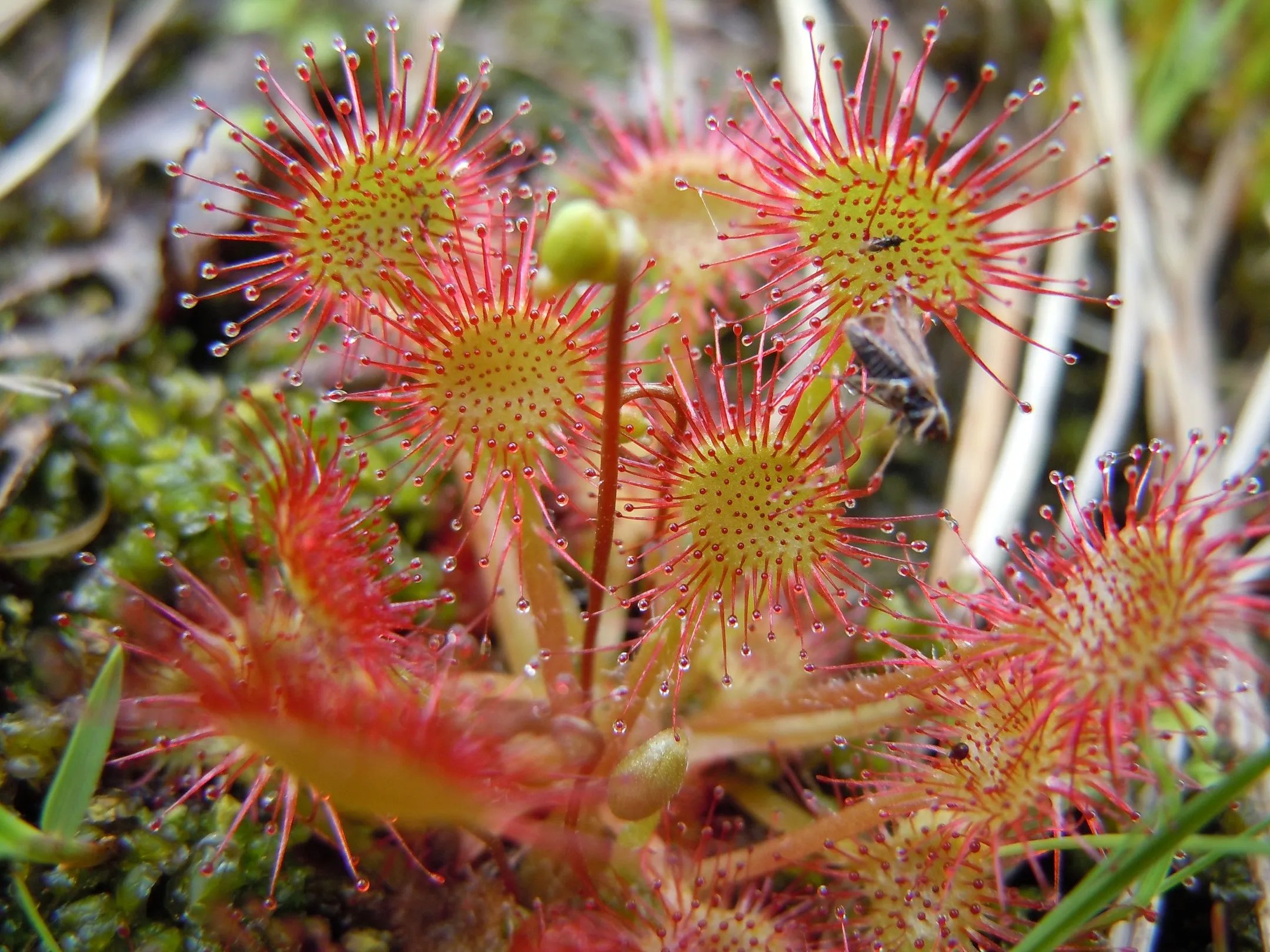
Tags: Carnivorous plant Description: Sundew has sticky, reddish threads on its leaves. At the tip of each thread sits a viscous droplet resembling dew, especially when the sun shines on them. This is how it got the name sundew. When insects settle there, they cannot free themselves again. The sticky threads bend towards the trapped insect, and the whole leaf curls up a little more so that the insect is firmly stuck. The slime on the threads slowly dissolves the insect so that the plant can take up the nutrients. Sundew produces small, white flowers, which can pollinate themselves.
A legend tells that when Mary stood weeping by the cross of Jesus, her tears fell onto a sundew plant. There they remained without drying away, even though the sun shone on them. The slime secreted from the glandular hairs on the leaves was therefore called ‘the Virgin Mary’s tears’. Use: In olden times it was believed that the glistening droplets on the leaves of sundew could have miraculous effects. Among other things, it served as a rejuvenating and aphrodisiac agent, and it has been used against many different kinds of ailments. Habitat type: Water and bog Edible: No Written by: Lærke Stewart
, via Wikimedia Commons](Soldogg/Soldogg.jpg)
Sundew. Photo: Sarkan47, CC BY-SA 4.0 https://creativecommons.org/licenses/by-sa/4.0, via Wikimedia Commons
Next steps
- Plants — the hub
- Learn more about plants — entries and identifying features
- Foraging — practical harvesting
- Food from nature — wild plants — preparation if edible
Learn more
- Artsdatabanken — species, status, Red List
- SNL — Norwegian botany — encyclopaedic
- Sopp- og Nyttevekstforbundet — courses and checks
- Botanisk forening — the Norwegian botany community