Food
Food from nature - wild plants
In the old days, wild plants were an important and necessary part of the diet. In hard times it may have been precisely this knowledge that kept people alive.…
- Table of contents
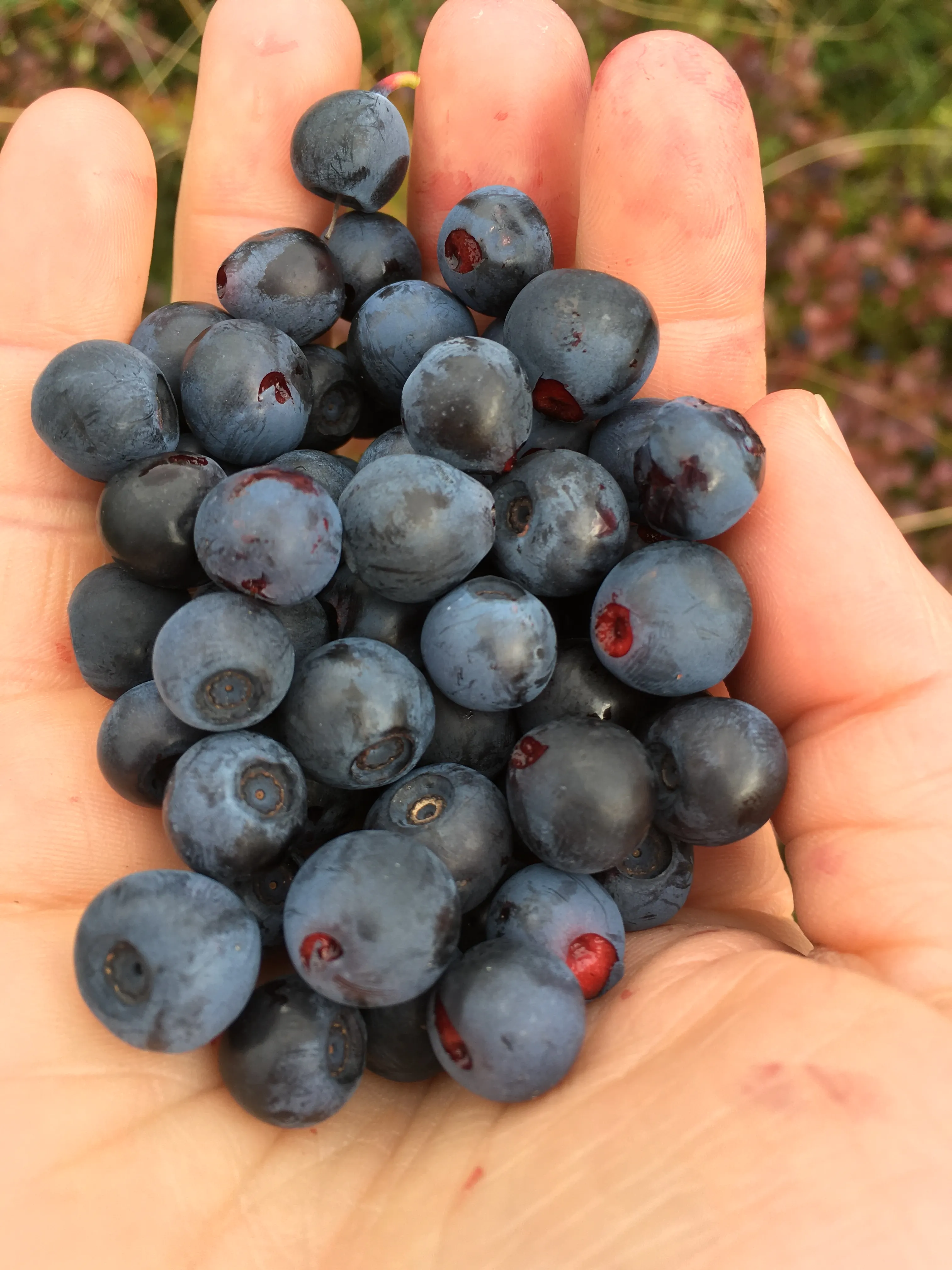
Photo: Gina Wigestrand
In the old days, wild plants were an important and necessary part of the diet. In hard times it may have been precisely this knowledge that kept people alive. There are a great many edible plants in nature that are both nutritious and good. And, what is more, entirely free! Imagine how fine it is to serve mushroom stew or freshly stirred berries out on a tur (outing) made from mushrooms and berries you have picked yourself!
In brief
- Pick only plants you know and are completely certain of!
- There are many poisonous wild plants.
- There are many different kinds of berries, mushrooms and herbs in nature that are edible
- Much of what we call weeds is edible
- Pick sustainably so that the plant survives and can carry on reproducing and growing.
- Mushrooms and berries you may pick without limit.
- The most important thing we bring on a foraging outing is knowledge.
- Learn a few species that you are completely sure of.
- Familiarise yourself with the protection rules.
Sustainable foraging
If many people pick a lot over a short time, it is easily done to wipe out species locally. This applies especially to herbs, where we pick the whole plant, the flower and thereby also the seeds that are to become new plants. And in any case, do not pick more than you intend to eat and use, and leave the root behind.
Foraging-sense rules
In the book “Norges spiselige planter og bær”, Edle Catharina Norman and Sofie Grøntvedt Railo recommend these ten foraging-sense rules:
- Pick only plants you know and are completely certain can be eaten.
- Do not pick plants that may have been sprayed with insecticides or weedkillers.
- Do not pick in places that are particularly exposed to pollution.
- Do not pick plants on another person’s innmark without asking permission, not even when you are being kind and “weeding” your neighbour’s flowerbed.
- Do not eat plants that are affected by viruses or pests.
- The first time you try a new plant, eat only a little at a time. Even if it is edible for others, some people may be allergic.
- Do not pick plants that are endangered (check the Norwegian Red List on artsdatabanken.no if in doubt).
- Do not pick everything that grows in one spot. After all, we want more to grow next year, and wildlife needs its share too. The exception is blacklisted species (check alien species on artsdatabanken.no).
- Do not pick plants in nature reserves or other protected areas without checking whether it is permitted. Each area has its own regulations (contact Statsforvalteren’s environmental department or search for the regulations on lovdata.no).
- Show respect and care for nature; take pleasure in being able to use it and harvest from it.
(Norges sopp- og nyttevekstforbund, n.d.)
Edible plants and mushrooms
Kristin finds the first spring salad of the year.
There are many edible plants in nature. Some wild plants have a higher nutritional content and contain more minerals than processed and cultivated food. Others contain substances we should not have too much of, such as iodine, oxalic acid and heavy metals. There are also some poisonous and very poisonous plants. It is therefore very important that you learn and are completely confident that something is edible before you put anything in your mouth.
Weeds and herbs
Much of what we call weeds is edible. Stinging nettle, ground elder, dandelion and common chickweed are good and nutritious. Why not try making a weed salad?
It is the young shoots and leaves that taste best; most plants become more bitter and tougher later in the season and when they flower. (Granheim et al., 2020)
Flowers such as rosebay willowherb, harebell, red clover and white clover are also edible. Young rosebay willowherb shoots you can fry in the pan like asparagus. You can make a lovely pink cordial from the rosebay willowherb flowers. But perhaps not out on a tur. Then you can scatter them over the food and use them as colourful decoration.
In the mountains you can make tea from heather flowers, young mountain birch leaves and alpine lady’s-mantle. Mountain sorrel, which is related to the other sorrels, can be used like lemon.
Berries
We have many edible wild-growing berries in Norway. Berries are full of antioxidants and vitamins, and taste good too. You can either pick them and eat them as they are, or pick them to make something when you arrive or when you get home. Berries can be made into cordial, jam and frozen.
-
Have you tasted crowberry?
They are not as sweet as bilberries, but next time you are in the mountains, try putting a handful in your mouth and chew/suck out the juice and spit it out. It is almost like a soft drink.
-
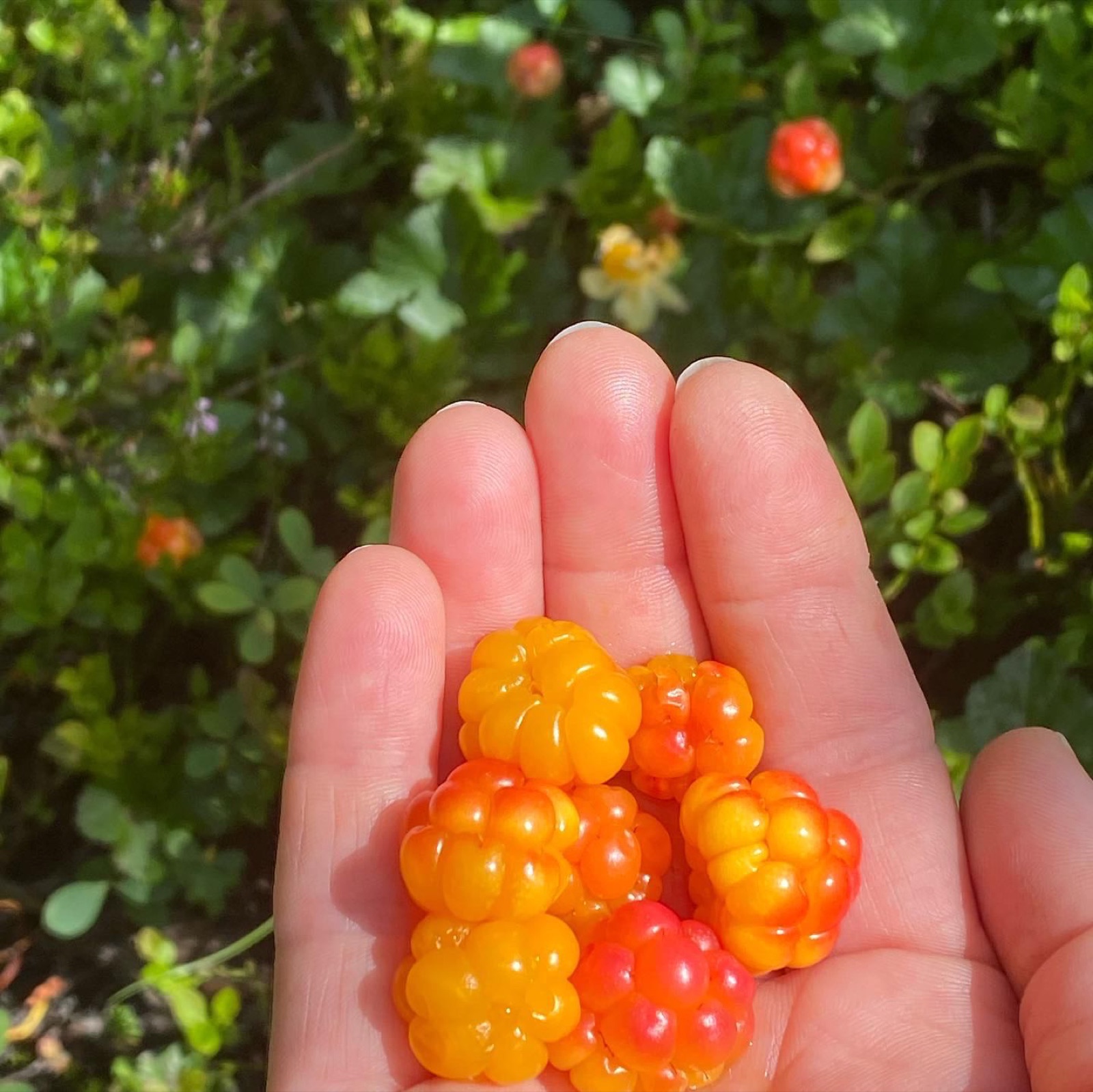
In autumn you can pick cloudberries, also known as the gold of the mountains.
You can eat them straight from the calyx, or you can gather them in a cup and add a little sugar so that you can make delicious jam.
-
Juniper berries are good to have in a game stew.
Crush 2-3 black berries and add them to the sauce for a proper wilderness flavour.
About antioxidants
Antioxidants are a collective term for natural substances we take in from fruit, vegetables and berries. They are connected to the body’s immune system and have a positive effect on a number of ageing processes, and can be said to be a kind of anti-rust treatment for the body. Eat a varied and colourful diet, and you will take in plenty of antioxidants. (Bama, Lyngvær, K., 2020)
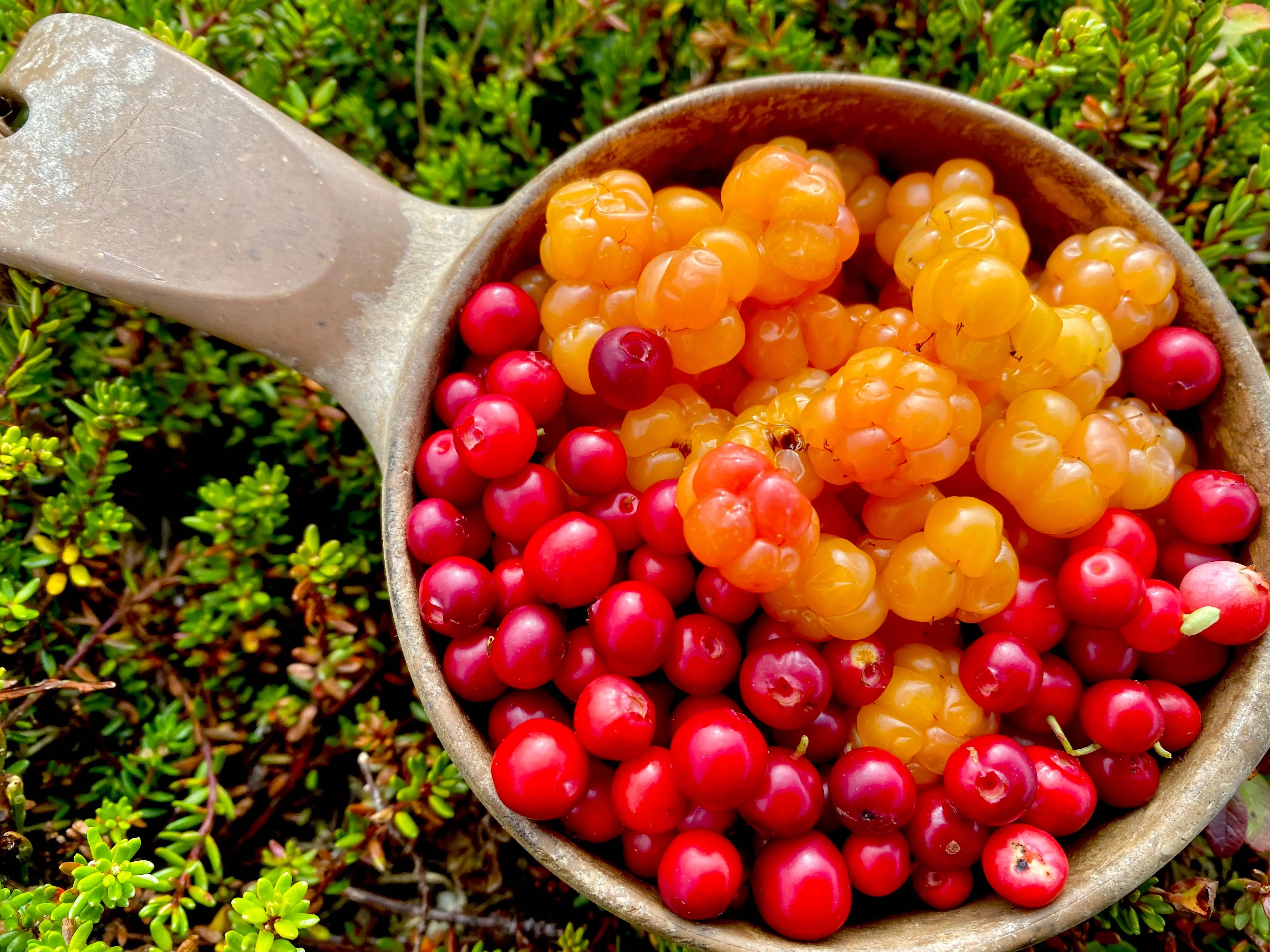
Photo: Hilde Grøtte
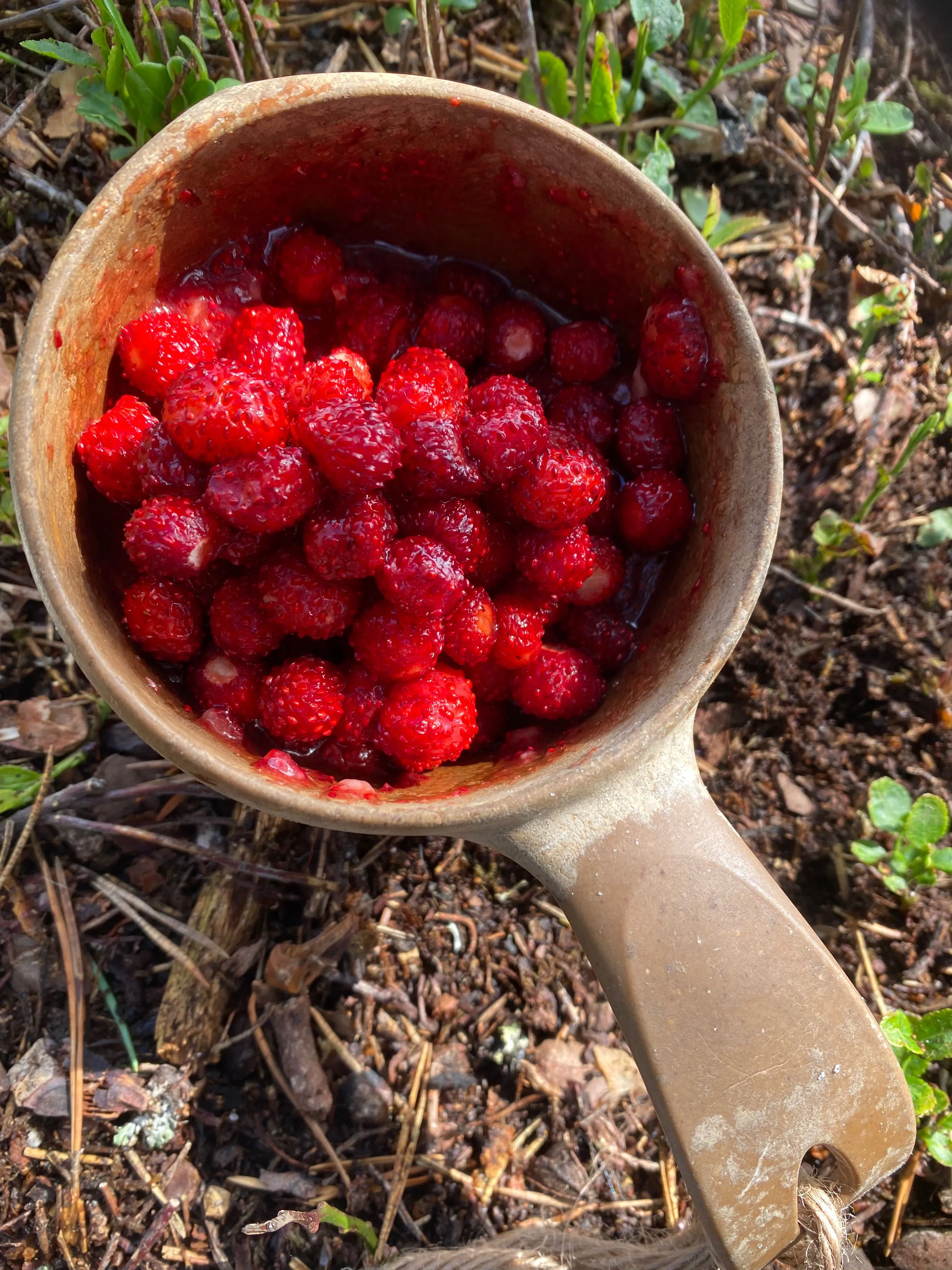
Photo: Hilde Grøtte
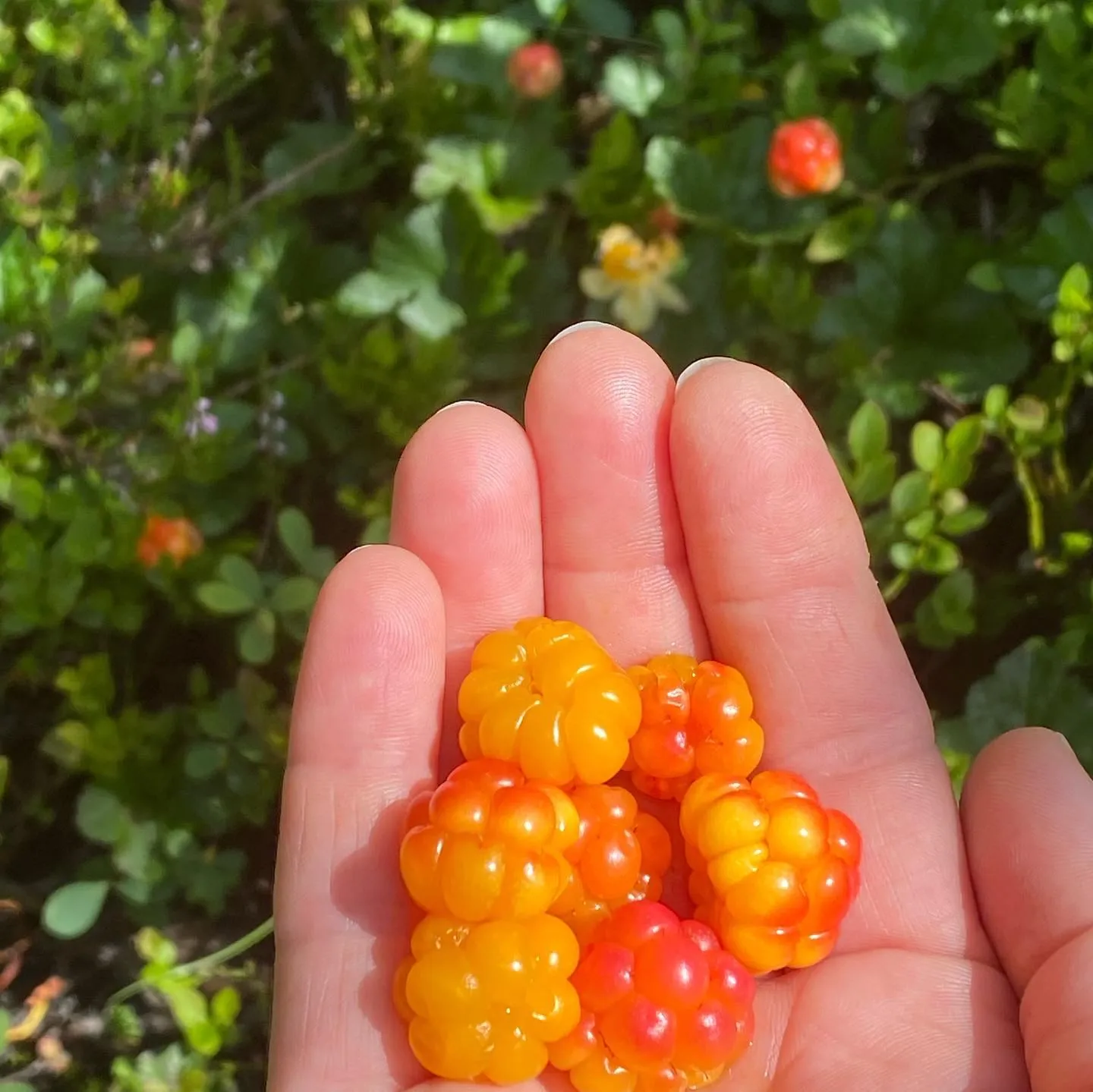
Photo: Hilde Grøtte
Overview of edible plants and mushrooms
Here you will find tips on some of the edible plants you can find in Norway. Those mentioned here are common across much of Norway, and easy to recognise. You can sign up for a course with a local useful-plants society, or read books about edible wild plants if you want to know more.
Untitled
Recipes - food from nature
It is especially fun to serve food that includes plants you have picked yourself. Herbs and weeds can be added to most dishes as a green element, for nutrients and flavouring. Mushrooms are food in their own right. Note that all mushrooms must be heat-treated before use. Berries are versatile and can be eaten as they are, as jam and much else. Flowers can be used as a colourful garnish; remember that we eat with our eyes too!
Uses and tips:
- Salads
- Common sorrel, greater plantain, fat-hen, dandelion, common chickweed, ground elder.
- Soups
- Mushrooms, ground elder, stinging nettle.
- Stews
- Mushrooms, fat-hen, sea orache.
- Cakes
- Berries, flower decoration, dandelion syrup, rosebay willowherb jelly.
- Pestos
- Dandelion, ground elder, stinging nettle, garlic mustard, ramsons.
Tips for recipes with wild plants
Untitled
Preserving food from nature
Whatever we are not going to eat right away we have to preserve in one way or another so that it does not rot or spoil. Different preservation methods suit different useful plants.
(Granheim et al. 2020)
| Type of preservation | Explanation | Food that suits it | Tips |
|---|---|---|---|
| Drying | You can also hang up bunches in a dry, airy room. | ||
| Store afterwards in airtight jars or tins to preserve the flavour. | - winter chanterelle |
- stinging nettle
- ground elder
- seaweed and kelp | Dry below 50 degrees, either in an oven or a drying cabinet with ventilation, or a food dehydrator | | Freezing | | - All kinds of berries
- ramsons
- ground elder
- garden cress
- dandelion | Freeze small quantities in airtight bags or tins; label clearly with the date and what it is | | Blanching | Means heat-treating a food item and then cooling it quickly before freezing | - Chanterelle
- stinging nettle | • Leafy herbs such as stinging nettle turn out best if you boil them in lightly salted water for about 1 minute and cool them in ice water. • Mushrooms are often best blanched before freezing. Cut them up, heat in a dry pan until they release their liquid and let this evaporate/boil down before freezing. | | Pickling/preserving | Jam is preserving with sugar and suits all kinds of berries and fruit. Preserving in brine suits various kinds of vegetables and mushrooms. | - berries
- fruit
- vegetables
- mushrooms | Different kinds of fruit and berries require different amounts of sugar. |
Read more about food from nature
Brochures
We have selected three brochures that may be relevant; you will find many more from Norges sopp- og nyttevekstforbund
Trygge-matsopper-og-farlige…-NO.pdf
Nyttevekster-for-nybegynnere-2022-NORSK-low.pdf
TANG-OG-TARE-HEFTE-2022-low.pdf
Norges sopp- og nyttevekstforbund
Nyttevekster | Norges sopp- og nyttevekstforbund
Sanke - information about plants you can eat in nature
These weeds you can eat - NRK
Dette ugresset kan du spise - mange ukjente nyttevekster i grøfta
Next steps
- Food from nature — mushrooms — related harvesting
- Historical use of useful plants — cultural context
- Foraging — activity hub
- Plants — species knowledge
Learn more
- Mattilsynet — drinking water and hygiene — food safety outdoors
- The Norwegian Directorate of Health — dietary advice — nutrition
- Sopp- og Nyttevekstforbundet — mushrooms and wild plants
- DNT — trail food — recipes and tips
Text
Hilde Grøtte, Snuitide (2022)