Plants & Nature
Glittering wood-moss
Description: Glittering wood-moss is very common on damp forest floors, but is found throughout the country from the lowlands up into the mountains.
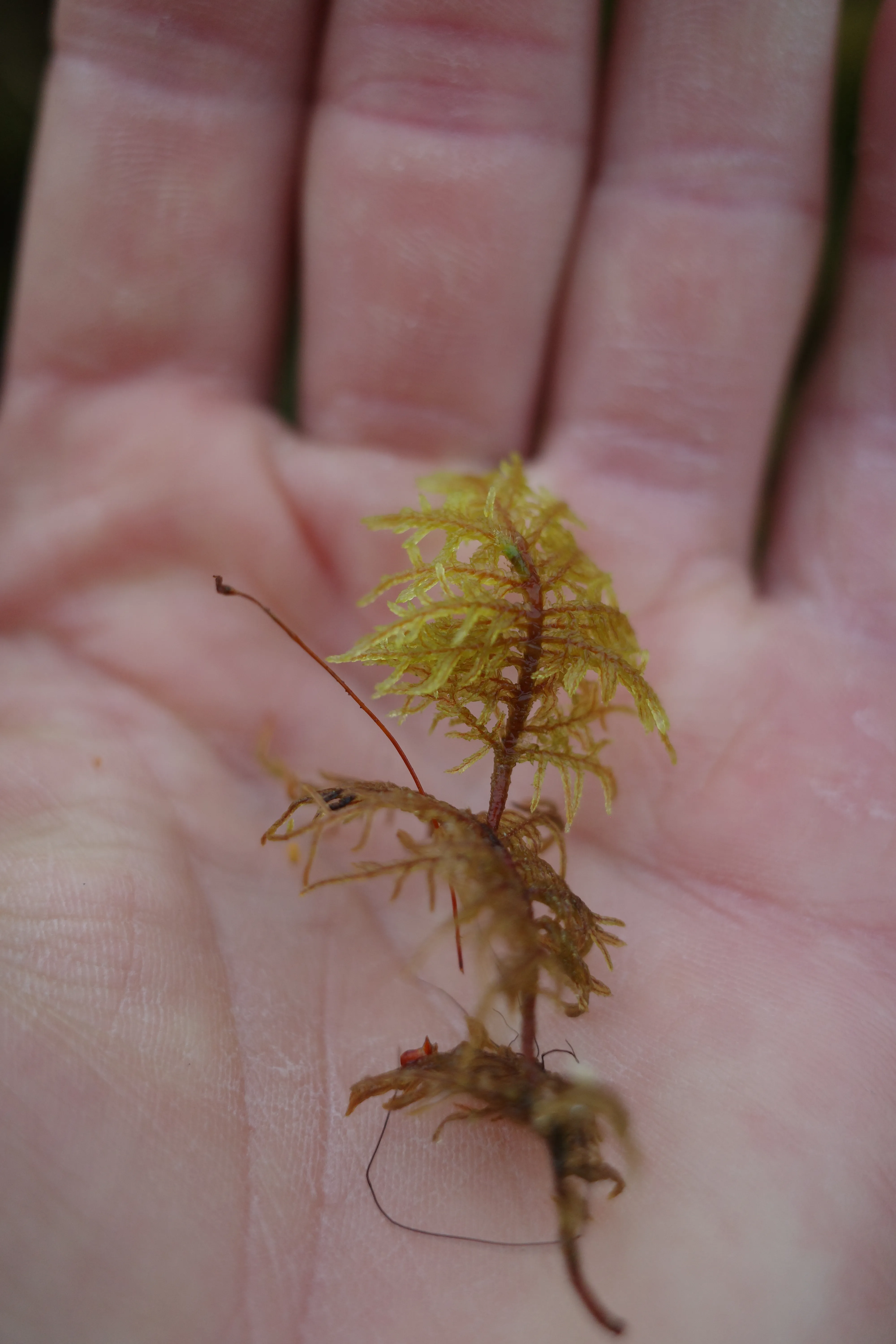
Description: Glittering wood-moss is very common on damp forest floors, but is found throughout the country from the lowlands up into the mountains. You can recognise glittering wood-moss by the way it grows in storeys. A new storey forms each year. Use: Glittering wood-moss has been much used for sealing houses, since it is so common. It is also used to map air pollution. Habitat type: Water and bog Edible: No Written by: Lærke Stewart
-
Moss
We have over 1,000 species of moss in Norway. Mosses do not have roots like trees and other plants. They have certain holdfast organs that keep them anchored to the ground, but they do not draw nutrients and water up through these. They take in nutrients and water from the air through their leaves. Mosses can withstand drying out for a long time, but they must have water and humid air now and then in order to complete their life cycle.
Mosses are variable both in colour and in growth form. They can grow on soil, in trees and on stone. Mosses are found in almost all habitat types, but especially in bog and in the mountains they can be very dominant and actually contribute more to photosynthesis than other plants. In the forest, too, mosses often grow in abundance. Within a small area there can be many different species of moss.
In the past, mosses were used to seal roofs, walls and boats. Today mosses are used in environmental monitoring. Mosses are, for example, used in surveys of air pollution because different species react differently to different substances. Some species of moss have medicinal properties, for example an antibiotic effect.
-
Bog moss
Bog moss is a genus of moss that thrives in damp places. There are around 200 species of bog moss, and we have about 50 species in Norway. The colour can be green, red, brown or yellowish. They grow in dense carpets.
Bog mosses have a particular growth in which they grow at the top while the lowest part is brown and dead. The dead part of the moss does not break down because bog mosses contain bactericidal substances. For this reason, dead bog moss is constantly built up at the bottom while the plant grows at the top. The dead parts are pressed more and more together and, after many years, turn into peat. In this way bog moss can help create “land” where there was previously open water in the bog. In many places the peat has been dug up by people and used as fuel.
The leaves of bog mosses are built up of two different types of cell. One type is ordinary plant cells that can carry out photosynthesis. The other type is special cells that can store water. When it is dry, these cells fill with air, and the moss will look white. When water comes again, the cells fill up and the plant regains its colour. Because they have these water-storage cells, bog mosses can absorb water equivalent to 20 times their own weight (Bjerkely 2018). This water-storage ability can help prevent flooding when a great deal of rain suddenly comes, because they soak up the water.
Try taking one bog moss and one other moss. Dry both. Weigh them while they are dry. Put them in water for 5–10 min. Let them drip a little and weigh again.
Since bog mosses contain an antiseptic substance that is bactericidal, they have over time been used for storing fish, vegetables and so on. They have also been used by women as sanitary towels during menstruation and as nappies for children. With this use, people made use of both the antiseptic effect and the ability to absorb water. We can also use bog moss as toilet paper when we are out on a trip, and to wash our hands after a trip to the toilet. And if you get an insect bite, rubbing the spot with damp bog moss can be soothing.
Peat and bog mosses have over time been harvested in large quantities both for fuel and, in our own times, because peat is a good soil improver and growing medium. Large quantities of peat-based compost are therefore sold in garden centres and nurseries. The problem is that it takes nature many years to build up layer upon layer of bog mosses, while harvesting it goes very quickly (see the section on the importance of bogs).
-
This is what the storeys of glittering wood-moss look like. Photo: Ola Njå Bertelsen
Next steps
- Bog moss — another moss
- Haircap moss — another moss
- Lakes, river systems and bog — biotope
- Plants — the hub
Learn more
- Artsdatabanken — species, status, Red List
- SNL — Norwegian botany — encyclopaedic
- Sopp- og Nyttevekstforbundet — courses and inspection
- Botanisk forening — Norwegian botany community