Plants & Nature
Water horsetail
Tags: Rushes, sedges and grasses Description: Water horsetail is common along the shores of lakes and rivers throughout Norway.
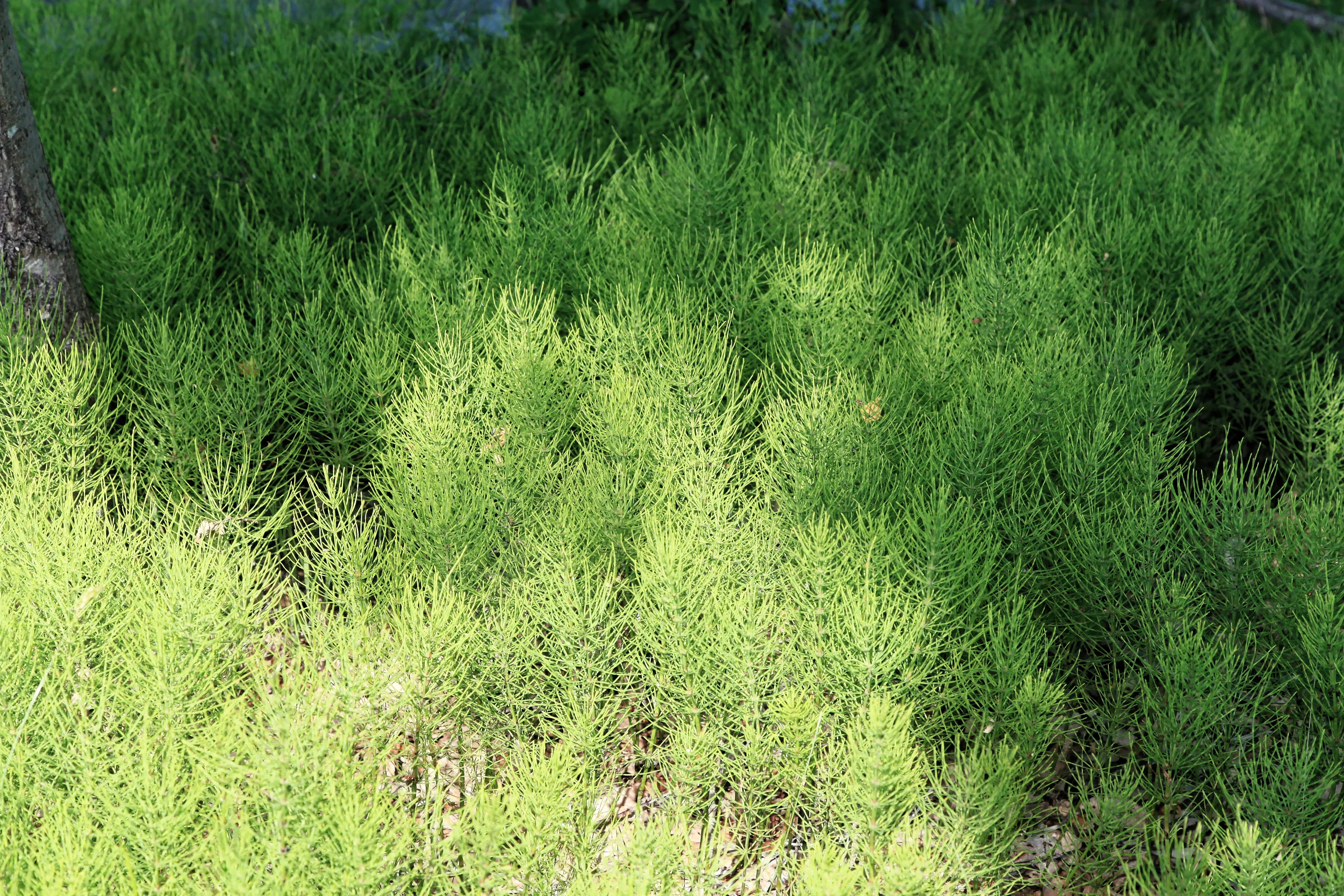
Tags: Rushes, sedges and grasses Description: Water horsetail is common along the shores of lakes and rivers throughout Norway. There are 9 species of horsetail in Norway. The stems are green and carry out photosynthesis. They are divided into segments and are hollow inside. The plants do not have ordinary leaves, but thin side branches that grow out from the stem so that they resemble little Christmas trees. Water horsetail belongs, together with the other horsetails, to a group of plants called vascular spore plants. Plants in this group do not have flowers like most of the plants we see around the landscape. Instead they reproduce by tiny spores. The horsetails, together with mosses and ferns, are among the oldest living plants. The oldest fossils of horsetails are from the geological period the Palaeozoic, which lasted from about 541 million to about 252 million years ago. Back then the horsetails were trees up to 20 m tall with a trunk diameter of up to 1 m. Much of these trees has become the coal deposits we mine today. The largest horsetail species found now is in South America, but it can only grow to around 10 m tall. Use: Horsetails have previously been used as animal fodder and also as a medicinal plant, especially against women’s ailments. Habitat type: Water and bog Edible: No Written by: Lærke Stewart
, via Wikimedia Commons](Elvesnelle/Elvesnelle.jpg)
Water horsetail. Photo: Frank Vincentz, CC BY-SA 3.0 https://creativecommons.org/licenses/by-sa/3.0, via Wikimedia Commons
, via Wikimedia Commons](Elvesnelle/Elvesnelle2.jpg)
Close-up of water horsetail. Photo: Dariusz Kowalczyk, CC BY-SA 4.0 https://creativecommons.org/licenses/by-sa/4.0, via Wikimedia Commons
Next steps
- Plants — the hub
- Learn more about plants — entries and identifying features
- Foraging — practical harvesting
- Food from nature — wild plants — preparation if edible
Learn more
- Artsdatabanken — species, status, Red List
- SNL — Norwegian botany — encyclopaedic
- Sopp- og Nyttevekstforbundet — courses and checks
- Botanisk forening — Norwegian botany community