Plants & Nature
Meadow buttercup
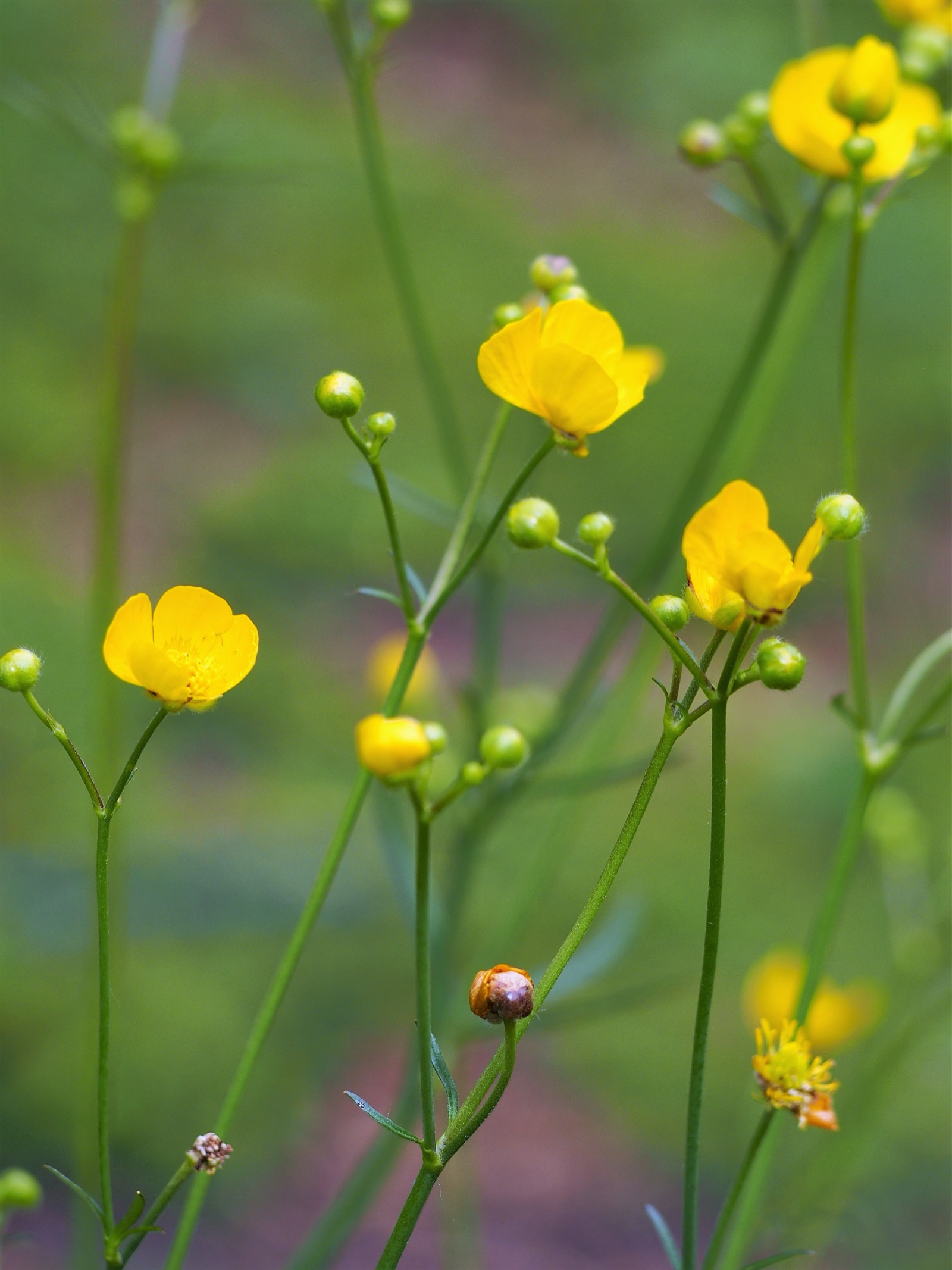
Buttercup — the classic yellow flower of pasture and grassland. It tastes bad and irritates the skin, which is why grazing animals leave it alone.
Meadow buttercup (Ranunculus acris) is a common plant on grassland and pasture. It is better known by its nickname buttercup — from the butter-yellow flowers that light up the meadow in summer.
Characteristics
- Flowers: butter-yellow, five petals (most species in the buttercup genus are yellow; a few are white)
- Leaves: palmately lobed (divided into fingers that spread out from a central point)
- Where it grows: grassland, pasture, cultural landscape
Why you see so many
Cattle do not graze on meadow buttercup:
- It tastes bad
- It irritates the skin
For this reason meadow buttercup is usually the only thing left in grazed ground once the cattle have been through. That is why you see large fields of buttercup on pasture — the other plants have been eaten, while the buttercup carries on without competition.
Habitat type
Cultural landscape. Meadow buttercup thrives in human-influenced landscape — pasture, grass meadows, roadsides.
Edible
No. Meadow buttercup contains toxins that irritate the skin on contact and can be poisonous if eaten in larger quantities. Keep clear of it.
Other species in the same family
The buttercup genus (Ranunculus) is large — there are over 60 species in Norway. Most have yellow, five-petalled flowers. Some classic ones:
- Meadow buttercup (R. acris) — also called bakkesoleie in Norwegian
- Creeping buttercup (R. repens) — creeping, grows in damp ground
- Lesser spearwort (R. flammula) — in bog and wetland
- Glacier buttercup (R. glacialis) — a mountain plant, white in colour
Glacier buttercup → · Plants and nature →
Text: Lærke Stewart, Snuitide (2022), revised 2026.