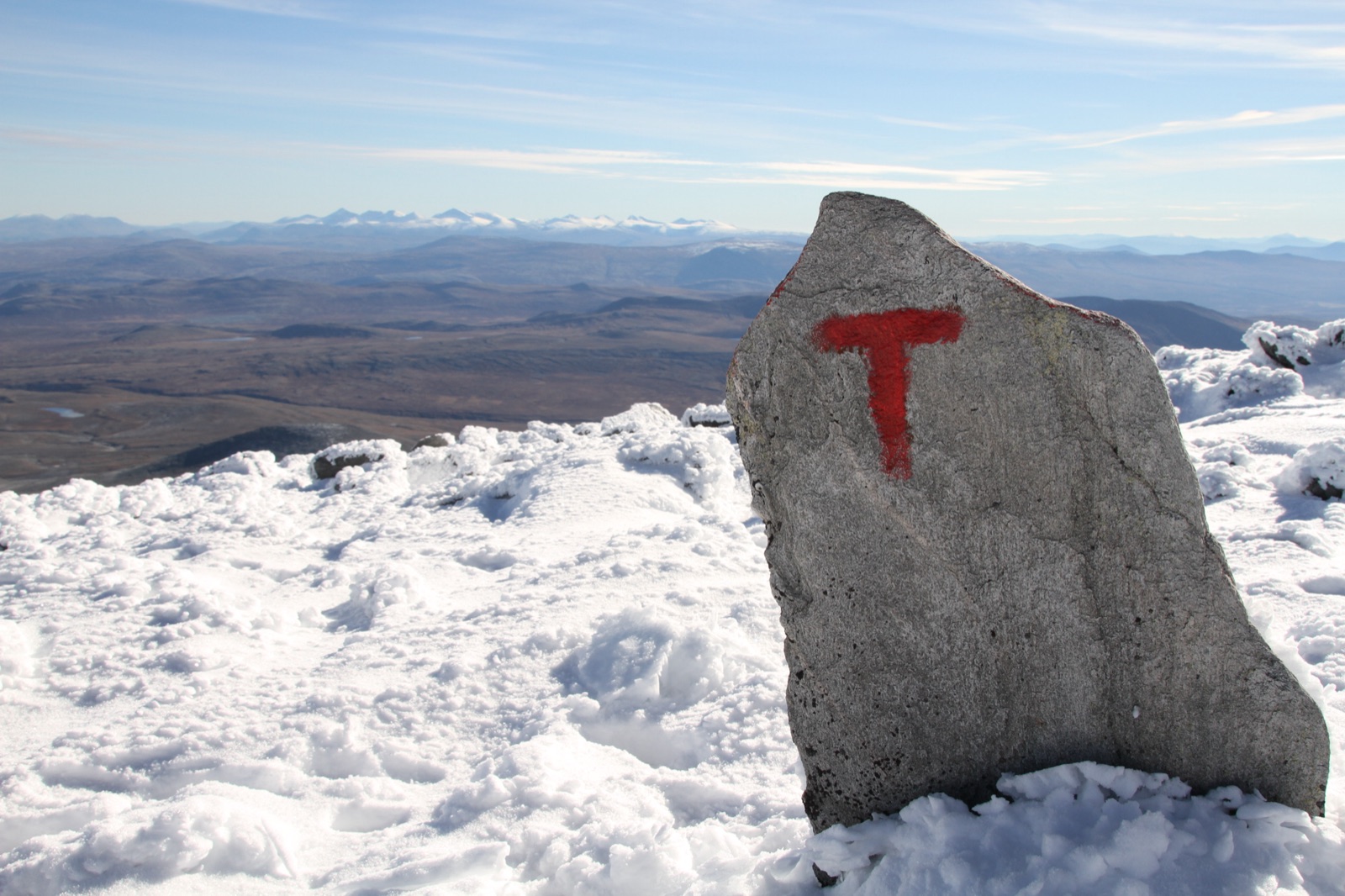
Hiking is the most common friluftsliv activity in Norway. Around 70 per cent of the population report having been out on a trip in woods or open country over the course of a year, and 31 per cent have been on a mountain hike — figures that have stayed steadily high across several decades. It is almost impossible to grow up in Norway without going on a tur, and there is barely an outdoor term that covers such a wide range: anything from half an hour on the floodlit ski track to a week across the Hardangervidda is called a fottur.
Hiking is also the way in to most other outdoor activities. Assessing the terrain, navigation, choosing clothing and packing are largely the same tools whether you are out for a Sunday walk in the neighbourhood or passing a glacier in Jotunheimen. Build hiking skills and you build the foundation for ski touring, foraging, hunting, climbing and most other things that happen on foot in the terrain.
What lies beneath
‘Fottur’ is an umbrella term. The Norwegian language has several words for going on a trip, and they overlap deliberately. The most important distinction is where you go (terrain) and for how long (duration, with or without an overnight stay):
Dagstur (a day trip) is the trip that starts and ends on the same day. It can be a half-hour loop close to home, or a long day in the mountains. Most hikes in Norway are day trips — this is the type that dominates the statistics.
Fjelltur (a mountain hike) is the collective name for trips that go into the mountains, often above the tree line. Even a short mountain hike has an entirely different weather and terrain regime than a woodland walk in the lowlands, and it calls for different equipment and different planning.
Langtur (a long trip) is a multi-day trip with an overnight stay — in a tent, a lean-to shelter, a rented cabin or the trekking association’s hut network. The range is wide, from a weekend trip with a single change from hut to hut to a week-long trip across a whole plateau.
Hyttetur (a hut trip) is an overnight stay in a hytte, either private or through DNT or other trekking associations. The threshold for equipment is lower, since a roof and warmth are secured, but the threshold for what happens between the huts is the same as for other trips in the same terrain.
Vandretur (a walking trip) is usually synonymous with a long trip, often used for trips along established routes — the Padjelantaleden, St. Olavsleden, Pilegrimsleden.
Topptur (a summit trip) says most about the destination: the trip goes to a specific summit. It can be a day trip, a mountain hike, a hut trip, or a combination. In summer it is a hike, in winter often ski touring — the word is season-neutral.
These are not mutually exclusive. A summit trip can be a day trip, a mountain hike can be a hut trip, a long trip can include several summit trips.
Roots in the Norwegian tradition
The word ‘friluftsliv’ seems to have first appeared in 1859, in Ibsen’s poem På vidderne. Fridtjof Nansen’s Greenland expedition in 1888 and Amundsen’s South Pole expedition in 1911 tied adventure in nature closely to Norwegian identity. Later, the labour movement’s struggle expanded free time — the eight-hour working day in 1919, the Holidays Act in 1937 — so that ordinary people gained the time for long trips.
The modern hiking tradition stands on two legs. The countryside’s friluftsliv came from the practical — supplementing the larder, grazing, hunting, fishing, travel between summer farm and village. The town’s friluftsliv came from the national-romantic — outdoor life as recreation and self-cultivation, inspired by European currents and by the mountain becoming a national symbol. The Norwegian Trekking Association (DNT), founded by Thomas Heftye in 1868, was entirely central to that process. The Outdoor Recreation Act (friluftsloven), passed on 28 June 1957, gave the right to roam (allemannsretten) statutory force in a way that is quite unique in an international context.
Today, social media — particularly Instagram from around 2010 — has changed recruitment markedly. Visual patterns of participation move people out into terrain that was previously little visited; at the same time, the most popular summit trips have taken on an entirely new traffic load that the area is not necessarily built for.
DNT as infrastructure
DNT is the backbone of Norwegian hiking, and the infrastructure has been built over 150 years. The association has 56 member associations and over 300,000 members (2024). They run around 550 huts — from unstaffed self-service to large, staffed tourist lodges with catering. The local hiking clubs mark and maintain around 22,000 km of summer trails and around 7,000 km of branch-marked winter routes.
The hut network (hyttenettet) makes it possible to go far with relatively little on your back — you do not need to carry a tent and food for the whole week. It is an infrastructure that has no direct parallel in most other countries, and a large part of the explanation for why Norwegian hiking can be physically hard, but is rarely extreme in equipment terms.
The huts are not without cost — nature comes first. In 2025, DNT is closing five huts and decommissioning around 125 km of trail out of consideration for wild reindeer habitat, as part of a larger reduction to safeguard herds in a critical condition. It is a reminder that the hut network is built within, not independently of, a vulnerable landscape.
Where in Norway
Norwegian hiking geography offers terrain for every level:
Jotunheimen is Norway’s highest mountain range, with over 250 summits above 2,000 metres. It calls for experience and equipment in heavier terrain, but is also accessible to beginners via marked classic routes such as Besseggen and Bitihorn. Hardangervidda is Europe’s largest high mountain plateau — open, wind-exposed, requiring good planning for several days of weather and water supply. Rondane is calmer, with clear lines and a well-developed hut network. Trollheimen is varied, from quiet valleys to alpine ridge traverses.
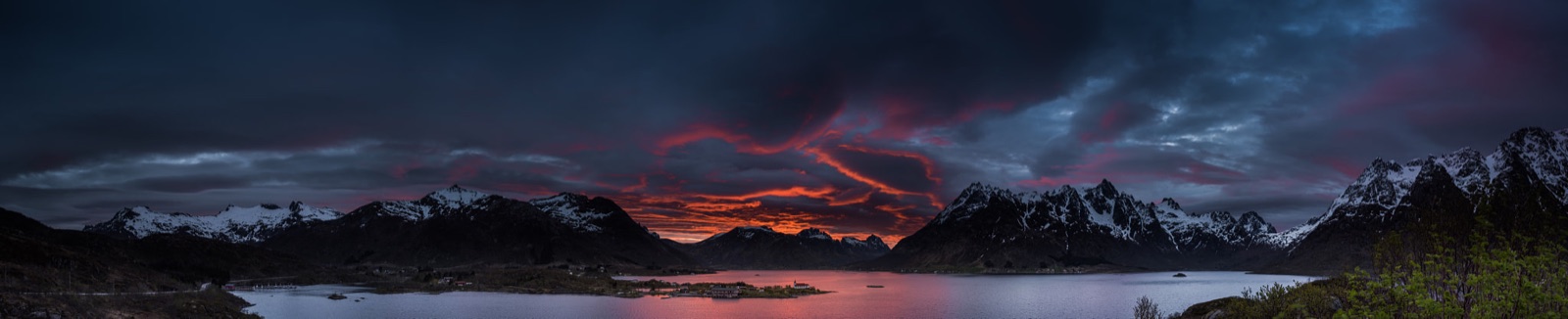
Lofoten and Vesterålen offer alpine mountains right by the coast — dramatic, but often short and low in metres. The modest height fools many; weather and terrain can be demanding even on a short trip. Femundsmarka and Finnmarksvidda are large, open areas where orienteering is the most important skill. It is easy to lose your way when you have no terrain features to hold your direction by.
Local familiarity is underrated. The best everyday hikes are often in your own municipality — Nordmarka, Bymarka in Trondheim, the vidde above Bergen, the urban areas around Tromsø and Stavanger. You can cover more terrain on a weekday evening than most think, and knowledge of an area gives a depth that no blockbuster trip can match.
The way in
The easy-access route is simple: take a day trip close to home, then a longer day trip in an area you do not know, and build from there. The hike teaches itself along the way — you adjust as you go.
Anyone who wants to go about it more systematically has several ways in. Local hiking clubs (turlag), both DNT-affiliated and other associations, organise group outings for all levels every weekend throughout the year. DNT alone accounts for over 4,000 trips and courses annually, with around 100,000 participants. There is no activity with a lower threshold for joining in.
Maps are the second skills lift. Begin by reading the map for areas you already know — find the trail, the forest edge, the difference in elevation — before you take up mountain maps in unfamiliar terrain. Reading a map is an entirely different skill from navigating by it. The first is learned in calm, the second in wind.
The physical threshold is rarely the problem. It is navigation, understanding equipment and assessing terrain that take time to build — particularly judgement, which is the skill experienced hikers rely on most when the weather turns.
Safety and terrain
The most important rule is simple: turn back in good time. There is no shame in turning around, and it is the entirely normal thing to do when conditions change. The fjellvettreglene are nine short rules of thumb developed by DNT and the Norwegian Red Cross after serious mountain accidents. The first version came in 1952. After 17 people died in the mountains at Easter 1967, the rules were thoroughly revised and the campaign Velkommen til fjells – men ta ansvaret selv was launched. The latest revision came on 15 February 2016 and included, among other things, avalanches and summit ski touring with randonée equipment.
The fjellvettreglene are not hiking-specific, but here is what is specifically worth remembering for hiking beyond them:
Changes in weather and hazard can come quickly in the mountains — even a five-hour trip in July can meet heavy snowfall or thick fog. Fog is the most common single cause of serious hiking incidents in Norway. When visibility drops below a few tens of metres, it is nearly always right to turn back or wait. River crossings can require a detour on longer trips — large rivers in flood are to be kept away from, and there is no equipment solution that replaces good judgement. Avalanches can also strike on a hike in winter and spring, particularly in steep terrain where you do not necessarily think about it. Check varsom.no and build up your avalanche knowledge when you go into terrain where it may be relevant.
For longer trips, it helps to tell someone where you are going and when you are expected back. DNT huts have trip logbooks — and digital route apps can share your location automatically with a contact person at home.
Equipment
For a day trip in the lowlands you need shoes that can take wet conditions, a pack with a water bottle and a little food, and clothing for a change in the weather. For a mountain hike and a long trip the requirements increase gradually — you must be able to handle everything from sudden fog to rain to cold nights. The main rule is as ever: learn first, buy afterwards. Hire or borrow equipment the first few times before you invest in your own.
Key items of equipment are linked from equipment. For packing specifically, see packing lists, and for choosing clothing and layering, see clothing.
Norwegian hiking has distinct seasons closely tied to the snow line and day length:
Summer (June–August) is peak season in the mountains. Snowmelt in May and June, full trail opening from July in many areas. Even so, it can drop below freezing in the mountains in mid-July, and it is not unusual to cross snowfields even in August. Autumn (September–October) has the colours at their peak and fewer people, but shorter days and faster weather changes. The frost comes early above the tree line, and a summer packing list will not stretch far enough. Winter (November–April) calls for entirely different equipment and skills — on foot it becomes ski touring or tour skating, and the threshold for both orienteering and avalanches is a different one. Spring (March–May) is the most difficult season for hiking because you combine bare ground in the lowlands with still-wintry conditions in the mountains. It requires good planning of start and end points.
Climate change is shifting the seasons. The mountain birch comes into bloom earlier, the snow line moves upwards, and many traditional ice-breakup dates are no longer reliable. Check local conditions before you plan, not the calendar.
Ethics and framework
The Norwegian right to roam gives us the right to move freely in open country — but also duties. The Outdoor Recreation Act (friluftsloven) regulates both the rights and the consideration owed to the landowner, wildlife and other users. Leave-no-trace travel (sporløs ferdsel) is not just an idea; it is a precondition for the right to roam continuing over time.
In practice: do not leave litter behind — rather take out a little more than you brought in. Do not pick from protected areas without having checked the rules. Keep dogs on a lead during the dog-on-lead period (båndtvang), 1 April to 20 August nationwide, longer in many municipalities. Respect grazing animals — particularly sheep on the vidde. On the most heavily trafficked mountain routes, the wear has reached a level where DNT, in consultation with the Norwegian Environment Agency and the local landowner, moves or closes routes to let the terrain recover. It is not the standard reaction to ‘too many people’, but to ‘too much wear in this place right now’.
Next steps
If you are new to hiking: go on a day trip this week — whatever the weather. It is the fastest way to build intuition. Then join a group outing with a local hiking club. You learn more from walking alongside experienced people for one weekend than from a whole summer on your own.
If you already go on trips and want to build out: set out on your first multi-day trip in the hut network — it lowers the packing threshold and gives you a controlled way to experience a long trip. The DNT huts in Rondane and Hardangervidda are classics that are largely safe enough for a first week-long trip.
If you already go on long trips and want to expand: try a summit trip in terrain where you have to assess a real weather window, and build out your orienteering to handle unfamiliar mountain terrain. That is the next big step.