Hiking
Day hike
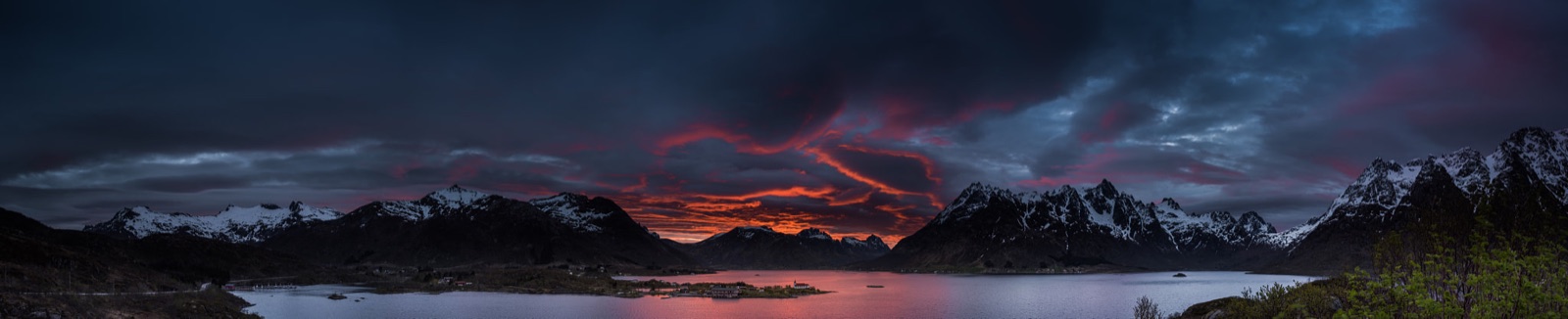
The day hike is the most common Norwegian outing — from a half-hour on the floodlit trail to a full day in the mountains. Here is how length, terrain and packing fit together, and when a day hike is really a mountain hike in disguise.
The day hike — the outing that starts and ends on the same day, with no overnight stay — is by far the most common type of Norwegian foot tour. When statistics show that around 70 per cent of the population has been out walking in woodland or open country over the course of a year, it is almost entirely day hikes that are meant. That does not make the day hike a less serious form of friluftsliv. It means it is the variant that covers the widest range — from half an hour on the floodlit trail to ten hours on a mountain ridge.
It is that range that makes it worth writing about. A day hike can be anything from neighbourhood recreation to one of the year’s most demanding outdoor experiences. The packing list, the assessment and the timetable look completely different, even though both are technically day hikes.
Three kinds of day hike
Day hikes fall roughly into three categories, each with its own logic:
The everyday walk is the short, local outing — an hour or two in the town woods, on the floodlit trail or in the forest. You do not need a map, you do not need a packing list, you go in what you are wearing. It dominates the traffic on every Norwegian trail and is probably the most important Norwegian friluftsliv contribution to public health.
The longer day hike is four to six hours, often in an area you do not know as well. This is where the packing list begins to apply — water bottle, extra clothing, food, a phone with battery. You need to assess the terrain somewhat, but most classic lowland trails fit here.
The full-day mountain hike is eight to twelve hours, often above the tree line, with terrain assessment as a real part of the outing. It shares technical similarities with a mountain hike or a tougher project — it just happens to finish the same day. Classics such as Besseggen, Romsdalseggen and Galdhøpiggen are day hikes on the calendar, but not in terms of load.
The difference between the three is not gradual — these are qualitative distinctions. The packing list for an everyday walk is not the longer day hike’s packing list minus a few things, and the longer day hike is not a mountain-hike version with a shorter distance.
When a day hike is a mountain hike
Many people underestimate the transition. An outing that crosses the tree line is a mountain hike, regardless of whether it ends the same day. Weather, wind, visibility and terrain assessment behave differently up there than in the forest, and the packing list has to reflect that.
Operational signs that you are in the mountains and must treat the outing as a mountain hike:
- You go above the tree line
- You have 1,000 metres of ascent or more in total climb
- The distance requires 6 hours or more in the estimated time budget
- The return route is not clearly shorter than carrying on
- Visibility can fail without warning
When two or more of these are true, the outing is a mountain hike — even if it is listed as a ‘classic day hike’ in a guidebook. First mountain hike goes through what that involves.
Packing by type
For an everyday walk in the lowlands the packing list is short: a bottle of water, perhaps a bar of chocolate, a rain jacket if it looks threatening. For many people the everyday walk is so low-barrier that it barely has a packing list — you go in what you stand up in and come home.
For the longer day hike, things start to apply:
- A pack of 20–30 litres
- Water bottle or flask (1–1.5 litres)
- Packed lunch and a little energy food
- A windproof jacket and possibly a rain shell
- A head torch in summer after 18:00 as well
- A miniature first-aid kit
- A phone with battery, ideally with a map app
For the full-day mountain hike you step up to the full mountain packing list — map and compass, extra clothing (down jacket or fleece jacket), a windproof outer shell, a head torch as mandatory, food for the whole outing plus an hour, and navigation you have actually practised. Packing lists goes through this in detail for different types of outing.
Time and the turnaround decision
For day hikes, the most important planning action is to set a snutid. That is: the time by which you must be at a particular place if you are to get back down in daylight with a margin. If you are not there by that time, you turn back, regardless of how the outing is otherwise going.
The snutid compensates for the fact that people are optimists. You underestimate how long a rest takes, how long a food break lasts, how much an extra look at the view costs. When you have walked half the time but not half the distance, it is not because everything is going wrong — it is because an outing takes longer than you think.
For classic day hikes in the mountains, the recommended rule of thumb is 2 km/h in steep terrain (including a break), 3–4 km/h on the flat or on even ascent. If the outing is 18 km, you are out for 5–9 hours. Plan for the high estimate, not the low one.
Where in Norway
Day hikes are found in every part of the country. The ones most people enjoy are the most local of all — Nordmarka in Oslo, Bymarka in Trondheim, the Vidda above Bergen, the urban areas around Tromsø and Stavanger. That is where the everyday walk lives.
For longer day hikes, most large mountain areas have classic day-hike objectives. Bitihorn in Valdres, Kjerag in Lysefjorden, Trolltunga in Hardanger, Preikestolen, Galdhøpiggen, Dalsnibba, Helagsfjellet on the border region. Many of these are becoming too heavily trafficked for the area’s carrying capacity, and local landowners and national-park managers are moving routes or introducing fees to handle it.
For day hikes that are not classics, local knowledge is the best source of information. Local hiking clubs (turlag), the municipality’s walking leaflet, and conversations with people who live in the area often turn up routes that are better than the most widely shared ones.
Season
Day hikes in the lowlands are a year-round activity. In the mountains the season is narrower:
- May–June has lingering snow in the mountains, and the terrain can be difficult because the snow melts unevenly
- July–September is the core season for full-day mountain hikes
- October has short days (start early, snutid before 14:00 in many areas)
- November–April means mountain day hikes on skis or snowshoes — even classic mountain-hiking terrain calls for winter competence
The lowland woods are open all year, but the surface changes dramatically — hard frost in November, slippery ice in January, mud in March, firm and pleasant in May.
Next steps
If you do one or two day hikes a year: try to do one extra this month, regardless of the weather. It is fitness and rhythm that build over time, not equipment.
If you do many day hikes and want to go further: try your first mountain hike on a good day, or build up to a longer outing by linking two day hikes together via a cabin — that is the first step towards a cabin trip and the DNT system.
Learn more
Text: Snuitide (2026).