Allemannsretten (the right to roam) leaflets
Leaflets about allemannsretten (the right to roam) — from the Norwegian Environment Agency (Miljødirektoratet) and Oslo municipality (Bruk hue). Download as a PDF or view as images.
2 articles
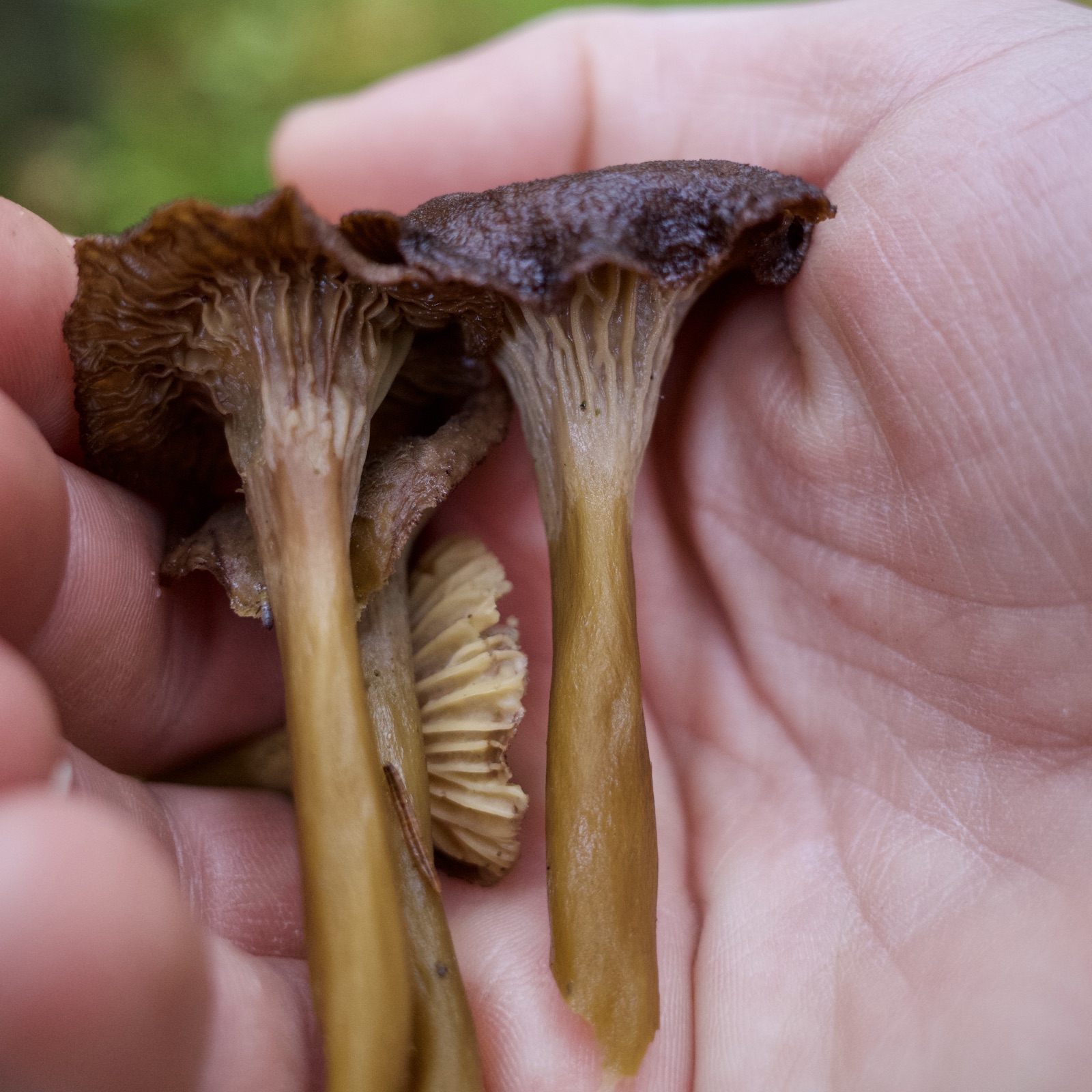
Wondering where you can pitch a tent, whether you are allowed to pick mushrooms, or how far you have to keep from a house before pitching camp? It is governed by the Outdoor Recreation Act (friluftsloven) of 1957, and the Norwegian concept of allemannsretten (the right to roam) is one of the clearest and most generous in Europe.
In Norway we have free access in utmark. It is a free common good that holds regardless of who owns the land. Few countries have it. With the right comes the duty to act considerately — towards both nature and the people you meet.
Leave-no-trace travel (sporløs ferdsel). The scouts put it well: all that should be left behind us is “thanks and nothing”.
These two terms are the key to what you are allowed to do:
Innmark = areas where public access would be a nuisance to the landowner:
Utmark = everything else. In practice: forest, mountain, bog, coast, and the greater part of Norway.
Special rule: cultivated land becomes utmark when it is snow-covered or frozen (typically from around December to March in the lowlands).
More on what allemannsretten says about different activities →
The right carries duties:
A general fire ban (bålforbud) in utmark applies from 15 April to 15 September. During this period it is forbidden to make a fire in or near forest and other uncultivated land.
Exception: a fire when it “obviously cannot cause a fire risk” — for instance over dense snow cover, or after heavy rain on wet ground.
When in doubt — don’t, or contact the fire service for a site-specific assessment. Even where it is allowed, you must judge the risk yourself.
More on fires → · Find firewood and a suitable fire site →
In national parks, landscape protection areas, nature reserves and other protected areas, additional rules apply that may limit allemannsretten. Examples:
Check the rules for the area you are heading to on the site of the Norwegian Environment Agency (Miljødirektoratet) or at local national park centres. The sign at the entrance to the area often shows the main rules.
DNT (the Norwegian Trekking Association), local trekking groups and municipalities waymark thousands of kilometres of paths and trails each year. Follow waymarked paths where you can — it reduces wear, protects vulnerable vegetation, and is safer for navigation.
In the wild-reindeer ranges (Hardangervidda, Setesdal Vesthei, Setesdal Austhei, the Snøhetta area, Rondane) it is especially important to stay on the path — several studies show that the animals avoid areas where more than 30 people a day cross paths.
Many areas, particularly wild-reindeer and large-carnivore ranges, have a locally extended dog-on-lead period. Check in good time.
Allemannsretten does not mean you can do whatever you like. Damage to nature and interference with industry or people can have consequences:
For the great majority, the rules are simple if the underlying idea sits well: leave little trace, show consideration, take out what you bring in.
Related: Sustainability and leave-no-trace travel → · Reindeer husbandry and Sámi culture →
Text: Snuitide (2022), revised 2026.
Key resources: Lovdata — Friluftsloven · Miljødirektoratet — allemannsretten · Norsk Friluftsliv · Norsk brannvernforening
Leaflets about allemannsretten (the right to roam) — from the Norwegian Environment Agency (Miljødirektoratet) and Oslo municipality (Bruk hue). Download as a PDF or view as images.
You may walk freely wherever you like in utmark, as long as you do so considerately. The duty to travel without leaving a trace and not to cause unnecessary damage to the terrain or…