Reindeer Herding & Sámi Culture
0 articles
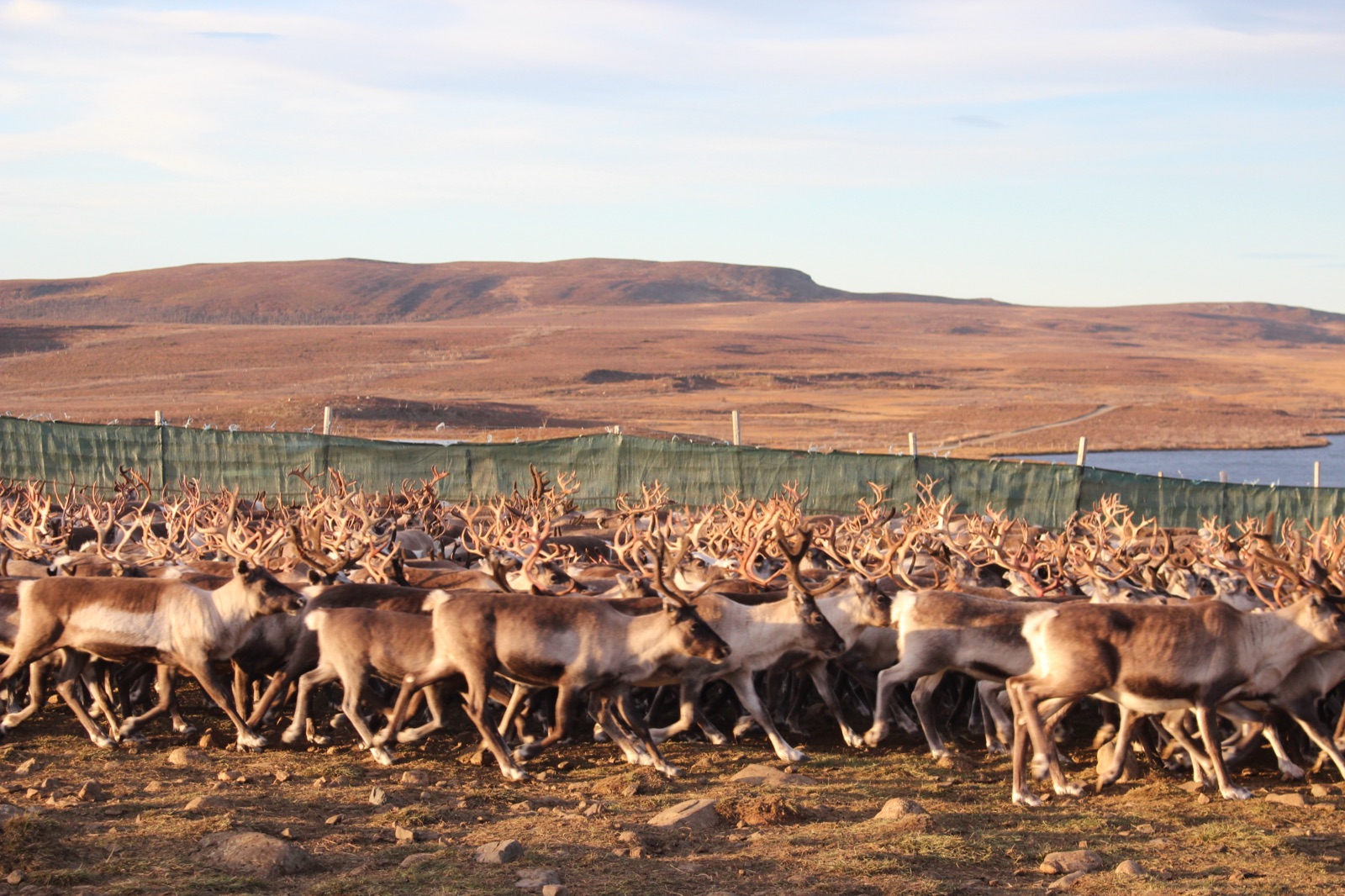
Reindeer husbandry in brief
- Reindeer husbandry is found across large parts of Norway, especially in the northernmost counties.
- Reindeer husbandry is an important part of Sámi culture and use of nature.
- Reindeer husbandry is often based on a nomadic culture in which the reindeer herd is moved between summer and winter pastures.
- Sámi reindeer husbandry is run by siidas, a work-community that is often a family group.
- It is important not to disturb the reindeer herd during the rutting season and the calving season.
- In Sámi culture the whole reindeer is used, and food is made from both meat and offal.
- Sámi place names are descriptive and can tell you a great deal about an area and how it has been used.
The distribution of reindeer husbandry
Reindeer husbandry is often associated with Sámi culture. Although Sámi culture is very diverse, reindeer husbandry is nevertheless an important part of Sámi culture. In Scandinavia it is assumed that domesticated reindeer have been kept since the 16th–17th centuries.
Today the herds consist mainly of female reindeer and calves in order to optimise meat production, because this is the main source of income in reindeer husbandry. Reindeer husbandry takes place mainly within the Sámi reindeer-herding area. This area stretches from Finnmark in the north to Engerdal in Hedmark in the south, and as a result almost 40% of Norway’s land area is reindeer grazing land. Sámi reindeer husbandry is also carried out in Trollheimen, as well as limited reindeer husbandry in the mountain areas of southern Norway organised by separate domestic-reindeer cooperatives. The Sámi reindeer-herding area is divided into 82 reindeer grazing districts (Landbruksdirektoratet, n.d.). A reindeer grazing district forms an administrative unit for one or more siidas. A siida is family groups or a work-community that cooperates on the various tasks that make up reindeer husbandry.
A nomadic livelihood
Sámi reindeer herders have rights to practise reindeer husbandry based on custom and alders tids bruk. ‘Alders tids bruk’ is a legal term and means that one has used an area for a long time and has the right to use it regardless of who owns the land. The right to herd reindeer today includes the right to graze reindeer, the right of movement, and migration routes for the reindeer within the defined Sámi reindeer-herding area. The right to herd reindeer also means that there are restrictions on what kinds of intervention may be made in Sámi reindeer grazing areas (Ravna et al., 2022).
Reindeer husbandry is based on the reindeer grazing on uncultivated outfield pasture, and follows a fixed annual cycle with movement from different grazing areas through the year. Finnmark is the largest reindeer-herding area, where almost three out of four domesticated reindeer are found (Reinbase, n.d.). In Finnmark the herding is nomadic. This means that the reindeer move through the year. In summer the reindeer graze in areas near the coast.
When winter comes, the reindeer are moved to the dry, cold plateaus of inner Finnmark. This gives the reindeer access to the best pastures in both summer and winter. The move is carried out by driving the reindeer with the help of snowmobiles or all-terrain vehicles, and by herding dogs. In some cases the reindeer are moved by trailer. Across stretches of sea the reindeer are often moved on military barges, while some siidas let the herd swim. In the coastal areas from Troms to Nord-Trøndelag the grazing pattern is more varied, where the reindeer may be either more stationary or moved between different grazing areas.
Traditional and modern herding
Today reindeer husbandry is a modernised livelihood that makes use of motor vehicles and modern technology. Even with modern technology available, reindeer herders nevertheless still depend on the traditional knowledge built up over many generations. The interplay within nature and the use of the grazing areas under changing weather conditions are especially important in order to give the reindeer herd the best grazing conditions.
The reindeer herds mostly roam freely in nature, and in connection with marking calves, administering medicine and taking out animals for slaughter the reindeer owners gather their herd. The animals are then led into what are called reindeer corrals, and finally they end up in the giirdnu, or kverna in Norwegian. The giirdnu is a small enclosure where part of the herd is taken in and the reindeer herders work to take hold of each animal in order to separate them from one another and do the work that each animal requires. The work with the animals in the kverna is something everyone in the siida takes part in, and it can be hard physical work. The members of the siida have different tasks.
Knowledge is passed on as the different generations take part in and cooperate on the tasks. Here children also take part alongside the adults to learn how the work is done. The children start with simple tasks. As they grow older and show that they master the work, they take part more and more in everything that happens around the reindeer herd. This kind of traditional transfer of knowledge and learning through one’s elders is still fairly common in Sámi cultures.
The eight seasons
Reindeer husbandry is governed by the changes in nature. It is therefore interesting to note that the year is often divided into eight seasons in Sámi culture. This makes the close connection to nature clear.
- Spring-winter (giđasdálvi): begins in February/March and lasts through April.
- Spring (giđđa): begins in April and lasts through May.
- Spring-summer (giđasgeassi): begins in May and lasts through June.
- Summer (geassi): begins in June and lasts through August.
- Autumn-summer (čakčageassi): begins in August and lasts through September.
- Autumn (čakča): begins in September and lasts through November.
- Autumn-winter (čakčadálvi): begins in November and lasts through December.
- Winter (dálvi): begins in December and lasts through February/March the following year.
Several of the months of the year have Sámi names linked to reindeer-herding activity. For example, May is called miessemánnu — the calf month — because that is when the reindeer calves are born. October is called golggotmánnu — the rutting month — because that is when the bull reindeer are in rut.
Moving through reindeer-herding areas
One challenge for the sustainability of the reindeer-herding livelihood is increased traffic in the grazing areas. Reindeer husbandry makes use of areas with scarce resources, and is vulnerable to disturbances that mean the reindeer do not get enough peace to graze. In spring-winter the reindeer draw on the last of their fat reserves and need grazing time. The reindeer are especially vulnerable during the calving season in May, and it is then in particular that the female reindeer (does) with calves should not be disturbed. If a friluftsliv trip is being planned in areas with reindeer husbandry, it is important to find out in advance whether there may be animals in the area, so that one can avoid the calving areas and important migration routes. Avoid frightening reindeer that have been gathered. In autumn it is important for the reindeer herds to have peace during the rutting season.
Do feel free to get in touch with the reindeer owners responsible for the area to find out whether there are reindeer in the area or other activity linked to reindeer husbandry where you are planning to go on a trip. Perhaps there might even be an opportunity to visit a reindeer corral or to make other contact with the reindeer herders? Take care, too, when crossing reindeer fences. Do not trample down the fences, and close gates behind you.
Sámi culture and friluftsliv
There is originally no separate word for friluftsliv in the Sámi languages, and friluftsliv as a concept and phenomenon cannot be equated with Sámi use of nature. In the Sámi languages there are several concepts that can be related to activities outdoors and to practising friluftsliv.
Being able to manage out in nature — for example through making a fire, moving through nature and handling tools — is highly valued in Sámi culture. This mastery can be linked to the North Sámi concept birgen, understood as managing on one’s own in any situation. The concepts olgustallat/olgodaddat — doing activities outdoors — and the concept meahccástallan — work-activity in nature — are also comparable to some of what we might think of as friluftsliv.
Sámi cultural practice through reindeer husbandry
Sámi culture is often characterised by a close relationship with nature. Reindeer husbandry has been, and still is, important. From of old, the Sámi have also harvested berries, meat, fish and various natural materials from nature. Duodji is the word used for Sámi handicraft in which natural materials are used to make tools and decorative objects. From the reindeer the Sámi have obtained hide, bone, sinew and antler, which have been and are still used in duodji.
In the Sámi food tradition based on the use of reindeer, the Sámi have always been good at making use of as much of the animal as possible. The food tradition is closely tied to how the Sámi lived close to nature and depended on making use of resources. Meat, offal and bone are all used in cooking. Drying and smoking the meat was common in order to preserve it in a time when freezers and refrigerators were not common. Today reindeer meat is still dried and smoked, but now more for the sake of taste than for storage. Bidos (a kind of stew), blood sausage, blood pancake and reindeer broth are examples of traditional Sámi dishes.
Sámi cultural traces in the landscape
In reindeer-herding areas you can find many cultural traces left by reindeer husbandry. Reindeer fences, both abandoned and new, dwelling sites and fire sites can show that there has been and is reindeer husbandry in the area. Inside the reindeer fence the reindeer trample and fertilise the ground, so that the area gradually develops a grass-rich vegetation that clearly distinguishes it from the other vegetation nearby. If you keep your eyes open as you move about, you will be able to spot such old cultural environments and recognise them by their vegetation. Old reindeer fences often consisted of stone or of trees and brushwood, and there may also be remains of the enclosures themselves. In connection with such old reindeer-herding fences you can also find traces of old lavvo sites.
Lavvo
The lavvo is the Sámi traditional dwelling that they often brought with them and lived in when they moved around with the reindeer herd. A lavvo has a framework of several long tent poles, or rajer, set at an angle into the ground and gathered at the top. In earlier times the tent covering could be of reindeer hide or woollen fabric. In a modern lavvo the covering is usually of a heavy canvas fabric. There is an open hearth in the middle of the lavvo, the árran, and the smoke from the fire comes out through the opening in the roof where the rajer meet. The floor of a traditional lavvo is covered with a layer of birch brushwood with reindeer hide on top. In friluftsliv many people are familiar with the lavvo in its even more modern version, where the tent covering is of nylon fabric and there is only a single pole in the middle holding the lavvo up.
Offering sites
In Sámi cultural landscapes you may also find traces of old offering stones, Sieide, and offering sites. In an open plateau landscape these were often prominent, large stones or erratic boulders that both served as natural waymarkers and were used as offering sites. Objects such as reindeer antlers and other small ‘gifts’ can often be found at such places. If you seek out or pass by such places, you should show respect for the place and for the significance it has had and perhaps still has for Sámi culture. This respect means not leaving anything behind for fun.
Sámi naming on the map
The Sámi languages are descriptive, and you often need several words in Norwegian to translate one Sámi word. In Sámi areas, place names often appear on the map in both Sámi and Norwegian. These two do not always match. By gaining familiarity with certain common Sámi terms, you can understand and interpret the landscape in a different way from the information that the Norwegian place name can give. Nature has been seen as a resource by the Sámi, and many place names can reflect how a place and an area has been, and still is, in use, and what characterises the landscape.
One example of this is the mountain Sorbmegáisá in Nord-Troms. Sorbmi means accident, and the Sámi meaning of Sorbmegáisá is: ‘the mountain where one can easily come to grief’.
Next steps
For the practical side of the lavvo as a form of overnight accommodation, see tent and lavvo. For the basic rule on access in the outfields, including in reindeer grazing areas: the Outdoor Recreation Act and the right to roam.
For related traditions: traditional friluftsliv (harvesting and foraging for food) and gathering (berries, herbs, natural materials). For the reindeer as a species: animals and tracks.
Learn more
- Boyne, H. P. & Nordsletta, S. (2021) — Samiske naturbenevnelser, Forfatternes forlag
- Reindriftskart, NIBIO — map of reindeer grazing areas
- Reaidu — Senter for samiske studier ved UiT — resource for Sámi knowledge
- Sametinget — Sámi politics and culture
- Landbruksdirektoratet — reindriftsstatistikk
- SNL — samer
- SNL — reindrift
Text: Elisabeth Enoksen and Inger Wallem Krempig, Snuitide (2022), revised 2026.
Sources: Landbruksdirektoratet (n.d.): reindriftsstatistikk · Reinbase (n.d.): tamrein-data · Ravna, Ø. et al. (2022): reindriftsrett · Boyne, H. P. & Nordsletta, S. (2021).
No articles in this category yet.