Cooking on an open fire
A pagodebål is the best for cooking — the fire is stable, pots can be set straight on top, and the embers give precise heat. Fire types, recipes and practical tips.
10 articles
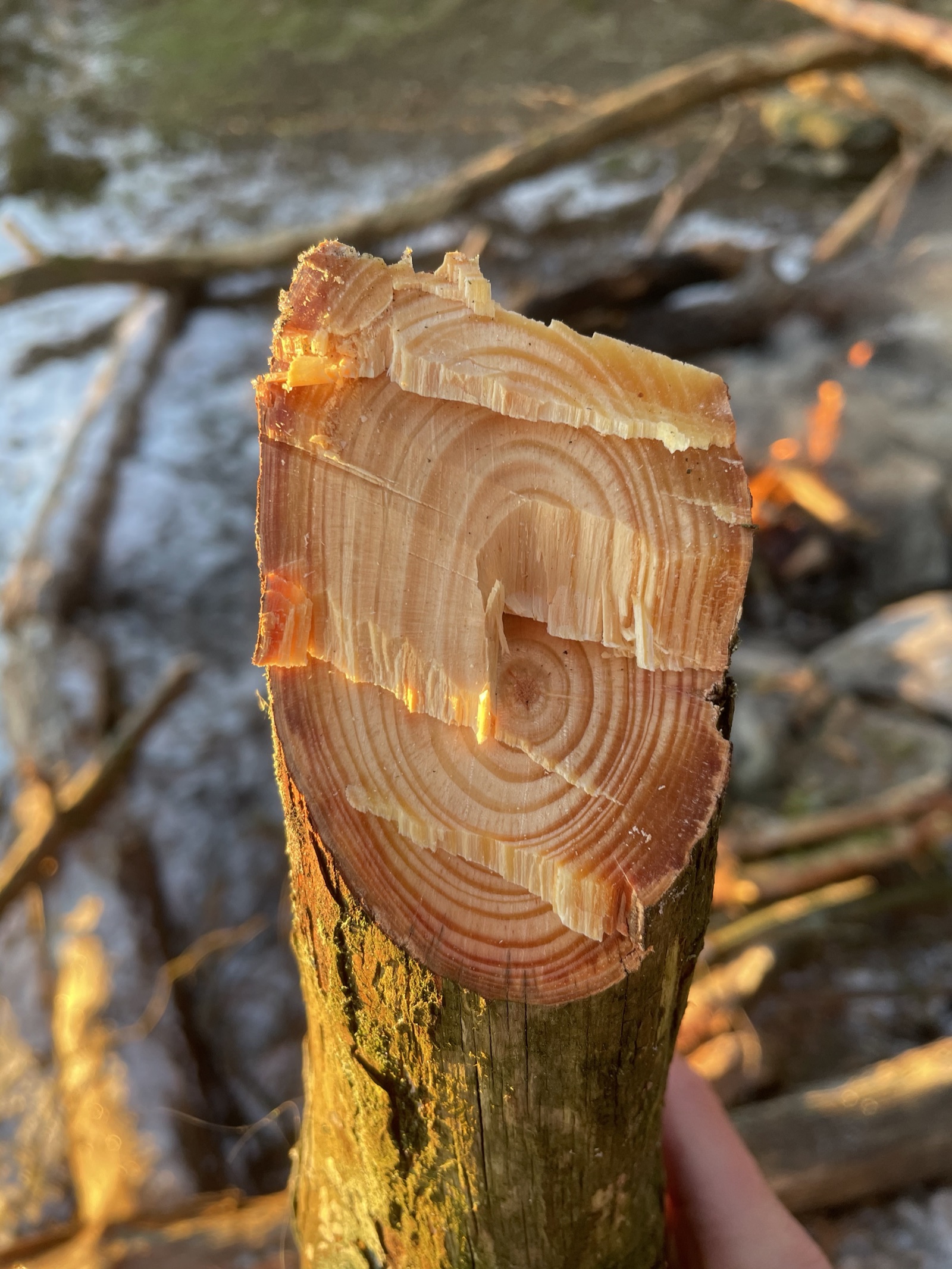
A fire is rarely just a fire. It is warmth, light, a gathering point, a kitchen and a drying rack in one. With a little practice and dry wood it is not hard either — but the law and nature ask something of you, and it is your responsibility to know what.
To get a fire going you need three things at the same time:
Find wood and a suitable fire site →
Classic lighting:
Check that the bark is bone dry — it crackles if you rub it. Even on a wet day you can find dry bark under birch bark or on hollow trees. The twigs low down on spruce trees are often dry even in rain — snap them off the branch to check.
Different purposes call for different fires:
Fire types — pyramid, pagoda, nying →
The fire becomes a kitchen when cooking is part of the outing — pancakes, pieces of fish, soup, twist bread. Directly over the flame for the difficult things, over embers for steadier cooking. Pack a cast-iron frying pan if you want anything other than packet food.
Cooking on the fire → · Packing lists →
Use an existing fire site where there is one. Every new fire site leaves marks that last for years.
If you have to make a new one:
After use:
Allemannsretten lets you light a fire in utmark outside the fire ban period. Within the fire ban period you need the owner’s permission, and it must be safe.
On private ground (innmark, garden, cabin plot) the owner decides. At a fire site run by a municipality or a hiking association — check the rules posted on site.
Do not fell living trees to get wood — it is forbidden on common land and poor friluftsliv everywhere. Gather dead wood from the ground or dry twigs from trees. By all means bring wood from home if you are unsure what you will find.
Related equipment: Fire-starting kit — lighter and matches · Fire for cooking · Twig stove
Text: Bjørn Henrik Stavdal Johansen and Gina Wigestrand, Snuitide (2022), revised 2026.
Key resources: Direktoratet for samfunnssikkerhet og beredskap (DSB) — bålregler · Norsk Friluftsliv — sporløs ferdsel
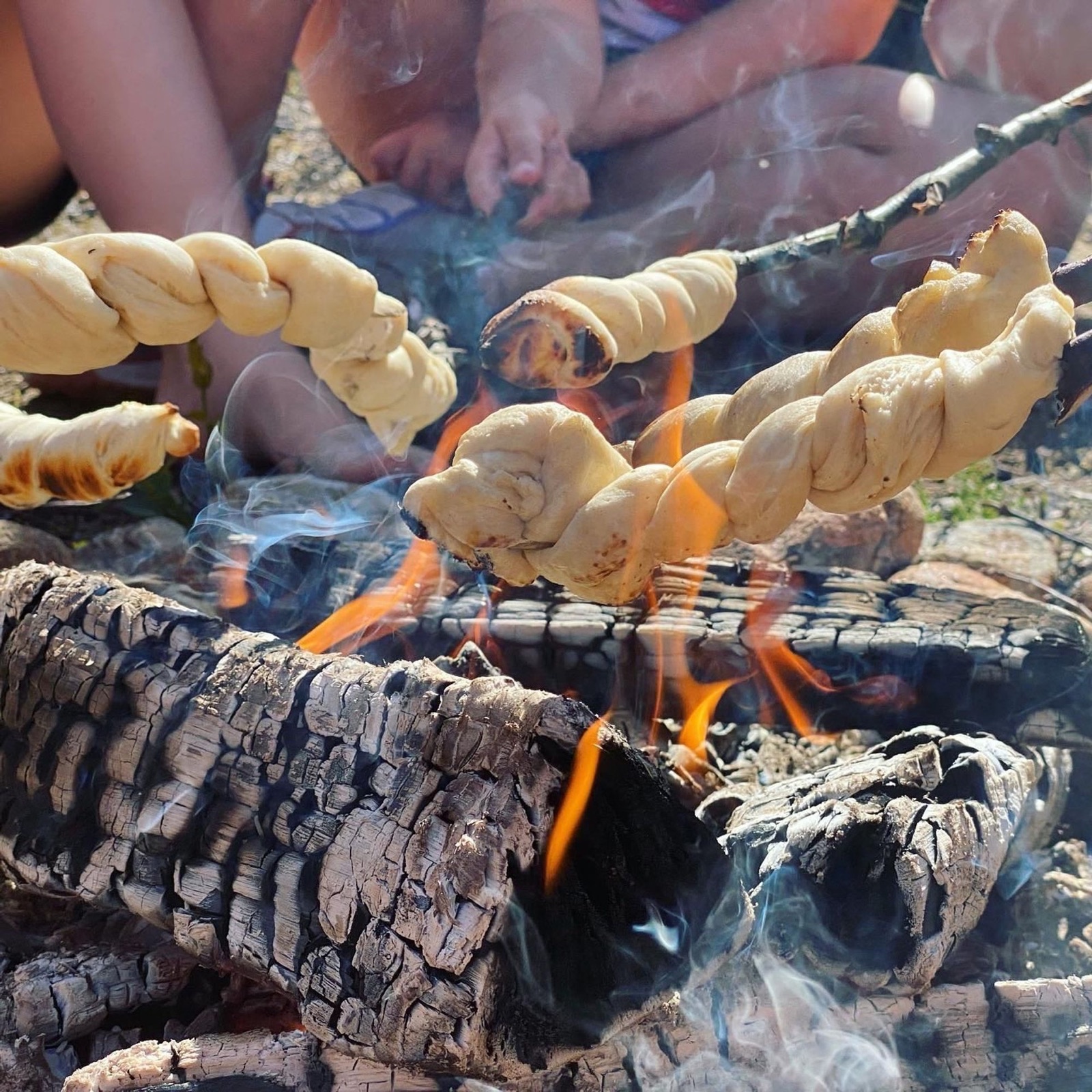
A pagodebål is the best for cooking — the fire is stable, pots can be set straight on top, and the embers give precise heat. Fire types, recipes and practical tips.
A cooking pit is an old way of preparing food — dig a pit, build a fire, fill it with hot stones and cook meat underground for 2.5–4 hours. Remember to get the landowner's permission.
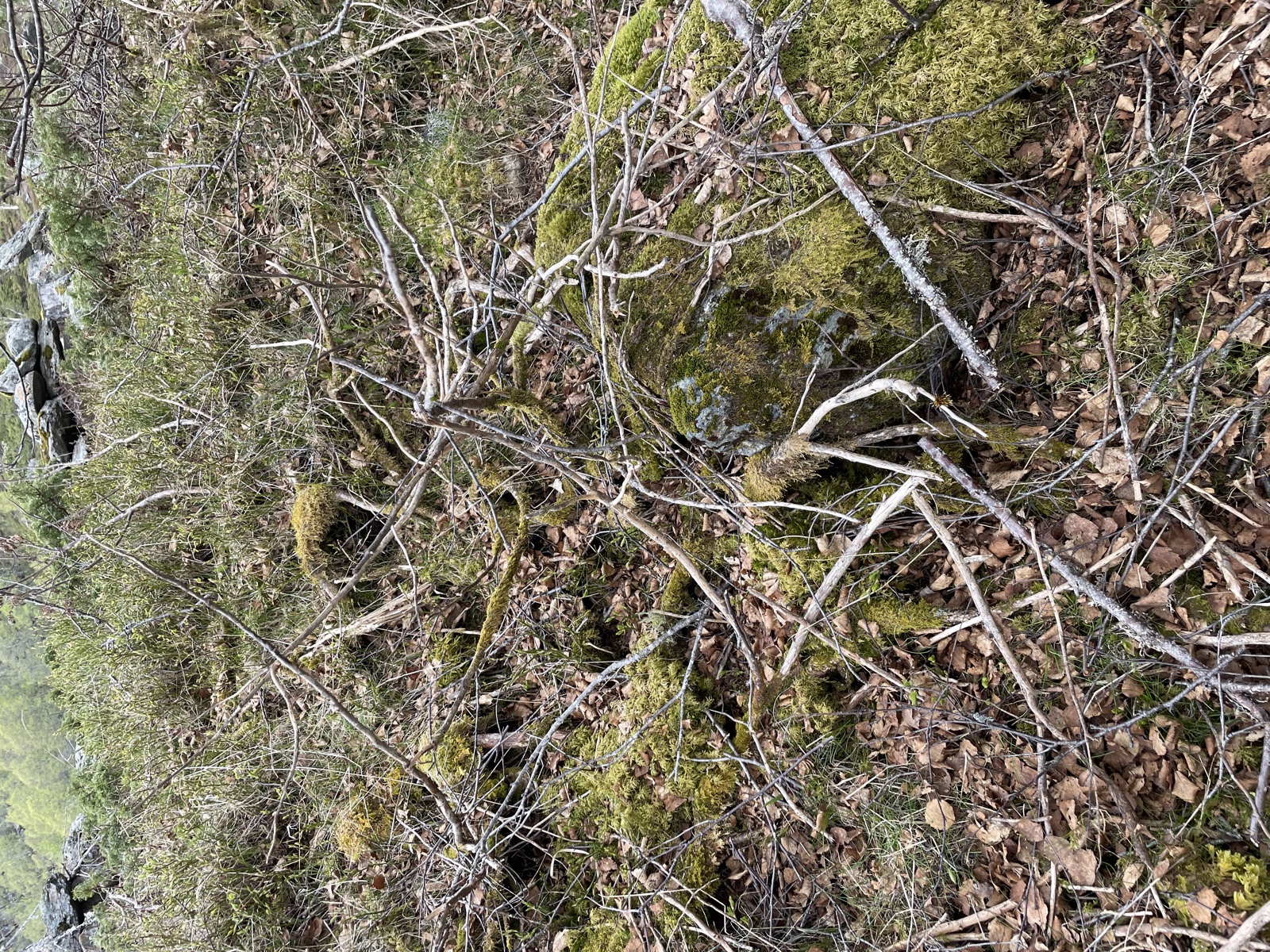
Use an established fire site if one exists. Make sure there is plenty of distance to buildings and vegetation.
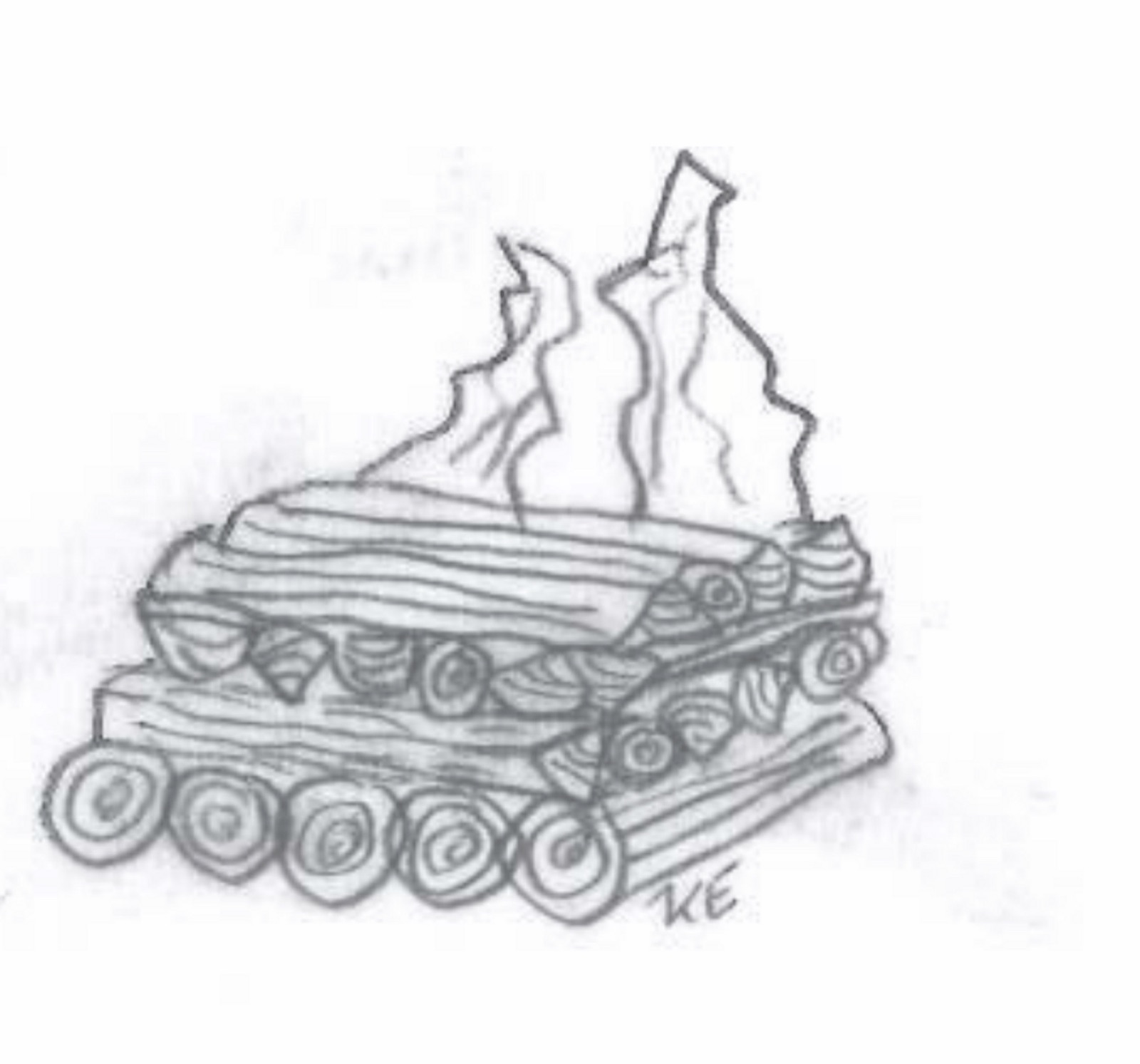
There are many ways to build a fire — tipi, upside-down, long log, Swedish torch. Which fire type do you choose? It depends on whether you want to warm yourself, cook food or burn through the night.
The kubben is a Coastal Sami or Finnish type of fire that makes itself a stove out of a log. It burns for a 24-hour period, perfect for driftwood or as a heat source.
The log cabin fire is the perfect winter fire — it burns slowly and for a long time. Dig down to the ground or build it on a firm mound of snow so the fire does not sink in.
The long log fire (nying) is the traditional outing campfire that can burn all night — two large logs with kindling in the gap between them, a cross-stick, and a large log on top.
The pagoda fire is a fine, simple campfire for outings — it resembles an Asian pagoda temple. It burns fast and hot, perfect for cooking for many. Building it step by step.
The general open-fire ban runs from 15 April to 15 September. You may still light a fire where it is obvious that no fire can start.
The tipi fire is the most common way to make a fire. You start with small splints and gradually add thicker wood in a pyramid shape.