Campfire
Fire types
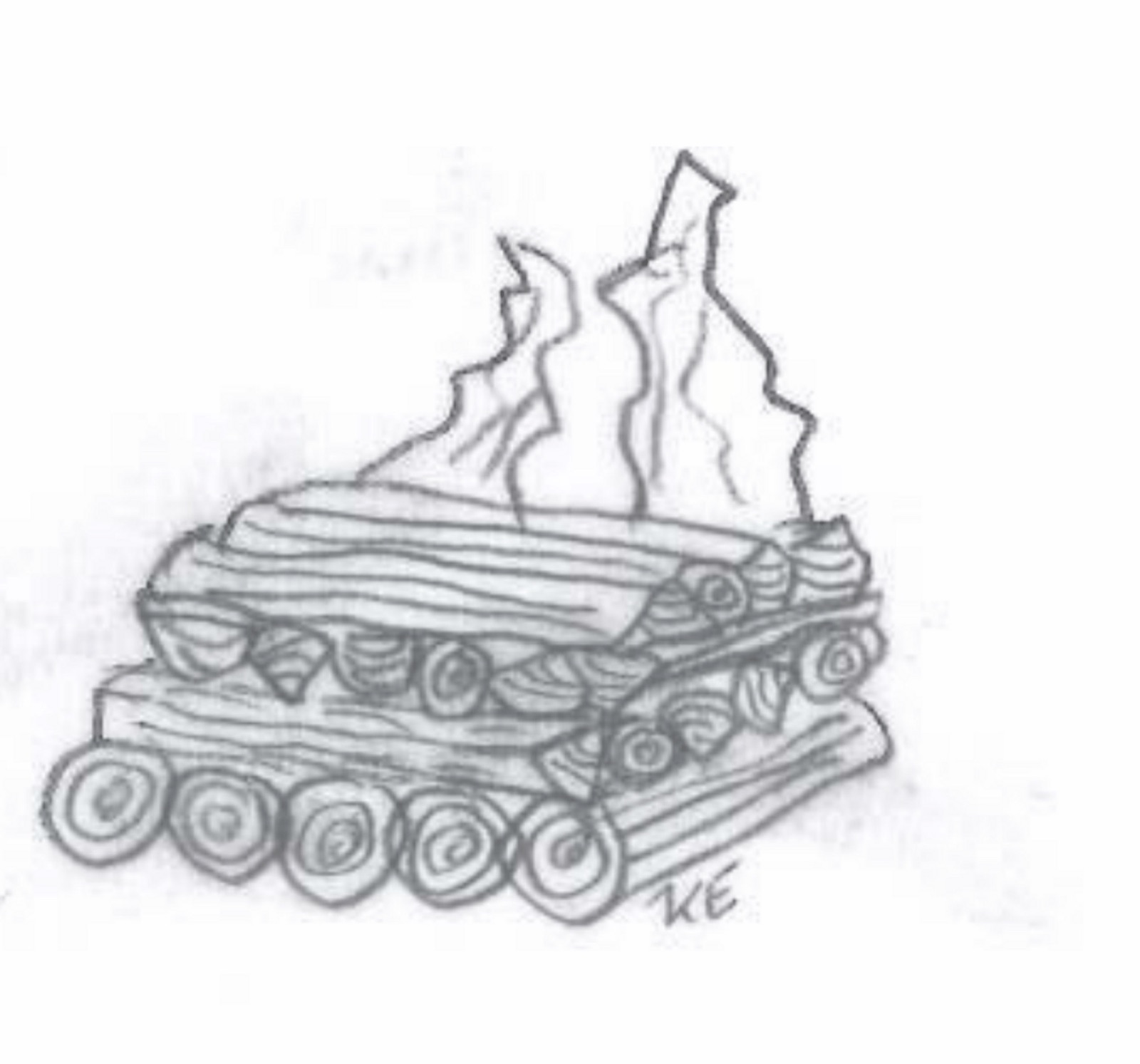
There are many ways to build a fire — tipi, upside-down, long log, Swedish torch. Which fire type do you choose? It depends on whether you want to warm yourself, cook food or burn through the night.
There are different ways to lay a fire, depending on what you are going to use it for. Is the fire mainly for warming yourself, or are you going to cook food on it? The tipi fire (pyramidebål) and the upside-down fire (pagodebål), a square fire, are the most common.
There is no single right answer when it comes to stacking a fire — often you have to improvise according to the conditions. When it is very wet out, or there is a lot of snow, it is wise to make a top-lit fire — that is, a fire you light at the top rather than at the bottom, which is most common. The most usual of these is the upside-down fire.
Fire types for cooking
- Upside-down fire (pagodebål) — a top-lit square fire, perfect for cooking for many. It burns fast and hot.
- Tipi fire (pyramidebål) — the classic campfire shape. Hang the pot over the fire on a stick or stand.
- Swedish torch (kubben / finskeprimusen) — a Sea Sámi/Finnish fire type that makes itself a stove out of a log. Burns for a day.
- Cooking pit (kokegrop) — an old method for slow-roasting meat underground. Remember the landowner’s permission.
Fire types for warmth and light
- Long log fire (nying) — a traditional night fire of three large logs that can burn all night.
- Square fire / winter fire (firkantbål / vinterbål) — for fires in the snow; burns slowly and for a long time.
Learn more
Cooking on a fire · Finding firewood and a suitable fire site · The general bonfire ban (bålforbud) 15 April – 15 September
Text: Gina Wigestrand, Snuitide (2022), revised 2026.
Film: Bjørn Henrik Stavdal Johansen, Snuitide (2022).