Climbing skins and randonnée gear
Ski-touring kit — skins, pin bindings, randonnée skis, transceiver, shovel, probe. How the system fits together, what has changed over the past twenty years, and what is nice-to-have versus non-negotiable.
10 articles
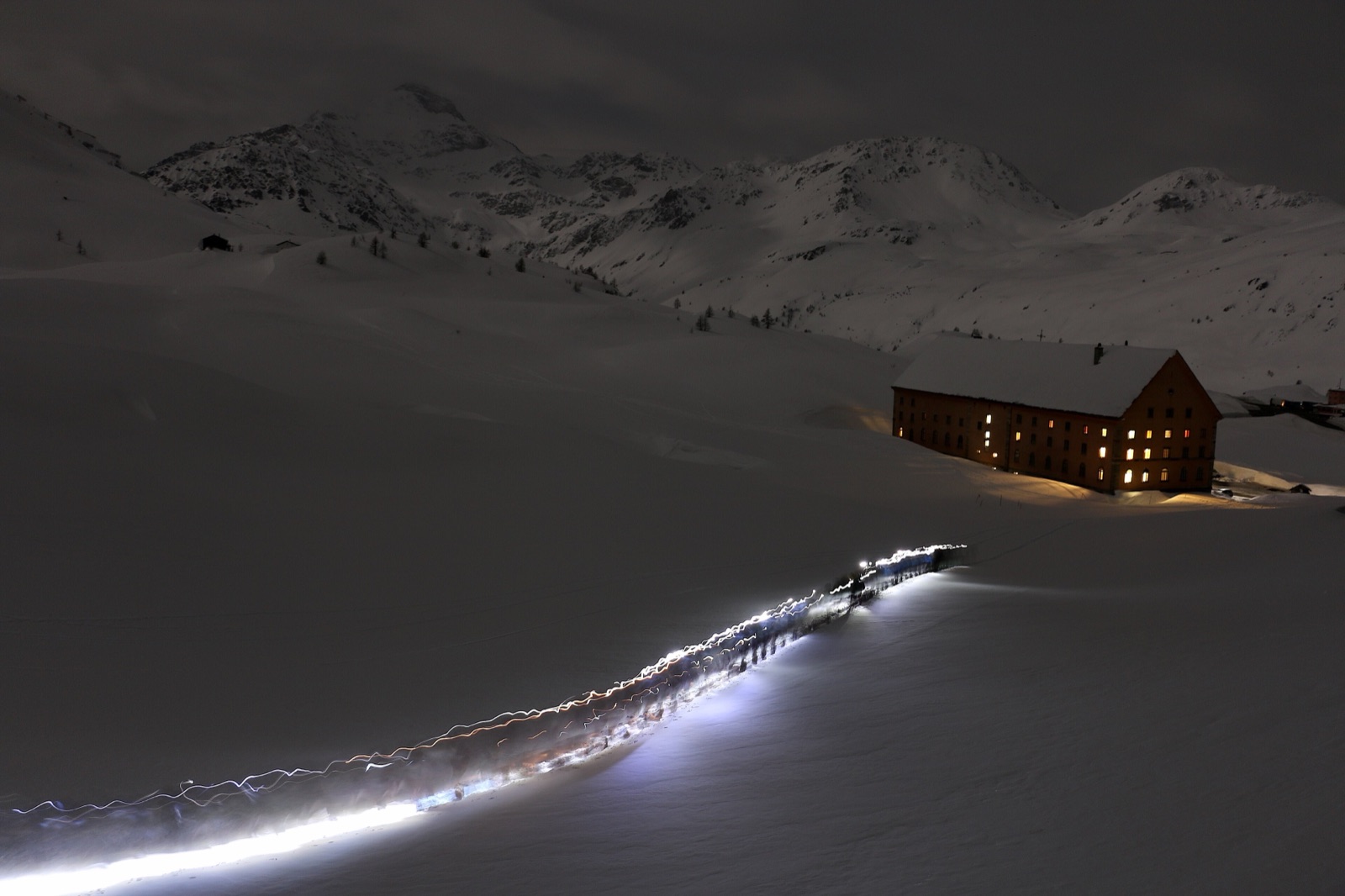
Ski touring is perhaps the outdoor activity most strongly tied to Norwegian identity. ‘Born with skis on their feet’ is a cliché because it rests on real traditions. But the Norwegian relationship with skiing is more complicated than the cliché — and more interesting. It is about Sondre Norheim, who travelled 200 km from Morgedal to Christiania in 1868 to demonstrate a turning technique on a flat meadow; about Fridtjof Nansen’s 42 days on skis across the Greenland ice sheet in 1888, which turned skiing into a popular sport; and about the technological shifts of the past twenty years that have changed what a ski tour can be.
Today ‘ski touring’ covers a wide range of activities with very different thresholds. What they share is that you travel on skis. The difference lies in the terrain, the equipment, and the kind of judgements that actually keep you safe — from a groomed lysløype with no margin for error to summit touring in steep terrain, where the choice of skis and bindings is not the main question, but rather your understanding of the snowpack.
The Norwegian skiing tradition covers at least five distinct activities that overlap in words but not in skill:
Cross-country skiing is what most people mean when they say ‘going skiing’. Light skis, narrow bindings, groomed tracks. Skiforeningen in Oslo, founded in 1883, has run the trail network in Nordmarka for over 140 years. The classic variant (in the track) and skating (outside the track) have different bindings and technique. When SSB reports that 33 per cent of the population went on short ski trips in 2020 — down from 42 per cent in 2011 — it is this category that dominates.
Mountain skiing (fjellski) is the Norwegian term for ski trips off groomed tracks, often on the vidde and in the mountains. Wider skis, sturdier bindings (BC or 75 mm), boots closer to mountain boots. It is mountain skiing that makes the hut network winter-friendly — you can travel between DNT cabins over several days with the same basic skills you have from cross-country skiing. Mountain-skiing participation has in fact held up better than the lowlands’ short ski trips.
Topptur (or randonée, from the French aller en randonnée) is the newest popular branch. You go up a steep mountainside with skins under the skis, take the skins off at the top, and ski down. The activity came to Norway from the Alps in the 1960s — Nils Faarlund and his circle among the earliest — but it was only around 2007 that sales took off in Norway, with pin bindings that make the ascent easy. Today topptur is by far the largest growth activity within Norwegian ski touring.
Telemark is the classic Norwegian technique with a free heel. Sondre Norheim’s invention in the 1860s, it dominated Norwegian skiing through the 1900s, and had a renaissance from the 1980s to about 2000. At the height of the telemark wave in the mid-1990s, around 250,000 telemark bindings were sold per year according to industry sources. Today the figure is around 25,000 — telemark has become a niche variant, practised mostly by older skiers and a smaller subculture.
Winter walking is a multi-day trip on mountain skis with overnight stays, often across the vidder. Hardangervidda, Finnmarksvidda, Saltfjellet, Femundsmarka. You travel between DNT cabins with 25–35 km daily stages, or in a tent for those who want total flexibility. The winter route Finse–Haukeliseter across Hardangervidda is about 120 km over seven days — a classic first-time trip in the network.
Norwegian skis have roots as a working tool long before they became sports equipment. People in Telemark, Møre og Romsdal, and northern Norway used skis for practical transport across mountains and plateaus over hundreds of years. The decisive cultural shift came in the 1860s–80s with three figures who each shaped a part of what we today call the skiing tradition.
Sondre Norheim (1825–1897) was a crofter from Morgedal in Telemark. He cut skis with a sidecut that made turning easier, and fitted a withy band behind the heel that locked the foot — the forerunner of all modern mountain-ski bindings. In 1868 he travelled about 200 km over three days to Christiania to take part in a national ski race, and demonstrated the techniques that later took the names ‘the telemark turn’ and ‘the christiania turn’. That race marked the breakthrough for skiing as a sport in the capital.
Fridtjof Nansen’s ski crossing of the Greenland ice sheet in 1888 — with Otto Sverdrup, four others, and the Sámi Samuel Balto and Ole Ravna — turned the national narrative about what skis could be used for. Nansen’s book Paa ski over Grønland (1890) is regarded as the document that moved skiing from the upper middle class to general practice. Olav Bjaaland from Telemark was central to Roald Amundsen’s South Pole expedition in 1911 — he built and repaired the sledges, reduced the weight from 88 to 22 kg, went first as the trail-setter, and took the famous photograph at the pole on 14 December 1911.
The modern ski industry followed. Madshus started in 1906 in Vardal near Gjøvik, Åsnes Skifabrikk in 1922 in Trysil. Splitkein laminate in the 1930s and fibreglass in the 1970s made skis cheaper and more durable. Skiforeningen in Oslo, founded in 1883, organised the Husebyrennet (1883–1891), then the Holmenkollrennet from 1892. Norges Skiforbund (NSF) had 110,936 members in 2023, spread across 16 districts and around 1,150 clubs.
Today the skiing conditions in the lowlands are changing dramatically. The ski season in Nordmarka is now around eight weeks shorter than in the 1890s, according to NVE reports. More snow is stored in the mountains above about 850 m, less in the lowlands. For longer ski trips this means the season is moving uphill; for everyday ski trips in the lysløype it is no longer safe to rely on December bringing snow to southern Norway.
Skiing conditions vary enormously between regions and altitudes:
Hardangervidda and Finse are the core of Norwegian winter walking. The vidde covers around 6,500 km² and lies consistently above 1,100 m — Europe’s largest high-mountain plateau. Finse, at 1,222 m and with its staffed lodge, is the classic gateway. On the vidde you travel mainly between 1,200 and 1,400 m — flat, open, and dependent on good navigation.
Hurrungane and Jotunheimen are the topptur mecca of southern Norway. Hurrungane (western Jotunheimen) has around 20 peaks over 2,000 m concentrated in a small area. Classics are Store Skagastølstind (‘Storen’, 2,405 m) and Dyrhaugstinden (2,147 m). Base points: Turtagrø, Sognefjellet, Spiterstulen.
Sunnmøre and Romsdal are alpine and dramatic — sea-level peaks, fjords down to the ocean. A classic randonée region for the more experienced. Lyngen and Lofoten have international standing — the Lyngen Alps offer alpine peaks straight down to the Lyngenfjord at 70°N, and Lofoten has its own randonée competition in March (Lofoten Skimo).
Trollheimen and Dovrefjell are moderate alternatives suited to a first real mountain-ski trip. ‘The Triangle in Trollheimen’ — Gjevilvasshytta, Jøldalshytta and Trollheimshytta — is on DNT’s list of Norway’s ten most popular mountain trips. The cabins are staffed at Easter, and the routes between them are marked with branches.
The urban forests — Nordmarka in Oslo, Bymarka in Trondheim, the Vidda above Bergen, Marka in Tromsø — are the everyday channel for cross-country skiing. When the season is stable. In recent years they have been more uneven than before.
The accessible way into ski touring is the same as for hiking: you start where it is easiest, and build gradually. For ski touring that means:
Start with cross-country in a groomed track if you have not skied much. Light equipment, easy surface, easy to turn back if it is slippery or heavy going. Local ski clubs or hiking clubs offer beginner trips every weekend through the season.
Build up to mountain skiing when long track trips start to feel too short. Wider skis with a BC binding or 75 mm binding give access to the vidde and the mountains. The first mountain-ski trip should be a short day trip in good weather in an area with clear landmarks. The first mountain-ski trip goes through what it involves.
Wait with topptur until you have avalanche knowledge. It is the one activity where poor judgement can take a life directly, and where the competence takes time to build. NSF, NVE and local mountain-sports clubs run their own avalanche courses for ski-touring planners. Reading the avalanche forecast is a compulsory foundation before you take up topptur in avalanche-prone terrain.
For those who want to build out systematically: local hiking clubs and DNT associations run winter courses in mountain skiing, map and compass, snow knowledge and topptur. You learn more from a weekend with experienced people than from a whole season alone.
Avalanches dominate the Norwegian ski-touring risk profile. On average around seven people per year die in avalanches in Norway according to NVE statistics over the past 16 years, and around 90 people are caught by avalanches each year (most without dying). March and April are the months most prone to accidents.
Varsom.no gives a daily avalanche forecast for the whole of Norway during the avalanche season, run by NVE in cooperation with Meteorologisk institutt, Statens vegvesen and Bane NOR. The danger scale runs from 1 (low) to 5 (very high). At danger levels 4 and 5, travel outside avalanche terrain is advised. At danger level 3 (‘considerable’ — the most common in season), precise terrain assessment is decisive.
Three competencies are critical for topptur and mountain skiing in avalanche terrain:
The Vassdal accident on 5 March 1986 — where 16 Norwegian soldiers died during the NATO exercise Anchor Express — is the Norwegian avalanche-accident reference point and part of the basis on which the modern safety and warning system was built. NGI and the armed forces have since built out avalanche knowledge, maps, and course programmes.
It is not only avalanches. Cold, poor visibility, and distance to rescue are equally dangerous in combination. Short winter days. Fog that makes a familiar vidde completely directionless. Fjellvettreglene, revised on 15 February 2016 by a group including Cecilie Skog, Markus Landrø and representatives from DNT, NVE and the Red Cross, is compulsory reading for winter ski activity.
At Easter 1967, 17 people died in the mountains according to DNT’s yearbook 1970 — two in avalanches, fourteen from exhaustion and cold. It triggered the first major revision of the fjellvettreglene and the campaign Velkommen til fjells – men ta selv ansvar. That line has held.
Ski equipment is complex because the sub-disciplines require different systems. The main rule is as ever: learn first, buy afterwards. Rent or borrow equipment on your first ski weekend or first topptur — you will not know what you actually want until you have spent a hundred hours in different systems.
For a typical mountain-ski trip you need:
For topptur in avalanche-prone terrain, add an avalanche transceiver, a shovel and a probe — and the skill to use them under stress. It is not optional equipment.
Clothing and layering gives the principle for choosing clothes. Packing lists has concrete variants for different ski-tour types.
The Norwegian ski season is enormously variable between regions:
Easter is the classic multi-day time for Norwegian ski trips. It is also statistically a period with a concentrated number of accidents — mountain weather heading towards spring is unstable, the snowpack has built up through the winter with weak layers, and people set off on longer trips than earlier in the season.
Allemannsretten applies to skiing as well. In practice it means: keep your distance from cabins and innmark, be aware of grazing animals that are easily disturbed, and do not ski down steep slopes above people below you.
For topptur in popular areas there is also a mass-phenomenon aspect: repeat trips can wear on the snow and the terrain on the most-used routes. Spread out, take alternative routes where you can. Hurrungane, Lyngen and certain routes in Sunnmøre have seen a sharp increase in pressure over the past ten years.
In the habitats of wild reindeer — particularly parts of Hardangervidda and the Snøhetta massif — there are periodic access restrictions through the winter to protect the wild reindeer’s winter movement. It is part of the same trend that has led DNT in 2025 to close five cabins and decommission 125 km of trail. Check local management plans before you plan long routes in wild-reindeer areas.
If you are new to ski touring: spend three or four days in a groomed track before you plan a mountain-ski trip. It is the rhythm and fitness that build up, not the equipment.
If you ski cross-country regularly and want to go further: plan your first mountain-ski trip in a good weather window in Trollheimen, Dovrefjell, or a short vidde trip such as Finse–Haugastøl. It is a qualitatively different experience from the lysløype, but not harder.
If you have done mountain skiing and want to go further: build out your avalanche knowledge before topptur. Reading the avalanche forecast is the foundation, but skill is built on courses with NVE-approved instructors or local mountain-sports clubs.
For longer winter walks: winter walking builds on the mountain-skiing foundation and extends the trip over several days. Hardangervidda is a classic first-time trip.
Text: Snuitide (2026).
Ski-touring kit — skins, pin bindings, randonnée skis, transceiver, shovel, probe. How the system fits together, what has changed over the past twenty years, and what is nice-to-have versus non-negotiable.
Cross-country skiing is what most people mean when they say they're 'going skiing'. Groomed tracks, light skis, classic or skating. How the sub-forms hang together, how the trail networks are built, and why the lowland season is on the way up.
Fjellski is the Norwegian ski type for travelling off the prepared tracks — vidde, mountains, open forest terrain. Wider skis, a sturdier binding, a more mountain-boot-like boot. The activity that makes the cabin network winter-friendly.
Varsom.no is the daily avalanche forecast for the whole of Norway. Here is how to read the danger-level scale, recognise avalanche problems in the terrain, and understand what the forecast cannot tell you about the snow right where you are standing.
Ski touring (topptur) — or randonee — is the newest popular ski discipline in Norway. How ascent, descent and avalanche assessment fit together, why the activity has grown explosively since 2007, and which areas are built for what.
Telemark is Sondre Norheim's technique from the 1860s — free heel, deep turning stance, a classic Norwegian hallmark. How the technique came about, why it had a revival in the 1990s and then declined, and where it lives on as a niche activity today.
Waxing is the difference between a good and a bad day of cross-country skiing. Here is how grip wax, klister and glide wax fit together, what the fluoro ban means in practice, and why wax-free skis have changed the whole activity since 2015.
Tent, snow cave and lean-to in winter — how the R-value works for sleeping mats, why a combination of sleeping bags often beats one heavy bag, and what is different from a summer overnight.
A multi-day trip on mountain skis with overnight stays — the hut network or a tent, plateau or fell. How the rhythm between stage and hut works, which routes were built for it first, and why Easter is the classic time for winter walking.
The first tour on fjellski is qualitatively different from the floodlit track and easier than a ski tour. Here is how to choose your route, your day and your packing list — and why Trollheimen and Dovrefjell make better first targets than Hurrungane.