Big-wall climbing
Big-wall climbing — multi-day routes on walls over 500 metres. Trollveggen, Kjerag, Stetind. How bivouacking on the wall works, which routes are the classics, and how high the threshold really is.
11 articles
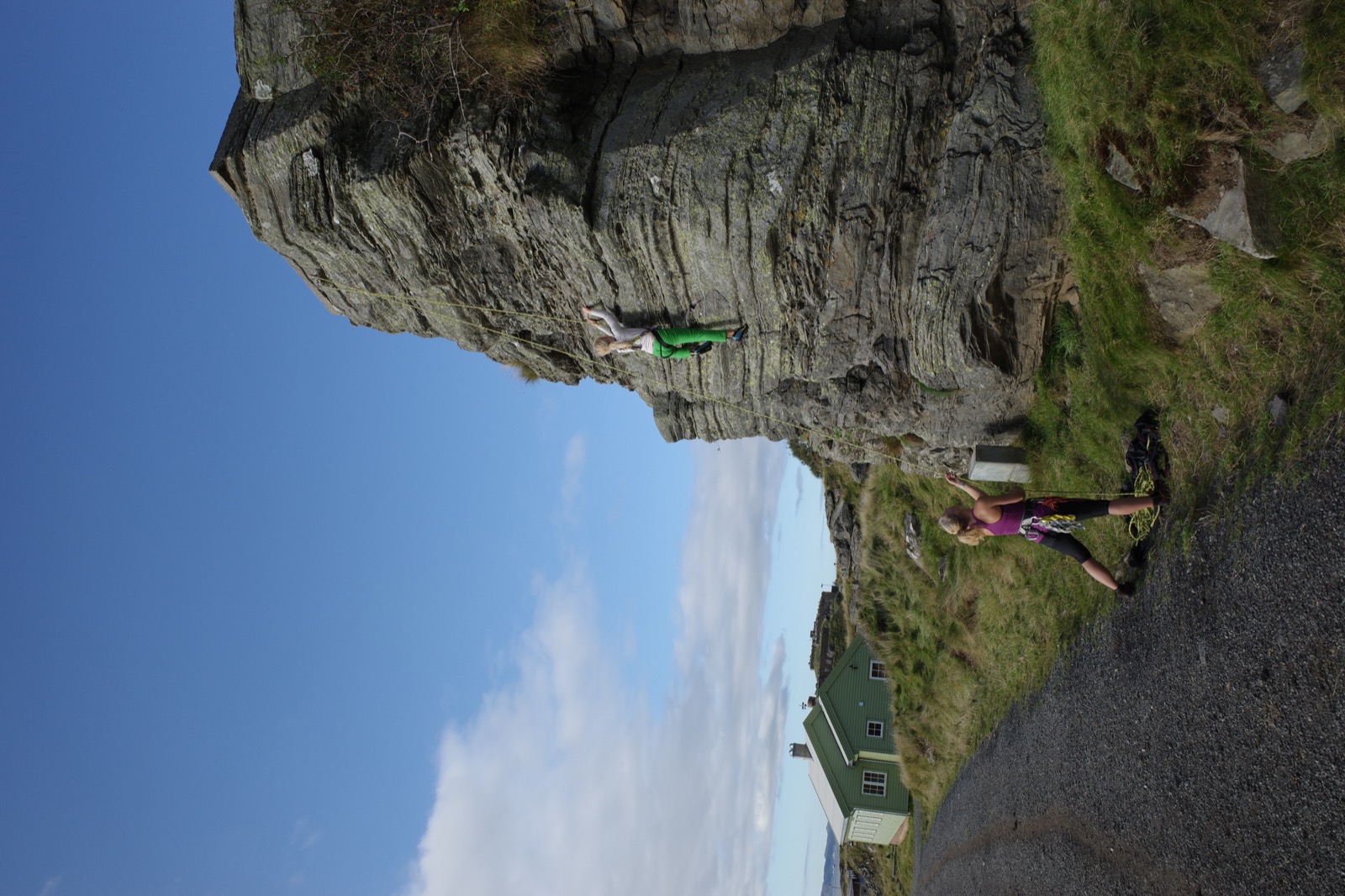
Climbing in Norway covers a wide range — from an indoor climbing centre on a rainy Sunday in Oslo to an alpine big-wall route on Trollveggen. What they share is that you move in steep terrain where grip strength, protection and judgement decide whether the trip is safe or not. The differences between the sub-disciplines — sport climbing, trad climbing (traditional climbing), bouldering, mountaineering, ice climbing and via ferrata — come down to how much of the protection system you have built yourself, how long the routes are, and what kind of terrain you are actually climbing in.
The Norwegian climbing community has grown dramatically since the turn of the millennium. The Norwegian Climbing Federation (NKF), founded in 1992, has gone from around 9,000 members to over 30,000, spread across more than 200 clubs. The main explanation is the climbing-centre boom — modern climbing centres in most cities since 2010 have made indoor climbing a low-threshold activity on a par with the gym. The outdoor scene, especially sport climbing in southern Norway and mountain climbing in Hurrungane, Romsdal and Lofoten, has stayed strong through all these shifts.
It is an activity composite enough to be hard to define briefly, but the logic is surprisingly simple: the more of the protection you have placed yourself in the terrain, the more skill is required. Sport climbing (bolted routes) lets you focus on movement. Trad climbing (natural protection) requires you to read the rock and build the protection system as you go. Mountaineering and big-wall climbing add length, the alpine environment and weather assessment. Ice climbing adds frozen water as the surface.
Norwegian climbing divides into several distinct activities:
Sport climbing is climbing with a rope on drilled bolts. The protection is already placed on the route — you clip in quickdraws as you go. The dominant form on established crags in southern Norway: Setesdal, Sirdal, Hægefjell, Rogaland (the Stavanger–Jøssingfjord–Sirekrok area has over 800 routes). A low-threshold way in for new climbers, with a focus on movement and physical technique.
Trad climbing (traditional climbing) is climbing where the protection is placed and removed as you go. You climb with nuts, camming devices (Camalots, friends) and slings that you attach around blocks or in cracks. The NKF recommends 10–12 nuts and 5–12 camming devices per route. The traditional Norwegian form of climbing, especially on mountains and big walls. It requires that you can read the rock and assess your own protection placements.
Bouldering is short routes (often under five metres) without a rope, protected by bouldering mats. The oldest form of climbing, but in organised form it dates from Fontainebleau in the 1850s. John Gill (USA, active in the 1950s–60s) is regarded as the father of modern bouldering. Early Norwegian history at «Gårdsplassen» on Kolsåstoppen in Bærum (called «nøtteklatring»). Today Harbak (Trøndelag), Østmarka (Oslo), Hægefjell (Nissedal) and Paradiset in Lofoten are important areas.
Mountaineering and mountain climbing are alpine routes — multiple pitches, often with a combined approach over snow and glacier. Classic objectives are Storen, Stetind, Romsdalshornet, Vågakallen and Slogen. It requires skills both in climbing and in alpine terrain (route-finding, glacier travel, weather assessment).
Ice climbing is climbing on frozen waterfalls and ice cascades. Rjukan has northern Europe’s longest and most stable season — around 150 frozen waterfalls climbable from December to February/March. The scale WI1 to WI7 indicates steepness and brittleness.
Via ferrata is a more recent Norwegian phenomenon — fixed protection installations with steel cable and rungs where you attach yourself with your own protection set. Commercial installations in Mosjøen, Loen, Tromsø and Sunnmøre, all built in the 2010s.
Big-wall climbing is long routes (typically 500–1,100 metres) that often require spending the night on the wall. Trollveggen, Kjerag, Storen and a handful of others are Norwegian big-wall objectives. A discipline of its own with its own equipment and assessment tradition.
Drytooling is climbing with ice axes and crampons on bare rock — developed in combination with ice climbing. Norwegian crags: Almenningen and Mullaveggen in Heggedal are established scenes.
The modern Norwegian climbing tradition began in the summer of 1876, when the Englishman William Cecil Slingsby (1849–1929) came to Hurrungane together with Emmanuel Mohn and the mountain guide Knut Lykken. In five days they made five first ascents — a record that still stands. The most famous was Storen (Store Skagastølstind, 2,405 m above sea level), Norway’s third highest mountain and the highest summit in Hurrungane. Slingsby went the final part alone on 21 July 1876 and is called «the father of Norwegian mountain climbing».
British and European alpinists continued the exploration of the Norwegian mountains through the 1880s and 1890s. Romsdalshornet (1,550 m above sea level) was officially first ascended on 1 September 1881 by the Dane Carl Hall together with the mountain guides Mathias Soggemoen and Erik Norahagen. On the summit they found a cairn raised by locals before them — Christen Smed and Hans Bjermeland, around 1828.
Norsk Tindeklub (NTK) was founded on 10 April 1908 at Frognerseteren by six climbers: Henning Tønsberg, Kristian Tandberg, Alf Bonnevie Bryn, Carl Wilhelm Rubenson, Christian Saxlund and Ferdinand Schjelderup. NTK is the third oldest alpine club in the world, modelled on the British Alpine Club. The club today has around 600 members and runs several climbing huts — Skagadalshytta (1938), Vengedalshytta (bought in 1948 for 10,000 kr) and Giklingdalshytta (1968). NTK opened to female membership only in 1975.
Stetind (1,391 m above sea level) was first ascended on 13 July 1910 by three of the NTK founders: Alf B. Bryn, Carl W. Rubenson and Ferdinand Schjelderup. The South Pillar was climbed in 1936 by the philosopher Arne Næss and Else Hertzberg. Stetind was voted Norway’s national mountain in 2002 by listeners to NRK Reiseradioen.
Trollveggen was first ascended in 1965 by two teams the same summer — the Norwegian team (Jon Teigland, Odd Eliassen, Ole Daniel Enersen, Leif Norman Patterson) on Norskeruta on 23 July, and the British one (Tony Howard, John Amatt, Bill Tweedale) on Rimmonruta. It marks the transition to modern Norwegian climbing and the opening of big-wall climbing as a discipline of its own.
In the 1980s German climbers established many routes in Setesdal, and Hans Christian Doseth (1958–1984) became the central Norwegian climber before alpine climbing. Doseth made the first free ascent of Rimmonruta on Trollveggen (1979), the first winter ascent of Svenskeruta (1980) and the first free ascent of Trollkjerringruta in the summer of 1983. He and Finn Dæhli died on 5–7 August 1984 during the descent from Norskepilaren on Great Trango Tower in Pakistan, probably because of a failing abseil (rappel) anchor.
Norwegian climbing areas have their own characteristics:
Hurrungane and the Skagastølstindene are Norway’s alpine core. Storen is the classic, but the whole area has high-mountain summits and long classic routes. A classic trip combination from Turtagrø: around 18 km, 1,500 metres of ascent, 10–14 hours total time. Access bases: Turtagrø, Sognefjellet, Spiterstulen.
Romsdalen is the heartland of the big wall. Trollveggen — often called Europe’s highest vertical rock face, around 1,100 metres from base to summit — lies in Reinheimen national park. Trollryggen, Romsdalshornet and Vengetind are other classic objectives. The area also has ice climbing in season.
Stetind is its own category — a 1,391 m above sea level granite obelisk by Tysfjorden, voted national mountain. A climb, not a walk.
Lofoten has Vågakallen (943 m above sea level) as its classic — first ascended around 1885 by Martin Hoff Ekroll. The climbing school at Kalle in the 1970s–80s established a rich scene that is still alive. Classic routes: Storpillaren, Bare Blåbær, Pianohandler Lunds rute, Nordryggen (13 pitches).
The Sunnmøre Alps with Slogen (1,564 m above sea level) and Kolåstind (1,432 m above sea level) have a history that reaches back to English climbers at Hotel Union in Øye in the early 1900s. The first winter ascent of Kolåstind in 1908.
Setesdal/Vestheien is the heartland for sport climbing — Hægefjell central, with the classic Via Lara, regarded as Norway’s most popular multipitch route for beginners.
Kjerag by the Lysefjord is one of Norway’s most dramatic big-wall areas. A 4–5 km long, around 1 km high granite mass on the south side of the fjord. 33 independent routes, including Tsunami (9-/9), regarded as Norway’s hardest big wall.
Rjukan is the international ice-climbing mecca with around 150 climbable frozen waterfalls. Classics: Lillefoss, Krokan, Sabotørfossen.
For someone new to climbing, the usual progression pattern is:
The climbing centre first. Indoor sport climbing or bouldering lowers the threshold. The climbing centre hires out shoes, harness and chalk bag, and you pay a day rate (around 200 kr) or a monthly pass. There is no safety-related threshold until you have to learn to belay on a rope.
Brattkort or top-rope card through the NKF in order to climb on a rope. A Brattkort course is typically 12 hours over two evenings or a weekend, with a final test. It covers basic skills — belaying others, clipping, communication.
Outdoor climbing with a club or experienced climbers. Local climbing clubs arrange group outings every weekend through the season. You learn route choice and protection placement, and build experience without guessing.
Trad climbing requires its own courses — typically a two-to-three-day course with NKF-approved providers such as Norges Høgfjellsskole or local climbing clubs. You learn placement of nuts and camming devices, and how to read the rock.
Mountaineering and big wall require a solid foundation in both trad climbing and alpine terrain. NTK and local climbing clubs offer alpine courses.
For someone who wants to climb seriously outdoors, it is wise to go with a club from the start. Local climbing clubs are open to everyone — you pay a low membership fee (typically 500–1,000 kr/year) and gain access to group outings, courses and a network of experienced people.
Climbing safety rests on a small number of mandatory skills:
Belaying others. Correct braking technique on belay devices (ATC, Grigri, Reverso). Kept up to date through the Brattkort system. Everyone who climbs on a rope at a climbing centre must have a valid certification.
Placing protection (trad). Reading the rock for cracks and blocks, placing nuts and camming devices correctly. Learned on trad-climbing courses.
Using the harness, helmet and rope correctly. A helmet should be worn both outdoors and during rope climbing indoors in certain situations. The norm for helmet use has steadily become stricter over the past 20 years.
Understanding the belay station. Where you stop between pitches, how you attach the protection to the rock face, and how you swap the lead.
Abseil. Descent on a rope with abseil equipment. The classic descent from many climbing classics.
Norsk Fjellsportforum (NF) is the joint standardisation body for steep and alpine friluftsliv. NF publishes the Nasjonal Standard (National Standard) for instructors, guides and course providers. All Norwegian climbing courses that want to be quality-assured follow this standard.
For accidents, the NKF runs a national Accident database at klatring.no/sikkerhet/ulykker. Clubs document their own incidents and report to the database — this builds a body of knowledge over time. Trollveggen alone has had 19 deaths since 1966 (10 in climbing accidents, 9 in BASE jumping). After a series of accidents, the Storting banned BASE jumping on Trollveggen on 25 July 1986.
Climbing routes are graded by technical difficulty. Norway uses a hybrid form in which the Norwegian grade and international grades (UIAA, French, British) are used in parallel. The rough correspondence:
For ice climbing the WI scale (Water Ice) is used. WI2 is around 60° with good structure. WI7 is overhanging or particularly brittle ice. For mixed (a combination of ice/rock) the M scale is used. Central terms — belay station, runner, abseil, prusik, jumar, lead climbing, top-rope — are international, but are also used in Norwegian.
Many classic climbing areas lie in national parks or nature reserves, and there are rules to keep to:
Nesting season for birds. From April to July there is often an access ban in crag areas with birds of prey nesting. Miljødirektoratet has a digital map of protected areas with bans. Breaches can lead to sanctions.
Trollveggen. Climbing permitted, but BASE jumping banned since 1986. The area lies in Reinheimen national park.
Bolting and the trad tradition. The Norwegian climbing community has a strong trad tradition, but sport climbing has grown sharply since the 1980s. There is still a live debate about how much bolting is appropriate on natural-protection routes.
Allemannsretten (the right to roam) covers free access and thereby climbing. But national-park and protected-area regulations can restrict it — specifically bolting, camping and access in vulnerable periods.
Climate change affects Norwegian climbing in several ways:
Glacier access. Glacier travel as an approach to alpine climbing objectives is changing in character. Glacier crevasses open earlier, snow bridges are less stable, and some classic approach routes are no longer reliable.
The ice-climbing season has become more unstable in mild winters, especially in the lowlands. Rjukan still has reliable conditions because of geographical shade, but several local ice crags have a shorter season now than 30 years ago.
Rockfall is increasing in some places because permafrost is melting. Experienced climbers in Romsdal and Hurrungane report that some classic routes have changed risk profile.
For anyone planning longer alpine trips in 2026: local observations and up-to-date reports (from NTK, local climbing clubs, and Norsk Klatring) are even more important than they used to be.
If climbing is new: go to a local climbing centre or climbing club and try a single session. Most offer introductory courses or drop-in for beginners.
If you have climbed indoors and want to go further: take a Brattkort course if you do not already have one. It is the simplest way to climb seriously on a rope.
For anyone who wants to climb outdoors: join a club group outing or take a basic course in trad climbing. You can find local climbing clubs via klatring.no.
For mountaineering and big wall: build up gradually. Sport climbing and trad climbing first, then an alpine course with NTK or Norges Høgfjellsskole, then combined trips with experienced climbers.
For glacier travel as an approach to alpine climbing objectives: glacier travel is the classic approach form for many Norwegian climbing classics.
Text: Snuitide (2026).
Big-wall climbing — multi-day routes on walls over 500 metres. Trollveggen, Kjerag, Stetind. How bivouacking on the wall works, which routes are the classics, and how high the threshold really is.
Bouldering — short routes without a rope, protected by crash pads and spotting. How the discipline works, where in Norway it happens, and why Fontainebleau is still the global point of reference.
Norwegian climbing grades — UIAA, French, British, YDS. How the systems relate, what the difference between sport-climbing and bouldering grades is, and why grades vary between areas.
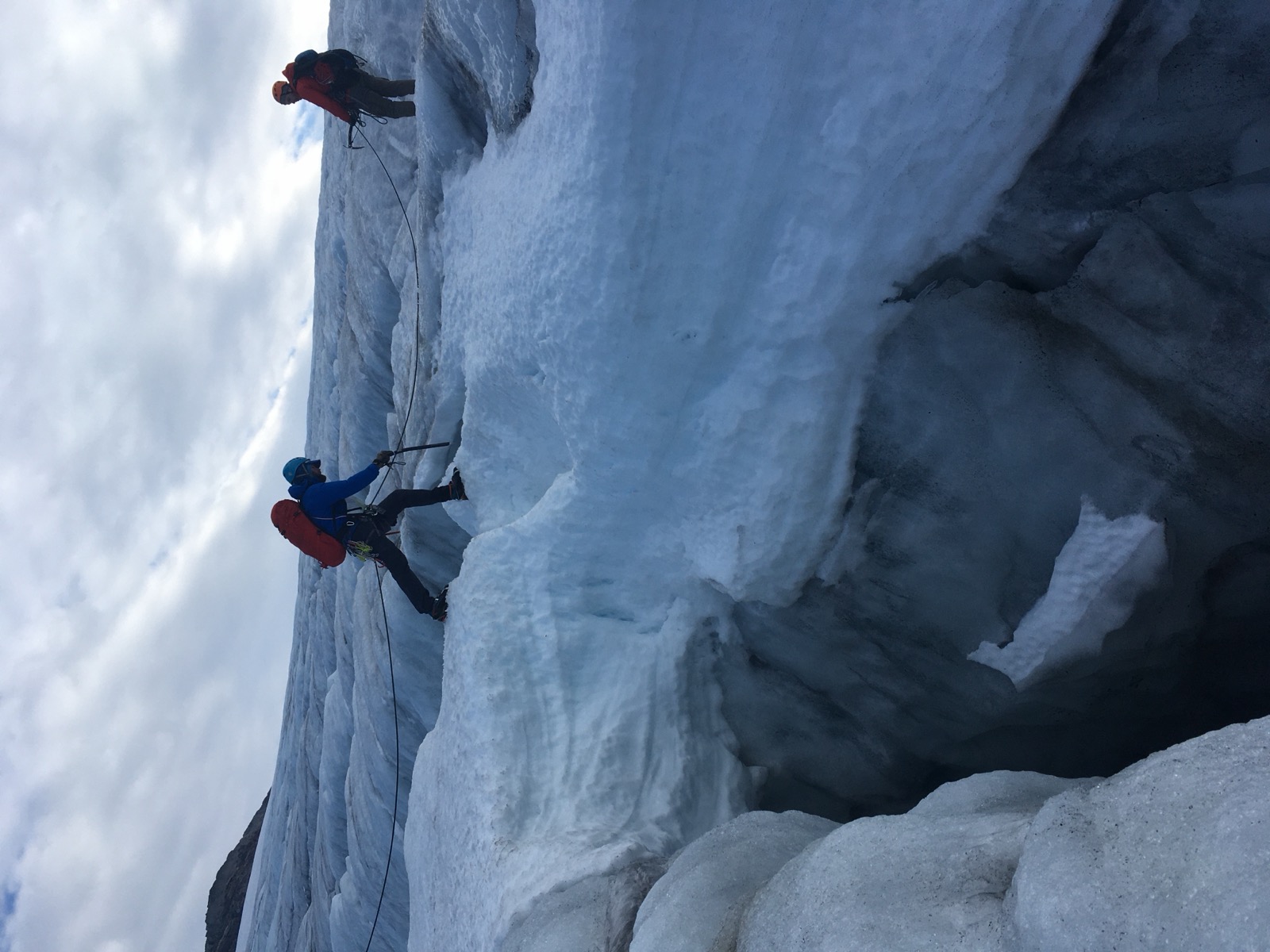
Walking on a glacier in a rope team — it requires an ice axe, crampons, a rope and knowledge. A specialised form of mountaineering and walking on snow and ice.
Ice climbing — climbing frozen waterfalls and ice cascades. How the WI scale works, why Rjukan is the mecca of northern Europe, and what actually belongs in your pack when the temperature is below freezing.
Trad climbing is climbing where the protection is placed and removed as you go — nuts, cams, slings. How to read the rock for protection, what sets it apart from sport climbing, and why it is the classic Norwegian form of climbing.
Climbing gear — harness, helmet, shoes, rope, belay device, nuts, cams, ice screws. How the systems fit together, the difference between sport and trad gear, and why the kit is built up gradually.
Sport climbing is roped climbing on drilled bolts — you clip in quickdraws as you go. How lead climbing and top-roping work, which areas dominate in Norway, and why it is the usual way into outdoor climbing.
Tindebestigning and mountain climbing — alpine multi-pitch routes, a combination of climbing and mountain hiking. How Storen, Stetind and Romsdalshornet fit together, which skills are actually required, and where you begin.
Via ferrata — a fixed, protected climbing route with a steel cable and rungs. How the discipline works in Norway, where the largest installations are (Loen, Mosjøen, Tromsø, Sunnmøre), and why it is the beginner-friendly way into steep mountain terrain.
How to take your first climbing session — indoors at a climbing centre, then outdoors on a sport-climbing crag. How to choose the place, the company and the route, and which 30 minutes at the climbing centre actually change everything.