Gear
Socks on the trail (wool socks, a change of wool socks)
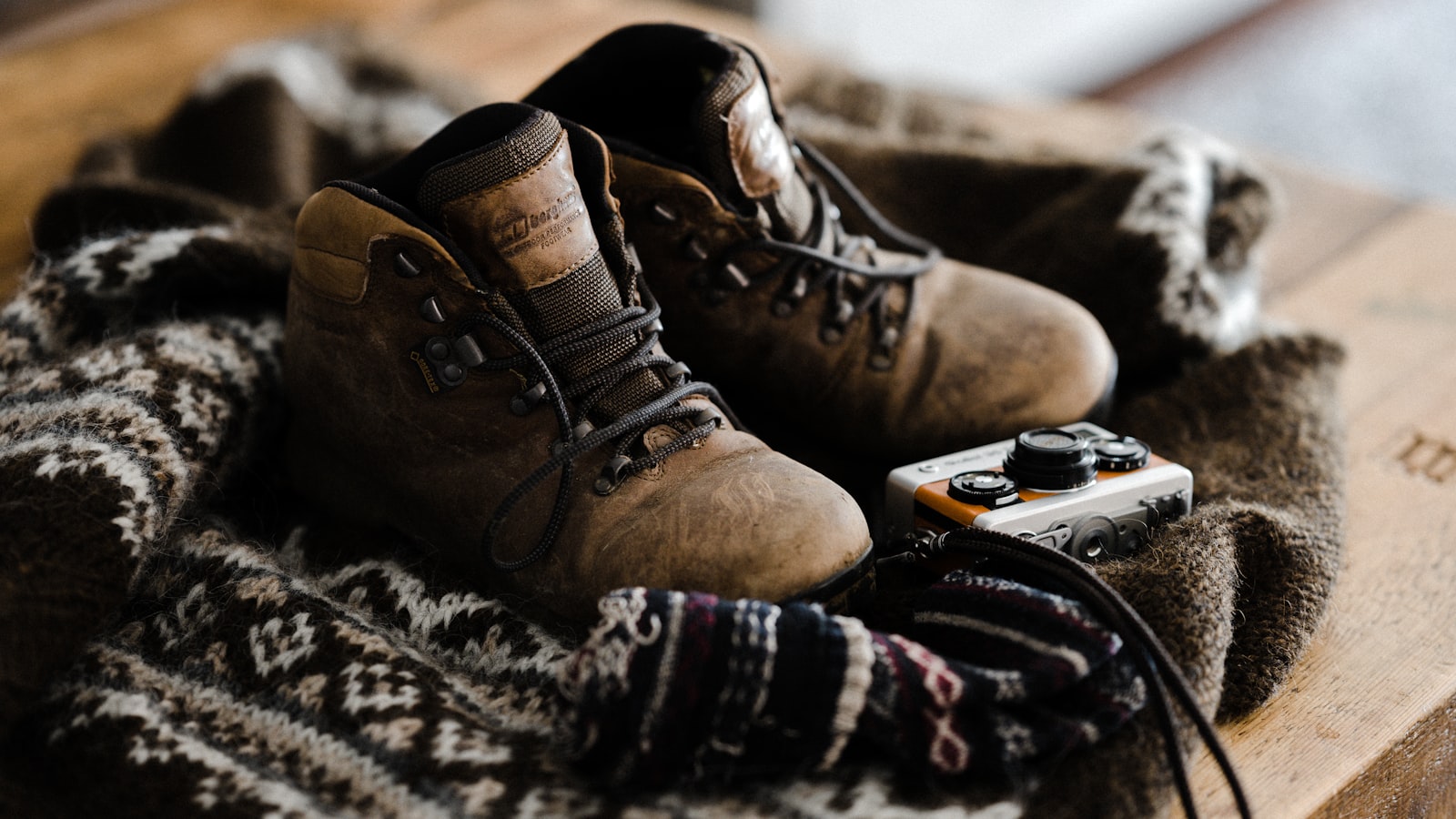
Dry feet are safe feet. Why it has to be wool, how many pairs you need on a multi-day trip, and how to look after your socks.
Socks are the one garment where the choice of material is not a grey area. It has to be wool. Cotton socks have no place in a pack on the way to the mountains — they soak up sweat, hold the moisture, and give you blisters within a couple of hours.
Why wool and only wool
A wool sock does three things at once: it draws moisture away from the skin, it insulates even when damp, and it smells less after days of use. Cotton manages none of these. Synthetics (polyester, polypropylene) dry quickly, but collapse under pressure and wear thin at exposed points; they also smell rank after a day.
In practice this means:
- Summer trips: thin merino wool (15–25% synthetic for durability) is the all-round choice.
- Winter trips: a thick wool sock in coarser felted wool, ideally with 75%+ wool content.
- Climbing and walking in warm weather: light merino wool with good moisture transport.
A typical trail-quality sock has 60–80% merino wool, 15–25% polyester or nylon for durability, and a few percent elastane for fit. 100% wool stretches out and wears faster; under 50% wool is no longer wool.
Two pairs per day on a multi-day trip
On multi-day trips, experienced people pack two pairs of socks per day — one for walking and one dry pair for the evening. Not because it is nice to have, but because dry feet are one of the few things that genuinely change how the rest of the trip feels.
On a five-day trip that means five walking pairs plus two or three evening pairs — you can rotate and air the used socks on your pack as you walk. Many manage with fewer for walking (washing in a stream, airing), but the evening pair — the dry sock — is the real minimum. Pack it in its own bag so it does not get damp with the others.
Things to check when buying
- Material content: at least 50% wool. Ideally 65–80%.
- Reinforcement at the toe, heel and over the instep — where the wear comes.
- Seams at the toes should be soft or smooth (flatlock seams). Thick seams over the toe wear a hole in the toe skin over a day.
- Length matched to the boot height. A low-cut sock in a tall mountain boot chafes the calf against the stiff leather edge.
- Fit. The sock should sit tightly enough not to bunch up under the foot, but not so tightly that it feels tight across the instep.
Thickness and warmth rating
- The thin liner sock (40–80 g/pair) — as an inner layer in the cold, or as the only sock in a warm trail shoe in summer.
- Mid-weight (80–120 g/pair) — the usual choice, covering May to October in most boots.
- The thick winter sock (120–200 g/pair) — winter trips, cold mountain overnights.
- The expedition sock (200–300 g/pair) — pulk-hauling, polar trips, long days in pulk socks.
Two thin socks (a liner plus a mid-weight) give more flexibility than one thick one — you can add or remove a layer. Some also reckon it reduces blisters because the friction occurs between the sock layers rather than between skin and sock. Others notice no difference.
Brands
Smartwool, Bridgedale, Devold, Aclima and Falke are consistently the brands that deliver quality over the years. Norway’s Devold makes socks in pure wool and a wool-synthetic blend — a solid choice. Bridgedale from Britain has long, reinforced trail socks that stand up to hard wear. Smartwool is thinner, softer and a little more expensive.
Price: 150–300 kr per pair for quality wool. A cheap sock under 100 kr usually has too high a synthetic content and wears out in a season.
Care
Wash the wool sock at 30°. Do not use fabric softener — it coats the fibres and reduces moisture transport. Hang to dry; a tumble dryer shrinks the wool and shortens its life. If the sock gets a hole, sew it up — good sock wool stands up to 4–6 seasons with regular darning.
Next steps
- Base layer (wool underwear and light changes) — the same wool logic for the rest of the body as for the feet.
- Mountain boots — the sock and the boot are chosen together; too stiff a sock in the wrong boot gives blisters.
- Trail shoes (low walking shoes) — the summer choice where a thin merino sock is enough.
- What goes in the pack — where the dry evening pair belongs on the packing list.
Learn more
The layering principle → · Darning socks and repairing a wool jumper → · Shoes → · Blister plasters and sports tape → · Gaiters →
Text: Snuitide (2026).