Gear
Throw line and tow line
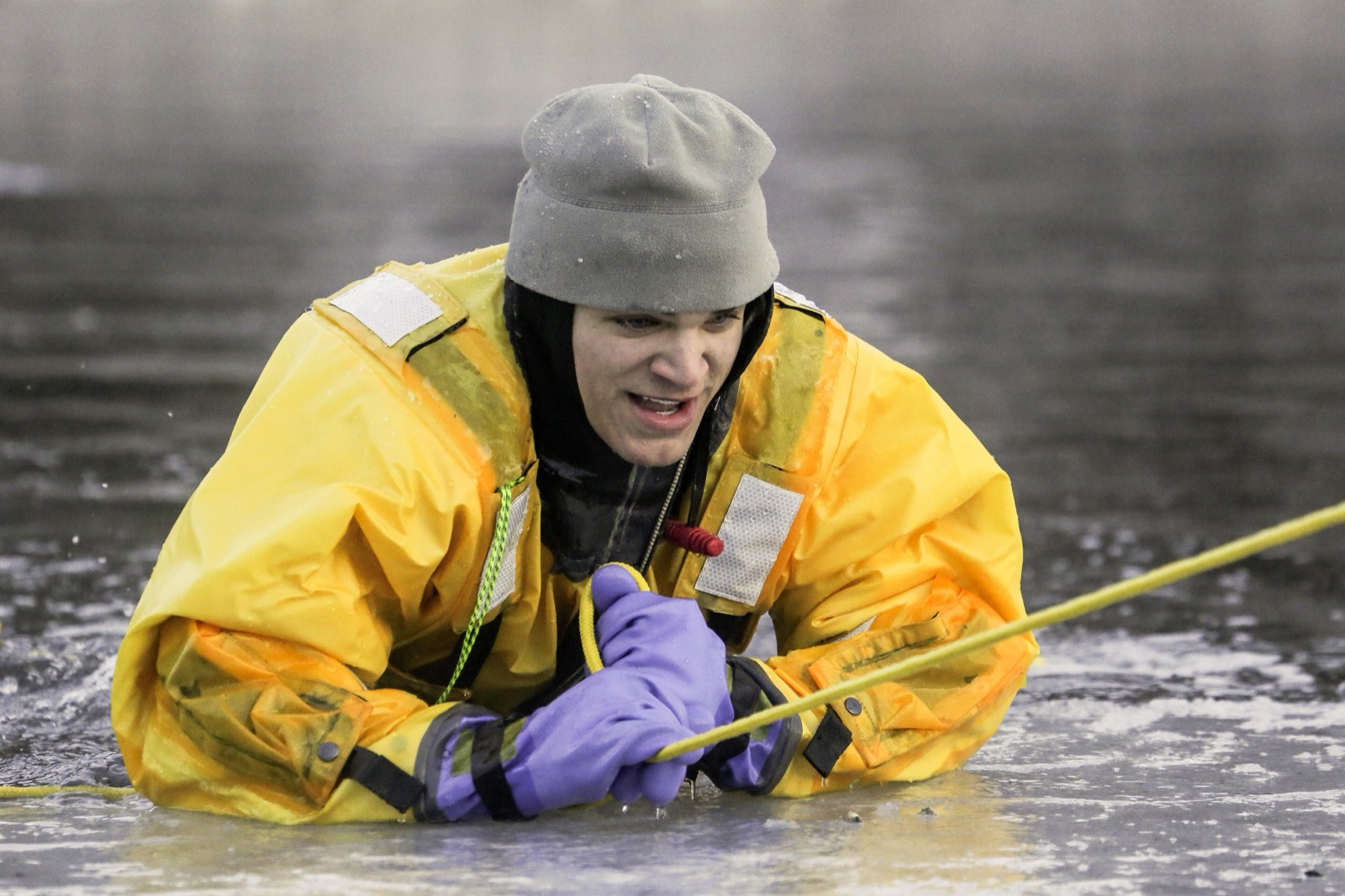
Two similar tools that solve two different problems. A throw line is thrown from shore to rescue a swimmer in current. A tow line is used boat-to-boat to tow a kayak or paddler to shore. How to choose, and how to avoid confusing them.
A throw line and a tow line look almost alike. Both are floating ropes packed in a bag, and both are used in rescue situations on the water. But they solve two quite different problems, and it is worth understanding the distinction — otherwise you risk having the wrong equipment for the water you are actually paddling.
In short: a throw line is for rescuing someone from shore, a tow line is for towing someone between boats. The throw line belongs to river paddling. The tow line belongs to sea paddling. Many experienced paddlers have both.
The distinction
| Throw line | Tow line | |
|---|---|---|
| Main use | Rescue a swimmer from shore to shore | Tow a paddler or kayak to a safe place |
| Thrown or attached? | Thrown to the person | Attached with a carabiner to the kayak or paddler |
| Typical length | 15–20 metres | 4–15 metres (varies by use) |
| Where do you paddle? | River and packraft | Sea kayak and open water |
| Where is it carried? | In the buoyancy aid or on deck, ready to throw | Attached to the paddler or on deck, ready for quick release |
| NPF context | Central to the River Safety Course and the Packraft Safety Course | Recommended safety equipment for sea kayaking and group paddling |
Throw line
A throw line, or throw bag, consists of a floating rope packed loosely in a bag, so that the rope unrolls when you throw the bag towards a swimmer drifting down a river. The person grabs the rope or the bag, and you can pull them in to shore.
Length and dimension. Norges Padleforbund (the Norwegian Canoe Association) recommends at least 15 metres, preferably 18–20 metres. The rope is typically 8–10 millimetres thick, polypropylene that floats, and colour-coded in red or yellow for visibility in white water.
Use. A throw line is used mainly from shore — you stand on a bank or a rock, see someone drifting downstream, and throw the bag so that the rope unrolls over the person. You hold one end, or it is attached to you in a controlled way. The person in the water grabs the rope or the bag. You swing them in to shore with the current, not against it.
Where you carry it. Many river paddlers carry the throw line in the buoyancy aid — either in a pocket on the front or at the back. Others have it in a bag attached to the deck. The important thing is that it is ready for immediate use; a throw line you have to search for helps no one.
Who needs it. Anyone paddling rivers at class II or above should have a throw line and know how to use it. It is at the core of the River Safety Course and the Packraft Safety Course in the NPF system. On flat water and calm sea a throw line is less relevant — there it is the tow line that dominates.
Tow line
A tow line is a longer line with a carabiner at one end, often with a quick-release attachment to the paddler. It is used to tow a tired companion, a kayak that has drifted off, or a paddler who is unable to keep paddling on their own.
Length and dimension. It varies. A short tow line (4–6 metres) is used for quick boat-to-boat towing where the companion is right beside you and cannot keep paddling. A longer tow line (10–15 metres) is used when you need distance between the one being towed and yourself — for example in waves, where the short distance makes the two boats knock against each other.
Attachment point. A tow line usually has a quick-release attachment — typically a large plastic clip or a release toggle — that the paddler can let go of quickly if things become unsafe. The carabiner at the other end is attached to the kayak that is to be towed, usually to a loop on deck or around the cockpit rim.
Use. A tow line is used mostly for companion rescue at sea. A common use: a paddler is tired or injured, and cannot paddle the last few kilometres in. You attach the tow line carabiner to her kayak, paddle on at your own pace, and she rests. Another use is to tow an empty kayak that has drifted — you fetch it, attach the carabiner, and bring it back with you.
Who needs it. Anyone paddling a sea kayak in open water, especially if you paddle with a companion or in a group. The NPF lists the tow line as a mandatory part of the safety equipment. It is as central to sea kayaking as the throw line is on the river.
Hybrids and dual function
Many products on the market are combination bags labelled “throw/tow”. These have a long line with a carabiner at one end and a bag at the other. You can use them as a tow line by attaching the carabiner to the kayak, or as a throw line by attaching the carabiner to a ring on your buoyancy aid and throwing the bag.
In practice the hybrid solution is good for paddlers who switch between sea and river, or for packraft paddlers whose trip combines both. For a pure sea paddler who never paddles rivers, a dedicated tow line (without a throw function) is often more precise in use and quicker to release. For a pure river paddler a dedicated throw line is easier to carry in the buoyancy aid and quicker to throw.
Practical choices
Material. Polypropylene is standard for both — it floats and stands up well to water. A thickness of 8–10 millimetres gives both buoyancy and grip quality. Polyester or nylon are also used, but float less well and are therefore less suited to a throw line.
Bag. Throw line bags are typically short and tight with a drawstring closure at one end — so that the rope unrolls when you throw it. A tow line bag often has a quick zip and better compartmentalisation so that the carabiner is quick to get hold of.
Carabiner (on the tow line). A solid steel locking carabiner or screwgate at the other end. A plastic carabiner is usually not durable enough for paddling use — especially at sea, where saltwater weakens the material over time.
Reflective elements. On a tow line, reflective elements on the bag can help in the dark or in fog. Less relevant for a throw line, since it is used in daylight and in close contact.
Maintenance
Both types of line need the same care: rinse with fresh water after seawater or a dirty river, dry in a cool and well-ventilated place, and inspect for wear before each season. A frayed rope or discoloured areas are signs of UV damage or wear — replace the lines before they become critical.
The carabiner on the tow line should be checked regularly. Saltwater corrodes the locking mechanism over time; a carabiner that sticks or locks sluggishly is a carabiner that should be replaced. A new one costs little. A carabiner that fails when you really need it costs a great deal.
Repack the bag regularly so that the rope unrolls correctly. A rope lying tangled in the bag can ruin a rescue before it begins.
Who needs what
If you paddle only at sea or on calm lakes, you need mainly a tow line. It is mandatory sea kayak equipment and is used in the clearly most common type of companion rescue there.
If you paddle only on rivers, you need a throw line. It is central equipment from class II and upwards, and it is what the River Safety Course builds its rescue techniques around.
If you paddle both sea and river, or packraft on a combined trip, you have use for both — or one good throw/tow hybrid that covers both areas of use.
For most Norwegian paddlers who start with courses through the NPF system, the instructors will recommend specific equipment purchases based on which discipline you go on with. That is a good rule: wait to invest in a throw line or a tow line until you have taken the introductory course in the discipline you actually want to paddle. Then you know what you are after.
Next steps
- Buoyancy aid — the first piece of flotation equipment; a line comes in addition, not instead.
- Rescue in a kayak — the rescue techniques the lines are built for.
- River paddling — where the throw line belongs, from class II and upwards.
- The Våttkort system — the course ladder where you learn to use a throw line and a tow line correctly.
- Paddling — paddling as an activity, where these tools form part of the safety.
Learn more
- Norges Padleforbund — Sikkerhetsutstyr for elvepadling
- Norges Padleforbund — Redningsteknikk for elv
- Sikkerhetskurs Elv
- Sikkerhetskurs Packraft
Text: Snuitide (2026).