Gear
Buoyancy aids and lifejackets
The one thing everyone on the water in a small craft should wear. Here is how the classes (50N, 100N, 150N, 275N) work, what sets a buoyancy aid apart from a boating lifejacket, and how to choose and look after one.
A flotation device is the one piece of kit you do not get wrong. Everyone aboard a recreational boat under eight metres must wear suitable flotation when the boat is under way — and that includes kayaks, canoes, stand-up paddleboards (SUP) and packrafts. The Norwegian Maritime Authority requires the device to be CE-approved, the right size and well maintained. Beyond that, the choice is yours: what kind you wear is governed by what you do on the water.
Two questions settle the choice. Which class do you need, and which type — a buoyancy aid with fixed flotation, or an inflatable boating lifejacket? This article explains both, and what you do to make sure it works when you actually need it.
The classes — from 50 to 275 newtons
ISO 12402 is the European standard that classifies buoyancy aids and lifejackets by buoyancy measured in newtons. The higher the number, the more buoyancy — but also the more bulk. The four classes relevant to outdoor use are:
50N is the buoyancy aid. It gives buoyancy, but it will not turn an unconscious person face-up, and it does not keep the head clear of the water automatically. It is for competent swimmers in sheltered water close to shore, or with help nearby. This is the most common buoyancy-aid class — because it allows enough freedom of movement to paddle without the aid getting in the way.
100N has more buoyancy and helps bring you onto your back — even if you cannot swim or are unconscious. It is for calm waters and general boat use. It is bulky enough to get a little in the way of paddling, though some buoyancy aids come in the 70–100N range for those who want extra flotation.
150N is what most people picture as a ‘lifejacket’. It is the standard for sea and coast, often inflatable in a boating context. Easy to roll over in, designed to keep the head clear of the water even when you are unconscious and wearing winter clothing. It is not usually recommended for paddling — it is too large and can foul the paddle or the cockpit.
275N is the offshore jacket, intended for extreme conditions and for use with a survival suit or heavy protective clothing. It is for industry and commercial shipping, and not relevant for ordinary outdoor use.
The buoyancy aid — what sets it apart
A buoyancy aid is a flotation device shaped specifically to stay out of the way while you paddle. Three things set it apart from an ordinary boating lifejacket:
A shorter back panel. A buoyancy aid stops at the waist, not down the small of the back. That leaves room for sitting in a kayak cockpit or standing on a SUP board without the aid pinching or catching against the coaming or your hips.
Freedom of movement at the armholes. The shoulders have larger cut-outs and less fabric under the arms. You should be able to paddle hundreds of strokes without the aid chafing.
Attachment points for accessories. Many buoyancy aids have pockets on the front for a whistle, knife, throw line and compass. Some have a tow-line attachment on the back with a quick-release. That is where the kit belongs — not in the bow hatch where you cannot reach it.
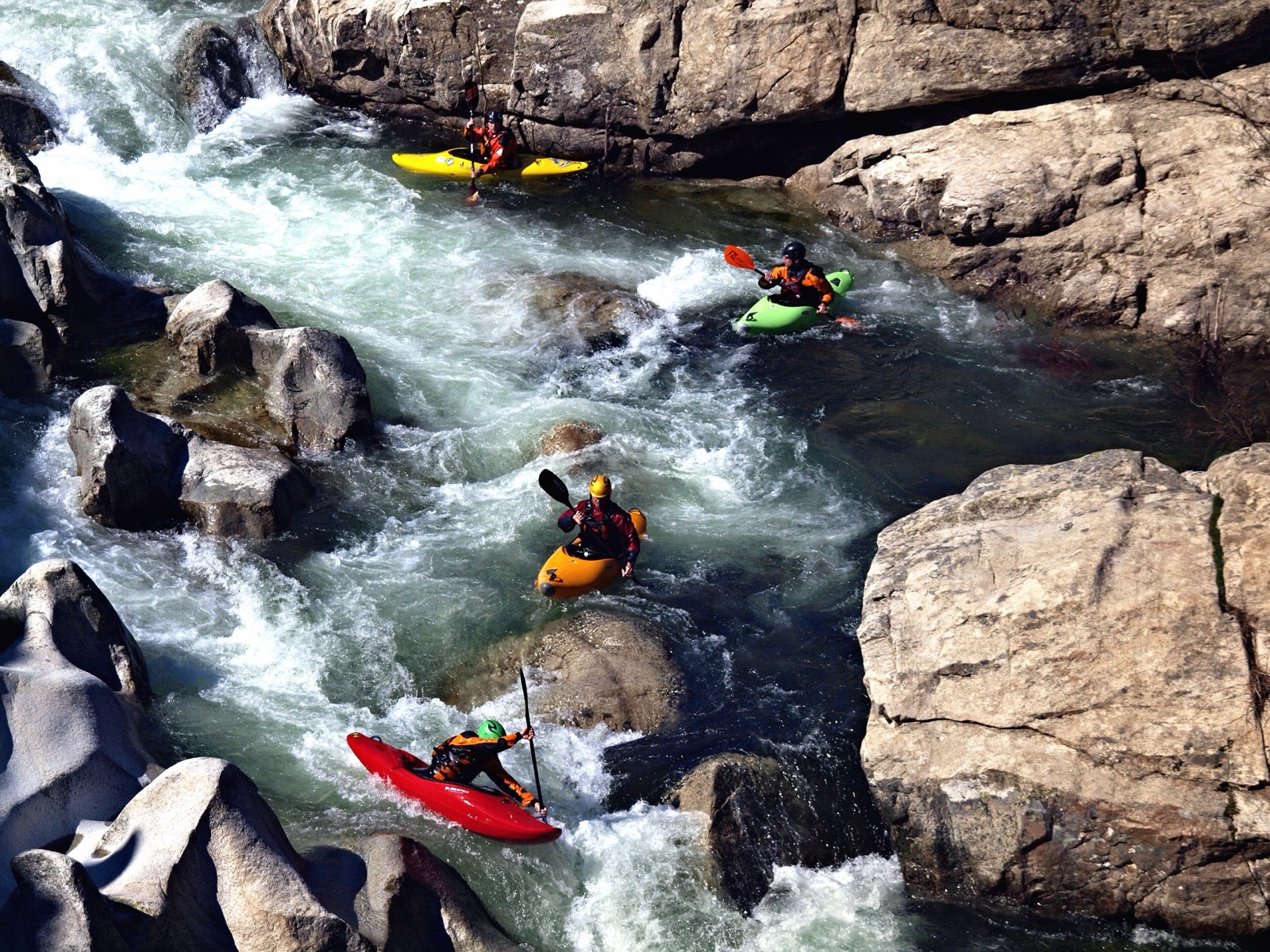
Buoyancy aids tend to sit around the 50N class (some products state 50–70N buoyancy), and are CE-approved under ISO 12402-5 (Buoyancy Aids). For white-water paddling there are specialist variants with an extra chest plate, a throw-line attachment and sometimes an integrated harness. That is what we call a white-water PFD — built for river use and rescue in moving water.
Fixed flotation vs inflatable
There are two basic constructions:
Fixed flotation is foam (typically closed-cell PE foam) sewn into the device’s fabric. It floats at all times; you do not need to do anything to activate it. Robust, low-maintenance, but bulky.
Inflatable is a folded air bladder in a thin housing, with a CO2 canister that inflates it within seconds. It is small and light when not deployed. Inflation can be automatic (on contact with water, after about 5 seconds) or manual (you pull a release cord). It needs annual maintenance and inspection.
For paddling, fixed flotation is used almost without exception. An inflatable is a poor fit for paddling because you expect to end up in the water, and you want the aid active at all times without having to deploy it or repack it after every capsize. The Norwegian Maritime Authority does not recommend inflatable jackets as buoyancy aids.
For boaters and small-boat use it is the other way round — there an inflatable is comfortable and unobtrusive, and you do not expect to get wet. A 150N with an automatic trigger is then a good choice.
Fit — what actually decides it
A lifejacket that is too loose rides up over your head when you go in the water, and you end up under it rather than in it. One that is too tight restricts breathing and movement. Getting the fit right is central.
Check on land: Put it on and tighten all the straps. Have someone try to pull it upwards by the shoulders. If it comes up over your head, it is too large or too loosely adjusted. The chest straps should tighten so the device stays put even when you stretch your arms overhead.
Check in the water: Ideally you test it on a pool course or somewhere calm close to shore. It should keep your neck clear of the water without you having to swim actively. If you have to kick to keep your face up, the class is too low for your body mass.
Size is set by chest measurement, not weight. Adult jackets typically come in sizes from XS to XXL by chest measurement. Children’s jackets go by weight, because a child’s body has different buoyancy.
Maintenance
For buoyancy aids with fixed flotation:
- Rinse with fresh water after salt water. Salt breaks down both fabric and seams over time.
- Dry in a well-ventilated place. Never on a radiator or in sunlight — UV breaks down both fabric and foam.
- Check seams and buckles for wear before each season. A frayed edge or a damaged buckle means the aid should be replaced.
- Service life is typically 10 years with normal use. After that, the Norwegian Society for Sea Rescue (Redningsselskapet) recommends replacing it.
For inflatable jackets:
- Annual inspection: unscrew the CO2 canister and check that it is intact and that its weight matches the figure stamped on it. Check the release tablet — it should be replaced every year.
- Repack the jacket after deployment. An inflatable that has gone off requires professional repacking, or careful adherence to the manufacturer’s instructions.
- For heavy use, have it serviced every 2–3 years by a dealer or manufacturer.
If your jacket is over 10 years old, or has been exposed to strong UV, mould or chemical damage, replace it. It is the one thing in the pack not worth skimping on.
Who needs what
If you paddle a kayak, canoe, SUP or packraft: a 50–70N buoyancy aid with fixed flotation. Choose one with pockets for a whistle and small kit, and — if you paddle the sea — ideally one with a tow-line attachment on the back.
If you paddle rivers of grade II or above: a white-water PFD with a throw-line attachment and an extra chest plate. This is a buoyancy aid with added rescue functionality.
If you are in a boat (motor, sail, rowing boat): a 150N inflatable with an automatic trigger. Comfortable when you do not expect to get wet, and with enough buoyancy to turn you over if something goes wrong.
If you are at sea in tough conditions (offshore, bad weather, winter): a 150–275N inflatable, ideally with a harness and a light.
If you are only on land watching others paddle: none of this applies to you. But next time you are on the water, put the jacket on before you leave the jetty. It is no help at the bottom of the pack.
Next steps
- Paddle float — the self-rescue kit that belongs with the jacket when you paddle alone.
- Whistle — the sound signal that belongs in the buoyancy-aid pocket.
- Visibility on the water — so others can see you, not just that you float.
- Kayak rescue — the rescue techniques only work if you are wearing the jacket.
- Cold water and hypothermia — why flotation is critical at Norwegian water temperatures.
Learn more
- The Norwegian Maritime Authority — Requirements for lifejackets and buoyancy aids
- Standards Norway — NS-EN ISO 12402
- Redningsselskapet — Maintaining your lifejacket
- DSB (the Norwegian Directorate for Civil Protection) — How to maintain your inflatable lifejacket
Text: Snuitide (2026).