Gear
Light and visibility on the water (reflectives, lights, bright colours)
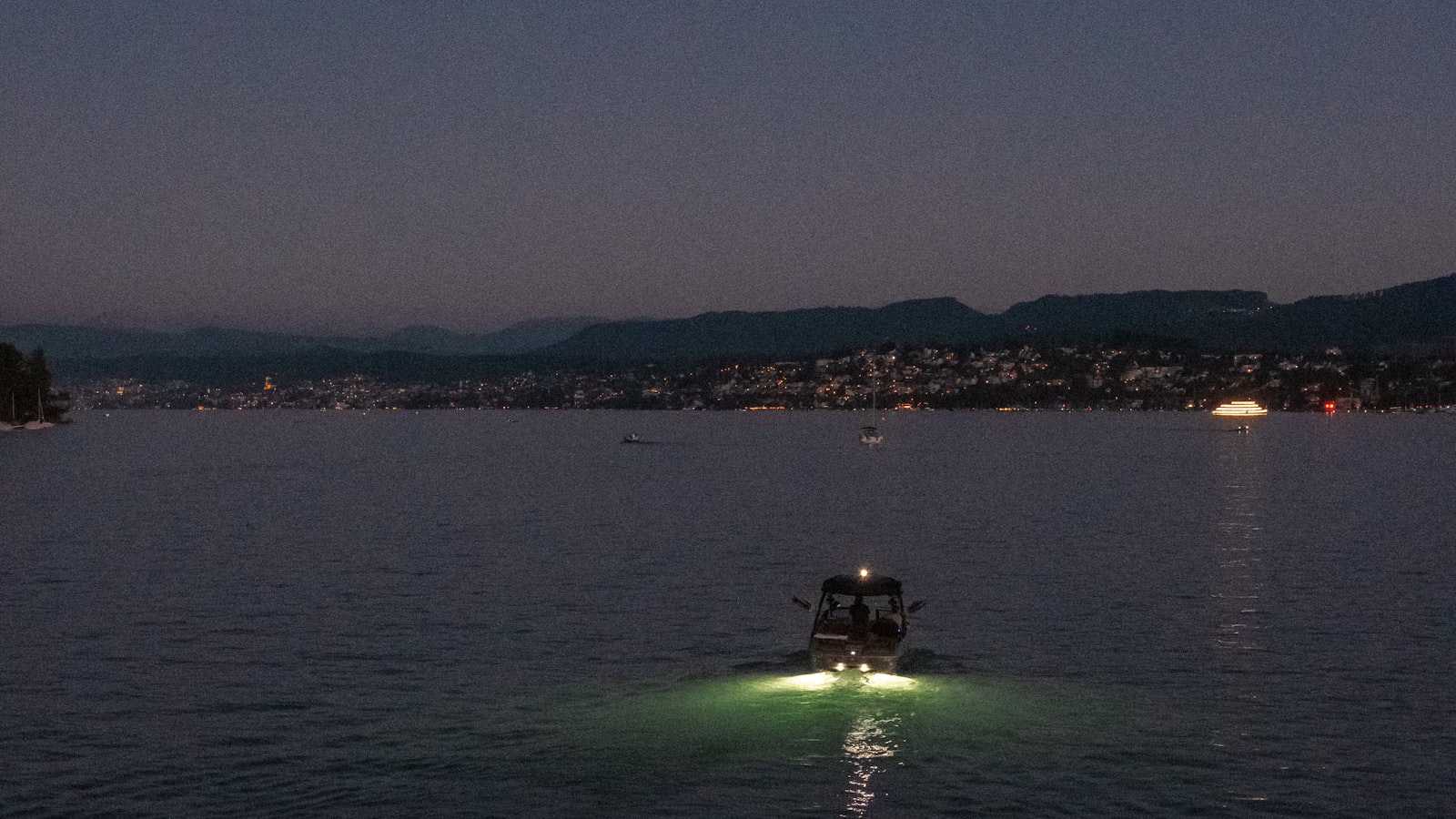
A paddler is hard to see from a boat. You sit low, you have no radar reflector, and you disappear between wave crests. Here is how to build your visibility with bright colours, reflectives and light — and how the Collision Regulations place you as the smallest unit.
A paddler in a kayak is almost impossible to see. You sit 30 cm above the surface of the sea, you have no radar reflector, and you disappear between wave crests 0.5–1 metres high. To a ferry or pleasure boat doing 5–15 knots you are visible at perhaps 200–300 metres in good conditions — and considerably less when the sun is low, you are looking into the sun, or there is drizzle. Visibility on the water is therefore not a nice-to-have. It is what separates being seen by people who have a duty to avoid you from not being seen at all.
Fortunately, making yourself visible is not a big kit project. Three layers — bright colours, reflectives and light — solve most situations.
Why the paddler disappears
Three physical reasons why paddlers are hard to see:
Low over the water. A person paddling a kayak has their eyes 60–80 cm above the surface of the sea, and the boat itself sits 10–30 cm above it. At 1.5 km away you are below the horizon for someone standing low on a sailing-boat deck. In 1-metre waves you disappear into the troughs for several seconds at a time.
No radar reflector. Aluminium foil, plastic and the human body give almost no radar return. Commercial traffic at sea relies on radar in reduced visibility and at night, and a kayak does not show up on the screen. The AIS system — the automatic identification system that boats transmit and receive — is something ordinary paddlers do not have either. You are invisible to radar and AIS at the same time.
Hard to tell apart from the surroundings. A grey kayak on a grey sea on a grey day is almost camouflage. Bright colours and reflectives solve this layer — but not the other two.
Bright colours on boat and jacket
The simplest layer of visibility is the colour of what you are sitting in.
Kayak colour. Red, orange and yellow kayaks are more visible than blue, grey or dark green. If you are buying a kayak and are free to choose the colour, a signal colour on the bow and deck is the simplest safety addition you can make. A large majority of kayaks at clubs and hire outfits are in signal colours — that is a deliberate decision, not chance.
Jacket colour. The life jacket is what is seen most clearly when you sit upright — it is on the upper body and covers chest and back. Bright orange, yellow or red works best against sea, mountain and sky alike. Dark jackets (black, navy blue) make you harder to see, especially if the kayak is dark too.
Clothing on the upper body and head. A hat or cap in a clear colour is simple and effective. It is also the highest point of you above the water, and therefore the first thing a boat skipper sees.
If you already have a dark kayak and a dark jacket, there is no reason to throw them out — you add signal colours elsewhere instead (cap, reflective elements, paddle blades).
Reflective tape and reflective elements
Reflective tape is passive visibility — it does not shine by itself, but throws light back towards the source. It is what makes you visible from boats with a searchlight, from lighthouses, and in the half-light when other boats have their navigation lights on.
Reflective tape on the paddle blades is probably the most effective addition. When you paddle, the blades are in almost constant motion over the water and up into the air. Reflective tape on both sides of both blades gives a flashing reflective signal that is visible from much further away than a static reflective element. 30–50 cm² of SOLAS-approved tape per blade is a lot of light for very little weight.
Reflective tape on deck and hatches. Strips fore and aft of the cockpit make the kayak visible from the side. Place them so they do not weaken the hatch seal.
Reflectives on the jacket. Most paddling jackets have built-in reflectives at the shoulders and front. Check that these are not faded or scraped up — worn reflectives stop working.
SOLAS is the international set of rules for ship equipment and determines what kind of reflective is approved for life-saving gear. SOLAS-approved reflective tape (typically 3M Scotchlite or similar) is marginally higher quality than cheaper alternatives from builders’ merchants — and does not cost much more. At sea, where margin matters, SOLAS is the standard choice.
Light for evening and night paddling
In the half-light and at night you have a duty to carry a light on a kayak. The Collision Regulations count you as a “vessel under oars” — and the requirement is that you must have a torch ready so that you can show a light in time to avoid a collision. In practice this is interpreted as:
A white head torch on at least medium strength that you can switch on if another boat approaches. The light should not be on the whole time — it dazzles other people at sea and ruins your own night vision — but it should be possible to activate within seconds.
A white navigation light mounted on the deck is the next option. Built for boat use with batteries that withstand water, with 360-degree visibility. Used more by paddlers who are out a lot in the evening.
Reflective elements as described above also work where other boats have navigation lights — your reflective becomes a visible signal against their light.
For those who paddle regularly in the half-light (winter paddling, autumn evenings, northern-lights paddling), the combination of a white head torch on the front of the jacket plus good reflectives on the paddle and deck is the baseline solution. It is not expensive and weighs little.
The Collision Regulations — you are the smallest unit
The Collision Regulations distribute responsibility between vessels along a ladder. Simplified: power-driven vessels give way to sailing vessels, and both to vessels engaged in fishing. Paddlers often have the advantage in the give-way rules, but in narrow and busy waters a vessel under oars must also keep out of the way of larger vessels, scheduled ferries and other commercial traffic — and in any case it is poor comfort if the ferry does not see you.
In practice the rule means two things for the paddler:
You have the right, but not the duty, to press it. If it looks as though a motorboat does not see you or is not changing course, you have to move. “I had the right of way” is not a good argument if you have been run over.
You have a duty to be visible and predictable. Bright colours, reflectives, and keeping a predictable course in fairways and crossing points are your contribution to making the rules real. A zigzag pattern in the main fairway of the Oslofjord removes many of the margins boat skippers have in their course planning.
More in boat traffic and the Collision Regulations.
Who needs what
For the day-trip paddler in the summer half of the year: a bright jacket plus SOLAS tape on the paddle blades is the baseline. A small head torch in your pocket for the case where you end up out longer than planned.
For the sea kayak paddler who paddles in the half-light or at night: a white head torch on the front of the jacket, reflectives on the paddle blades and deck, bright colours on kayak and jacket. Consider a dedicated kayak navigation light if you are out a lot after dark.
For the paddler in fairways and large boat-traffic areas: everything above, plus a VHF radio on channel 16 if you paddle far out. An AIS app before the trip to know what the ferry and cargo routes look like.
For the winter and northern-lights paddler: everything above plus a more powerful head torch with a red night mode, spare batteries in a waterproof bag. The reflective function becomes more important when other boats have their navigation lights on for several hours of the day.
Next steps
- Life jacket — the carrier of both visibility and buoyancy; bright colour counts most here
- Head torch — the light you actually carry for evening and night paddling
- Whistle — sound where light does not reach
- Boat traffic and the Collision Regulations — the rules that place you as the smallest unit
- Sea kayak — the activity where visibility on open water is most critical
Learn more
Text: Snuitide (2026).