Gear
Heat sources for cooking
Which stoves are used for cooking on a tur? Gas, multifuel, twig stoves and the campfire — plus general tips for safe use and kitchen kit.
There are many different heat sources for cooking on a tur, suited to different uses.
Tips for safe use
- Light the stove outdoors. Better ventilation, and easier to put out any fire. The stove produces carbon monoxide, a poisonous gas that is deadly if you take in enough of it.
- If you are going to use a stove in the tent, do it in the porch well away from the tent fabric. Keep a knife to hand so you can cut your way out if there is a fire (Pettersen, 2020).
- Set the stove down securely where it will not easily be knocked over.
- Keep water or snow close at hand to put out a flame that gets out of control.
- Never fall asleep with a stove still burning.
- Dismantle the stove after use so it cannot leak gas or petrol.
- Bring spare parts.
Types of stove
The choice of stove depends on the season, the weight, how easy you want it to be to use, and how much fuel you have to carry. Gas stoves are the simplest choice for summer trips; petrol/multifuel for winter; a twig stove for a leave-no-trace alternative to the campfire; and the campfire when you want to carry as little as possible.
An open fire for cooking
The simplest heat source — you need carry nothing with you. But you must have enough fuel in the area, and permission to light a fire.
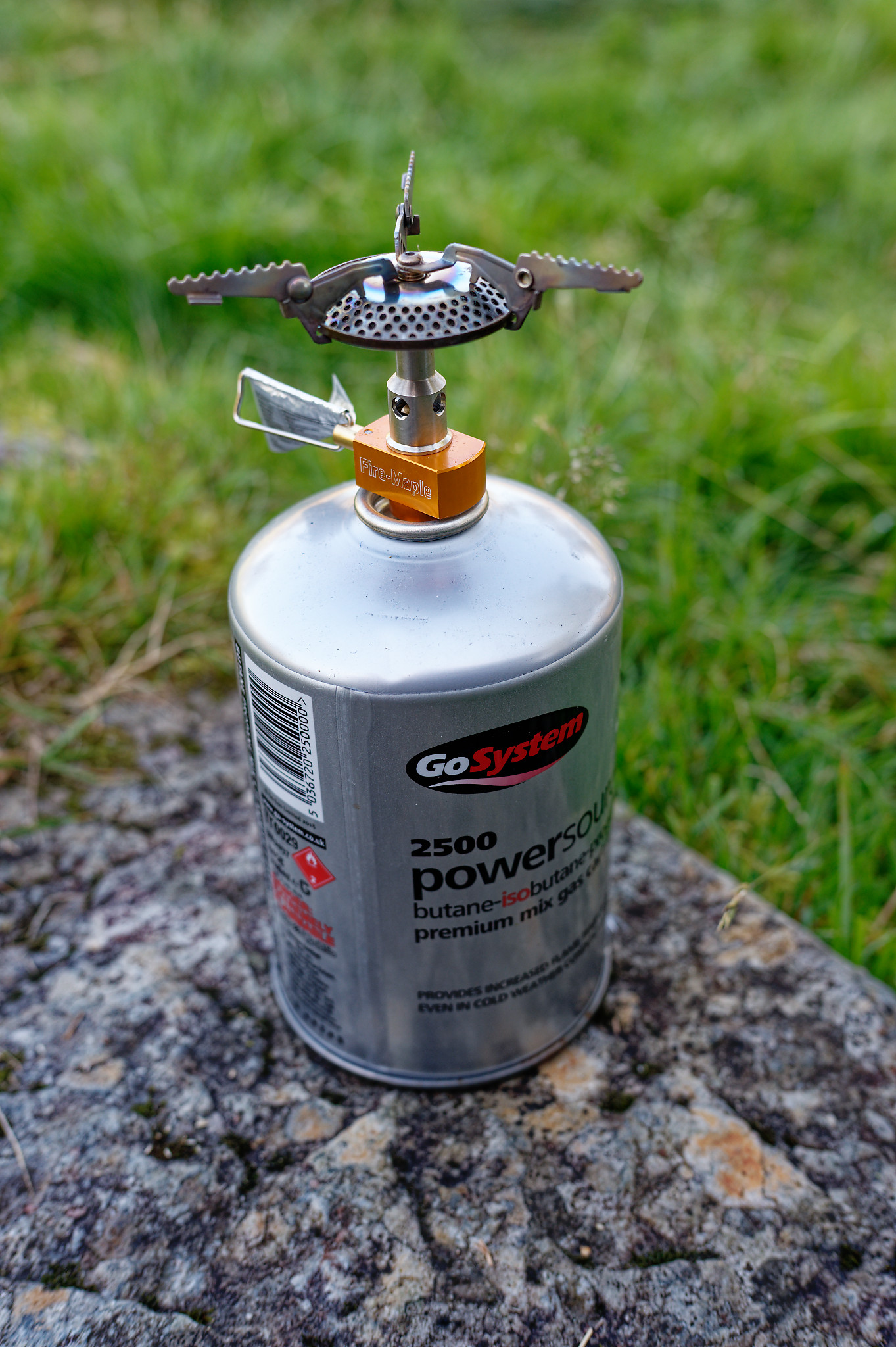
Gas stove
The simplest and quickest stove. Best for the summer half of the year — it works less well in the cold, and the gas canisters must be carried out empty.
Meths stove
Strongly advised against. The invisible flame, combined with the fire risk when refuelling, has caused serious accidents. Choose a different stove.
Multi-fuel / petrol stove
A stove that can be fired with petrol, paraffin and sometimes gas. The best choice for winter trips — it burns clean and efficiently in the cold.
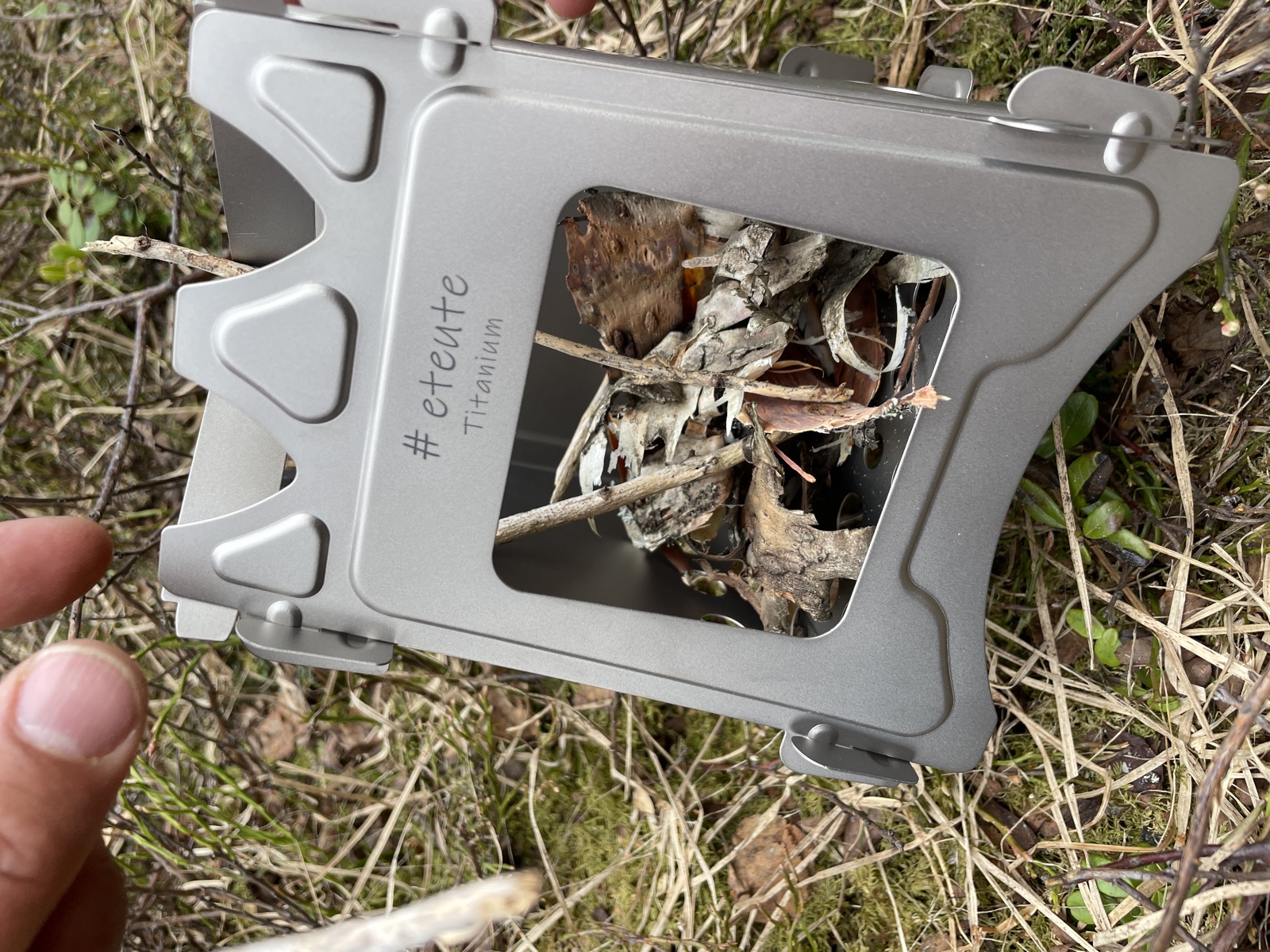
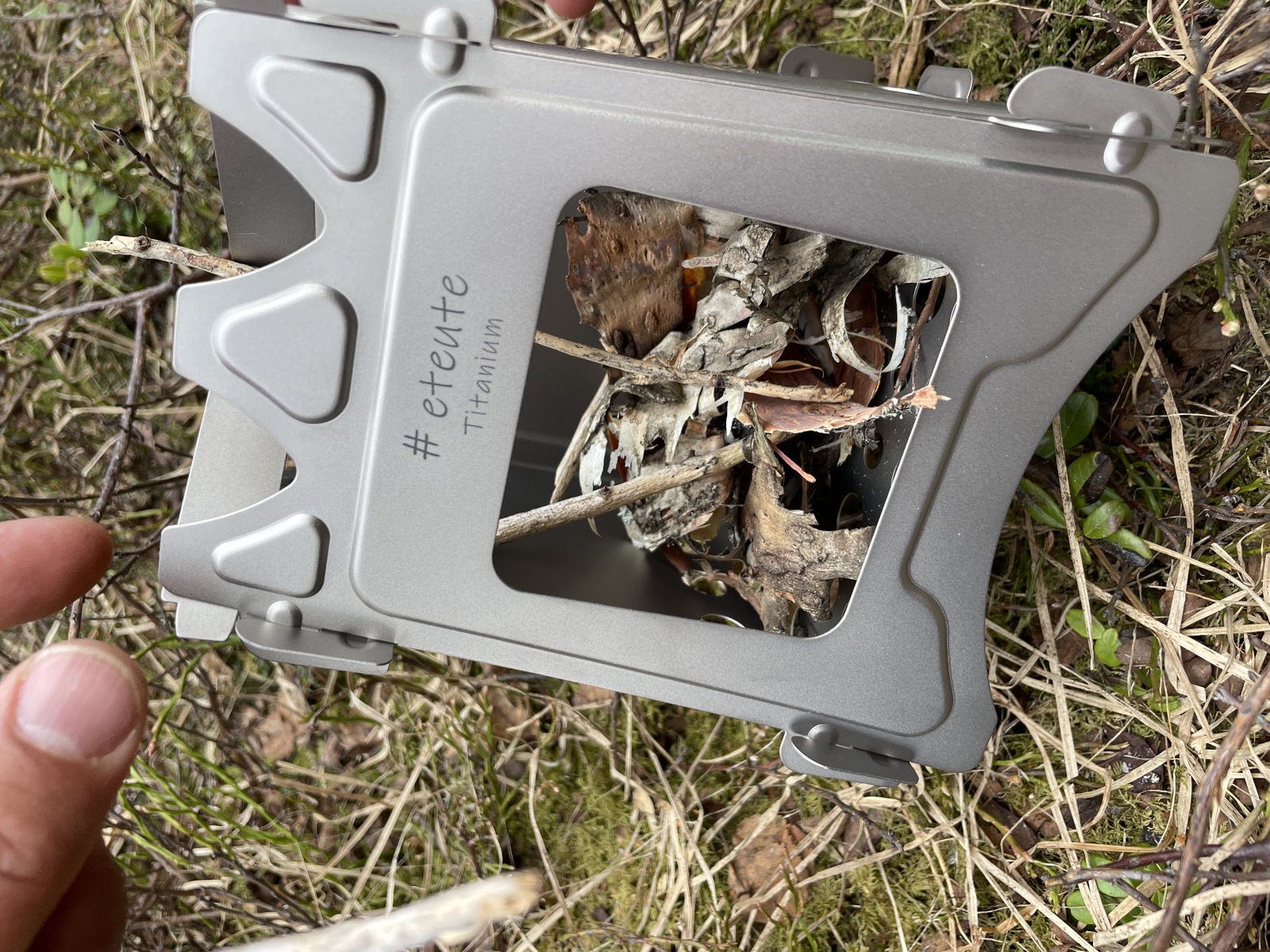
Twig stove (campfire stove)
A small metal box fed with twigs. The safest way to cook over an open fire — concentrated heat, less fuel, more trace-free than an ordinary campfire.
Means of ignition
You will not get far with lighting a fire without a tool to ignite it. Three options:
- Matches — traditionally the most popular. Must be kept completely dry. If the strip on the box gets damp, you will never get a light.
- Lighter — ordinary disposable lighters work well and are easy to keep dry enough to get a light. Should it get wet, you can shake and dry it quickly.
- Fire steel — strikes sparks. Excellent for lighting gas, but for a campfire it needs good, dry tinder.
Pots, plates and cutlery
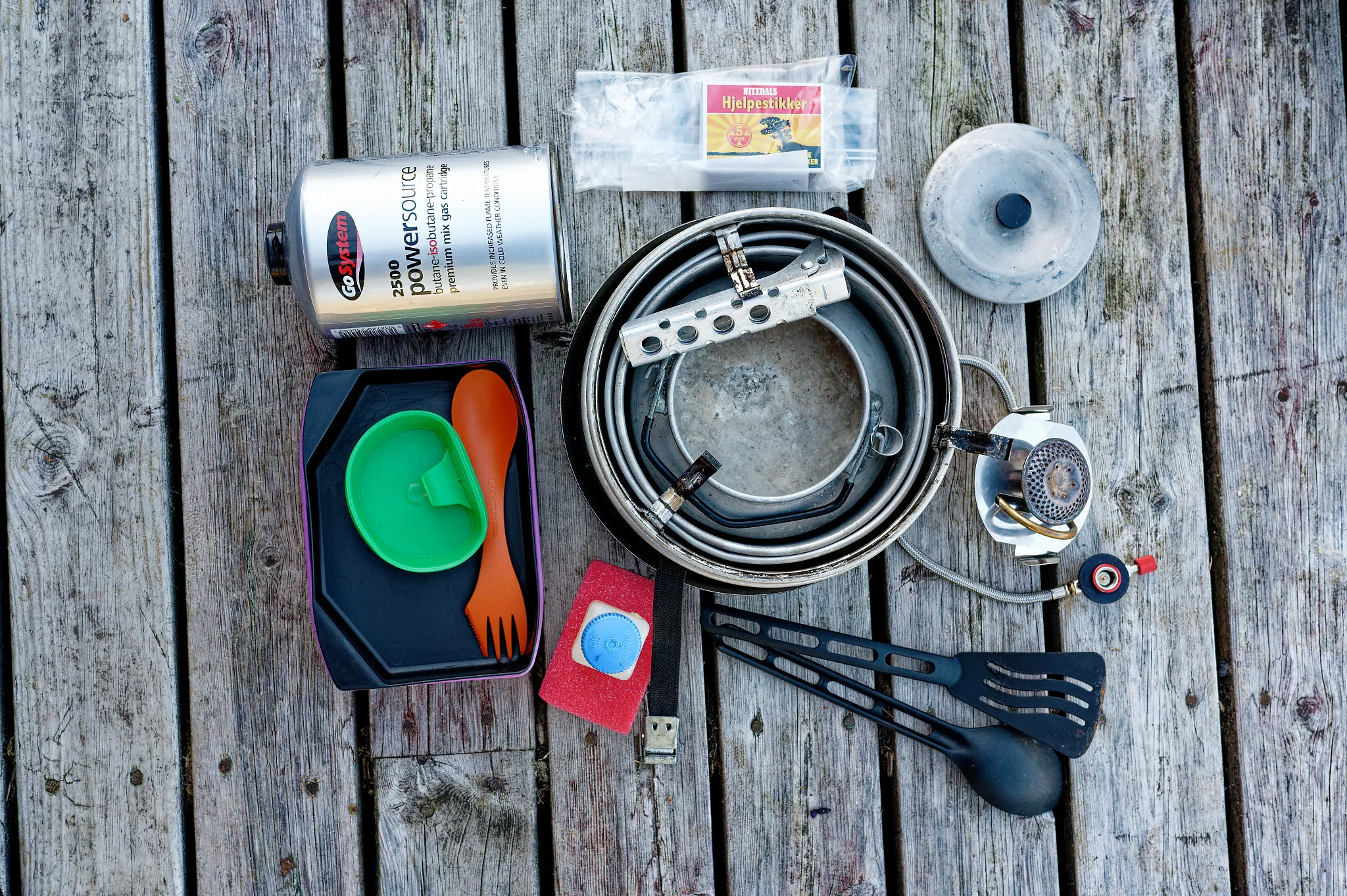
For one person, a small pot of around 1 litre is enough — wide enough that you can fry in it and do without a separate pan. For 1–3 people, a pot set with two pots of around 1.5 litres works well. For 3–5 people you should go up by a litre; more than that needs several sets.
Non-stick or not? Practical, but the coating is made of environmentally harmful fluorocarbons that loosen over time and spread into nature. The alternative is pots without it — they need more attention to keep the food from burning, but are better for the environment.
Cutlery — for freeze-dried trail food and porridge a spoon is enough. Otherwise a fork and knife too. The knife and fork should be metal (wood/plastic does not work). Titanium is durable but expensive. The knife can be replaced with your ordinary outdoor knife if you are counting the grams.
Plate — always useful. Choose soft plastic — it lasts forever, is light and inexpensive. Wooden plates break easily.
Next steps
- Food on the tur — the hub for food
- Cooking on the tur — methods
- The campfire — the traditional heat source
- Equipment — the hub
Learn more
- DNT — equipment — recommendations and courses
- Friluftsmagasinet Fri Flyt — tests and specialist material
- Klepp & Tobiasson — Lettkledd — a sustainable approach to equipment
Tekst: Bjørn Henrik Stavdal Johansen og Gina Wigestrand, Snuitide (2021)