Gear
Indoor shoes and slippers
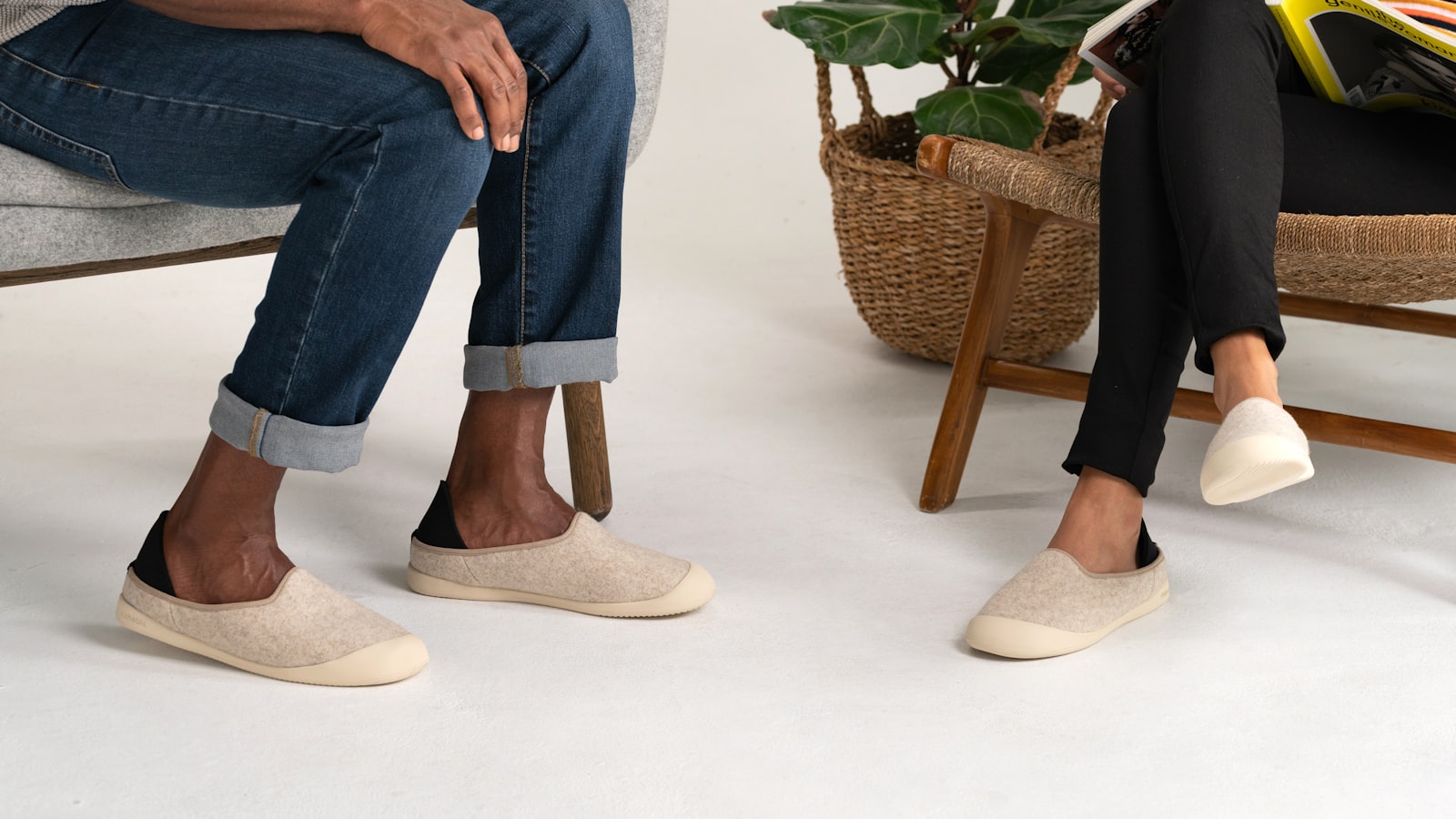
Light slippers or bivouac shoes for cabin use — they spare your mountain boots, make the cabin stop more pleasant, and can save you from a crushed foot after the day's boot.
After a day in heavy mountain boots, few things match the pleasure of pulling on a pair of light indoor shoes and feeling your feet breathe. At DNT cabins it is normal to change into indoor shoes when you come in — and a good, light slipper reduces wear on the cabin floor while warming cold feet.
Three main choices
Classic slippers (textile upper + foam sole) are the most common. Light (~150–250 g per pair), pack flat, cheap (~150–400 kr). Examples: Bergans, Helsport, Ulvang.
Bivouac shoes (synthetic down-insulated shoe with a closed sole) are the warm-winter version. Weight: 200–400 g per pair. Price: 600–1,200 kr. They give enough warmth to walk around the tent or cabin in cold ski-touring bindings, and are necessary if your backcountry ski boots freeze fast in the binding overnight.
Ordinary shoes/trainers can be used as cabin shoes, but are heavier and take more pack volume than dedicated slippers.
For a summer cabin trip, classic slippers are the standard. For a winter trip or sleeping out, bivouac shoes are worth the weight.
What to look for
Weight — under 250 g per pair for slippers, under 400 g for bivouac shoes.
Pack size — flat, pack like T-shirts. Bivouac shoes can pack in a mesh bag.
Sole — soft for indoor use, but solid enough that you can walk out to the toilet in snow at night.
Width — check that they fit your feet — slippers that are too tight are as bad as mountain boots that are too tight.
Bivouac-shoe details
Bivouac shoes have:
- Synthetic down or Primaloft insulation — warm, fast-drying
- Closed outsole with tread — handles 50–100 m of walking outdoors in snow
- High cuff up over the ankle — keeps snow out
- Tight closure with a cord or Velcro
Classic makers: Sivera Toko, Pajak Inferno, Black Diamond Stance, Mountain Equipment.
Bivouac shoes are especially useful for:
- Ski touring where backcountry ski boots can freeze fast in the binding
- Winter tenting where you have to go out to the toilet at night in snow
- Long stays in the same place (base camp) where you spare your mountain boots
Packing
Classic slippers: in the pack or on the outside (a waterproof bag against rain).
Bivouac shoes: pack dry in the pack or in a side net. Keep them dry — wet ones are useless as warmth.
Maintenance
Slippers tolerate the dishwasher or a gentle washing machine at 30 °C. Bivouac shoes should be washed by hand in lukewarm water with a down-specific detergent — rarely, only when visibly dirty.
Text: Snuitide (2026).