Gear
Paddle
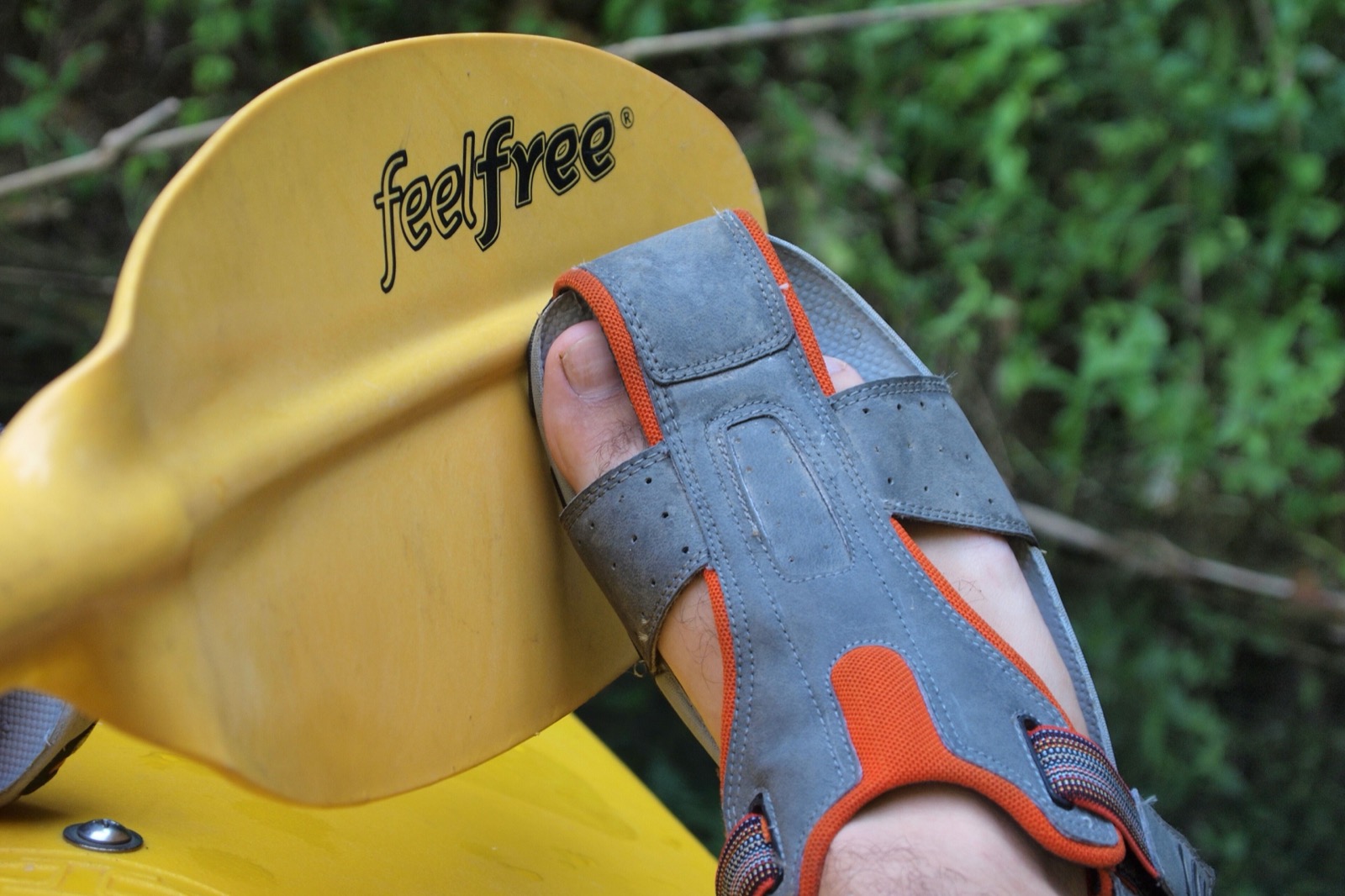
The paddle matters as much as the kayak — the wrong paddle makes a good kayak bad. Here is how to understand length, blade shape, feathering and material, and why it mostly is not about the brand.
People who paddle for a season or two eventually discover the same thing: the paddle matters more than they thought. The kayak carries you, but it is the paddle that moves you. The wrong length, the wrong blade shape, the wrong material — and a good kayak becomes troublesome. The right paddle does the opposite: an average kayak becomes comfortable to paddle all day.
This is a reference article about the paddle as a piece of equipment. It covers the main types (kayak, canoe, SUP, packraft), how you choose length and blade shape, and what you should actually look for when you are standing in the shop or borrowing a paddle from the club.
The main types
There are four basic types of paddle, one for each form of paddling:
The kayak paddle has two blades — one at each end of a shared shaft. You hold the shaft with both hands and alternate strokes from side to side. The standard for sea, touring and river kayaks as well as packrafts. Length 200–230 cm depending on the type of kayak and the paddler.
The canoe paddle has one blade and a T-grip at the other end. You hold the T-grip with one hand and the shaft with the other, and paddle on one side at a time. Used for canoeing. Length is measured differently — from the chin down to the T-grip when you are standing upright — and is typically 120–145 cm.
The SUP paddle is a long pole with one blade at the bottom and a T-grip or palm grip at the top. Used standing. Length is the paddler’s height plus 15–25 cm.
The packraft paddle is usually a kayak paddle in four or five sections — so that it fits in the pack alongside the packraft itself. Length and blade are similar to a light touring kayak paddle.
The rest of this article is mainly about the kayak paddle, because it is the most complex. The others are mentioned where there are differences worth knowing about.
Length — the most common thing to get wrong
The length of a kayak paddle is governed by three things: the paddler’s height, how high you sit (the kayak’s clearance) and the paddling style. For touring and sea kayaks the recommendations are:
| Paddler’s height | Recommended paddle length |
|---|---|
| 150–170 cm | 210–215 cm |
| 170–185 cm | 215–220 cm |
| 185–200 cm | 220–225 cm |
Shorter paddlers and lower kayaks call for a shorter paddle. Wider kayaks call for a slightly longer paddle because you have to reach the paddle further out to reach the water.
For a faster paddling style with a higher cadence (shorter strokes, more cardio) you can go slightly shorter. For a long, calm paddling style with deeper strokes you can go slightly longer.
River kayak paddles are shorter — typically 190–210 cm — because you sit higher and paddle more often with large corrections. A longer paddle in current becomes cumbersome.
Blade shape
Two geometric choices govern how the blade behaves in the water: shape and size.
Symmetric vs asymmetric. A symmetric blade is the same above and below the centre axis — the upper and lower edges are mirror images. An asymmetric blade has a longer lower edge than upper edge, so that the water meets the blade more evenly when you take an angled stroke. Asymmetric is the standard on all quality paddles today, because it gives more efficiency with less twist.
Blade size. Measured in square centimetres on the blade. Touring and sea kayak paddles are typically 600–700 cm². Smaller blades (550–600) are easier on long days and suit a high paddling cadence. Larger blades (700–800) give more power per stroke but tire the paddler out more quickly — relevant for rivers and racing.
For a long tour in a sea kayak, small to medium blades are the best choice for most people. Larger blades do not give more speed over distance — the kayak reaches its cruising speed at around 3–5 knots, and a larger blade only adds extra resistance without extra speed.
Feathering
When the paddle’s two blades do not lie in the same plane, it is called feathering. When you hold one blade straight down in the water, the other blade points slightly ahead of or behind you. The feathering angle is typically 0°, 45° or 60°.
Why feather. Feathering was originally developed to reduce wind resistance on the blade that is above the water. In strong wind you notice the difference — a paddle without feathering catches the wind and pulls your hand back.
The classic paddle has 45–60° of feathering and is what most paddlers have. The standard choice for touring and sea kayaks.
The Greenland paddle has 0° feathering (parallel blades) and long, narrow blades. A tradition of its own with roots in Inuit paddling, and a whole world of geek culture, woodcraft and rolling techniques. More in Greenland paddle.
Most modern kayak paddles have adjustable feathering — you can set it from 0° to 60° in steps of 15° or more. That is handy both for experimenting and for sharing between paddlers.
Material
Shaft and blade come in several materials:
Aluminium and plastic are the cheapest, used on rental and club paddles. Heavy, strong and hard-wearing. Plastic blades crack after many years of use. Fine as a first paddle.
Fibreglass is a familiar classic. Lighter than aluminium, more responsive. A good balance between price and performance. Many touring paddlers stay here for life.
Carbon fibre is the lightest and most responsive. A carbon paddle weighs perhaps 700 grams, against 1100 grams for fibreglass. The difference is noticeable after an hour on the water — you get less tired in the arms and shoulders. Expensive: a carbon paddle costs from 3 000 kroner upwards.
Wooden paddles exist — an older tradition with an aesthetic of its own. Heavy but quiet in the water, and some paddlers prefer them for the feel.
For anyone who paddles more than 50 hours a year, a light carbon or fibreglass paddle is the single investment that most changes how long you have the energy to paddle. That is where the weight saving really matters.
Two-piece vs four-piece
Kayak paddles come in several sections:
Two-piece is the standard for sea and touring paddling. The shaft splits in the middle with a locking joint. All modern two-piece paddles have adjustable feathering.
Four-piece is used for packrafts or when you have to pack the paddle in your bag. A little heavier and with a little more play in the joints, but no real disadvantage for normal use. For packraft trips, four-piece is almost obligatory.
The one-piece paddle (undivided shaft) is rare — only on racing paddles or some classic wooden paddles where the stiffness of the whole paddle is an advantage.
Maintenance
A paddle needs little, but some:
- Rinse with fresh water after salt water, especially the joints between the sections. Salt settles in the mechanisms and makes the lock stiff.
- Dry it in a well-ventilated place before you put it away. Wooden paddles need oil every year.
- Check joints and locking buttons before each season. A worn or misshapen locking mechanism should be repaired or replaced.
- Plastic and fibreglass blades can be damaged by hard knocks against rock. Carbon blades are stiffer and snap sooner than they bend.
A well-maintained paddle lasts many decades. It is not unusual for clubs to use fibreglass paddles from the 1990s that still work fine.
Who needs what
If you only want to try paddling: hire or borrow a paddle from a club or rental outlet. Do not buy before you know how much and what kind of paddling you actually do.
If you paddle a touring or sea kayak regularly: a light fibreglass paddle of 215–225 cm with asymmetric blades and adjustable feathering is the sweet spot for most people. Carbon if you can afford it and paddle a lot.
If you paddle a river kayak: a shorter paddle (190–210 cm), larger blades, robust fibreglass or carbon. Plastic blades crack too quickly.
If you paddle a canoe: a single-blade paddle in light wood or carbon. The T-grip size should fit your palm. Length is measured from the chin down to the T-grip when you are standing upright.
If you paddle a SUP: a pole paddle in carbon or fibreglass with adjustable length. The length is your height plus 15–25 cm.
If you paddle a packraft: a four-piece kayak paddle in light fibreglass or carbon. The weight counts more than anything else — it sits in the pack all day.
Paddle types
- Greenland paddle — the traditional narrow-blade Inuit paddle. Lower strain on the shoulders over long day trips, classic technique, and the choice of many experienced sea kayak paddlers.
Next steps
- Greenland paddle — the narrow-bladed traditional paddle with 0° feathering
- Kayak — the boat the paddle is meant to move; length and width govern the choice of paddle
- Paddling shoes — the rest of the paddler’s personal equipment
- Paddling — the activity the paddle is the tool for
- First paddling trip — where you find out which paddle actually suits you
Learn more
Text: Snuitide (2026).