Gear
Kayak
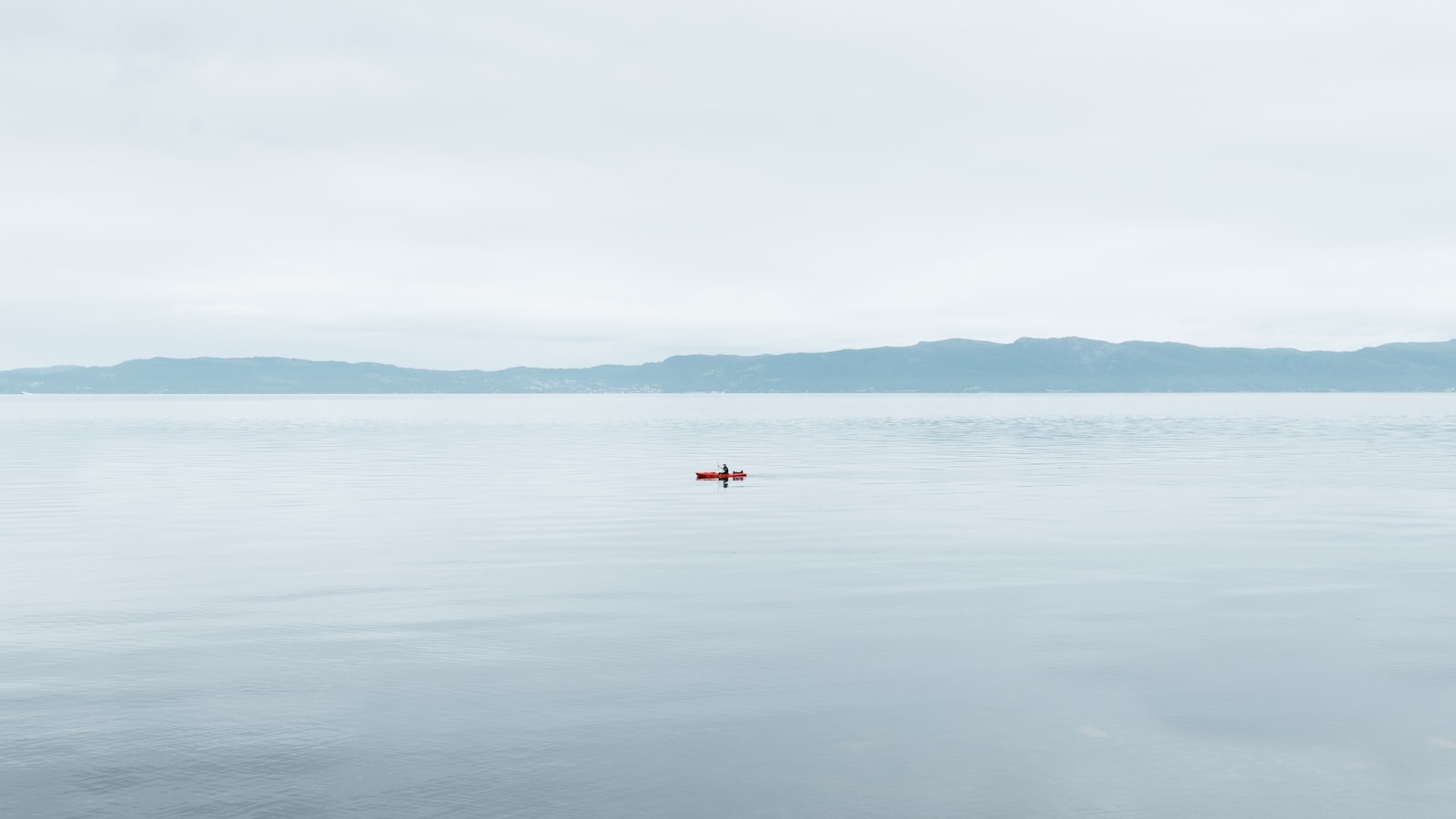
A closed craft paddled with a double-bladed paddle. How to understand the main types (sea kayak, river kayak, touring kayak, recreational kayak), the materials from rotomoulded plastic to skin-on-frame wood, and how to choose without being misled by the marketing.
A kayak is a closed craft with one or two cockpits, paddled with a double-bladed paddle. It differs from the canoe in that the paddler sits inside the boat with their legs in front of them, not up on an open deck. The cockpit can be sealed with a spray deck so that the whole boat becomes a closed space — that is what lets the kayak paddle in waves and cold water without filling up.
As a craft, “kayak” covers a wide span — from short, robust plastic hulls to long, slender composite hulls, from toy-like sit-on-tops to serious expedition boats six metres long. This article is about the kayak as equipment: the main types, the materials, and what is worth knowing before you hire or buy. For paddling itself — technique, safety, where in Norway — see paddling and its sub-articles.
The roots: from sealskin to plastic
The kayak comes from the Inuit of the Arctic. The original hull was a frame of wood or whalebone, covered with sealskin. The skin was scraped clean of fat, chewed soft, and stretched over the frame while damp — as it dried, it sat taut and watertight. A kayak was made for one particular paddler, fitted to body and pattern of use, and was used for hunting seal, whale and fish.
The sports kayak as we know it today took shape in Europe from the late 1800s, built through the 1900s mostly in wood or, later, glass fibre. The 1960s brought polyethylene plastic and the rotomoulding process, which lowered the price and made the kayak a broader popular activity. Today all the materials exist side by side — from modern mass-produced plastic kayaks to hand-built skin kayaks in the Inuit tradition.
The main types
Kayak is an umbrella word. Within it are several clearly distinct types, each for its own use:
The sea kayak is long and slender, typically 4.5–6 metres, designed for open coastal waters and longer trips. Watertight bulkheads in bow and stern. Stability comes from length and hull lines. Requires technique in waves and the ability to roll or rescue yourself after a capsize.
The touring kayak (also called a “touring/sea kayak” where they overlap) is a little shorter, often 4–5 metres, and wider. Less slender than a pure sea kayak, more stability for beginners, but also a little slower over distance. Used mostly on lakes, sheltered coast and calm fjords.
The river kayak is short (2.5–3 metres), wide and rockered, designed for rapids and moving water. It has its own sub-categories: river-runners, creek-boats, play-boats. A completely different pattern of use from the sea and touring kayak.
The recreational kayak is short, wide and very stable. Many have a large open cockpit or are sit-on-tops. Intended for shorter trips in sheltered water, and is often what people hire on a summer day without knowing anything about kayaks beforehand.
Polo kayaks and racing kayaks also exist — sport-oriented categories with very specific hull lines. Less relevant for outdoor use.
For more depth on the sea kayak as a discipline, see sea kayak in the paddling domain. Likewise for river paddling and its kayaks.
The materials
What the kayak is made of governs both how it behaves on the water and how long it lasts. The most common materials:
Polyethylene (rotomoulded plastic) is the most widespread. Plastic powder is melted in a rotating mould, and the result is a kayak in one continuous hull without seams. Affordable, robust, takes hitting rocks, and needs little maintenance. A more flexible hull than composite — which is an advantage when you strike underwater obstacles, but a disadvantage for how efficiently the kayak glides through the water. Weight is typically 22–28 kg for a sea kayak.
ABS / thermoformed plastic is a middle solution. Vacuum-formed sheet material in several layers, lighter than rotomoulded polyethylene and more precisely shaped aesthetically. Dearer than polyethylene, not quite as robust under heavy impacts, but a good middle way.
Glass-fibre composite has been the classic since the 1960s. The glass-fibre weave is laid in a mould and saturated with epoxy or polyester resin. The result is a stiffer hull than plastic — the kayak glides better through the water — and considerably lighter. A glass-fibre sea kayak typically weighs 20–25 kg. Repair is simple compared with plastic: a hole in a glass-fibre kayak can be repaired at home with a patch and a little resin.
Carbon-fibre and Kevlar composite is lighter again. Carbon at 18–22 kg for a sea kayak. The stiffest hull, the most responsive, but also the dearest. Carbon is more brittle than glass fibre — it does not give, it snaps. For paddlers counting every gram (long expeditions, racing), it is the right choice. For ordinary touring use it is often overkill.
Wood strip with epoxy is a classic hand-built building tradition. Thin wood strips are glued together to form the hull and covered with glass-fibre laminate. Light, beautiful, and part of a boat-building course tradition in Norway. Requires maintenance (varnish, oil treatment) that plastic kayaks do not.
Skin-on-frame is the modern version of the traditional Inuit building method. A wooden or aluminium frame, covered with ballistic nylon or dacron instead of sealskin, painted with a polyurethane coating. Very light — under 15 kg is not unusual — and suits the classic Greenland-inspired kayak style. Built on courses, rarely in mass production.
For most Norwegian paddlers, polyethylene or glass fibre is the realistic choice. Polyethylene for club paddling, hire, a first kayak of your own, or if you paddle shallow areas with a lot of rock. Glass fibre for those who paddle a lot and want a more responsive boat.
Length, beam and weight — what the numbers mean
Three dimensions are central when you compare kayaks:
Length governs speed and tracking. A longer kayak glides further per paddle stroke and holds its course better. A shorter kayak is more manoeuvrable. Touring and sea kayaks are typically 4.5–6 m. River kayaks 2.5–3 m. Recreational kayaks 3–4 m.
Beam governs stability and speed. A wider kayak is more stable but slower. A sea kayak at 55 cm beam is narrow and requires technique; one at 65 cm is more stable to begin with but will never be as fast. River kayaks are often 60–70 cm wide. Recreational kayaks 70–80 cm.
Weight comes into how easily you can carry it or load it on the car, and over time into how tired you get from paddling. A heavier kayak is not necessarily slower on the water, but it is more work to handle on land. For paddlers who paddle alone and have to load the kayak on the car themselves, weight is a real factor.
Cockpit, deck and hatches
On a closed kayak, the deck and cockpit area are important functional elements:
Cockpit size varies from a small “ocean cockpit” (typically Inuit-style, narrow entry) to a large “keyhole” (easy to get in and out of). The smaller the cockpit, the better the seal with a spray deck in waves. The larger, the easier it is to get in and out.
Bulkheads are watertight walls inside the kayak. A sea kayak usually has two — one behind the seat, one in front of the footrests. These create watertight compartments that keep the kayak afloat in a capsize and provide storage space.
Hatches are the openings to the compartments, covered with watertight rubber hatches or nylon covers. Used to store dry gear during a trip.
Deck lines and bungee cords are used to attach gear on deck — map, water bottle, rescue line. Standard on all serious touring kayaks.
Skeg or rudder is a fin on the underside (skeg) or a movable rudder that helps the kayak hold a straight course in wind. A skeg is fixed or adjustable; a rudder is steered with foot pedals. Which solution is best is an old debate — neither is objectively better.
Maintenance
Kayaks require little, but something:
Polyethylene kayak: Rinse with fresh water after the sea. Best stored on its side or on a rack, not directly on flat ground (that can deform the hull shape over time). UV exposure breaks down the plastic — protect it from the sun, and use a UV spray once a season.
Glass-fibre/carbon kayak: Same basic rule — rinse, protect from UV, store so the hull gets even support. Damage (scratches, dents) can be repaired with resin patches.
Wood/skin kayak: Requires more active maintenance — varnish or oil treatment every year or two. A skin-on-frame kayak should also be checked for cracks in the coating.
Storage indoors or under cover is the most important thing. A kayak that lies outside all year — especially in the sun — will age much faster than one kept in a shed or garage. A rack that lets the kayak lie relieved of load and ventilated is the single investment that most extends its lifespan.
Used vs new
A used kayak is often a good buy. A polyethylene kayak from the 1990s can still be perfectly usable, and typically costs 25–40 per cent of the new price. Glass-fibre kayaks last even longer — there are glass-fibre sea kayaks from the 1980s being paddled actively today after small repairs.
Check points for a used kayak:
- The hull: deep scratches, cracks, deformations. Smaller scratches are cosmetic; cracks that go through the hull are repairable but a factor.
- Bulkheads and hatches: watertight? The hatches must seal. The bulkheads must hold their seal (test with water if possible).
- Cockpit rim: a leaning or damaged rim means the spray deck does not sit properly.
- Seat and foot pedals: are they there, and do they work? Components can be replaced, but at a cost.
- Skeg or rudder mechanism: movable and free of corrosion? Works through its full range of movement?
- Deck lines: must be replaced if cracking.
For a realistic price on a used sea kayak in good condition: 4,000–8,000 kroner for polyethylene, 8,000–15,000 for glass fibre, more for newer composite. Wood and skin kayaks are rarely sold used — they are built for each owner.
For more on this, see borrow, hire or buy used.
Where you keep it
Practical: a kayak 5.5 metres long does not fit everywhere. Storage and transport are two factors that are easy to forget before the purchase.
For storage you need a place where the kayak can lie flat or be supported at an angle at two points at 1/3 and 2/3 of its length. Wall racks and ceiling hoists come in many variants. Directly on flat ground deforms the hull over time.
For transport, a roof rack with kayak carriers is used. A single person can lift a 25 kg polyethylene kayak onto the roof of a car with a little practice, but it is easier with two people or with roller-stop systems that let you drag the kayak up.
For paddlers short on space — flats, a small garage — there are also folding kayaks (skin-on-frame, inflatable) or packrafts that cover similar uses.
Who needs what
For club paddling and hire: a polyethylene recreational kayak or touring kayak. Robust, cheap, works for most conditions.
For sea paddling in open water and longer trips: a sea kayak in polyethylene for a first kayak of your own, glass fibre or composite if you paddle a lot.
For river paddling: a specific river kayak in polyethylene — other materials do not hold up to the rock.
For shorter trips on lakes and calm coast: a touring kayak or recreational kayak in polyethylene is the sweet spot.
For classic Greenland-inspired paddling: a skin-on-frame kayak or a narrow Eskimo design in composite or wood.
For transport and storage in limited space: consider a packraft, a folding skin kayak, or inflatable models.
Next steps
- Paddle — the double-bladed paddle that drives the kayak; as decisive for the experience as the hull.
- Spray deck — what turns the cockpit into a closed space and lets the kayak paddle in waves.
- Life jacket — mandatory buoyancy equipment on the water.
- Paddling — technique, safety and where in Norway — the kayak as an activity.
- Sea kayak — the sea kayak as a discipline, where the long slender kayak belongs.
Learn more
Text: Snuitide (2026).