Paddling
Packraft
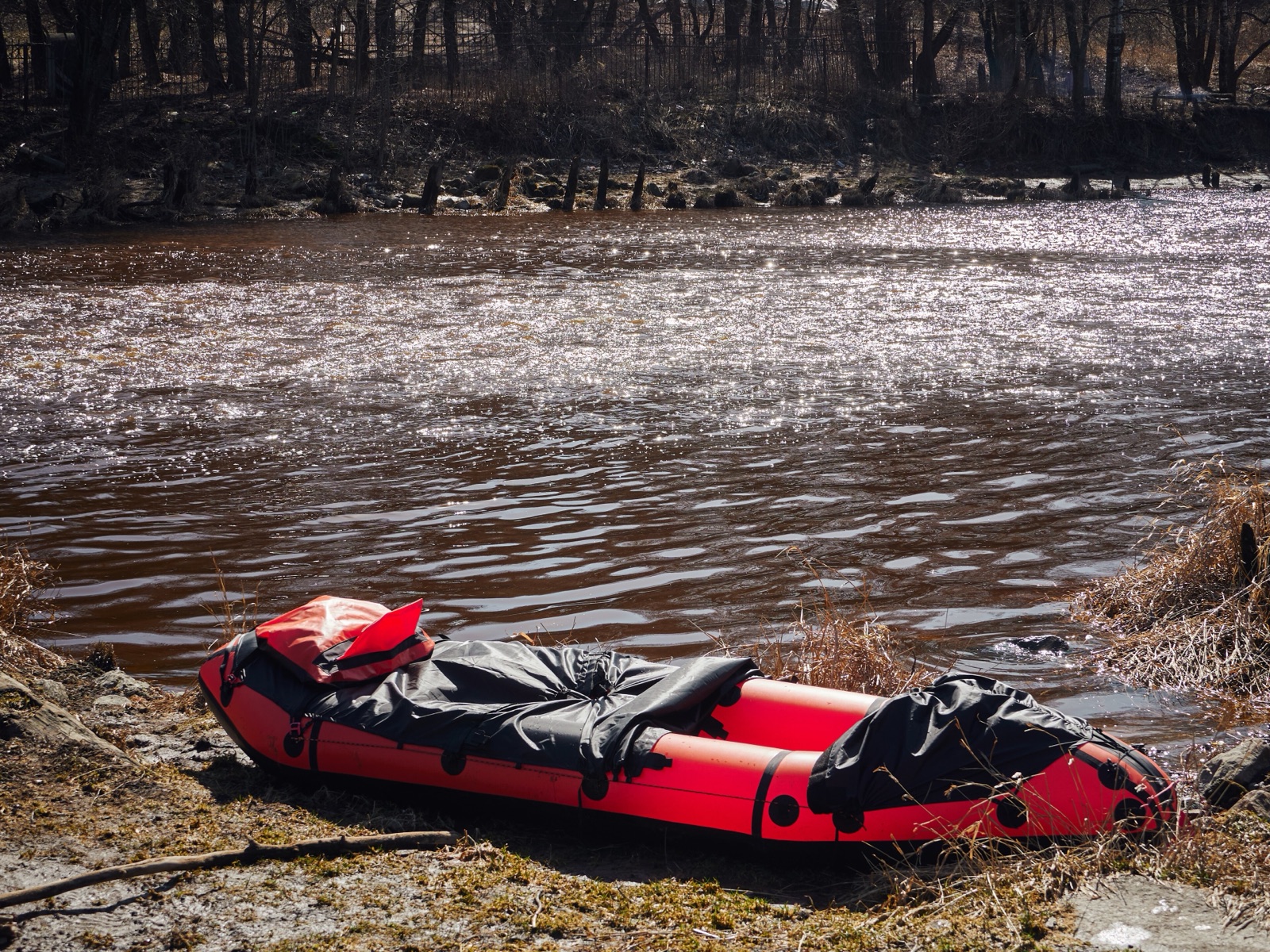
A packraft is an inflatable kayak that weighs less than five kilos and packs down into your rucksack. It opens up a type of trip all its own — walk into the mountains, paddle out — and is the newest of the five paddling disciplines in Norway.
A packraft is an inflatable kayak that weighs two to five kilos and packs down into a rucksack. It is not the same as a raft and not the same as an inflatable kayak — it is a boat type of its own, with its own way of being built and a type of trip entirely its own. You walk over the mountain or the vidde, come down to a river or fjord, inflate the packraft, and paddle out. Or the other way round — you paddle in a stretch, walk on where the water ends, and come out somewhere else.
It is the combination trip that is the real point of the packraft. Paddling on its own works too, but it is the transition between land and water — and the freedom to link them together — that has made the packraft the fastest-growing paddling discipline in Norway over the past ten years.
Where the packraft comes from
The modern packraft came about in Alaska. Thor Tingey was to traverse the Alaska Range together with four university friends in the summer of 1998, an idea inspired by Roman Dial — a professor in Anchorage who had done similar trips in a discontinued model called the Sherpa. Thor himself used a Sevylor Trail Boat. Both were poorly suited — neither strong enough nor river-friendly enough for what Alaska can throw at you.
When he got home, he asked his mother to build him a new one. Sheri Tingey had founded a small ski-clothing firm — Design by Sheri — in Jackson, Wyoming in the 1970s, and had decades of experience sewing technical garments. She mixed that experience with Thor’s ideas, and built the “White Boat” — an inflatable craft in white nylon with a urethane coating, 30 cm tubes and an upturned bow, joined with a hot-air gun and Aquaseal. The year was 2000, she was in her mid-fifties, and the firm she and her son founded that same year — Alpacka Raft — is still the dominant maker of packrafts in the world. Sheri Tingey still leads the design in 2025, 79 years old, from their factory in Mancos, Colorado.
Today packrafts also come from other makers — Kokopelli, Anfibio and MRS — plus Kipara, a Norwegian maker that produces packrafts in collaboration with Lars Monsen. Alpacka defined the genre, and a large share of Norwegian packrafts still come from there, but the market has a broader range than it did ten years ago.
Construction
A packraft is built around two inflated tubes that form the frame and carry the weight. The bottom is reinforced nylon or polyurethane-coated fabric. Over the top there is usually a deck with a spray deck — typically closed with a TiZip waterproof zip, an innovation Sheri Tingey introduced with the “Cargo Fly” system in 2011. Cargo Fly let paddlers pack gear inside the tubes themselves, which lowers the centre of gravity and frees up space on the deck.
The smallest packrafts are light, deckless versions, intended for calm water and shorter crossings — they weigh around two kilos. Standard touring models with a deck come in at three to four kilos. The largest and most robust models — intended for rivers and longer expeditions — can be up to five kilos. You paddle them with a four-piece folding paddle, usually also around 800 grams.
The tubes make the packraft unusually robust. You can paddle over shallows, bump into rocks, and drag the boat across short land sections without any drama. It is not a kayak to be protected, it is a means of transport that takes use.
The Norwegian packraft scene
Packraft came to Norway around 2010 and found a foothold in climbing circles and among hikers who liked long traverses. The growth has been steady rather than explosive, but over the past five to ten years the scene has built itself out considerably.
Packraft Norge works both as a supplier and as a unifying channel — they import boats, organise trips and run the Norwegian-language website. Mad Goats in the Sjoa area offers courses and guided trips both for beginners and for those who want to paddle rivers. Padlespesialisten and a handful of other retailers sell boats and gear. Norrøna Hvitserk organises a classic guided expedition from Hardangervidda to Numedalslågen.
The Facebook groups “Packrafting i Norge” and “Packrafting in Norway” are the most active gathering points for enthusiasts — it is there that people arrange trips, share experiences and ask about gear.
Norges Padleforbund recognised packraft as a discipline of its own under the Våttkort system, and there is now a formal course progression specifically for packraft. That means the scene has gone from “self-organised hobby” to “established paddling discipline” — a transition that gives both legitimacy and a clearer way in for new paddlers.
Where people paddle packraft in Norway
Norwegian packraft geography follows a logic: where land and water alternate closely, and where you can combine a walk or a ski tour with paddling.
Hardangervidda to Numedalslågen is perhaps the classic Norwegian packraft traverse. You walk or cycle over the vidde from the western side, come down to the upper reaches of the Numedalslågen, and paddle down the valley. Norrøna Hvitserk organises this as a guided trip, and many do it on their own over five to eight days.
The Kvenna watercourse on the eastern part of Hardangervidda is a shorter variant. It has been filmed for a documentary, and round-trip variants of 60–70 kilometres from Trondsbu are established routes.
The Sjoa area is the Norwegian centre for river packraft. The Sjoa is one of Norway’s classic paddling rivers, and packraft people paddle both calm and demanding stretches there. Mad Goats bases much of its course activity here.
Lyngen and Lofoten have become internationally recognised as packraft destinations. You can walk alpine mountains and paddle the sea on the same day — a combination of terrain and water that does not exist in many places in the world.
Reinheimen, Jotunheimen and Femundsmarka have lake systems where packraft opens routes that walking alone does not reach. Femundsmarka is classic canoe terrain, but packraft works there too — particularly for solo trips where you want something light to carry.
Competence — Våttkort Packraft
Right up until recent years there was no formal course progression for packraft in Norway. Most of the learning happened through mentor–mentee relationships and informal trips with experienced people. It worked, but it was also a fragile structure — there were varying standards, varying competence, and no common reference.
NPF has now established packraft as a discipline of its own under the Våttkort system, in parallel with Sea, River and Canoe. The structure follows the same pattern as the river and canoe tracks:
- Grunnkurs Packraft (around 16 hours over two days)
- Sikkerhetskurs Packraft
- Teknikkurs Packraft — after this you can paddle rivers up to class III
- Aktivitetslederkurs — for those who want to lead others
Heidi Grimnes and Fredrik Feyling run the Aktivitetsleder course on behalf of NPF. Basic courses are organised by several providers — Mad Goats, Packraft Norge, and a handful of clubs around the country.
The safety picture
Packraft has a risk profile that differs from the other paddling disciplines in one important way: you are usually far from help. A classic packraft trip takes you deep into mountain or vidde terrain, often in small groups or alone, often where mobile coverage is sporadic and outside help takes hours or days. That means both technical skill and judgement must be in place before you set off.
The basic safety principles are nonetheless the same as for other forms of paddling: a life jacket is mandatory, your choice of clothing matches the water temperature, and you must be able to handle a capsize. More in rescue in a kayak and cold water and hypothermia — packraft-specific self-rescue techniques build on the same foundation, but are simpler because the boat is more stable and easier to get back into.
On rivers, other risks dominate — current, strainers, obstacles. That is one of the reasons that dedicated courses are recommended before you paddle rapids in a packraft, even though the boat is more forgiving than a closed river kayak.
For the combination trip — where much of the time is in fact spent on land — turning back in good time and general principles of trip planning also apply. The packraft trip is never just paddling; it is just as much a walk or a ski tour, and you plan and assess as you would on a longer traverse.
Season
The packraft season in Norway is shorter than the pure paddling season, because much of the terrain requires that the ice sheet has gone and that the mountain passes are accessible.
In the south and the lowlands you can packraft from May to October in principle, but the most trip-active months are July, August and September. By then the ice sheet is completely gone, the mountain passes are open, and the days are still long enough.
In the north — Lyngen, Lofoten, Finnmark — the season starts later, often June or July, and can stretch into September.
For river packraft, the season is governed by water flow. Snowmelt in early summer gives high water levels and often stronger rapids; later summer and autumn give lower water flow and calmer paddling.
Winter packraft exists in niches — particularly among people who combine a ski tour with paddling in open fjord arms or ice-free rivers. It is not a widespread phenomenon, but it is there.
Why packraft opens something new
What makes packraft interesting is not the paddling in itself — that is simpler than both sea kayaking and river kayaking. What is new is that you can link landscapes and forms of movement that were previously separate.
You can walk in to the mountains and paddle out. You can combine the best walk with the best paddling water, instead of choosing. You can cross a lake that would otherwise have required a long detour. You can cycle with the packraft in your bag and paddle where the bike cannot go any further.
That makes packraft belong just as much to the mountain and hiking scene as to the paddling scene. Those who climb, ski, or are hikers first and paddlers afterwards are often the ones who take packraft up the quickest. For them the packraft is an extra tool in the bag, not a separate activity.
Next steps
If you are interested: go on an intro trip with Mad Goats or Packraft Norge, or join the Facebook groups and look for open trips. It is a relatively small and welcoming scene, and people are generally open to bringing along newcomers.
If you want to learn systematically: take Grunnkurs Packraft through an NPF-affiliated provider. More on the structure in the Våttkort system.
If you already paddle something else and want to broaden your repertoire: packraft requires its own progression, but much of the knowledge about judgement, cold water and rescue carries over from sea kayaking or river kayaking. The difference lies mostly in the combination-trip mindset — that you have to plan land and water together.
General considerations that apply to all paddling — the conditions, the risk picture, when to turn back — are in reading wind, waves and current and turning back in good time.
Learn more
- Norges Padleforbund — Grunnkurs Packraft
- Mad Goats — packraft courses and trips in Sjoa
- Alpacka Raft — Our Story
Text: Snuitide (2026).