Trip Planning
Turning back in good time
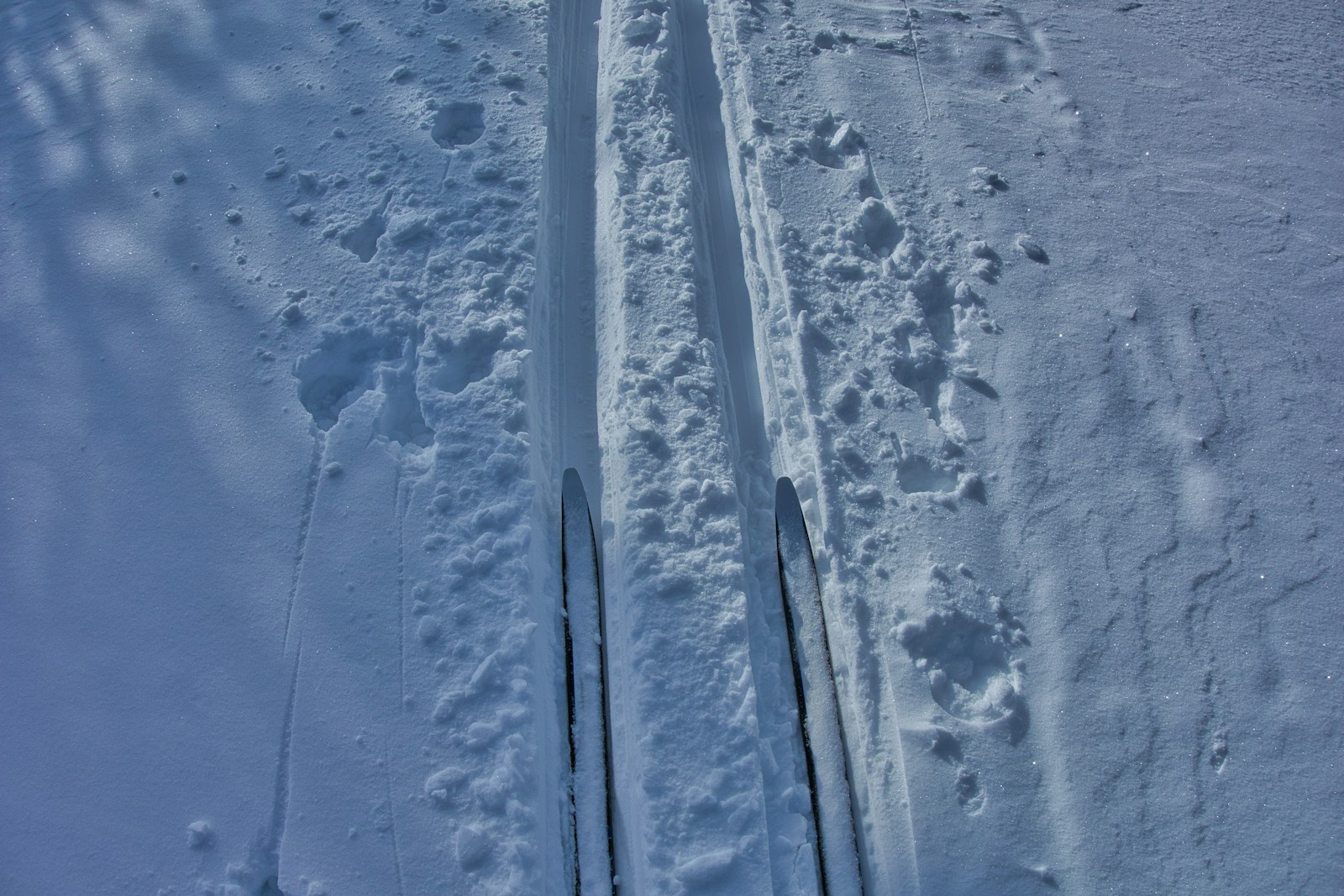
Turning back is a skill, not a defeat. Here is how to assess the weather, the terrain, the group and yourself — and how to recognise the thinking that stops you turning back when you should.
“Turning back in good time” is one of the most important trip skills that Norwegian friluftsliv has put into words. It is usually rule eight in the fjellvettreglene, and it is at the same time the core of the whole tradition: the trip is not the goal, the assessment is. A trip you turned back from because the conditions did not hold up is a good trip. A trip you completed against your better judgement is a dangerous one — regardless of whether you got home unscathed.
This article is about what actually needs to be assessed, which mental traps stop us turning back, and how you build the habit of asking again — even when the answer is uncomfortable.
Turning back is a skill, not a defeat
In sporting culture, giving up is a sign of weakness. In the mountains it is the opposite: the ability to turn back is what separates experienced trip-goers from inexperienced ones. Nils Faarlund put it simply: we do not go out to prove anything, we go out to be in nature in a way that means something. That meaning disappears the moment the trip becomes a fight against your better judgement.
That does not mean you should turn back the moment things get difficult. Quite the opposite: one of the reasons we go on trips is that we get to test ourselves against something that demands of us. Mastery arises precisely in the borderland between what we can manage and what we can barely manage. But that borderland only works if we continuously assess where it lies — and are willing to pull back when it goes too far.
Four dimensions you must assess
When you are in the middle of a trip and ask yourself whether to continue or turn back, there are in practice four things you assess at the same time. They all hang together, but it helps to separate them out when you are thinking.
| Dimension | What you assess | Examples of warning signs |
|---|---|---|
| Weather | Visibility, wind, precipitation, temperature, and how this is developing | Cloud cover closing in quickly, wind picking up, a change from dry to wet snow |
| Terrain | What lies ahead of you, slope angle, exposure, snow conditions, ice conditions | An avalanche-prone hanging slope ahead, steep sections with no alternative route, open watercourses |
| The group | Energy level, motivation, pace, the skill level of the weakest member | Someone lagging behind, someone cold, someone quiet who usually is not |
| Yourself | Your own state: tiredness, judgement, level of attention | Do you feel distracted, irritable, or have you stopped noticing small things? |
The last dimension is the one most often forgotten. When you yourself are tired, you do not make good assessments of the other three. Experienced trip-goers know that the first signs of poor judgement are that they stop checking the map, stop looking up at the weather, and start focusing only on the next step.
Mental traps that stop you turning back
It is rarely the assessment that fails when people do not turn back in time — it is the decision. You know the conditions have turned. You know the group is worn out. Yet you carry on. Why?
Sunk-cost thinking. “We have come so far. It would be a shame to turn back now.” This is the most universal of the mental traps, and the least rational. What you have already spent of your strength has no relevance to what the right choice is going forward. Ask instead: if we had woken up at this point this morning, would we have gone on from here?
Goal fixation. “We are almost at the top.” When the summit is visible, many people stop assessing — they just keep going. This is how accidents happen on the last three hundred metres. The summit is not the goal. Getting home is the goal. The summit is an optional stop along the way.
Group dynamics. In a group, the one who first feels uneasy will rarely say so. People wait for someone else to mention it. If you are the group leader, or simply an aware participant, your responsibility is to ask explicitly: “How are you all really doing?” Not “all good?”, which invites a “yes”. Real questions with room for honest answers.
Competence gap. The one with the most experience in the group assesses from their own margins, not the group’s. If you are leading people with less experience, you must plan with their margins, not yours. That often means turning back before you yourself would have done alone.
“It will probably be fine”. The most common, and the worst. Often it is fine. But every time you make the choice based on “it will probably be fine” without actually assessing, you have set a precedent for making the same choice next time under worse conditions.
Checkpoints along the way
Assessment is not something you do once at the start and once when something goes wrong. It is a continuous act. Experienced trip-goers have three fixed checkpoints they use:
Checkpoint 1 — At turning points in the terrain. Every time you reach a place where the route changes character — crossing a ridge, descending to a saddle, starting up a steep section — you stop, look around, and assess again. Not because anything has changed, but because it is easier to assess at distinct points than on a steady uphill.
Checkpoint 2 — A time-based interval. Every hour, or every half-hour if conditions are marginal: stop, drink, look at the weather, talk with the group. This breaks the momentum trap where you just keep going and going without registering that something has changed.
Checkpoint 3 — The inner alarm. If something in you says “this is not right”, but you cannot put your finger on what, then stop. Do not go on while you think. Stand still until you have worked out what is bothering you. The inner alarm is often pattern recognition from experience that has not yet had time to become words. It deserves to be heard.
Who decides
On informal trips among friends there is no formal trip leader. That does not mean there is nobody who decides — it means that everybody decides. In practice “everybody decides” usually means “nobody decides”, and the group drifts in whatever direction the strongest will pulls.
There is a better rule: in an informal group, anyone has the right to turn back. If one person says “I want to turn back”, the trip turns back, or that person turns back alone if it is safe. It is not a majority decision, and it is not weakness either — it is an agreement that the group’s enjoyment of being out should never cost an individual more than they are willing to give.
On organised trips (school, outdoor school, courses, club trips) it is the trip leader who has the final word. Then it is important that the participants still speak up — the trip leader cannot know how you are doing if you do not say so. The vegleiar tradition, as Faarlund put it, is about exactly this: the trip leader leads, but does not lead without listening.
After you have turned back
Many find it strange how a good day on a trip can include not getting where you set out to go. But it is a skill of its own to finish well after turning back: not to turn it into a catastrophe, not to go quiet and sour, not to start looking for who was “to blame”.
The best ritual act after turning back is a short conversation, ideally over coffee once you are safely down: what was it we assessed? What would we have done differently? What was it, really, that we did not manage? And — importantly — what was good today, regardless of the fact that we turned back?
It is rare that we turn back and wish we had gone on. It does happen now and then, and it is part of learning. But it is almost always better to turn back one time too many than one time too few.
How to grow in the skill
The turn-back-in-good-time assessment is not something you learn from an article. It is learned in the field, over time, through making assessments and then checking what would have happened. Most people who are good at this have built the skill through three habits:
First, make the assessment explicit. Say it out loud, or write it down in the log. “It is eight degrees below zero, the wind is ten metres per second, the visibility is fifty metres, and we are an hour from the cabin. We are going on because…” When you force yourself to put the assessment into words, the mistakes become visible.
Second, evaluate afterwards. Every trip. What did you say beforehand, what was the outcome, were you right? Over a hundred trips this builds an intuition that cannot be bought.
Third, go with people who are better than you — and ask them what they are thinking. Do not wait until you are a trip leader to start assessing. Assess from your very first trip, compare with the more experienced, learn the difference.
The next step from this article is to read about risk assessment before the trip starts and about the fjellvettreglene as a framework. For winter trips, avalanche knowledge is a skill of its own that builds on the turn-back-in-good-time foundation. When these are well in place, you can take on — and turn back from — more demanding trips with good margin.
Next steps
- Trip plan and risk assessment — the assessment you make before the trip, which sets the frame for the decision to turn back along the way
- The fjellvettreglene — the framework in which “turning back in good time” is usually rule eight
- Route choice and SARTTO — a structured way to read terrain and conditions along the way
- Avalanches — the winter skill that builds on the turn-back-in-good-time foundation
- Trip planning and safety — the whole category gathered