Paddling
The Våttkort system
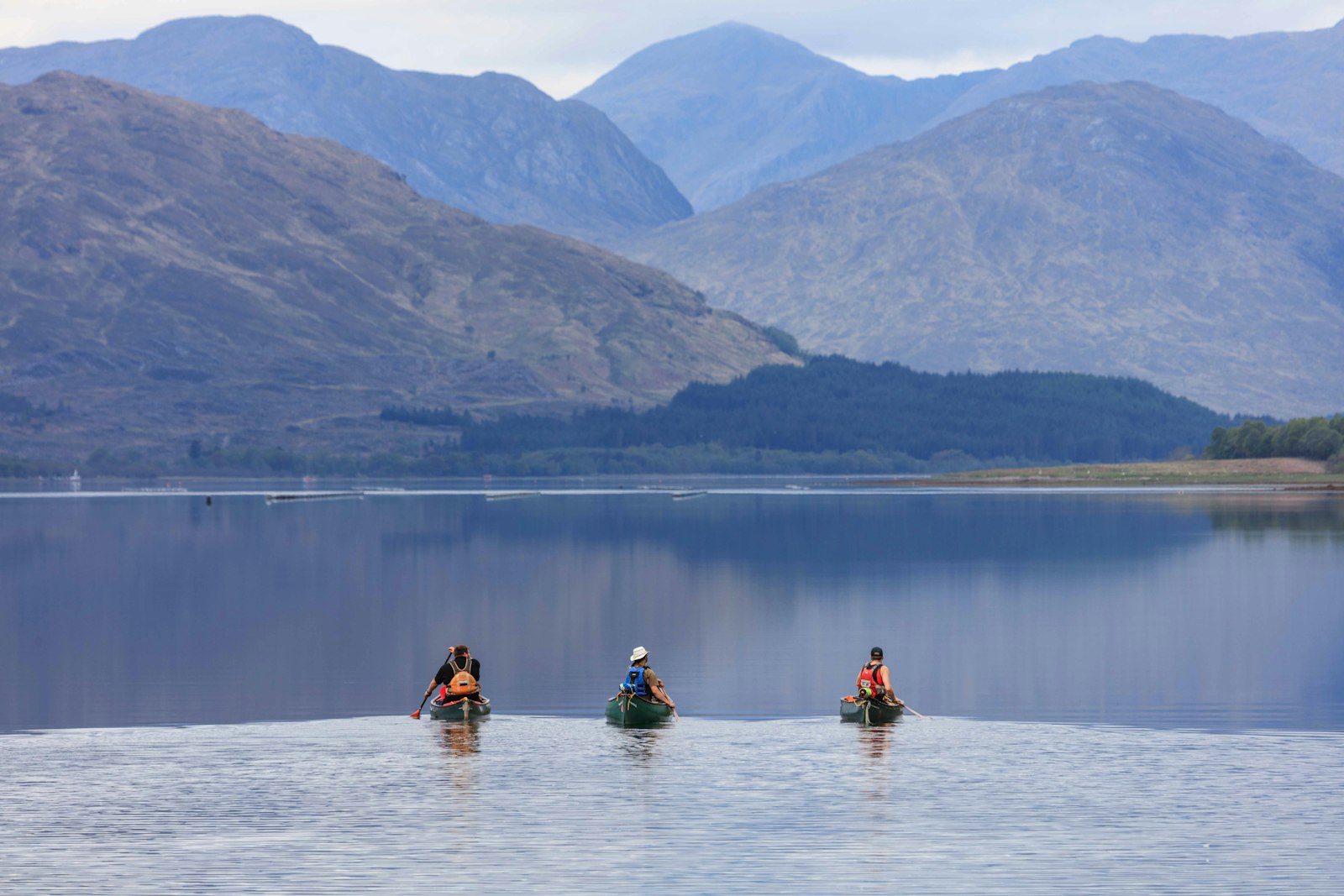
Våttkort is the Norwegian Canoe Association's course progression for paddling, launched in 2006. Seven disciplines, one shared structure from introduction to instructor, and a voluntary progression that has become the de facto competence standard for Norwegian paddling.
Våttkort is the Norwegian Canoe Association’s (Norges Padleforbund, NPF) official course progression for paddling. It is a plastic card the size of a bank card, with room for stickers — one for each course you complete. It documents a structure that has become the de facto competence standard for paddling in Norway, even though it is not legally required. By 2023, around 210,000 Våttkort had been issued since the system was launched in the spring of 2006.
The background
During the 1990s and the early 2000s, several serious accidents occurred in Norwegian paddling, particularly among foreign river-rafting and paddling tourists on Norwegian rivers. The patterns leading up to the accidents were often recognisable: a lack of basic training, an underestimation of current and cold water, the absence of rescue technique. The community itself took the initiative to build a coherent training model, rather than waiting for state regulation.
It is a typically Norwegian model — voluntary, broadly rooted in the clubs, and run by the activity community itself. The result was a system that clubs, rental outlets, instructors and commercial operators have in practice gathered around. You do not need Våttkort to paddle legally, but in practice you meet the system everywhere: rental operators often require it, course progression builds on it, and Norwegian paddling communities assume it as a shared vocabulary.
Seven disciplines under one system
Våttkort today covers several disciplines, each with its own course progression, while the structure across them runs in parallel. The main ones are:
Hav — sea kayaking in open water, fjord and coastal waters.
Elv — river paddling in current and rapids, from calm stretches to class III–IV.
Flattvann — touring kayak and flatwater paddling, particularly on lakes and calm areas.
Kano — open canoe, primarily for lakes and calm rivers.
Packraft — the newest discipline, added after packrafting established itself as a paddling discipline in its own right in Norway.
Surfski — racing-oriented kayaks for open water, often with a focus on fitness and speed.
Polo — kayak polo, a sport discipline with its own course and rules.
In addition there is Livredning ute as a certification for those who will lead activity, and Aktivitetslederkurs and Instruktørkurs as shared superstructures on top of the disciplines.
The structure within each discipline
The main routes in Våttkort follow the same basic structure, with one variation: Hav has no separate safety course as an intermediate step, whereas Elv, Kano and Packraft do. The steps are:
- Introduksjonskurs (3 hours, optional)
- Grunnkurs (16 hours, spread over two days or four evenings)
- Sikkerhetskurs (applies to Elv, Kano and Packraft)
- Teknikkurs
- Aktivitetslederkurs
- Further instructor and tutor courses
You must take the courses in order within the same discipline — you cannot skip the basic course and go straight to technique. You can, however, start directly on the Grunnkurs without taking the Introduksjonskurs first.
What you actually learn
Grunnkurs Hav (16 hours over two days) is the one that introduces you to sea paddling as a discipline. You go through the kayak and the paddle, the right choice of clothing and the use of a spray deck, packing the kayak and trip planning. On the water you practise basic paddling techniques — efficient forward paddling, reverse paddling and stopping, sideways movement, the low brace, sweep strokes and turning. You learn to lift, carry, launch and get aboard. The rescue techniques are practised: self-rescue and the T-rescue with a partner. Finally the course covers injury prevention, seamanship and the right to roam. You are going to capsize — usually on purpose, several times — so that it settles into the body before you need it.
Grunnkurs Elv has the same time frame but different content. Reading the current and reading the river are central: how water moves around rocks, what an eddy is, what an underwater obstruction is. Paddling technique in current is different from flatwater — eddy turn, peeling out, ferry glide. Safety equipment such as the throw line is introduced. After Grunnkurs Elv comes the Sikkerhetskurs Elv, which covers deeper rescue techniques for rivers, before the Teknikkurs Elv lets you build skills for class III paddling.
Grunnkurs Kano is the simplest way in. The canoe is more stable than the kayak and requires less technique for safe paddling. The course covers basic technique such as the J-stroke, the draw stroke and the division of roles between bow and stern, as well as basic safety on the water. After Grunnkurs Kano follow the Sikkerhetskurs Kano and the Teknikkurs Kano.
Grunnkurs Packraft covers the particulars of the inflatable craft — assembly, correct inflation, paddling technique in a less stable craft, and the distinctive features of paddling on the kind of combination trip the packraft is built for. The Sikkerhetskurs Packraft and Teknikkurs Packraft build from there; after the Teknikkurs you can paddle rivers up to class III. More in packraft.
Why the structure looks the way it does
Våttkort is built on what is called discovery learning or experience-based training — you learn the technique by doing it in a controlled setting, not by reading about it. An instructor can tell you that Norwegian water is cold, but the knowledge only settles once you yourself have been in eight-degree water with the spray deck on, on a June day, and felt it in your breathing and your fine motor skills.
The structure also reflects the principle of tur etter evne. There are no gates, no requirement of club membership, and no age limits within the system itself — only a realistic progression in which each step builds on the previous one. You can stop where it suits you, or go all the way to instructor if that is your thing.
Where you take courses
NPF-affiliated clubs run courses across the whole country, particularly in the core season of May–August. Commercial operators also offer courses, often with greater capacity and year-round. At padling.no and vaattkort.no you will find an overview of events.
Price and duration vary between organisers and areas, but a basic course typically runs at 2,000–3,500 kroner and extends over two days or four evenings. A technique course usually costs about the same. Activity leader courses and instructor courses are more extensive and more expensive, and require both prior technical and first-aid competence.
Validity — the card does not expire, but the skills do
The Våttkort has no expiry date. A basic course you took in 2010 is technically still valid as documentation. But the skills the card represents are not static. If you have not paddled for five years, your competence is in practice equivalent to that of someone who has not taken the course at all.
This is why many clubs and course organisers recommend a refresher course, or going straight to a Teknikkurs after a season or two into paddling. It is not about the certificate, but about the body and the judgement having what they need when it first becomes relevant.
International recognition
The Norwegian Våttkort system is inspired by similar structures in other countries — particularly British Canoeing (formerly the British Canoe Union) in the United Kingdom and the German system. At an international level the Grunnkurs Hav and the following steps are recognised as equivalent to these systems, even though no fully formal conversion exists. For paddlers who move between countries or take part in international trips, the Våttkort is in practice a familiar reference in Europe.
Next steps
If you have never paddled: sign up for an Introduksjonskurs or directly for a Grunnkurs in whichever discipline seems most interesting. Sea kayaking and canoeing are the most common ways in. Then paddle with a club or rental operator for the first few seasons before investing in your own equipment.
If you have the basic course: the Teknikkurs is the natural next step. There, brace, edging and rescue in demanding conditions are built in more deeply than the basic course had room for.
If you want to go further towards leading others: the Aktivitetslederkurs is the transition from participant to leader. It requires technical progression in your chosen discipline and a valid first-aid course.
General considerations that apply to all paddling — conditions, cold water, rescue and when to turn back — are found in the related sub-articles under paddling and in turning back in good time.
Learn more
- Norges Padleforbund — Våttkort
- Våttkort.no — course overview and registration
- SNL: våttkort
- Historien bak Våttkort
Text: Snuitide (2026).