Paddling
Reading wind, waves and currents
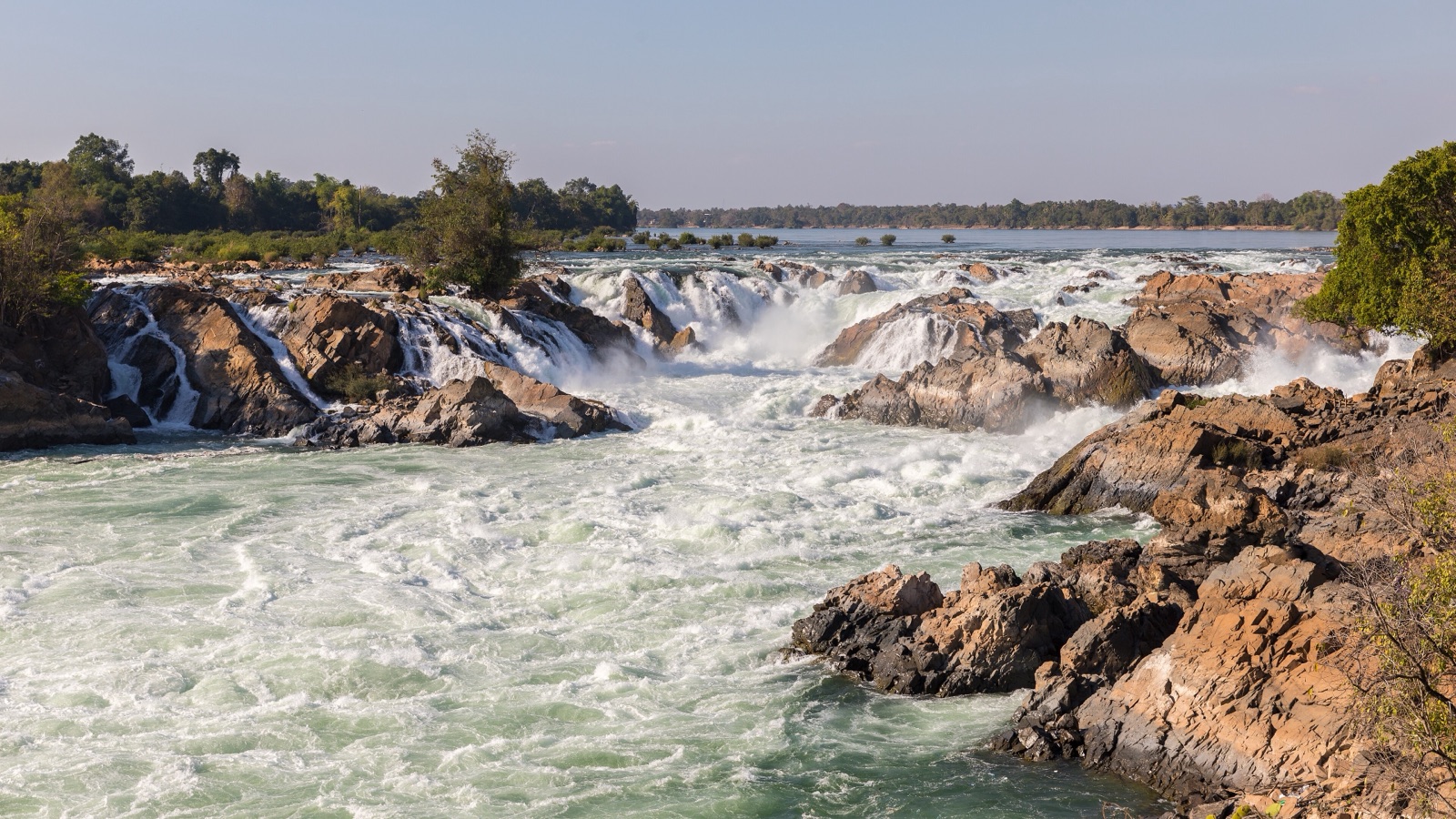
Assessing conditions before and during a paddling trip is the core skill on the water. Here is how to read the Beaufort scale, understand swell and wind waves, and recognise when wind and current are telling you it is time to turn back.
Paddling is an activity governed entirely by conditions. Unlike walking, where you can take breaks and reassess, on the water you depend on having made the assessment before you set off — and on still being able to change that assessment while you are out there. Three conditions dominate every paddling project: wind, waves and current.
This article is about how to read them — not from the forecast alone, but by seeing, feeling and understanding what the number means when you are out on the water. There is no drama in it. It is the craft skill that keeps you safe.
Wind — the Beaufort scale and what the numbers mean
Meteorologists use the Beaufort scale to measure wind strength. The scale runs from 0 (calm) to 12 (hurricane), but for paddlers it is practical to focus on the range 0–8.
| Beaufort | m/s | knots | Name | What you see on the water | For paddlers |
|---|---|---|---|---|---|
| 0–1 | 0–2 | 0–3 | Calm–light breeze | Mirror-smooth or small ripples | Ideal. Anyone can paddle. |
| 2–3 | 2–5 | 4–10 | Light–moderate breeze | Small waves, a hint of foam | Good. Beginners can practise. |
| 4 | 5–8 | 9–16 | Fresh breeze | Small, regular waves, frequent foam | Fine for the experienced. Demanding for beginners. |
| 5 | 8–11 | 16–21 | Fresh breeze | Medium-sized waves, considerable foam, spray off the crests | Demanding. Requires experience reading waves. |
| 6 | 11–14 | 21–27 | Strong breeze | Large, irregular waves, white foam everywhere | Beyond beginners and many experienced paddlers. |
| 7–8 | 14+ | 27+ | Near gale–gale | Very large waves, the sea ‘roars’ | Beyond anyone with any sense. |
The most important thing to understand: when you read the forecast and it says ‘6 m/s wind’, that usually means the average. In the gusts it can be 8–10 m/s — and it is the gusts that you really notice when you are on the water.
Weather sources for paddlers:
- yr.no — the Norwegian weather forecast. Check both ‘now’ (observations) and ‘forecasts’ for the coming hours. Wind direction matters just as much as strength.
- varsom.no — Norway’s warning service for nature, which publishes both avalanche warnings and some coastal observations.
- windy.com — Detailed dynamic weather map. Use the ‘Wind’ and ‘Waves’ layers. Updated more often than yr.no.
- The Coastal Forecast Service (kystverket.no) — The official sea forecast for the Norwegian coast. Updated every hour.
When you check the wind, note the direction too. An onshore wind of 6 m/s is fine. An offshore wind of 6 m/s can take you out.
Onshore wind vs. offshore wind — the most important distinction
Onshore wind blows in towards land from the sea. If it picks up and you have to turn back, it blows you back towards your starting point. That is comfortable.
Offshore wind blows out from land towards the sea. If it picks up, it pushes you further out. You drift away from the coast at increasing speed. That is the danger.
Example: a 5 m/s offshore wind on a calm summer day seems harmless. But if it picks up to 8 m/s halfway through your trip, and you are 2 km out in a fjord, you suddenly have a situation where you cannot paddle into the wind. You have to find another route, or turn and paddle with the wind back — usually a slower and more strenuous route.
For river paddlers: a current that follows an offshore wind makes the situation worse, because you are driven both out and down.
Waves — how wind creates them, and what you see
Waves do not appear at once. The wind has to ‘blow across a stretch’ to gather energy and build waves. That stretch is called fetch — the distance from where the wind started to where you are now.
In a small, sheltered fjord with a short fetch, it takes more wind to build significant waves. In the open sea with unlimited fetch, even moderate wind can build large waves over time.
There are two types of waves you have to recognise:
Wind waves are created by the wind blowing now. They are irregular, with crests that break and foam. When the wind drops, the wind waves flatten over hours.
Swell (dønning) are waves created by wind that blew far away — perhaps a hundred kilometres off. They arrive as long, regular waves that take hours or days to subside. A swell of 1.5–2 metres from a low-pressure system over the North Atlantic can reach Western Norway even though the weather there is calm. When you paddle, you can have the combination: calm wind locally, but a large, regular swell that makes the kayak unsteady and tiring to paddle in.
For paddlers the combination is worst: a moderate wind wave (irregular) + a large swell (regular) = a chaotic sea that is hard to read.
Concrete thresholds:
- Under 0.5 m: calm sea, all levels.
- 0.5–1.0 m: noticeable, demanding for beginners.
- 1.0–1.5 m: serious. Requires experience with wave paddling.
- Over 1.5 m: very demanding. Reserved for the experienced, and often not worth the effort.
When you see waves in the distance (dark stripes on the water), you can estimate the height by comparing them with the kayak: a wave that reaches hip level when you are sitting is roughly 1 metre.
Currents in Norwegian fjords — tides and the major sites
Norway has dramatic tidal differences. In Southern and Western Norway the water level varies by 1–2 metres between high water and low water. This creates tidal currents — water flowing in and out of fjords and sounds with enormous force.
The best-known stretches with strong currents along the Norwegian coast:
- Saltstraumen at Bodø in Nordland — the world’s strongest tidal current, up to 22 knots with huge whirlpools.
- Moskstraumen between Lofoten and Værøy — the classic maelstrom, which inspired Edgar Allan Poe. Can exceed 10 knots.
- The sound at Smøla and Frohavet off the Trøndelag coast — strong tidal currents in narrow sounds.
- Stadhavet off Stad — not a tidal current, but the area where the Norwegian Sea meets the North Sea, known for large waves and difficult sea.
The tidal current is not constant. It reaches its maximum between high water and low water and drops to near zero at the peaks and troughs themselves (slack). You can find current tables and water-level data through:
- se.kartverket.no — Water-level gauge with warnings for the whole coast.
- kartverket.no/sjøkart — The nautical-chart portal has tidal tables for all the main locations.
- yr.no also has water-level data for selected harbours.
If you are planning a paddling trip in an area where current plays a part, start at slack water (around high water or low water) and paddle against the current for the first half. That way you have the current with you on the way home, when you are tired.
How to read conditions along the way
You have checked the forecast and the current table before you left. But the weather conditions change. Here is what to look for while you paddle:
Wind:
- A change in the wave pattern — is it becoming more irregular, or are the waves getting larger crests?
- A change in direction — the wind often rotates before a change in the weather.
- White foam on the wave crests becoming more frequent and more covering.
Current:
- Unexpected drift. If you are paddling in a particular direction and notice you are being moved sideways, that is current.
- Turbulence or whirlpools in the lee of a headland or in a sound.
- Water visibly flowing towards or past a rock.
Swell:
- Long, regular waves from one particular direction, with greater spacing between the crests than wind waves have.
When it is time to turn back
Assessing conditions on the water comes down to a few thresholds:
- Wind over 6 m/s for beginners, or over 10 m/s even for the experienced, means you should plan a return or change your route.
- An offshore wind that is picking up — turn back before you really notice it.
- Waves becoming irregular and larger — that means the change in weather came faster than forecast.
- A current working against you while the wind picks up — you drift backwards even at maximum paddling.
The general principle is the same as for a mountain hike: turning back in good time is not defeat, it is the craft skill that makes paddling safe. If you are not sure, and the weather suggests it is getting worse, turn back before you are exhausted.
Local knowledge is irreplaceable
The theory is one thing. Local knowledge is built over trips. When you paddle the same area many times, you learn:
- Where the current is strong (because you have paddled against it).
- Which winds hit the area hardest (because you have felt the gusts).
- Which days the forecasts have consistently got wrong (because you were out).
There is no online source that replaces this. Paddle with people who know the area, ask what they look for, and take note yourself. After a dozen trips in the same area you know more than most tables can tell you.
Next steps
This article is about reading conditions. To paddle safely you also need:
- Kayak rescue — how to get back up if you capsize.
- Cold water and hypothermia — how clothing and time interact.
- The Våttkort system — the formal competence progression.
And the general one: if conditions change in a way that means you are no longer comfortable, or the group shows signs that it is too much, turn back in good time.