Clothing
The layering principle
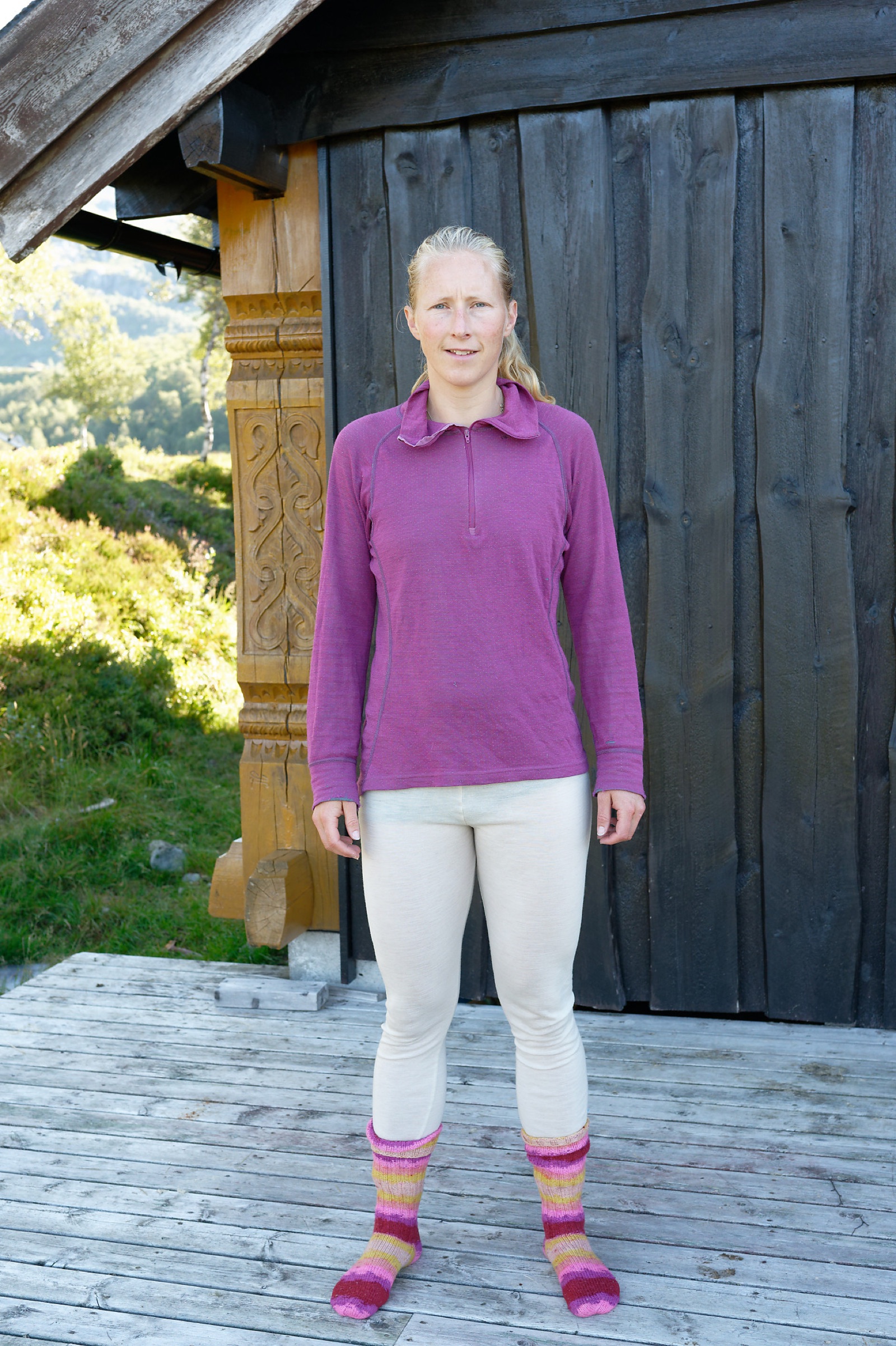
You dress for the weather, the wind, the temperature and your level of activity, and you do it in layers: a base layer, one or more mid layers, and an outer layer.
You dress for the weather, the wind, the temperature and your level of activity, and you do it in layers: a base layer, one or more mid layers, and an outer layer. With several layers you can add or remove a garment as conditions change. The pockets of air trapped between the layers provide insulation of their own.
How to dress for a winter outing.
Innermost — the moisture-wicking layer
The innermost layer — your base layer — should take up sweat and carry moisture away from the body. Cotton is a poor choice here: it absorbs well but moves moisture badly. With cotton next to the skin you soon get wet with sweat, and you do not want to stay in a damp base layer for long.
Synthetic base layers wick moisture well and stay drier than wool. They insulate poorly when wet. Blends of wool and polyester wick well, but soon smell of sweat. Wool does not wick as well as synthetics, but holds its warmth even when wet. Wool and synthetics are therefore what we recommend.
A mesh base layer (helsetrøye) — a string/net mesh base layer, Brynje-style — has plenty of holes. These create air pockets and insulation, and sweat is carried on to the next layer instead of sitting against the skin. That matters especially in cold weather. They come in both synthetic and wool versions.
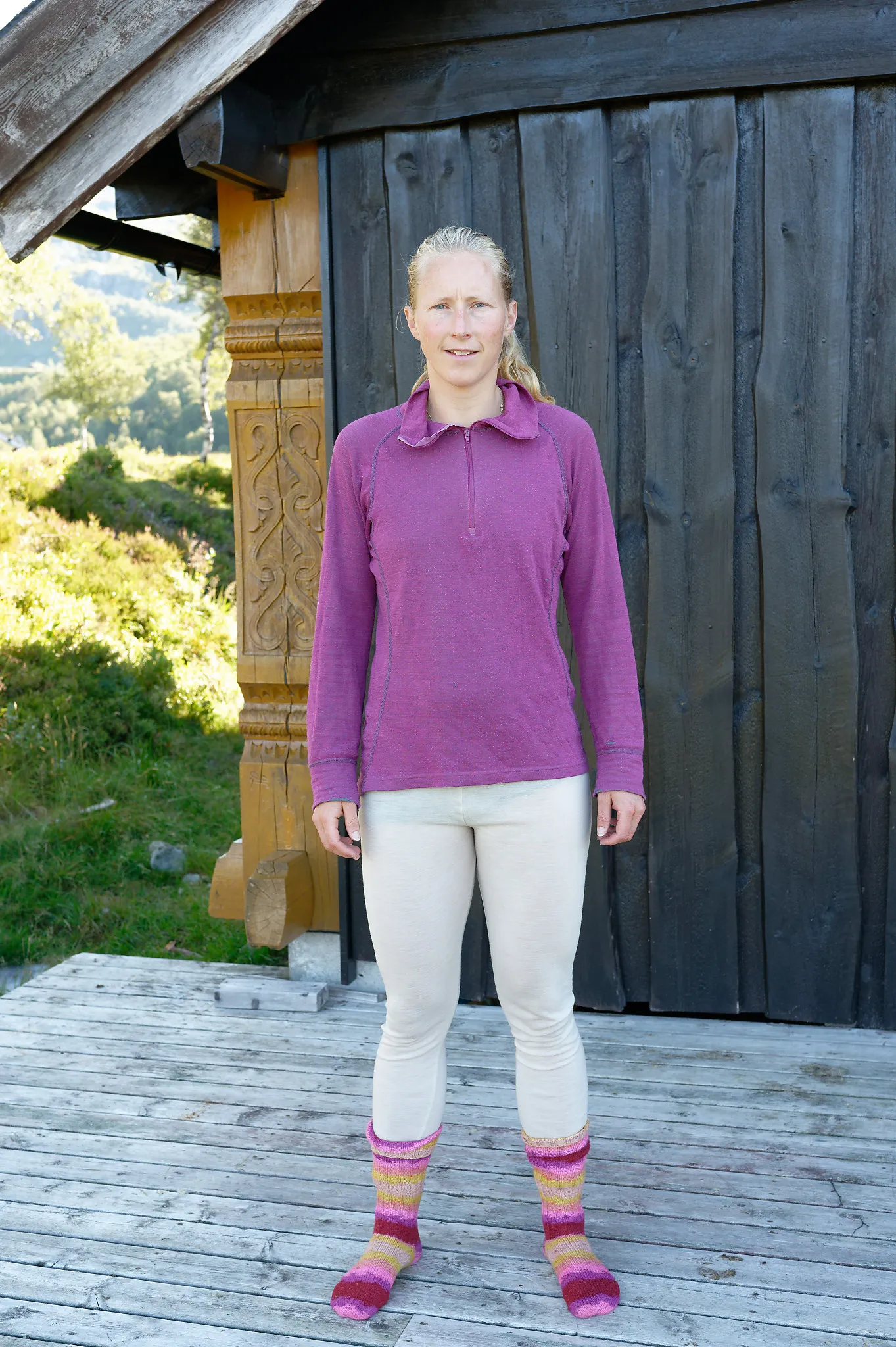
Photo: Ola Njå Bertelsen, Snuitide
Choose socks made mainly of wool. They smell less and last longer between washes. A little polyester in the socks adds durability.
Why wool?
Wool wicks moisture well and insulates even when wet. This is because the wool fibres do not collapse when wet — they hold on to air, and air insulates.
Wool resists dirt and tolerates longer use between washes than other fibres. It also smells less than polyester-based textiles. The drawback is that some wool base layers can feel a little stiff against the skin.
Middle — the heat-regulating layer
The mid layer regulates warmth. Several mid layers may be needed in the cold, especially if you are sitting still. Several thin layers are better than one thick one — they insulate better, and you regulate more easily by taking a garment off or putting one on. The mid layer should also take up moisture and carry it on, away from the body. Choose garments that are easy to vent, ideally with a zip at the neck. When you are active you often need no mid layer at all, because the body produces so much warmth. On a trip with a rucksack or a pulk — a small towed sled — the trick is to wear as little as you reasonably can under the jacket, so you do not get sweaty and wet straight away. The choice is between wool and synthetic materials. A wool jumper or wool jacket warms well, but also gets wet quickly.
After a day out it is wise to be able to pull on a dry mid layer, or change your base layer, so you are not left in damp clothing.
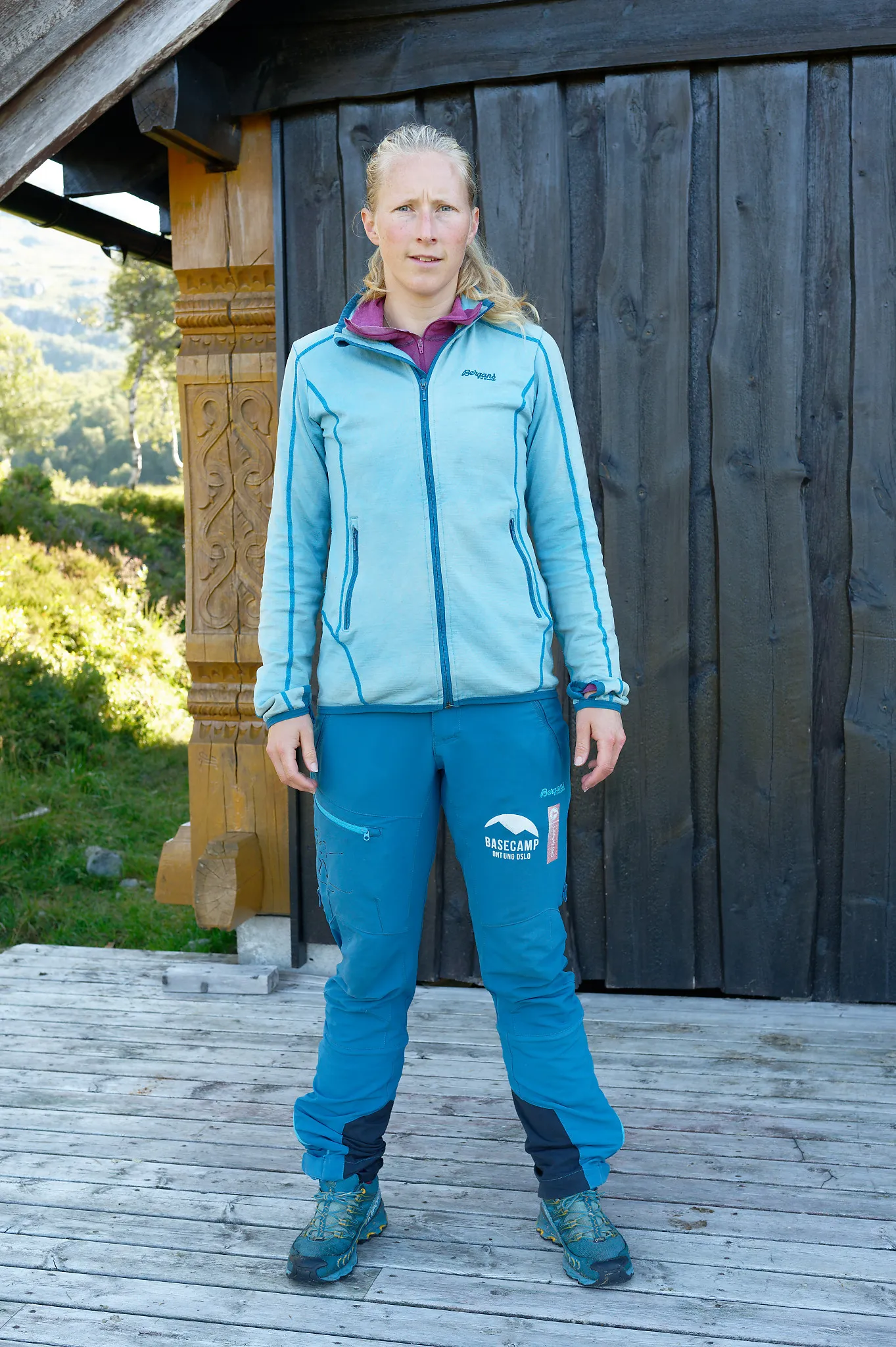
Photo: Ola Njå Bertelsen, Snuitide
Outermost — the windproof and waterproof layer
The outer layer should protect you against the weather: wind, sun, snow and rain. There is often wind in the mountains, and moving air cools you faster than still air. The jacket and trousers must, as a minimum, be windproof. At the same time it helps if the clothing is not completely sealed, so that moisture can escape. Here cotton’s properties are superior to membrane products such as Gore-Tex.
In sub-zero temperatures and clear weather you can swap a membrane garment for cotton. A cotton anorak suits a cold climate very well. It breathes well and often has a large hood with a fur ruff that shields you from wind and weather.
In rain, cotton garments fall short — they soon get wet and dry badly. In winter, in a cold climate, cotton is a good choice, because it does not soak through as quickly. Membrane clothing such as Gore-Tex jackets and trousers often has good vents both under the arms and along the legs, which makes up for the fact that they do not breathe so well.
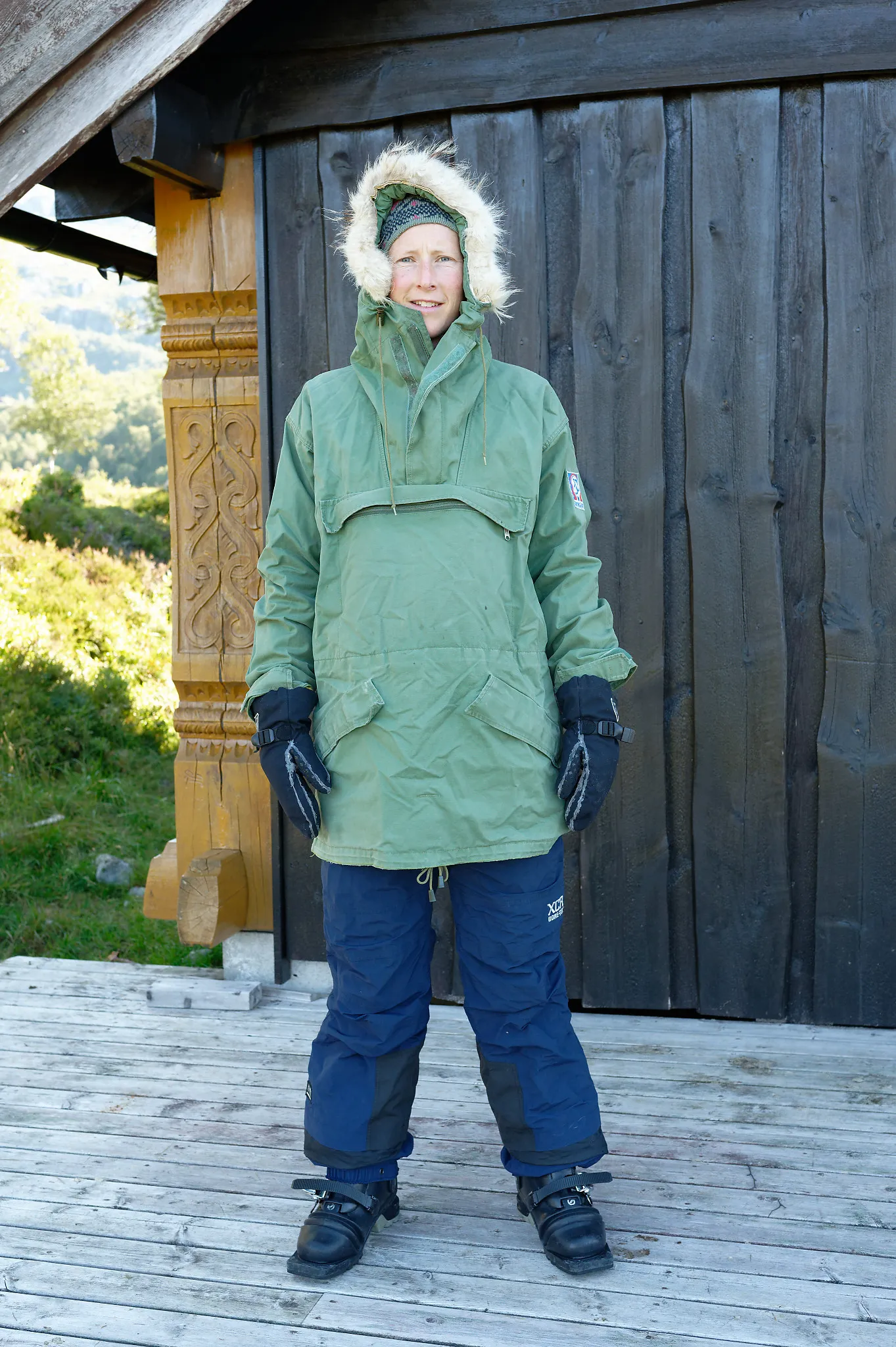
Photo: Ola Njå Bertelsen, Snuitide
An oilskin is the only garment that stays completely waterproof, but in return it does not breathe — which makes it poorly suited to being active. An ordinary rain jacket does the job in the rain. You do not need to buy the most expensive jacket in the shop to head out.
Your head, neck and hands get cold quickly and must be protected against cold and wind. Even in summer, a hat and mittens belong in the pack in the high mountains. Wool is a good choice, especially around the neck. If it is blowing hard and you have to pull the neck gaiter over your face, it gets wet from the moisture you breathe out. Wool feels less stiff and cold than synthetic fibre. Mittens are better than gloves, because the fingers warm one another. Layered mittens — overmitts with a felted wool mitten inside — are better than a single ordinary lined mitten: they are warmer, following the layering principle; you can wear just the one; and they are easier to dry if they get wet.
Next steps
- Choosing materials — which fibres suit which layer
- More about clothing — why it works in physical terms
- Winter clothing — practical adaptation for winter
- Clothing — the hub
Learn more
- DNT — clothing — outdoor-clothing recommendations from the Norwegian Trekking Association (DNT)
- SINTEF Gemini — clothing for the cold — research on friluftsliv (Norway’s open-air life) in the cold
- Klepp & Tobiasson — Lettkledd — a specialist book on sustainable clothing