Clothing
Choosing materials
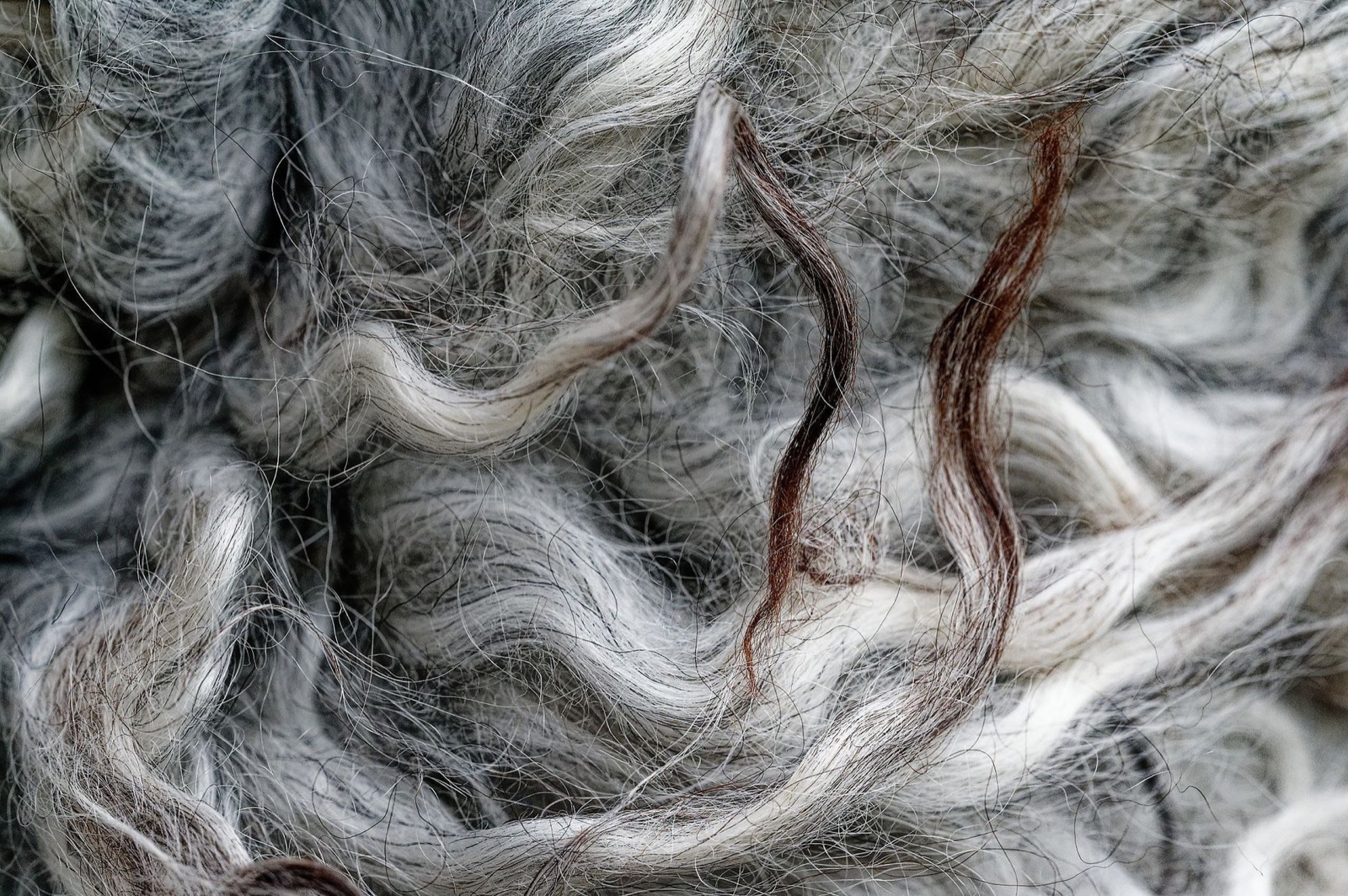
Here is an overview of the various types of fibre and material used in clothing production. These have different properties and uses, and should be chosen accordingly.
Contents
Here is an overview of the fibres and materials that clothes are made of. They have different properties and uses, and should be chosen accordingly.
The information is taken from Klepp & Tobiasson’s (2020) book: “Lettkledd Velkledd med lite miljøbelastning”
It mainly concerns five types of fibre and material: natural fibres, synthetic fibres, regenerated fibres, fur and leather.
Natural fibres
Natural fibres are characterised by being biodegradable, because they are made from organic material. The production itself, however, can be very damaging to the environment, depending on how it is carried out.
Plant fibres
Cotton
The most widely used material is cotton, which accounts for over 80 % of production (Klepp & Tobiasson 2020). Cotton is a plant fibre, because it is made from a plant, and it is one of the most readily flammable natural fibres. The fibres are not elastic, they take up water easily, get dirty quickly and dry slowly.
The cultivation of cotton is not very sustainable, because it needs large amounts of water and pesticides, and because the plant is often genetically modified. Organic cotton is more sustainable, but accounts for only 0.68 % of total cotton production (Klepp & Tobiasson 2020). Recycled cotton goes into new materials, including viscose.
Historically, cotton made its entry into Europe through the industrial revolution. Cotton made it possible to produce cheaper and less durable clothing, which led to faster turnover and an emerging fashion industry.
Linen
Fibres from linen tolerate age well, and become more lustrous as they get older. They are stiff, not very elastic and “crack” easily. The path from plant to product is long, and this plant also requires a lot of water. Linen fibres take up a lot of moisture, but dry faster than cotton. Clothing from stinging nettle is so similar to linen that it is often impossible to tell them apart. Hemp, bamboo, sisal and ramie are, like linen, plants whose stalk itself is used to make textile fibre. Hemp is illegal to grow in several countries, including Norway, because it resembles the cannabis plant in appearance. At the same time, hemp is the most productive textile plant, and together with the nettle plants it could contribute to more sustainable textile production in the future (Klepp & Tobiasson 2020).
Animal fibres
Fibres from animals — hair, fur, and fibres that animals make to catch other animals or to spin themselves in — consist of proteins. Of the fibres from insects, silk is the most widely used for textile production. Wool is the collective term for fibres from mammals, often in the sense of sheep’s wool. Several breeds of sheep and other animals have a soft, warm undercoat, and coarser guard hairs on the outside that are longer and offer more protection against the weather. Today sheep’s wool is the most widely used, and sheep have been bred with only one type of wool to avoid having to separate the wool types from each other (Klepp & Tobiasson 2020).
Wool
Wool stays clean longer, smells little after use, takes up moisture well and retains heat even when wet — the fibres do not collapse. Wool also burns poorly and protects against certain chemical gases. Sheep’s wool is the most widely used wool, but worldwide wool accounts for only 2 % of total fibre use (Klepp & Tobiasson 2020). The fine merino wool is soft and comfortable directly against the skin, but tolerates less, because the fibres are thinner and weaker — which is why merino wool garments soon develop holes. Coarser wool, such as that from Norwegian sheep, has great wear resistance and lasts a long time, but several people find that this wool itches more than merino wool. Mohair (from angora goats), cashmere (from goats in the Kashmir mountains), alpaca (from the camelid alpaca) and angora (from rabbits) are other types of wool that are also widely used.
Silk
Insulates well and is relatively elastic. It is extracted from the cocoons of the silkworm.
Synthetic fibres
The production of synthetic fibres has many problematic aspects. The fibres are made from petroleum, that is, oil. They do not take up much moisture, become static quickly, and therefore attract more dirt. Production also uses substances that are very harmful to the environment and possibly carcinogenic. Clothes made of synthetic fibres release microplastics during use and washing.
Polyester
Hard-wearing and tolerates both moisture and heat well. Not as readily flammable as many think, but it melts if it does catch fire. Polyester is the synthetic fibre that is produced most of, and production increases every year (Klepp & Tobiasson 2020).
Regenerated fibres
Artificial fibres made from natural raw material. Cellulose is mostly used in this production. Viscose, modal and lyocell are among the fibres that are made. Viscose has poor wear resistance when wet, unlike the other two. Lyocell, or tencel as it is often called, is made in a more environmentally friendly way because the fibres are biodegradable in water. All three materials take up a lot of moisture.
Fur
Warms very well, but its production and processing are much debated. Avoid fur from fur farming; preferably buy or inherit old furs. It is sustainable to make the most of the animals that are slaughtered — fur from animals that are shot while hunting, or from livestock, is better used than thrown away. Faux fur, incidentally, is made of synthetic fibres and therefore spreads microplastics. It also warms more poorly than real fur (Klepp & Tobiasson 2020).
Leather
Made from animal hide that is tanned. Untreated, the hide will rot quite quickly. Tanning is time-consuming and uses a number of chemicals that are not good for the environment. There are plant-based chemicals that can be used, and leather can be tanned organically, but it is more expensive and more time-consuming and therefore not very common. Fish skin can also be used, something they are skilled at in Iceland. Leather, too, is the subject of debate when it comes to animal welfare. As with fur, it is more sustainable to use leather from animals that are slaughtered than to throw it away (Klepp & Tobiasson 2020).
Overview of various materials and properties Source https://sewport.com/fabrics-directory
Next steps
- The layering principle — how the materials work as a system
- More about clothing — why wool, and what heat loss is
- Winter clothing — cold-specific
- Clothing — the hub
Learn more
- DNT — clothing — outdoor-clothing recommendations
- SINTEF Gemini — cold-weather clothing — research on friluftsliv in the cold
- Klepp & Tobiasson — Lettkledd — specialist book on sustainable clothing
Text Gina Wigestrand, Snuitide (2021)
-
Source
Klepp, I. G & Tobiasson, T. S. (2020). Lettkledd: Velkledd med lite miljøbelastning. Solum bokvennen