Clothing
Winter clothing
In winter you need a little more clothing than in spring, summer and autumn. This is mainly because of the temperature, but also because we have to protect ourselves against snow and wind.
In winter you need more clothing than in spring, summer and autumn. It is about temperature, but also about protecting yourself against snow and wind.
In cold weather with temperatures below freezing and wind, it is important to protect your face against frostbite. A wool neck gaiter or balaclava together with ski goggles is usually enough. In very cold temperatures you should consider a face mask. They are often made of neoprene, and you can buy them or make them yourself (Nerdrum 2019).
Dressing for winter.
Overboots (fotposer) are good to have if you are going to stay overnight in the snow; they prevent much of the heat loss from your feet.
Gaiters keep your boots dry and protect your trousers on a tur.
The Norwegian Armed Forces’ overboots. Photo: Gina Wigestrand
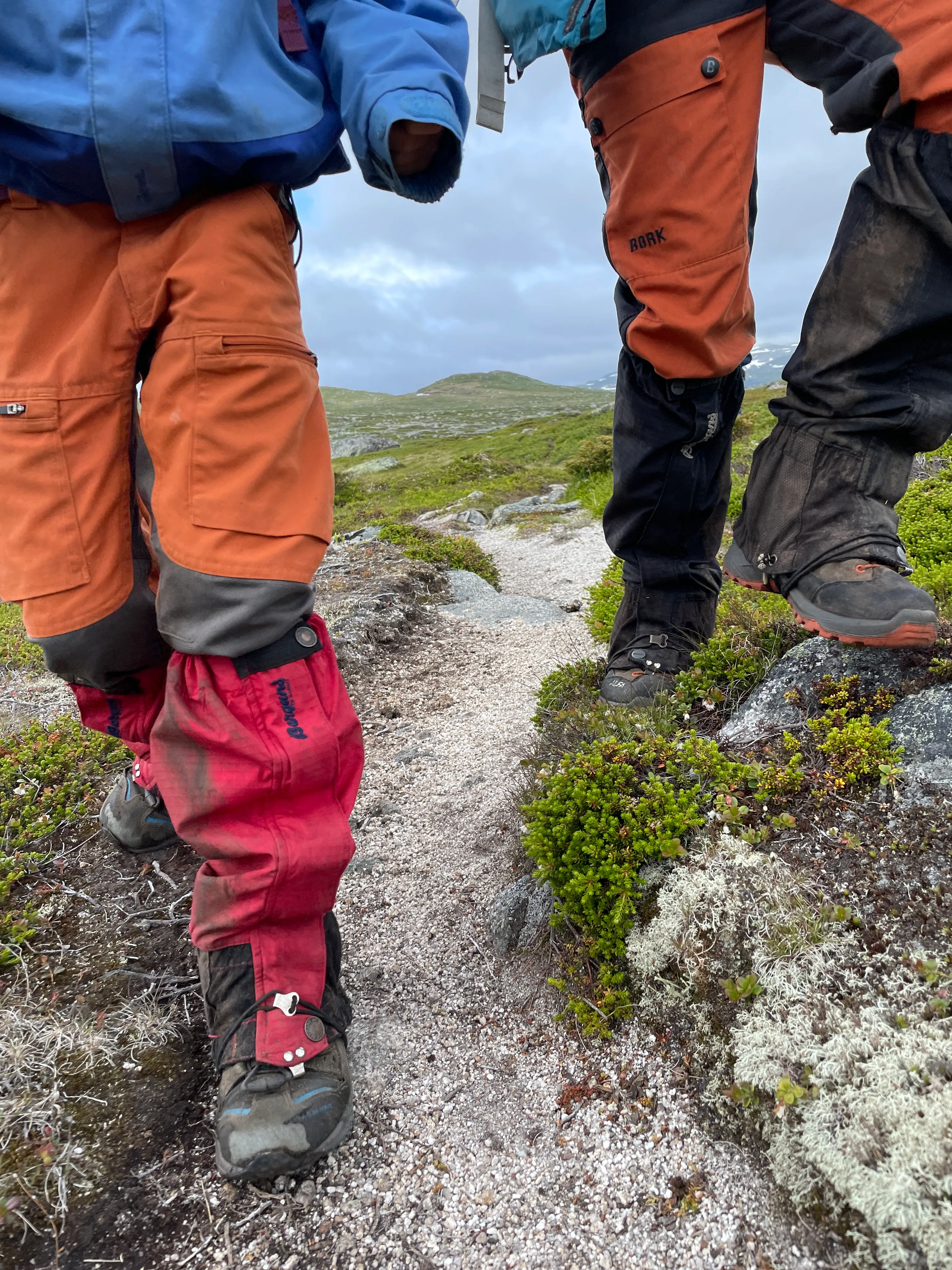
Photo: Gina Wigestrand
Boots and ski boots
The boots must be comfortable to walk in, waterproof and large enough. High hiking boots reduce the risk of a rolled ankle and give the foot good support. The terrain decides the choice. In boggy terrain, boots are good; in rock and scree you need footwear with good ankle support. On shorter trips on a good path or gravel road, with a light pack, you can happily choose lower footwear. The feet swell a little over the course of a day, so choose boots one size larger than usual. That also leaves room for an extra wool insole or support insole. A roomy boot insulates better than a tight one, because air insulates — this is especially important in winter and in ski boots.
What a good outdoor jacket should have
- a hood
- with the option to cinch it in
- ideally large enough for a helmet underneath the hood
- a zip or other opening so you can vent at the neck
- a hook-and-loop flap over the zip (for safety should the zip fail)
- pockets that are not in the way when you walk with a pack
- the option to cinch in at the wrist
- ventilation under the arms
- good water-repellent treatment (if it is not waterproof)
- large enough to leave room for several layers of clothing underneath.
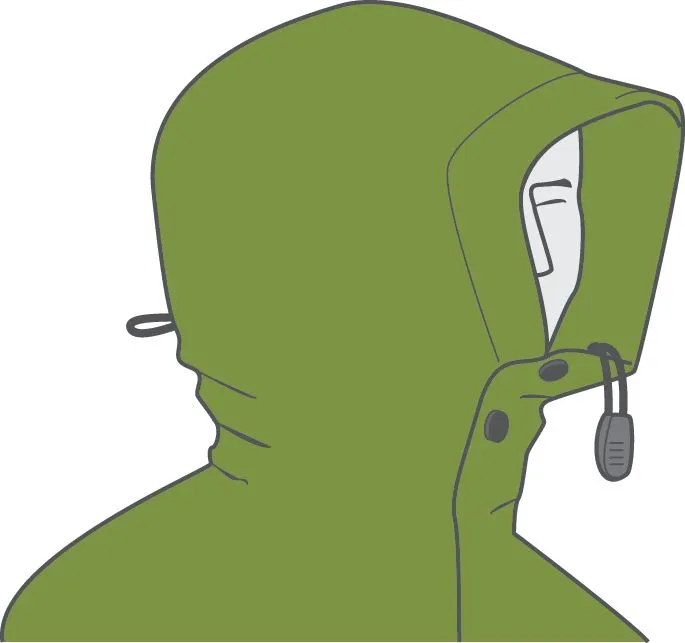
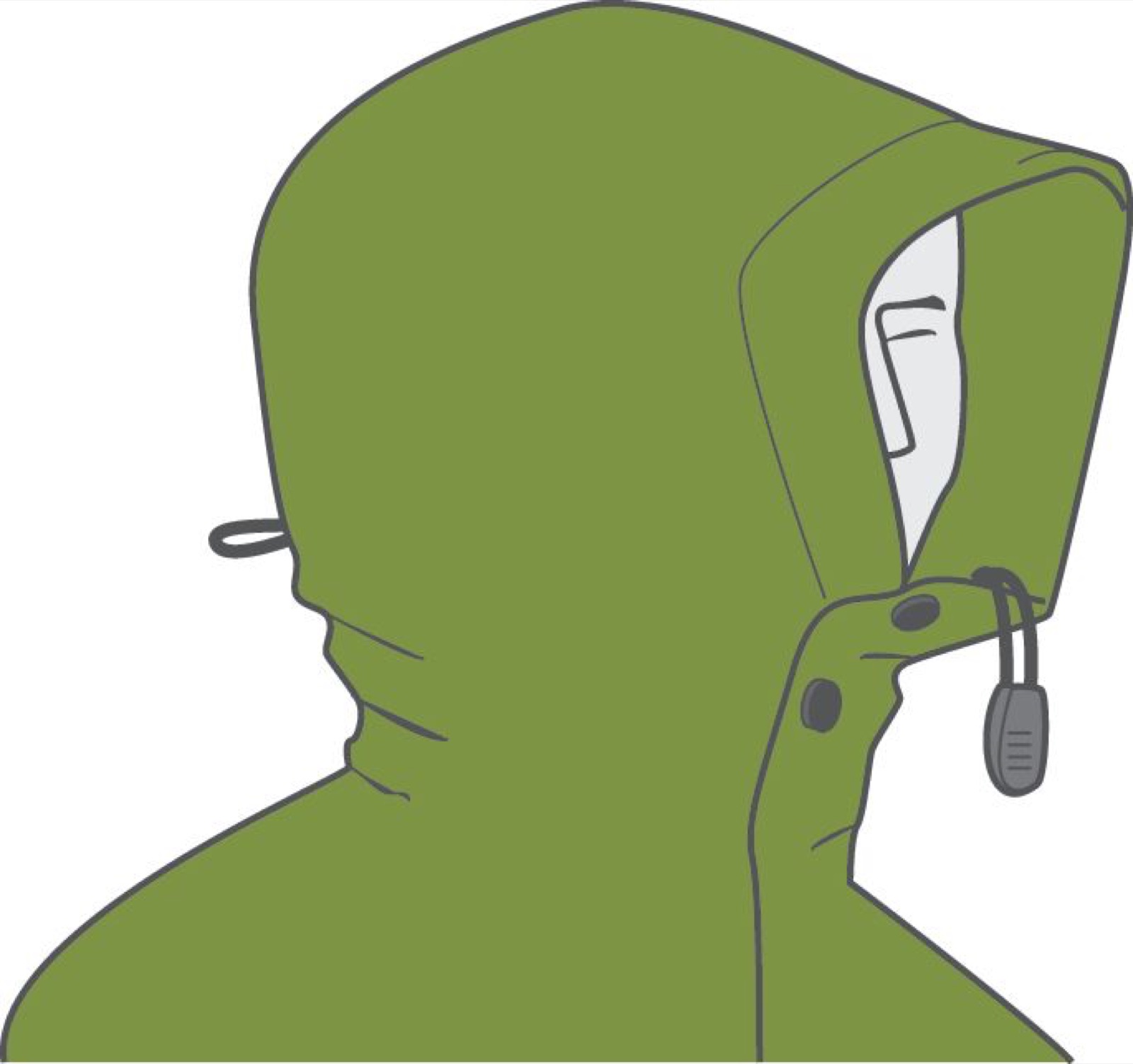
Illustration: K. N. Friis, Turlederboka
Choose a jacket with a large, good hood. It gives shelter when it is blowing hard, and has room for a large hat or helmet underneath. The hood should be adjustable both at the back of the neck and at the front around the face.
Next steps
- The layer-on-layer principle — the basic model
- Choosing materials — fibre properties in the cold
- More on clothing — the physics behind heat loss
- Getting chilled — knowing the risk
- Clothing — the hub
Learn more
- DNT — clothing — outdoor-clothing recommendations
- SINTEF Gemini — clothing for the cold — research on friluftsliv in the cold
- Klepp & Tobiasson — Lettkledd — a specialist book on sustainable clothing
Text Gina Wigestrand, Snuitide (2021)