Clothing
More about clothing
Picture a pot of water boiling. This water cools in several ways:
Contents
Heat loss – what actually happens
Picture a pot of water boiling. This water cools in several ways:
-
Leave the pot uncovered – much of the water evaporates, and the water in the pot grows colder.
-
The pot gives off radiation (in the same way an oven radiates heat).
-
Leave the pot on the worktop – the air and the worktop will cool the water, because the air, and the worktop, are colder than the water in the pot. This is called conduction – or heat conduction in plain terms.
-
Place the pot in running water, and the cooling goes faster still.
In the same way, the body loses heat — through:
- sweating — evaporation
- heat radiation from the body — radiation
- heat conducted away in contact with a colder surface or air — conduction
- cold wind or running water — convection.
The air cools you as long as it is colder than you. Conduction, or heat conduction, happens because everything gives off heat to whatever is colder around it. Warm water in the shower warms you because the water gives off heat to the body. Fresh warm water keeps coming, and the body gets a “top-up”. Cold wind cools you because the wind “steals” heat. The more wind, the more new air there is to steal.
Articles on heat production and heat loss
Varmeproduksjon og temperaturregulering - NHI.no
In the podcast Uteliv, Randulff Valle and Øystein Wiggen explain more about clothing and weather and how this affects the body:
Klær, vær og prestasjoner - med Øystein Wiggen | Podkasten Uteliv on Acast
Myths
No, it is not true that 90% of heat is lost through the head. But the head has a relatively large surface, which is often not as well covered as the rest of the body. Much of the heat is therefore lost from the head and neck. Likewise, Wiggen says, heat loss is large from the legs if you wear thin tights and a big down jacket on the upper body (Lein, 2020).
Du mister ikke mer varme fra hodet enn fra andre kroppsdeler - NHI.no
Why is wool so good?
In short
- wool warms even when wet
- smells little
- stays clean longer
- Norwegian wool has a long life
- merino wool is soft and itch-free, but quickly develops holes
- burns poorly
- protects against some chemicals
- an old jumper is as good as a new one.
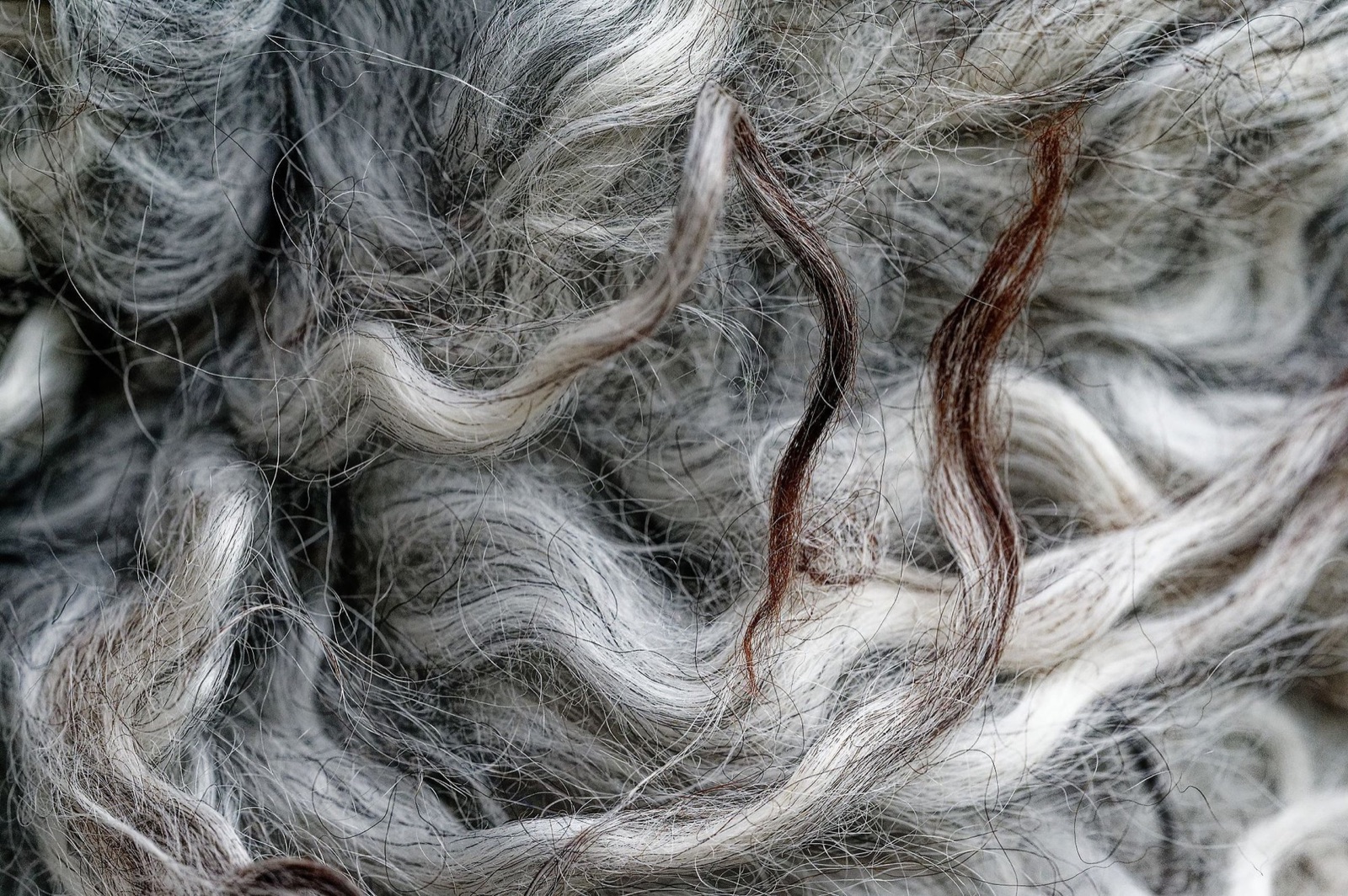
We hear all the time that “wool is gold” and that wool is the best choice as an insulating garment. Why this is actually so has a history. Sheep’s wool has been used for clothing since the Viking Age, and in open Viking ships the Vikings had woven wool blankets they could pull over themselves when they wanted to rest. Two reasons: they had access to wool because they kept sheep as livestock, and they discovered that the wool also warmed when it was wet. In an open ship at sea, one thing is certain, and that is that it gets wet. Unlike many other fibres, wool keeps the same structure even when it gets wet, and retains its insulating properties. The reason is that the wool fibres do not collapse when they are wet — they hold a lot of air, and air insulates well.
Wool from Norwegian sheep is also very hard-wearing and tolerates a lot. In more recent times, merino wool from sheep in New Zealand has become very popular, because it itches less and is softer against the skin. The drawback is that it tolerates far less than wool from Nordic sheep breeds, because the fibres are thinner and not as strong.
Wool also smells little and attracts little dirt, because of the surface of the fibres. Even with only 20% wool the garment smells less (Klepp & Tobiasson 2020). The thick wool (which many find itchy) has a long life because it is so hard-wearing. Wool burns poorly, and is a good choice instead of a fleece jumper around the campfire. Wool also protects against some chemical gases. Norwegian sheep are not treated with environmentally harmful chemicals.
There is no difference in the properties of a wool jumper that is 20 years old compared with a brand new one. The biggest difference is the choice of colour and the fit — for the use itself, an old jumper is at least as good as a new one.
Alternative video about clothing
- Focus on sustainability and inexpensive kit
Bekledning i friluftsliv - hva bør du bruke?
Next steps
- The layering principle — the main pattern
- Choice of materials — fibre properties
- Winter clothing — adapting to cold
- Clothing — the hub
Learn more
- DNT — clothing — recommendations for outdoor clothing
- SINTEF Gemini — cold-weather clothing — research on friluftsliv in the cold
- Klepp & Tobiasson — Lettkledd — a specialist book on sustainable clothing
Text Gina Wigestrand, Snuitide (2021)
-
Sources
Bay, E.G. (2014, 29. september). Bekledning i friluftsliv – hva bør du bruke? [Videoklipp]. Hentet fra https://www.youtube.com/watch?v=m4smBFVAV-c
Den Norske Turistforening. (2013, 13. desember). Bekledning i friluftsliv – hva bør du bruke? [Videoklipp]. Hentet fra https://www.youtube.com/watch?v=cxavXTtJnKc
Klepp, I.G. & Tobiasson, T.S. (2020). Lettkledd: Velkledd med lite miljøbelastning. Solum bokvennen
Lein, M. (2020). Du mister ikke mer varme fra hodet enn fra andre kroppsdeler. NHI. Hentet fra https://nhi.no/livsstil/egenomsorg/du-mister-ikke-mer-varme-fra-hodet-enn-fra-andre-kroppsdeler/
NHI (2016). Varmeproduksjon og temperaturregulering. Hentet fra https://nhi.no/kroppen-var/funksjoner/varmeproduksjon-og-temperaturregulering/?page=all
Norsk Fjellmedisinsk Selskap (2020, 11. oktober). Hypotermi: Håndtering. Hentet fra http://fjellmedisin.no/2020/10/handtering-av-hypotermi/