First Aid
Burns
How to assess and treat burns on a trip — from sunburn to boiling water. 20 minutes of running water is the most important measure. With a treatment film.
The seriousness of a burn depends on which parts of the body are burnt, how much of the surface is involved, and how deep the burn is. Damaged skin also gives open gateways for infection.
Somewhat simplified, you can divide burns into two categories:
Superficial burns
Like a bad sunburn after a long day on the glacier. Such burns give painful, red skin, but no blisters.
Treatment:
- Get the person into the shade.
- The burnt skin can be covered with wet cloths — this is soothing.
- If you have to go out into the sun, cover up all burnt skin completely. Sunscreen will not prevent the injury from getting worse, even when it is overcast.
- Remember to drink plenty of water.
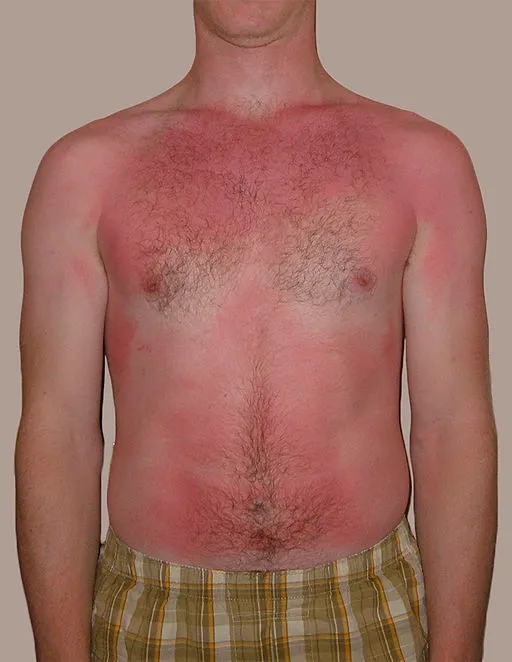
Superficial burns after a little too much sun (and a little too little sunscreen). Photo: QuinnHK, Public domain, via Wikimedia Commons.

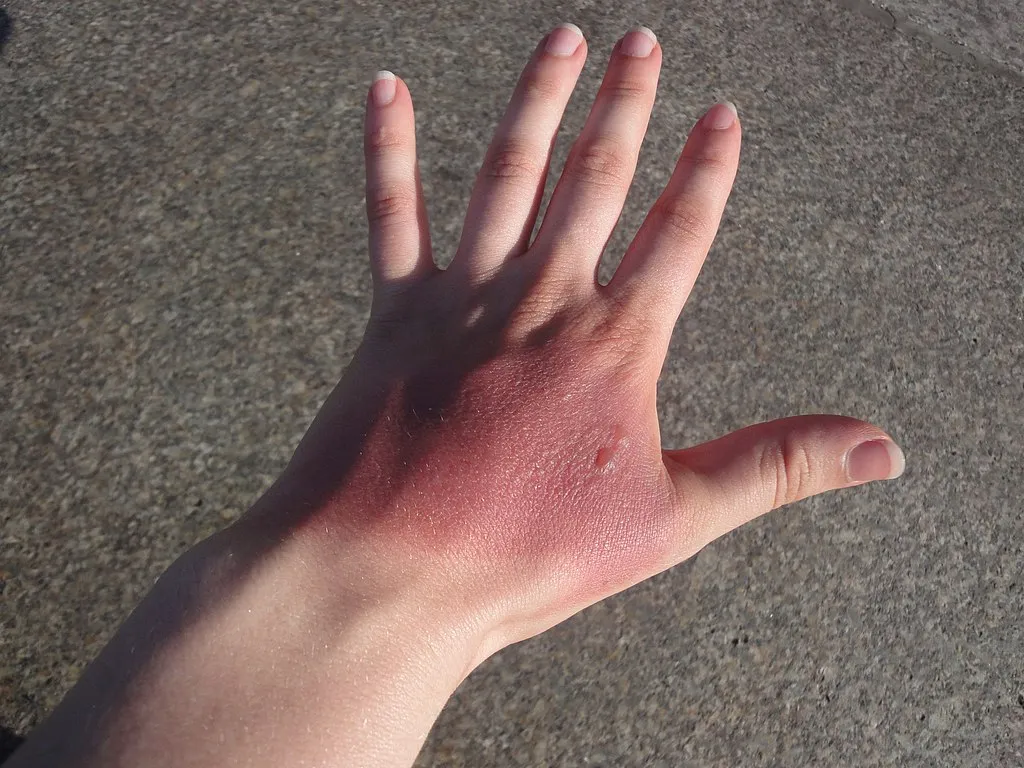
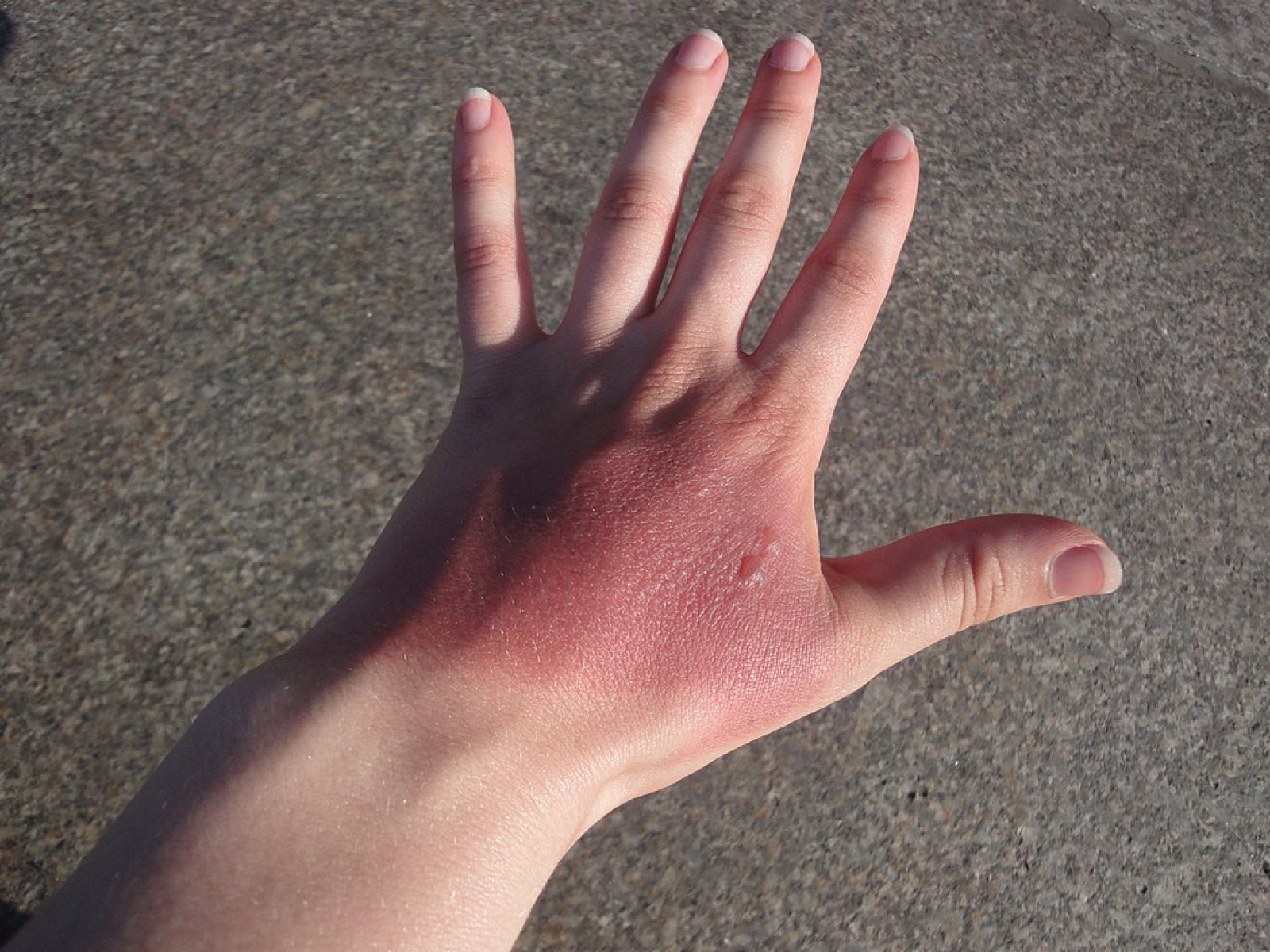
Hand after an encounter with boiling water. A couple of blisters have appeared, indicating second-degree burns. Photo: Vera de Kok, CC BY-SA 3.0, via Wikimedia Commons.

Deep burns
Tend to occur if you get boiling water over you, or are exposed to an open flame. The skin develops blisters with clear fluid (second-degree burns) or may turn white, grey, brown or black (third-degree burns).
Treatment
- Remove the injured person from the heat source.
- Cool the burnt skin with running water for 20 minutes. The water should be about 20 degrees. Reduce the risk of hypothermia by cooling only the burnt skin.
- Further cooling for 15–30 minutes can be pain-relieving. The water should not be colder than skin temperature, to avoid cold injuries.
- Cover the burnt skin with plastic film (Glad Pack or similar) after cooling. Plastic film counteracts fluid loss through the skin and reduces the chance of infection.
- Offer water if the injured person is awake and is not vomiting.
Deep burns of a certain extent should be seen by a doctor, but in the acute phase it is more important to cool the injury than to get quickly to a casualty clinic.
If you continue your trip after a burn, the injured area can be covered with sterile, non-adhesive gauze pads. Change the gauze pads every day, and watch for signs of infection that get gradually worse or come together with a fever.
Next steps
- Life-saving first aid — the basic principles of acute treatment
- Wounds and infection — follow-up if the skin is open
- First-aid equipment — gauze pads and burn dressings
- Alerting the emergency services — when you have to call 113
Learn more
- Norwegian People’s Aid — first-aid courses and wilderness medicine
- the Norwegian Red Cross — first aid and rescue corps
- Norsk Fjellmedisinsk Selskap — the Norwegian society for mountain and wilderness medicine
- the Norwegian Directorate of Health — first aid
Text: Snuitide (2022), revised 2026.
Sources: Medier og kommunikasjon, Hetland vgs (2022). Forslag til behandling av brannskade [Video clip]. https://vimeo.com/737339313