First Aid
First-aid equipment
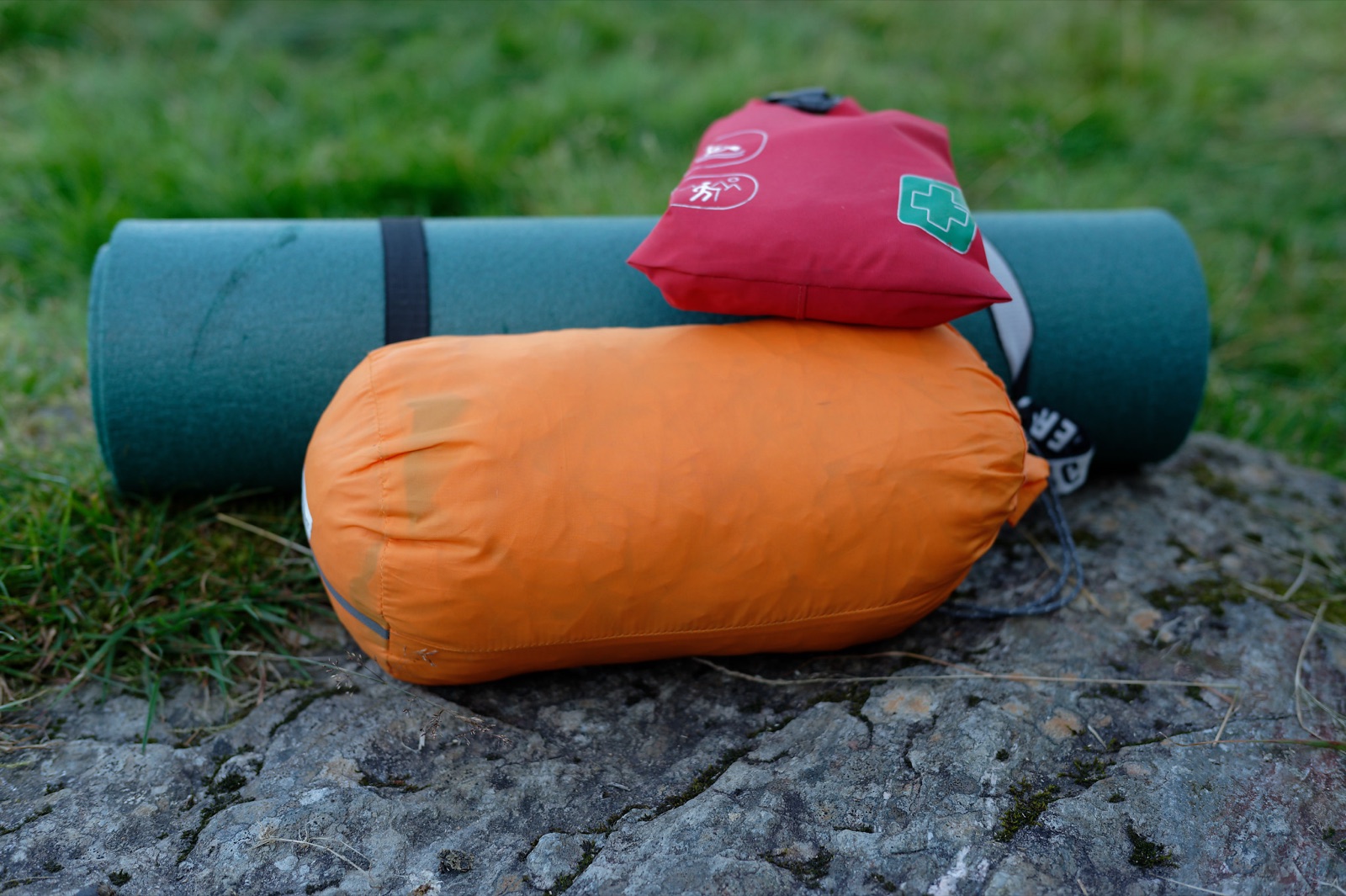
A sleeping mat, a bothy bag and a first-aid kit are among the items that should always come along on a tur.
Contents
The following equipment must ALWAYS come along on a tur
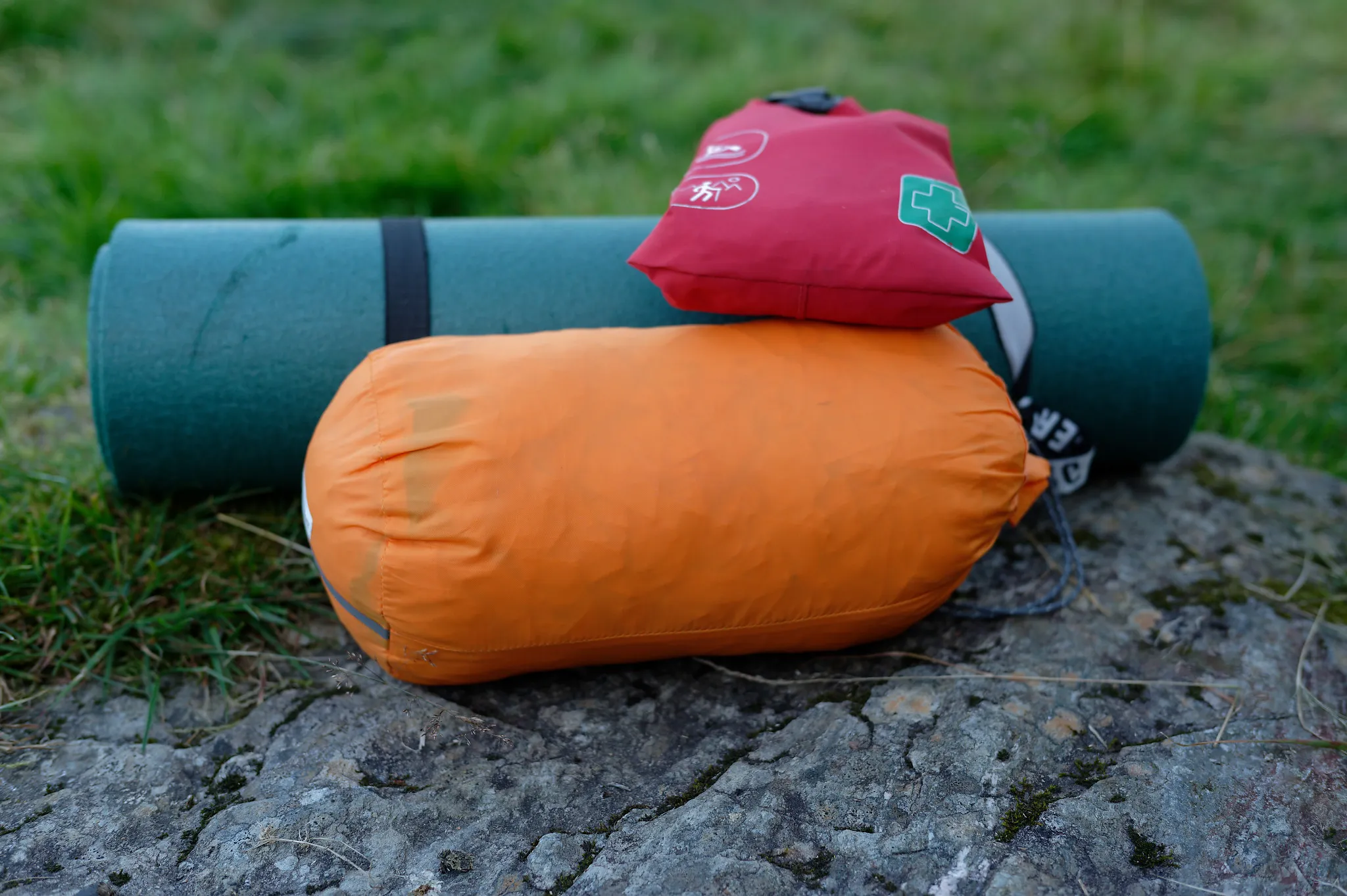
Photo: Ola Njå Bertelsen, Snuitide
- Medical equipment – first-aid kit
- Leatherman (or similar)
- Mobile phone
- Sleeping mat
- Emergency bivouac (bothy bag / Jerven Bag / bin bags)
- Warm clothing
Always bring warm clothing, a sleeping mat and an emergency bivouac to prevent severe cooling (hypothermia) of injured people. A mobile phone, satellite phone, SPOT, InReach or similar should also come along so that you can raise the alarm about an injury.
Suggested contents for first-aid kits (tur)
This is a suggested content for a first-aid kit for shorter turer (under a week). On longer turer you should bring more equipment.
Instruments
1 pair of scissors
1 pair of tweezers
2 gloves – can be left out
Bandage and wound care
-
2 sterile gauze pads, 10x10 cm
Large “plasters” without adhesive that are completely clean. Used on large wounds.
-
1 field dressing
A bandage with a pressure element for applying pressure to larger bleeds.
-
1 support bandage (heavy-duty type)
For getting compression on the foot in the event of a sprained ankle.
-
5 strips
For cuts that “gape”, to close the wound.
-
5 plasters
For minor wounds.
-
2 plasters, 5x5 cm
For slightly larger wounds. Fixed with, for example, sports tape or a gauze bandage.
-
1 elastic gauze bandage
Can be used to bandage around a bleed or to pack into a wound that bleeds a lot.
-
1 sports tape
Can be used for most things. Everything from blisters to a sore ankle, thumb or similar that needs extra support.
-
1 pack of Compeed
For blisters.
-
5 wound-cleaning wipes – can be left out
Used to clean wounds. If you have access to clean water, you can use that instead.
Example of the contents of a first-aid kit. Photo: Gina Wigestrand
Burns
-
1 burn dressing (hydrogel)
For dealing with smaller, superficial burns such as first-degree burns.
-
1 roll of 10 cm cling film (see photo) Image needed
Dressing for larger burns. The cling film does not stick to the burn, retains moisture and ensures the wound is kept clean.
Medicines and ointments
-
1 strip of Paracet (500 mg)
• reduces fever • relieves pain • works well against headache
-
1 strip of Ibux (400 mg)
• Has an anti-inflammatory effect • reduces fever • relieves pain
-
1 tube of Xylocaine ointment
A local anaesthetic ointment that eases pain from, among other things, insect bites, stinging nettle and jellyfish stings.
-
1 antibacterial ointment (bacimycin or zinc ointment)
Used to keep wounds clean.
Tips
- put the contents list in the first-aid kit so that it is easy to tick off what is taken out – and thereby ensure a complete first-aid kit for every tur
- buy waterproof bags and fill them with contents yourself
- alternatively, buy cheap first-aid kits and supplement with what is missing (and take out what you do not need)
Examples of waterproof bags that can be used for first-aid equipment. Photo: Gina Wigestrand
Relevant for longer turer
- suture set (for stitching wounds)
- strong painkillers
- splint (for splinting fractures)
Splint. Photo: Gina Wigestrand
Other safety equipment that is wise to bring
- Tampon – get the campfire going or help stop bleeding
- Cord 4–6 mm, 5 m – can be used for most things
- Head torch – makes any search teams able to find you in the dark
- Whistle – attracts attention
- Storm matches / storm lighter – if it is very windy
- Ziplock bag – can be used for cooling or rinsing wounds
Tips for buying first-aid equipment
There are several cheap first-aid sets you can buy — at the pharmacy, in shops selling equipment for car and home, and in outdoor shops. What most of the sets have in common is that much of the content should be taken out and replaced. They also usually lack sports tape, strips and a proper support bandage. You do not need to buy the most expensive set. You can also buy parts separately and buy a waterproof bag that works as a first-aid kit.
-
Tensoplast
Tensoplast is similar to sports tape, but it is elastic. As a blister plaster it therefore stays very well on the heel.
Kjøp Tensoplast kirurgisk tape 5.0 cmX4.5 m på nett | Vitusapotek
-
Compression / support bandage
Comprilan is a support bandage with limited stretch. It is effective at stopping swelling, but it can be uncomfortable to wear over a long time.
Kjøp Comprilan 10cmx5m på nett | Vitusapotek
A support bandage with a lot of stretch, like the example below, works well to walk in, but is not as effective as Comprilan when it comes to stopping swelling.
-
Splint
Effective for splinting and stabilising.
Next steps
- Life-saving first aid — what the equipment is to be used for
- Alerting the emergency services — communication equipment on the list
- First aid on a tur — the hub — which injuries the equipment meets
Learn more
- Norwegian People’s Aid — first-aid courses and wilderness medicine
- the Norwegian Red Cross — first aid and rescue corps
- Norsk Fjellmedisinsk Selskap — mountain and wilderness medicine
- the Norwegian Directorate of Health — first aid
Text
Gina Wigestrand, Snuitide (2021)