First Aid
Alerting the emergency services
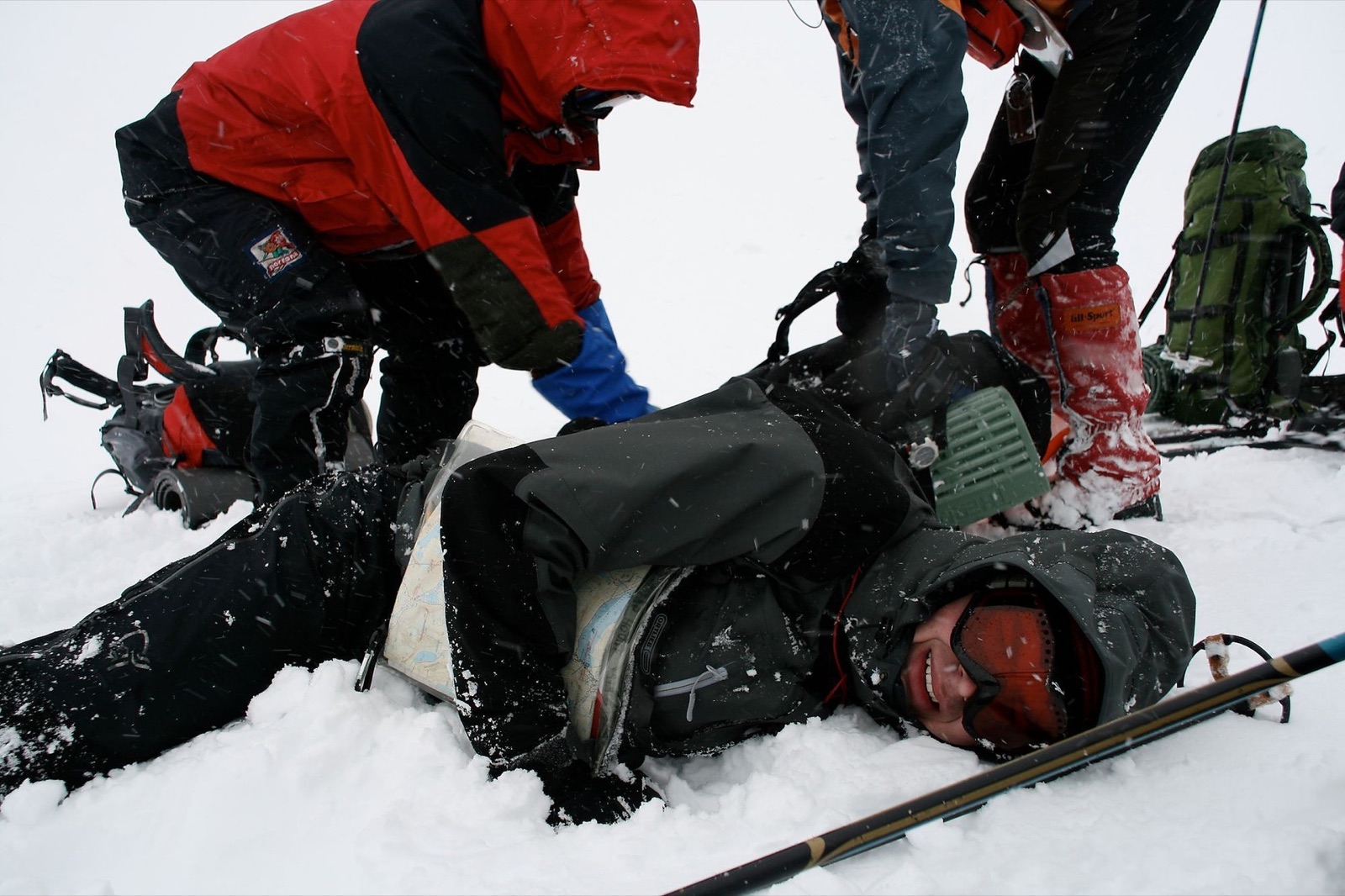
A summary of situation assessment, alerting and rescue.
A summary of situation assessment, alerting and rescue.
How do we raise the alarm?
If you, or someone in the party, needs help, you must alert the emergency services. Calling the emergency numbers is free, and everyone has the right to help in emergencies.
If you think there is a danger to life or health, you should call the medical emergency number on 113. They give first-aid advice, and they send the right medical help to you, such as an ambulance, an air ambulance, first responders or the voluntary rescue service. If you only need help with evacuation, this will be organised by the police. You reach the police on 112. You can still call 113, since the operations centres will alert one another, depending on what the party needs.
One tip is to download the app Hjelp – 113 to your smartphone. If you open this app and tap the number you want to call, the centre you are calling will see your exact position on the map. If you do not have coverage where you are but want to use the coordinates that come up on the screen, you can take a screenshot before you move. That way you can give the coordinates of the place where the accident happened.
If you do not have mobile coverage where the accident happened, you must make your way to the place where you last had coverage in order to raise the alarm. It is therefore wise to note where you last had mobile coverage. If there are several of us in the party, we can split up, so that one or two people set off on foot to a place where one can raise the alarm.
There are also other ways to raise the alarm than a mobile phone. Examples of this are satellite phones, which use GPS satellites to set up voice calls, and emergency position-indicating radio beacons, which can relay an emergency signal with your coordinates by means of satellites.
What should we say when we raise the alarm?
The most important thing that should come across when you call 113 is to give the person you are speaking to a picture of the situation (see the section on Situation assessment). Based on what you tell them, the person you are speaking to will assess which resources should be sent out to help you.
Here is a suggestion for what we should tell them when sick or injured people are involved:
- Say who is calling.
- Tell them what kind of incident it is, e.g. a road accident, a snow avalanche, or that someone in the party has fallen into the water.
- Tell them how many people are sick or injured, and what injuries or symptoms the people have. Do describe the sex and age of those who need help.
- Give the position of the place where help is needed. If you use the 113 app, the AMK centre will already have your position. If you give the position yourself, use a grid reference, in addition to explaining where you are by using place names and terrain features.
Next steps
- Life-saving first aid — done in parallel with raising the alarm
- First-aid scenarios — situation assessment made concrete
- First aid on the trip — the hub
Learn more
- Norwegian People’s Aid — first-aid courses and wilderness medicine
- the Norwegian Red Cross — first aid and rescue corps
- Norsk Fjellmedisinsk Selskap — mountain and outdoor medicine
- the Norwegian Directorate of Health — first aid