First Aid
Frostbite
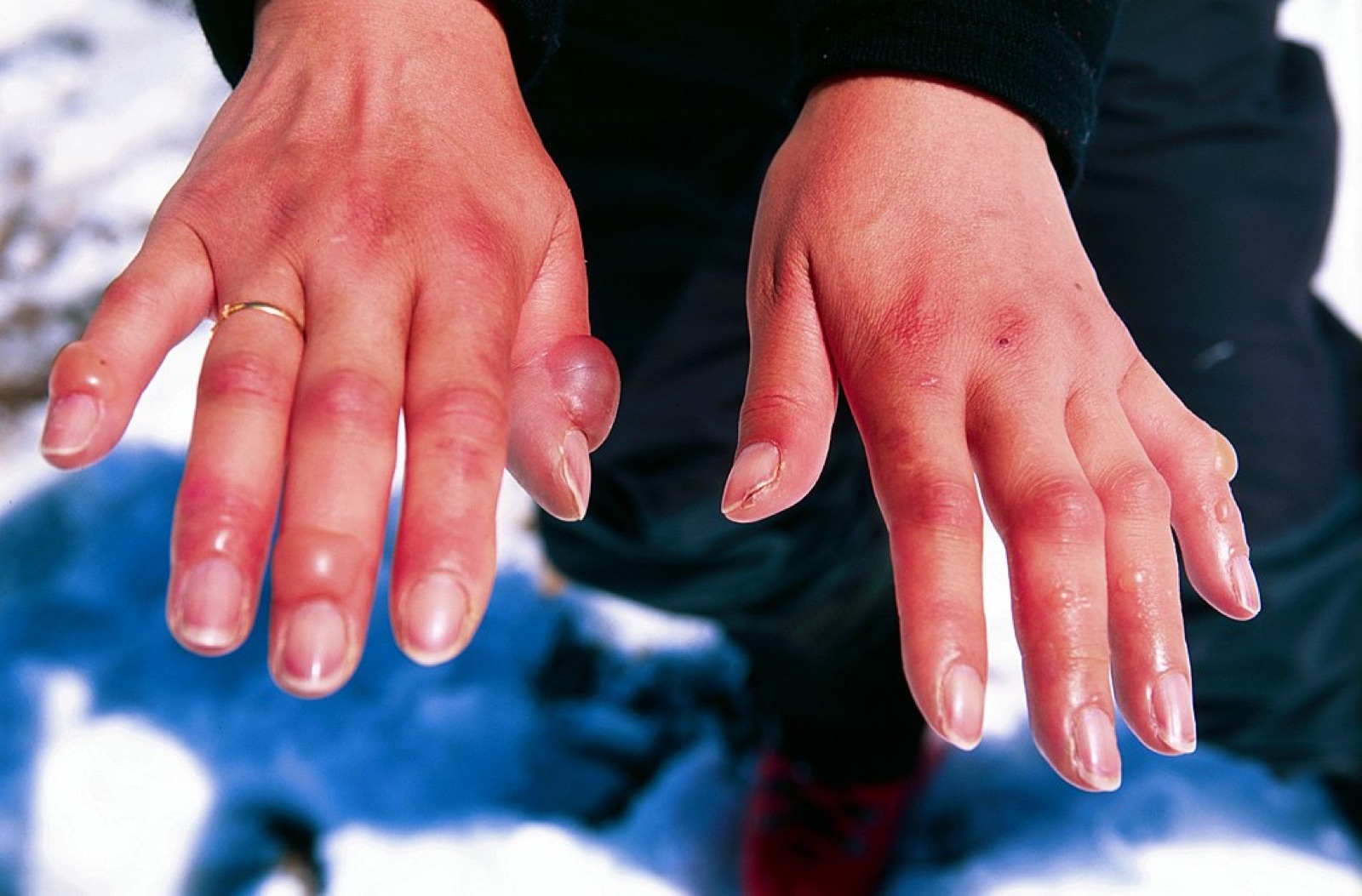
How to recognise and treat frostbite on a tur — from white patches (superficial) to deep blue-black tissue (deep). Treatment focuses on slow rewarming and shelter from the cold.
Frostbite is an injury to the skin that arises because the skin is exposed to low temperatures. As long as the temperature is below 0 degrees, frostbite can occur. Wind on bare skin means frostbite can occur quickly.
You can distinguish between superficial and deep frostbite. Superficial frostbite causes no permanent damage. Deep frostbite will, to a varying degree, cause permanent damage to the skin (Fauske & Bruland, 2019, p. 127).
Superficial frostbite
The symptoms are skin that is reddish at first and gradually white, often combined with localised stinging pain and numbness. You can recognise this kind of injury by looking for white patches/spots on the skin. If the frostbite is allowed to develop, blisters, swelling and severe pain appear.
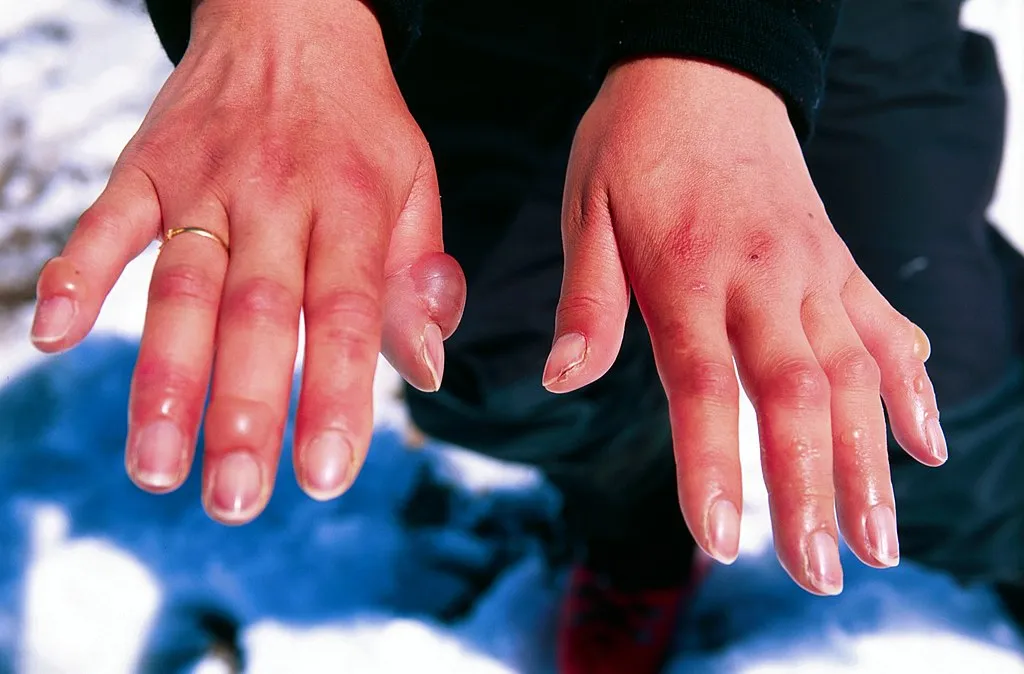
Superficial frostbite on hands. Here we see blisters that have formed. Photo: Winky from Oxford, CC BY 2.0, via Wikimedia Commons.

Treatment
- Seek shelter from the cold.
- Uncover the parts of the body that are cold / may be injured.
- Ensure rewarming until the skin regains its normal colour. Place a warm hand on a cold cheek; place frozen toes on a warm belly.
- Do not rub the skin — it can make the injury worse.
- Keep any blisters intact to avoid infection. If they burst, treat them as wounds with daily inspection and a change of dressing.
Deep frostbite
Deep frostbite involves several layers of the skin and can go as deep as the bone. The frostbitten part loses feeling and mobility, and turns bluish — later deep red or blue-black.
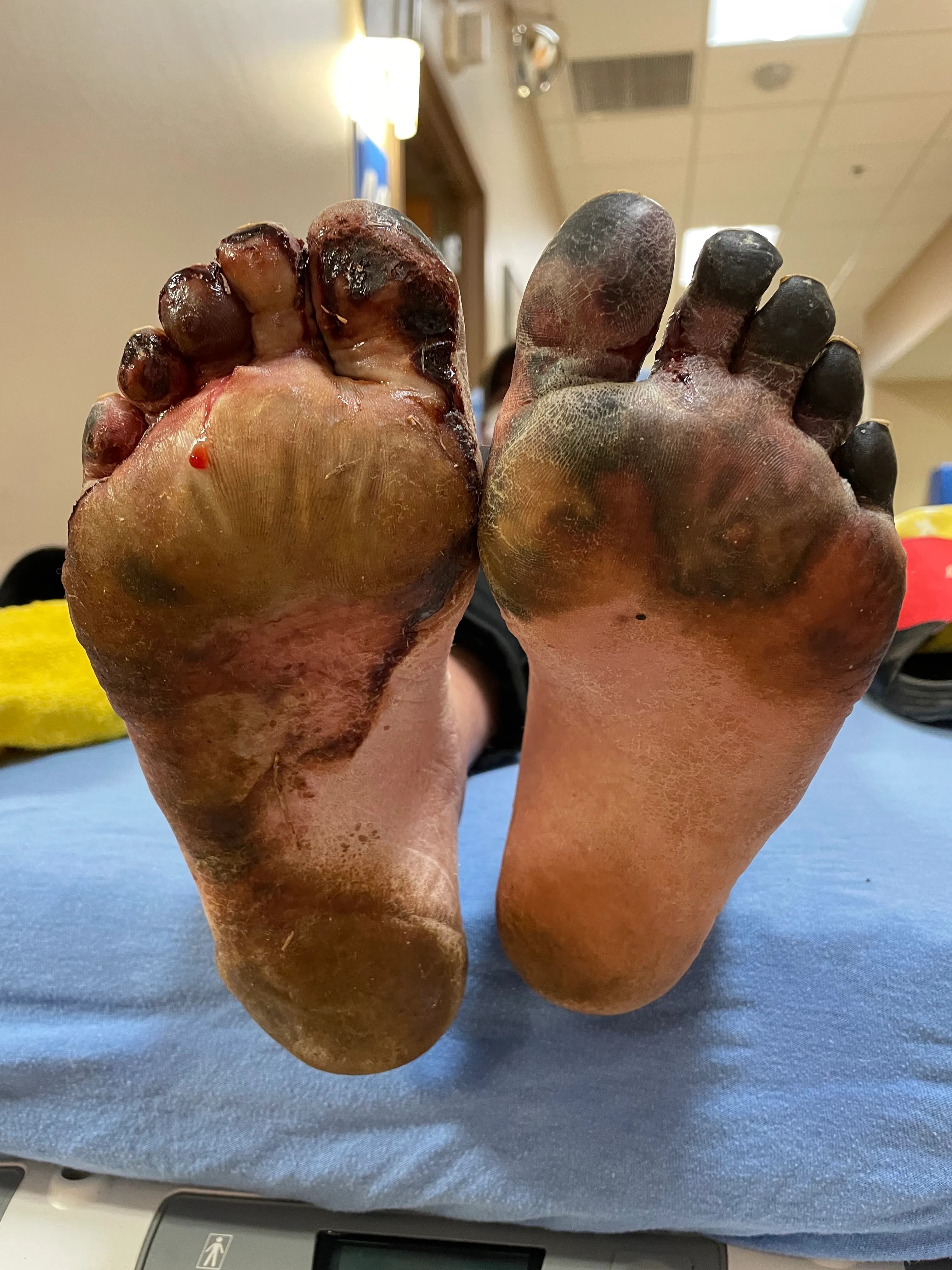
Deep frostbite. In the worst case, body parts that turn black must be amputated because of gangrene. Photo: CheckDO, CC BY-SA 4.0, via Wikimedia Commons.

Treatment
- Seek shelter from the cold.
- Protect the injured parts against knocks and pressure.
- Protect against getting chilled — people with deep frostbite are at risk of hypothermia.
- Deep frostbite must usually be treated in hospital. Raise the alarm if necessary, and consider evacuation.
Next steps
- Getting chilled — the body’s overall response to cold
- Life-saving first aid — the basic principles
- First-aid equipment — emergency bivvy, warm clothes, warming pads
- Turning back in good time — prevention in cold conditions
Learn more
- Norsk Folkehjelp — first-aid courses and wilderness medicine
- Norges Røde Kors — first aid and rescue corps
- Norsk Fjellmedisinsk Selskap — mountain and outdoor medicine
- Helsedirektoratet — first aid
Text: Snuitide (2022), revised 2026.
Sources: Fauske, T. og Bruland, A.S. (2019). Førstehjelp på tur.