First Aid
Wounds and infection
Wounds are a common injury on a tur. This part is about smaller wounds and puncture wounds that do not bleed, or bleed only a little. How to stop a larger bleed is…
Wounds are a common injury on a tur. This part is about smaller wounds and puncture wounds that do not bleed, or bleed only a little. How to stop a larger bleed is explained in the section on Bleeding.
Wounds are openings in the skin, and they mainly present two problems:
- blood loss
- the wound becoming contaminated and developing an infection.
An infection arises if bacteria, viruses, fungi or parasites get past our skin and manage to establish themselves.
Principles for treating wounds
- The person treating the wound should have clean hands; use gloves if you have them.
- If small wounds bleed a little, it is perfectly fine to let a little blood run for half a minute or so. This can help clean the wound.
- If the wound is visibly dirty, rinse with clean water.
- If there is a foreign body lodged in the wound, it should not be removed — then we risk it bleeding more.
- Cover the wound with a clean gauze pad, and bandage or tape around it so the pad stays in place. If you bandage around something, for example an arm or foot, make sure the bandage is not too tight, so that it does not restrict blood flow.
Deep and/or gaping wounds = Apply wound closure strips
- Wipe away blood and other dirt.
- Gently press the wound closed so that it does not gape.
- Apply one or two wound closure strips over the wound to hold it shut.
- Consider whether the wound is so large that it needs stitches — if you are unsure, contact the out-of-hours medical service on 116 117.
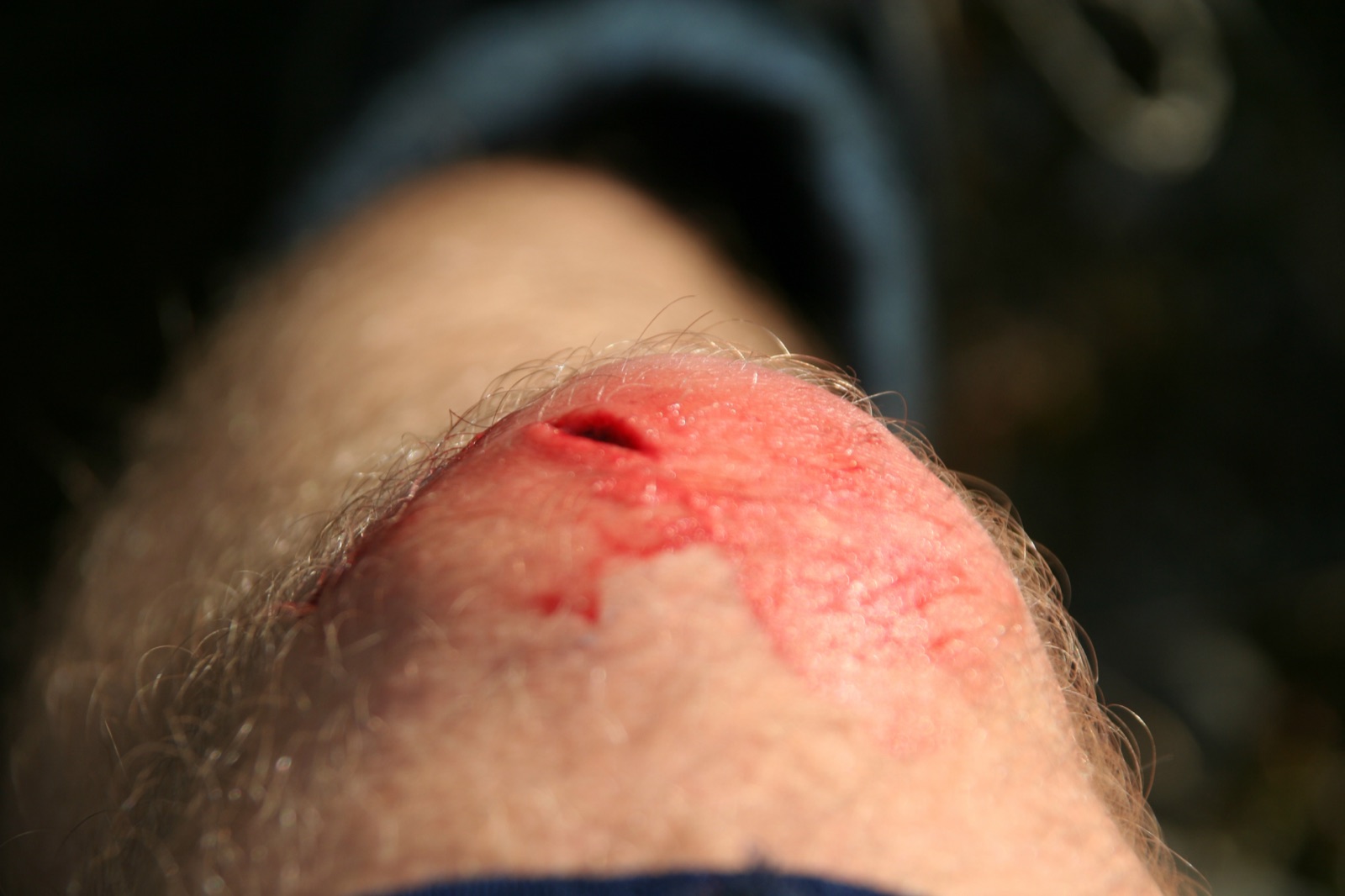
An example of a wound that needed wound closure strips. This one also needed five stitches. Photo: Gina Wigestrand
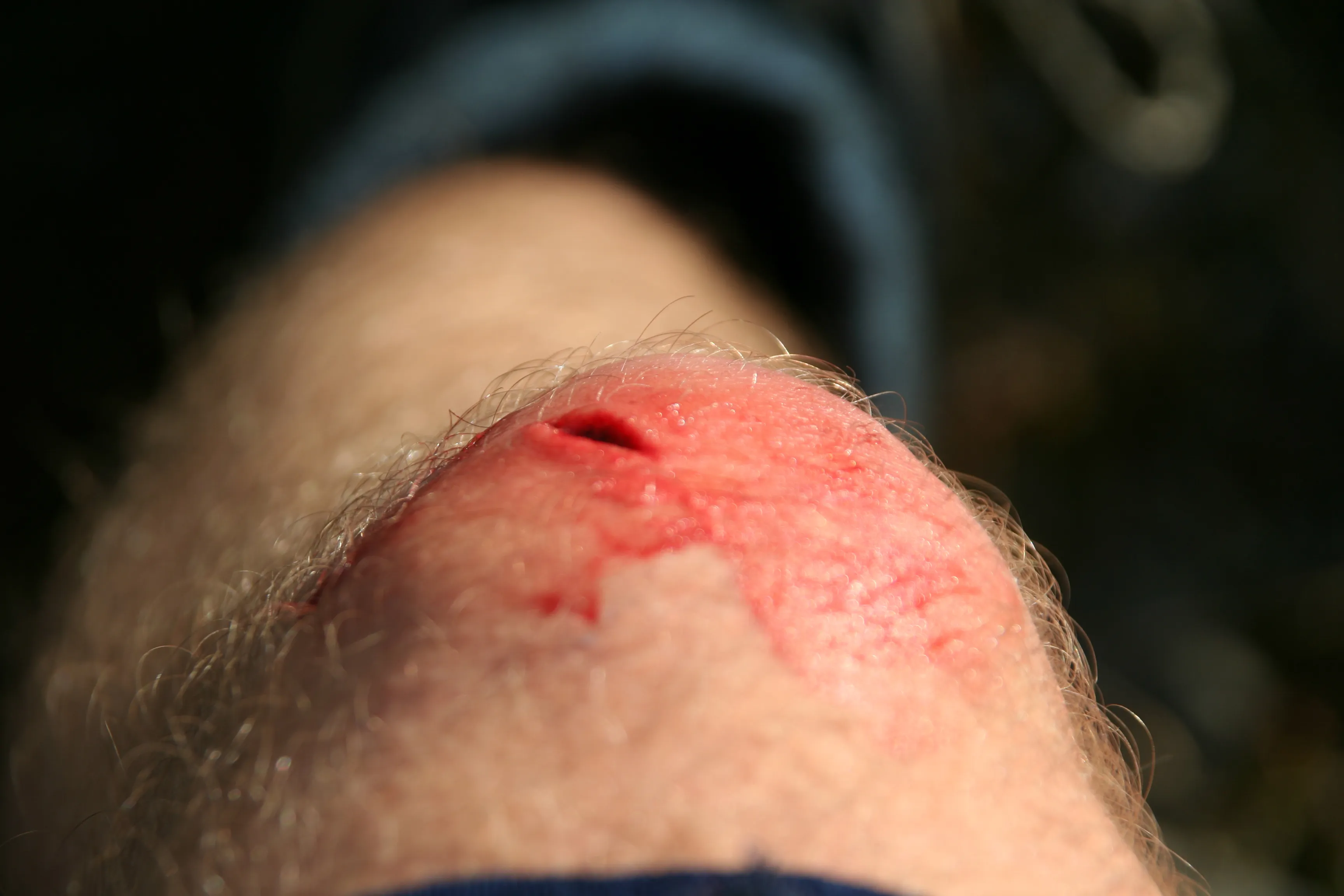
Photo: Endre Kjærnes Øen, Turlederboka
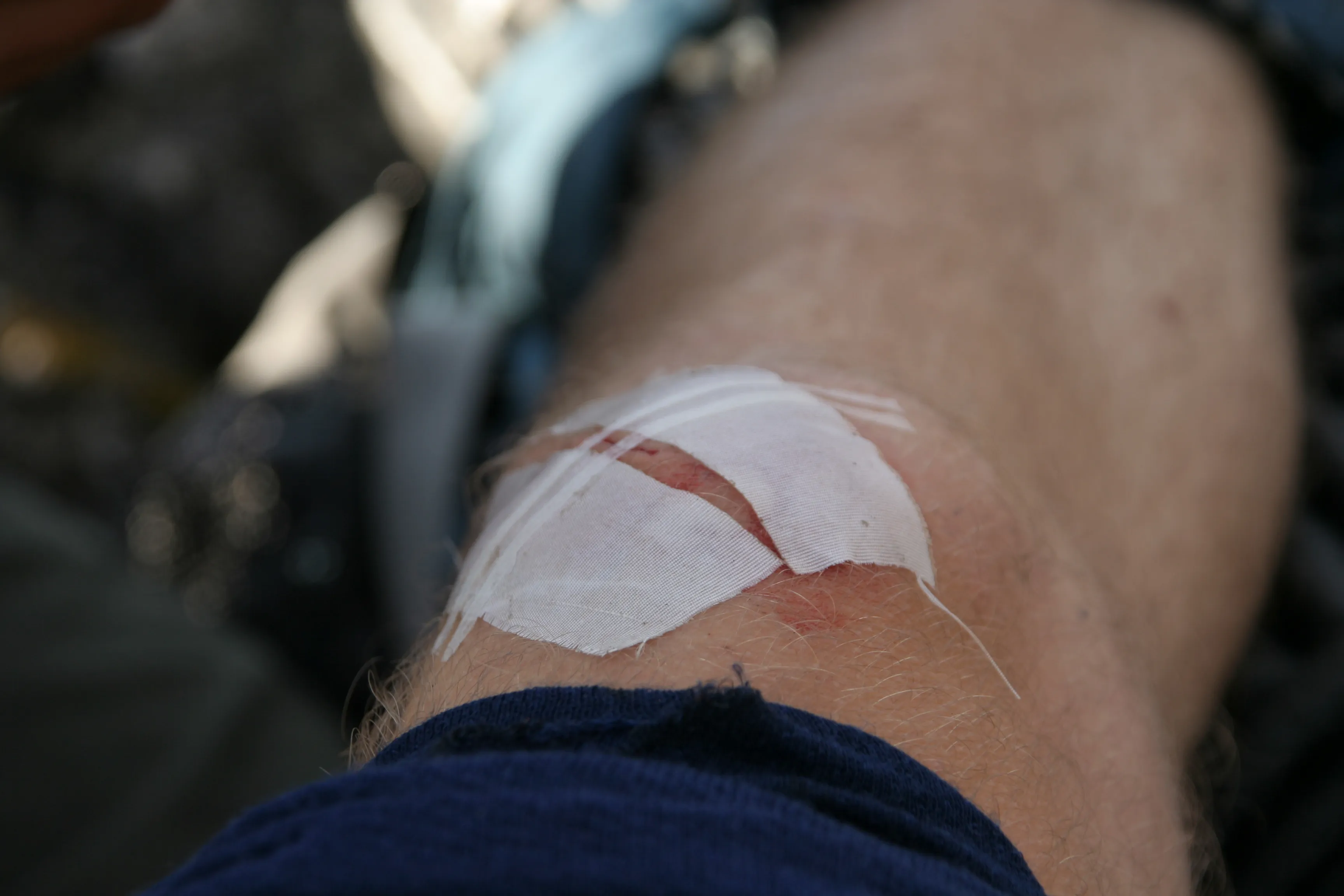
Photo: Endre Kjærnes Øen, Turlederboka
If you notice that it bleeds through the gauze pad within 4–5 minutes, consider taking measures to stop the bleeding.
Infections develop over time, and usually leave traces in the form of signs of infection. Early signs of infection are that, after a few hours or days, the wound becomes red, warm, swollen and painful, often together with a yellowish pus coming from the wound. You should then seek out the out-of-hours medical service.
More serious signs of infection are chills with shivering, fever and a feeling of being unwell. Here you should call 113.
Next steps
- First-aid equipment — gauze pads, plasters, sports tape, strips
- Burns — related — open skin needs the same principles
- Life-saving first aid — stop serious bleeding first
- About pain relief — ibuprofen has an anti-inflammatory effect
Learn more
- Norwegian People’s Aid — first-aid courses and wilderness medicine
- The Norwegian Red Cross — first aid and rescue corps
- Norsk Fjellmedisinsk Selskap — mountain and wilderness medicine
- The Norwegian Directorate of Health — first aid