Gear
Waterproof phone case (your phone on the water)
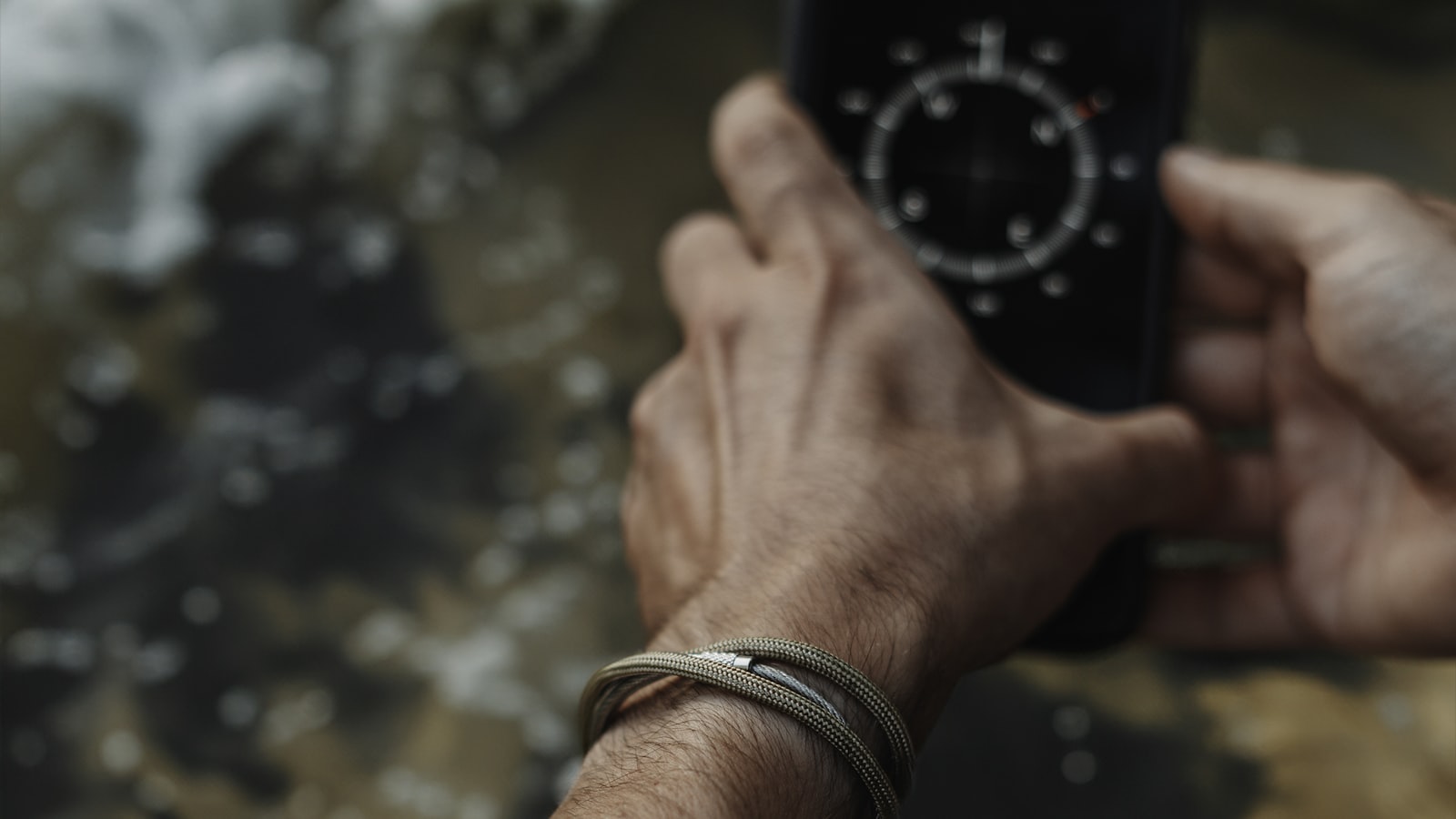
On a paddling trip your phone is map, compass, communication and camera. A waterproof case that floats is what means it still exists after a capsize. Here is how to understand the IPX system, lanyard cases, and why floating is critical.
On a paddling trip your phone is map app, sea chart, alert radio and camera. It is also glass and electronics, and glass and electronics and seawater are not good friends. A waterproof phone case is the simple solution — a transparent pouch with a seal that lets you use the screen while the phone sits safely inside. On a paddling trip it is basic kit, and it is one of the few pieces of equipment that costs little and means a lot when it is finally needed.
Why floating is critical
The most important criterion for a paddler’s phone case is that it floats if it comes off the lanyard and ends up in the sea. A phone in a case that sinks is a phone you will never see again. Most waterproof cases are built with a little foam or an air pocket that gives buoyancy even with a heavy phone inside — check this explicitly before you buy, because it is not a given.
The common mistake is to assume that waterproof and floating are the same thing. They are not. A zip pouch in thick plastic keeps the water out, but sinks faster than the phone on its own. A good paddler’s case has a foam rim around the edge or built-in flotation that keeps the whole package on the surface.
The IP rating system
The IP numbers (IP67, IP68 and so on) are an international standard for how much dust and water a device or piece of packaging can withstand. The numbers consist of two digits:
The first digit (0–6) indicates protection against dust and particles. For paddling purposes 6 is standard — fully dust-tight.
The second digit (0–8, or 9K) indicates protection against water. The ones relevant to paddling:
- IPX7 — withstands immersion at up to 1 metre depth for 30 minutes.
- IPX8 — withstands immersion deeper than 1 metre for more than 30 minutes (the precise figure varies by manufacturer — check the specification).
For paddling, IP67 is the basic minimum, and IP68 is recommended if you paddle a sea kayak or paddle often. The difference shows when the phone lies submerged for a while — IP67 holds while you swim, IP68 holds after you have been under for a period.
Be aware that an IP rating is for the device or the packaging under defined lab conditions — not a guarantee that it still holds after wear. The seals on a waterproof case go slacker over time, and the case you bought three seasons ago does not necessarily have IP68 function any more.
Open-opening vs fixed seal
Two basic constructions exist for paddler’s phone cases:
Roll-top or fold-closure is the simplest. You put the phone in, fold the opening several times and clip the buckle. Works well, and is easy to open every time you need the phone — but gives IP67 at best, not IP68.
Screw-tight or clip-tight has a completely fixed opening that is clamped shut with one or more locking mechanisms. More fiddly to open, but gives a better seal — IP68 is achievable.
For day-trip paddlers a roll-top is usually enough. The phone is typically in the case all day and is only opened in emergencies or for photos. For paddlers who paddle in the sea several times a week, or who do rolling, a screw-tight gives more peace of mind.
Specific brands and price
- Aquapac — British, classic roll-top case in clear PU. Light, cheap, works well, IPX7.
- OverBoard — British, both small waterproof cases and larger dry bags with windows for a phone.
- Lifeproof / Otterbox — American, makes hard-plastic cases that are built permanently around the phone. IP68 and works as everyday protection too.
- Aquavault and Tomakeit — cheaper Asian manufacturers, variable quality.
- Catalyst — premium hard-plastic cases with IP68 for the largest iPhone and Samsung models.
Price level:
- 100–300 kr for a simple roll-top case in PU.
- 300–700 kr for a premium case or hard-plastic case for a specific phone model.
- 800–1500 kr for a hard-plastic case that permanently replaces the standard case.
For most paddlers a 200-kroner Aquapac is a good enough investment. Replace it when the roll-top goes slack or the plastic (the PU) goes matte (typically after 3–5 seasons).
Function while the phone is inside
A good case lets you use the phone without taking it out. Three details matter:
Screen touch works through the plastic. Test this in the shop — some thick cases give poor response. Modern PU windows are usually thin enough that a touchscreen responds normally.
The camera window is clear and without distortion. If you plan to use the phone as a camera, check that the window over the camera lens is optically clear. Many cheap cases have ridged plastic that makes the images blurry.
Buttons are reachable through the case. Volume buttons and the on/off button should be pressable without taking the phone out. It is rarely a problem on modern cases that are shaped to the phone model.
Communication at sea — emergency numbers
If things go wrong on the water, there are two emergency numbers to remember:
- 120 — Kystradioen, the common number for emergencies at sea. Kystradioen is the link to the Joint Rescue Coordination Centre (Hovedredningssentralen) and connects you to the resources that coordinate search and rescue along the coast.
- 113 — Medical emergency (AMK), for acute health situations.
On the open sea, far from coverage, a VHF radio on channel 16 is a better option than a mobile. More in boat traffic and the Collision Regulations and alerting the emergency services.
For coastal paddling with coverage, the phone in a working case is usually the simplest means of raising the alarm. It lets you call 120, send your position via an app, and communicate with people on shore. That is one of the reasons a waterproof case is on the equipment list, on top of being practical for maps and photos.
Maintenance
- Rinse with fresh water after seawater. Salt deposits in the seams create small leak paths over time.
- Dry it open and on the inside before you put it away. Moisture on the inside makes the glass blurry and can corrode the phone’s pins.
- Check the seal by closing the case with a little air inside, squeezing lightly, and feeling whether air is pushed out. If the air escapes quickly, the seal is slack.
- Replace the case after 3–5 seasons or if the PU is matte, cracked or has bubbled areas. The seal’s lifespan is shorter than the phone’s.
Next steps
- Mobile phone on a trip — the phone itself that the case protects, and what it can and cannot do on a trip.
- Drybag (waterproof packing bag) — the same sealing principle for the rest of the equipment in the kayak.
- Power bank — the phone as map and alert only holds out as long as the battery lasts.
- Paddling — the activity where the case is basic kit, not an extra.
- Rescue in a kayak — what happens after a capsize, and why a floating case is part of being prepared.
Learn more
- Mobile phone on a trip
- Boat traffic and the Collision Regulations
- Alerting the emergency services
- Power bank
Text: Snuitide (2026).