Gear
Tunnel tents
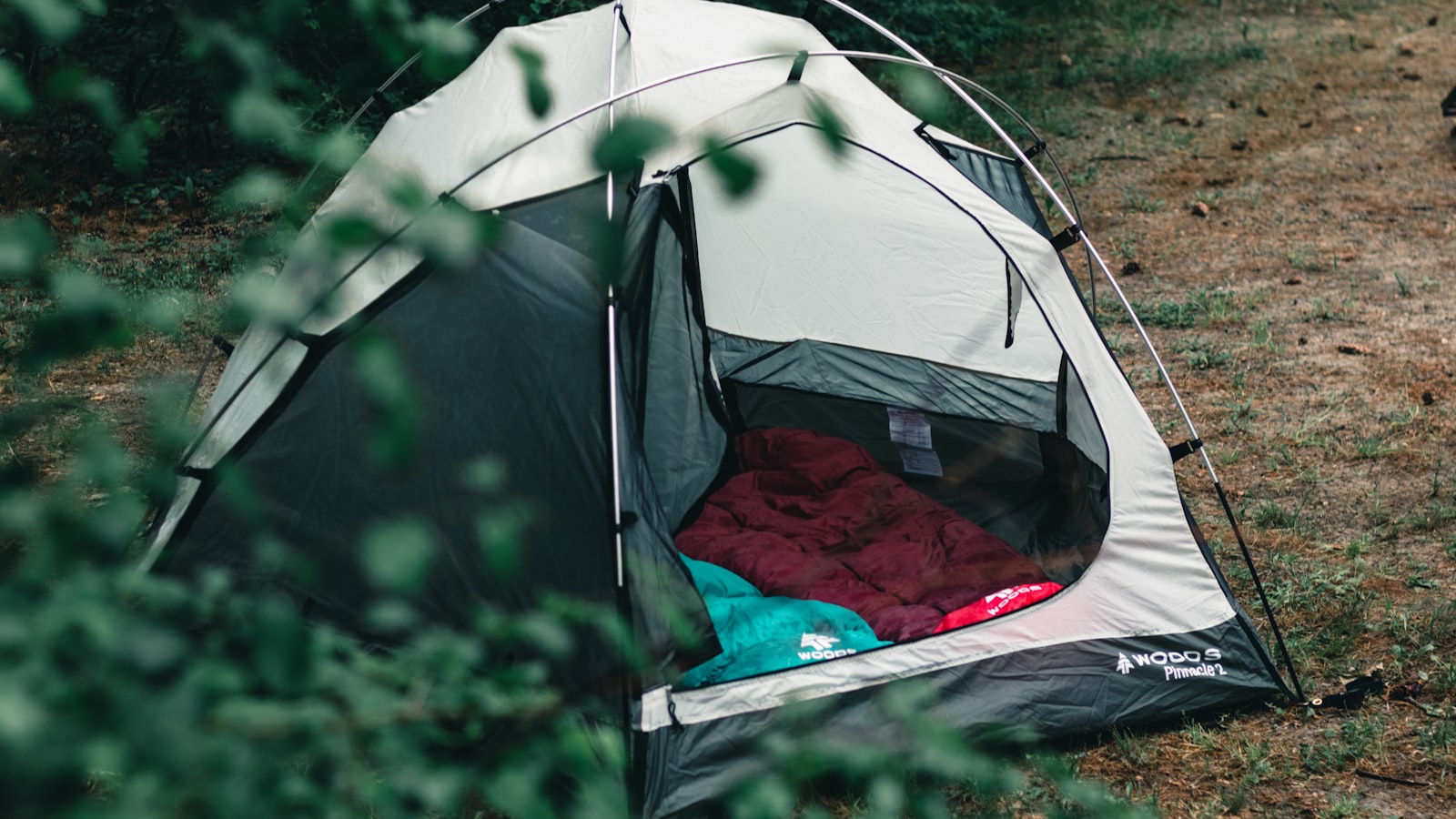
Parallel poles in series give the best space-to-weight ratio and good lengthwise orientation. Not free-standing and requires careful pitching — but the lightest option for a long tour when every gram counts.
A tunnel tent has 2–3 parallel poles that form hoops along the length of the tent. The result is a tunnel shape: light, roomy per gram, and well streamlined against wind from one clear direction. The tunnel needs to be pitched out — it does not stand on its own. That is the price of the space it saves.
Space per gram
The tunnel’s big advantage: the floor is rectangular and the poles follow the shape, so there is little wasted space. A two-person tunnel often weighs 1.7–2.4 kg and gives noticeably more interior room than a comparable dome tent. On a long hike where you sleep with two uncomfortably full packs, or at a glacier camp where the gear has to go in the porch, you notice the difference.
The porches are typically large and useful — especially three-hoop models that have room both front and back.
Needs pitching out, not free-standing
A tunnel tent without pegs is a heap of fabric and hoops. That means:
- You have to find a spot where the pegs actually hold. Stone, bare rock and hard frozen ground are difficult without extra techniques.
- You have to pitch it correctly from the first go. Tensioning the guy lines evenly gives the tent its strength; a half-done job gives a flapping tent.
- You plan the orientation — the short end into the wind, not the side.
In return, the tent becomes very stable once it is pitched correctly. Hilleberg tunnels are known for standing in 30+ m/s winds when they are pitched right.
Vulnerable to side wind
The Achilles heel: side wind. If the wind shifts in the night and you have not pitched symmetrically, the tent blows flat. For the same reason, the tunnel is less forgiving on exposed mountain plateaus where the wind direction changes.
At a glacier camp, in forest, or in narrow sheltered valley bottoms — where the wind holds steady along one axis — a tunnel is ideal. On open ridges, a dome is more forgiving.
Example models
- Hilleberg Nallo — the reference in its class, two-person, 2.4 kg, three-season. The Hilleberg Anjan is the lighter summer variant.
- Hilleberg Akto — one-person, 1.7 kg. The classic ‘used on all of Scandinavia’s long routes’ tent.
- Bergans Wiglo Tunnel — Norwegian-made, mid-price.
- Helsport Ringstind — solid and cheaper, 2.5–3.2 kg depending on the model.
- Fjällräven Abisko Endurance — a robust four-season tunnel.
Who it suits
The person who walks far and weighs every gram. Long hikes (Padjelantaleden, Kungsleden, Nordkalottleden), ski tours in the Hardangervidda style, glacier camps where gear space in the porch matters a lot, cycle tours where pack volume is limited.
Where it falls short
Tight pitches with hard ground — pegs that will not go in. Shifting wind direction on exposed ridges. Pitching for the first time in the dark — a free-standing dome forgives more. Pitches on rock slabs or bare rock without a good chance to peg out — there you have to hold the tent down with stones, and that is an awkward solution that calls for large flat stones and a bit of experience.
The tunnel is also not especially fun to put up alone in strong wind. It is two-person work: one holds the short end while the other pegs it out. Possible alone, but you will be wet before you finish.
Price and lifespan
A good mid-range two-person tunnel tent runs to 5,000–9,000 kr. The Hilleberg models start around 12,000 kr and often last 20+ years if you keep them dry, rinse them after the sea, and replace cords and pegs when they wear. Bergans and Helsport give solid quality at half the price — a different choice of materials, but genuinely usable for many years.
If you want to weigh up a tunnel against a dome, see the tent overview.
Next steps
- Tents — the equipment guide that places the tunnel against the other tent shapes
- Dome tents — the free-standing option for shifting wind direction
- Mountain tents and expedition tents — robust four-season tunnels for the winter mountains
- Snow pegs for tents — what you need to pitch the tunnel in snow
- Broken tent pole — on tour — a field fix when a hoop breaks