Gear
Dome tent
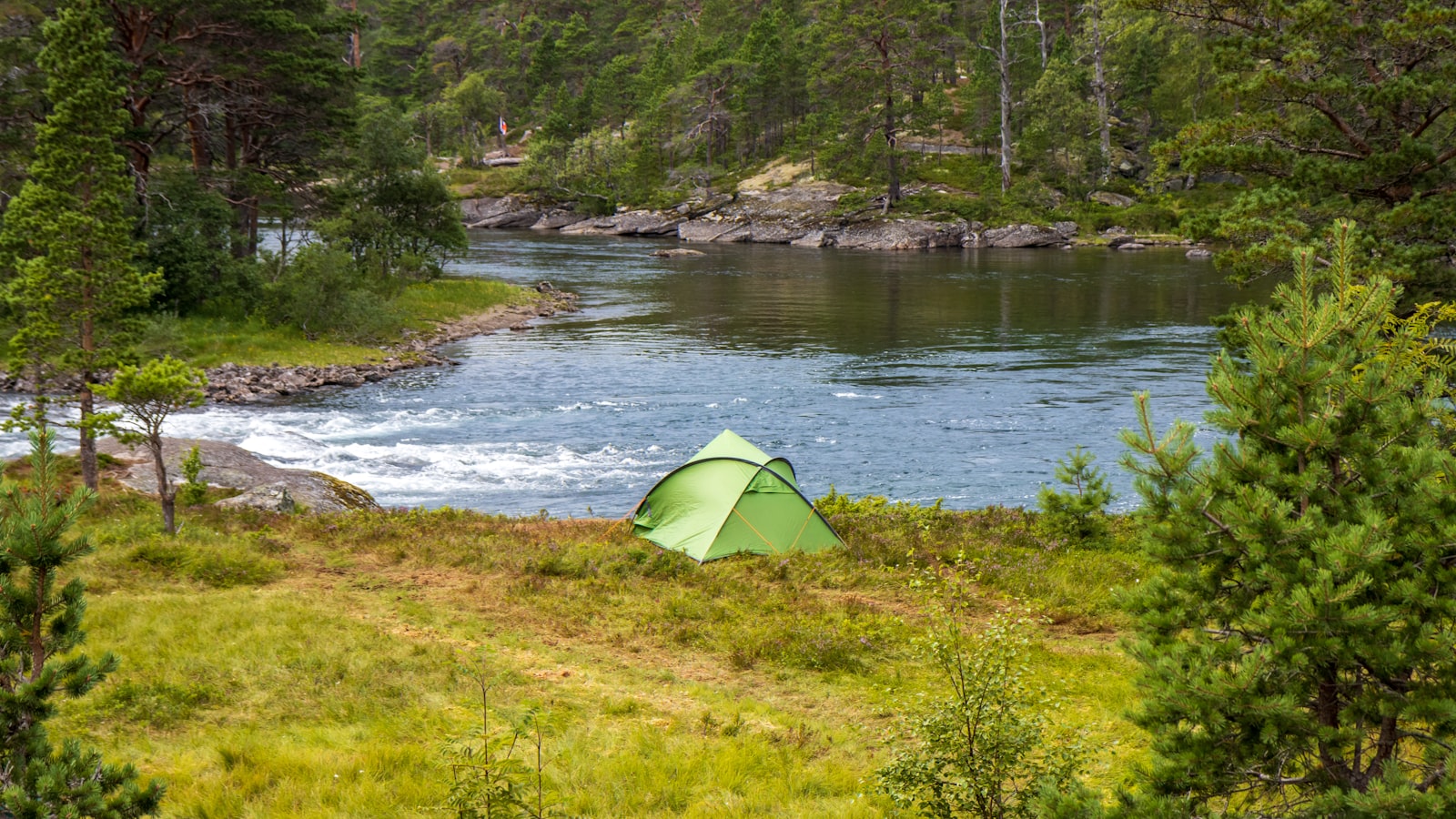
A free-standing three-season tent with two crossed poles. The all-rounder for the mountains, the garden and most things in between — good wind stability and roomy enough to be practical.
A dome tent has two (or three) poles that cross at the top and bend down to the corners. The construction is free-standing — it stands upright without pegs on dry ground — and copes with wind from all directions roughly equally well. It is the tent that most people picture when they think of a “standard tent”, and with good reason: it works for most situations.
Why free-standing is practical
You can pitch it on a veranda, a cabin floor, a rock slab or a cramped plateau where there is too little room to peg out a tunnel tent. Once you have pitched it, you can move it a few metres to find a more even spot — without starting over. The pegs should still go in (the wind will take even an empty dome tent), but the tent does not fall down while you fasten them.
In the mountains there is also a reassurance in the tent not collapsing if a peg works loose in soft ground in the middle of the night.
Weight and space
For a two-person three-season dome tent:
- Light (1.8–2.3 kg) — silnylon, DAC Featherlite NSL, paying for the weight. MSR Hubba Hubba, Big Agnes Copper Spur, Nordisk Halland.
- Standard (2.3–3.2 kg) — PU nylon, solid DAC. Helsport Reinsfjell, Bergans Compact, Vango Banshee.
- Heavy (3.2–4 kg) — robust touring tents with a good vestibule. Tatonka Polar, Robens models.
A crossed-pole system gives a better sense of space than a tunnel for the same floor area — you have standing room in the middle instead of a sloping roof down towards the short ends.
Wind stability
The dome shape is aerodynamic in every direction. You do not need to plan the orientation against the wind as carefully as with a tunnel tent. In a strong gale it is still wise to turn the lowest profile towards the most exposed side and peg out all the guy lines, but the tent does not collapse if the wind shifts during the night.
For a real storm — winter storms above the tree line, expeditions — a geodesic (3+ crossing poles) is stronger. But for what most Norwegian hikers encounter, a two-pole dome is more than enough.
Example models
- Hilleberg Soulo — a solid one-person dome, 2.4 kg. Strong and expensive.
- MSR Hubba Hubba — a two-person classic. 1.7–2.1 kg, good ventilation.
- Helsport Reinsfjell — a Norwegian mid-range all-rounder, 2.5–3 kg.
- Bergans Wiglo Light — the family-tent variant, 4–6 people.
Who it suits
Beginners who want one tent for most things. Mountain campers who do not know in advance whether they will end up on a flat meadow or a steep plateau. Families who alternate between garden camping and mountain trips. Anyone not sure they will become an ultralight enthusiast — the dome is the safe default choice.
Where it falls short
If you are two people on a long walking trip and every gram counts, a tunnel tent gives more space per gram. If you are heading into a real winter storm you need a mountain tent or a geodesic. The dome is broadly competent — it is rarely best in any single category.
For the choice between the types, see the tent overview.
Next steps
- Tents — the overview of tent types, where the dome tent is one of the options.
- Tunnel tent — the sibling type that gives more space per gram, but requires a planned orientation against the wind.
- Mountain tents and expedition tents — where the dome falls short: a real winter storm above the tree line.
- Snow pegs for tents — pegging is necessary for free-standing tents too; in snow you need dedicated pegs.
- Tent and lavvo — the tent in use: overnighting as an activity.