Gear
Mountain tents and expedition tents
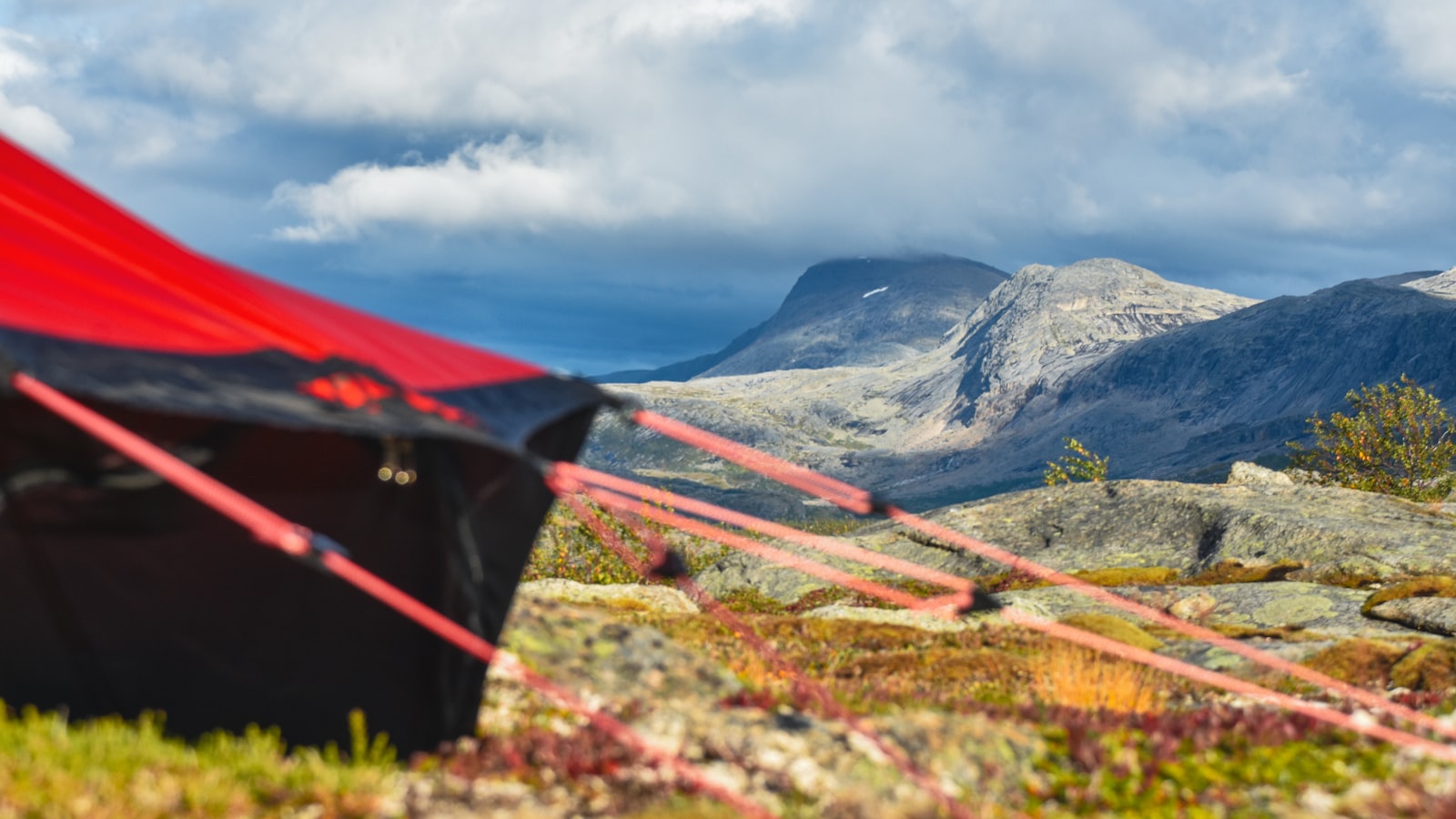
Four-season tents built for winter, the high mountains and expeditions. Heavier, more expensive and more robust than three-season tents — with snow valances, strong poles and minimal mesh.
Mountain tents — also called four-season or expedition tents — are built for conditions that three-season tents cannot handle: winter, snow load, sustained strong wind and temperatures down towards −30 °C. They are heavier, more expensive and less versatile than a three-season tent, but when the weather turns serious the difference is clear.
What sets them apart
The poles are stronger — typically DAC Featherlite NSL in a thicker dimension, or DAC Pressfit. Geodesic models have 3–5 crossing poles to spread snow load and wind pressure.
The fabrics are more tightly woven, often without mesh on the upper parts of the inner tent (mosquito netting lets out too much heat). The flysheet comes almost down to the ground.
The snow valance is extra fabric around the foot of the flysheet that you cover with snow. It stops spindrift from blowing in under the tent and keeps heat inside. You dig it up again in the morning.
The ventilation is adjustable and tight — too much opening gives a cold night and spindrift, too little gives condensation and frost on the inner tent.
The vestibules are roomier. You should be able to cook safely under shelter, melt snow, and store skis and poles outside the tent itself.
Weight and price
For a 2-person four-season:
- Weight: 3–6 kg is the norm. Light Dyneema models can come in under 3 kg, but are rarely classic expedition tents.
- Price: 8,000 kr and upwards. Hilleberg tunnels start around 12,000 kr, the geodesic models over 18,000 kr.
That is a lot of money. The argument for it is that a good mountain tent lasts 20+ years if you look after it, and that it replaces both a winter tent and a storm tent for demanding summer trips.
Example models
Tunnel mountain tents:
- Hilleberg Nammatj — solid 2-person tunnel, 3.3 kg, handles winter.
- Hilleberg Keron — 3- or 4-person, a long-term-test favourite for winter expeditions.
Geodesic:
- Hilleberg Stalon / Saivo — symmetrical geodesic, expedition standard.
- Helsport Svalbard High Camp — Norwegian-made, strong value in the mid-price range.
- Bergans Compact Dome — solid dome mountain tent.
Geodesic of the Himalaya type:
- Mountain Hardwear Trango, The North Face VE 25 — American classics.
Who it suits
Winter trips in exposed mountain terrain — Hardangervidda in February, Saltfjellet in March, Finse in April. Longer ski expeditions where the weather window cannot be chosen. Climbing expeditions on high mountains. Those who are considering one tent for everything and are willing to carry a kilo extra in summer in order to have the same tent in winter.
Where it falls short
Summer in the lowlands — too heavy and too warm. Short approaches to cabins where the pack volume is a nuisance. A first-time purchase without having tried winter camping — having rented or borrowed a mountain tent a couple of times gives a better basis for knowing whether you actually need your own.
In mild weather on the summer mountains the ventilation is a problem — the mountain tent is built to keep heat in. You tend to wake up sweaty, or with light condensation on the inner tent. That does not mean it does not work, only that summer use is a compromise.
Consider renting first
A mountain tent is typically used a few times a year, and the purchase decision is 10,000+ kr. Many outdoor shops and hiking clubs rent them out. Helsport and Hilleberg often have demo models that you test on a winter trip before buying. That is often a better starting point than buying blind — you find out whether a snow valance is practical or a nuisance for you, and whether you are actually a winter camper or a cabin-trip person in disguise.
To place the mountain tent in relation to the dome and the tunnel, see the tent overview. For winter-specific considerations see tips for winter overnighting and sleeping in the snow.
Next steps
- Tents — the overview that places the mountain tent against the dome and the tunnel
- Dome tents — the freestanding construction that many mountain tents build on
- Tunnel tents — light and roomy, often the choice in the winter mountains
- Down sleeping bag — the warmth inside the tent is just as much about the bag
- Sleeping in the snow — when you actually put the tent to use in the winter mountains