Gear
Headwear (beanie, balaclava, face warmer, buff, cap, sun hat)
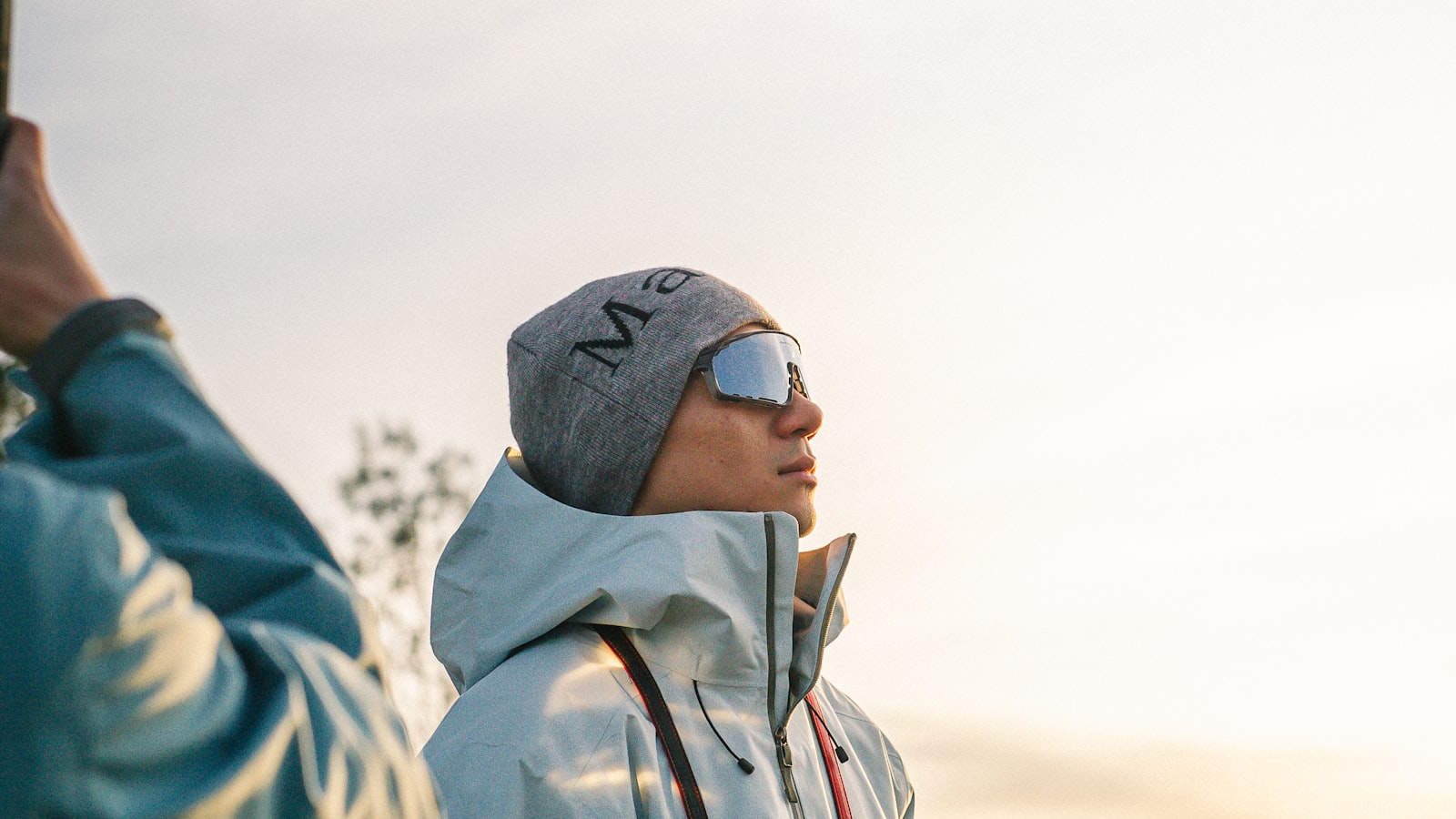
The head, neck and face have little insulation of their own. What you cover your head with changes how the rest of the body behaves. Summer and winter, everyday and bad weather.
There is a tall tale that you lose 50% of your body heat through your head. The figure comes from an American military experiment in the 1950s in which the subjects were fully clothed except for a hat — and it is as misleading as it sounds. Real heat loss from an uncovered head is closer to 5–10% at rest. But the head is often the first cold spot you notice, because there is little muscle there to generate heat on its own, and the brain is no fan of cold.
Summer headwear
Cap or peaked cap. Mainly to shade the eyes, secondarily to prevent sunburn on the forehead and over the ears. A simple hiking cap or running cap in breathable synthetic weighs 50–80 g and goes unnoticed in the pack. A wide-brimmed hat (sun hat) gives better coverage of the neck and ears, and is clearly better on a glacier, in snow and in open terrain where the sun comes from every angle.
Buff (tube scarf, multifunctional neck gaiter). A piece of stretchy synthetic or wool fabric in a tube shape. Worn as a neck warmer, beanie, headband, face mask, or headband. It weighs 30–50 g, costs 100–250 kr, and is the lightest garment with the highest practical value in the pack — it always comes in handy. In summer it is used as light sun protection on the neck or as a sweatband.
Sun hat with a cord. On a glacier or on the water the sun’s reflection is brutal. A wide-brimmed hat with a cord under the chin (so the wind does not take it) is underrated kit.
Winter headwear
Beanie. Close-fitting, warm, ideally wool or fleece. A shallow beanie covers the forehead and down over the ears. A deeper beanie also covers the neck. Wool smells less after days of use and insulates when damp; fleece is lighter and dries faster. For most people a mid-thickness wool beanie (80–120 g) is a good winter all-rounder.
Balaclava (headwear with a face opening). Covers the head, neck and face except the eyes. Used when it is cold enough for the cheeks and nose to freeze in the wind — typically from −15 °C and lower, or in strong wind at higher temperatures. A thin merino wool balaclava (50–80 g) under a helmet on a ski tour or downhill skiing. A thicker fleece balaclava (100–150 g) for expeditions and pulk-hauling in open terrain.
Face warmer / face mask. A separate garment that covers only the nose, cheeks and mouth, usually held on with elastic behind the head or with clips on the beanie. Used when a balaclava is too warm but the nose still freezes. Most common in downhill and racing skiing.
Headband. The middle ground between a beanie and a bare head. Keeps the ears warm and the forehead dry during activity, while letting heat out over the crown. Practical for cross-country skiing and high-intensity ski touring.
The buff in multiple roles
The buff deserves its own mention because it is the garment people learn to appreciate most over time. Concrete uses:
- Neck warmer in cool weather.
- Beanie substitute when it is too warm for wool.
- Face cover in wind or a light snowstorm.
- Headband to keep sweat out of the eyes.
- Sun protection on the neck.
- First aid: arm sling or padding for an injured hand.
- Filter cloth over the mouth in a dusty wind.
- Pillowcase in the tent (lay a forehead buff over a stuff sack of clothes).
A wool buff is warmer; a synthetic buff is cooler and better in summer. Many people bring both.
Helmet and headwear
A ski helmet almost always has room for a thin beanie or buff underneath. Climbing and cycling helmets are tighter — use a thin forehead buff or headwear shell designed for a helmet.
The realistic basic set
For a person covering Norwegian trips year-round:
- A buff (ideally wool, possibly two — one for the head, one for the neck).
- A beanie of wool or fleece.
- A cap or sun hat for sun.
- For winter and the mountains: a balaclava or face warmer when it is cold enough.
Total weight: 200–400 g. The space in the pack: negligible.
Next steps
- Hands on a trip — the other extremity that gets cold quickly, and that is governed by the same systems thinking.
- The layering principle — why beanie off on the climb is the same regulation as opening the jacket.
- Sunglasses on a trip — sun hat and sunglasses go together on a glacier, in snow and in open terrain.
- Winter clothing — where the balaclava and face warmer fit into the whole.
- Contents of a day pack for ski touring — where the beanie and buff actually get packed.
Learn more
The layering principle → · Winter clothing → · How to dress in the cold from head to toe → · Hands on a trip →
Text: Snuitide (2026).