Gear
Sunglasses on a tur (UV, snow blindness, categories)
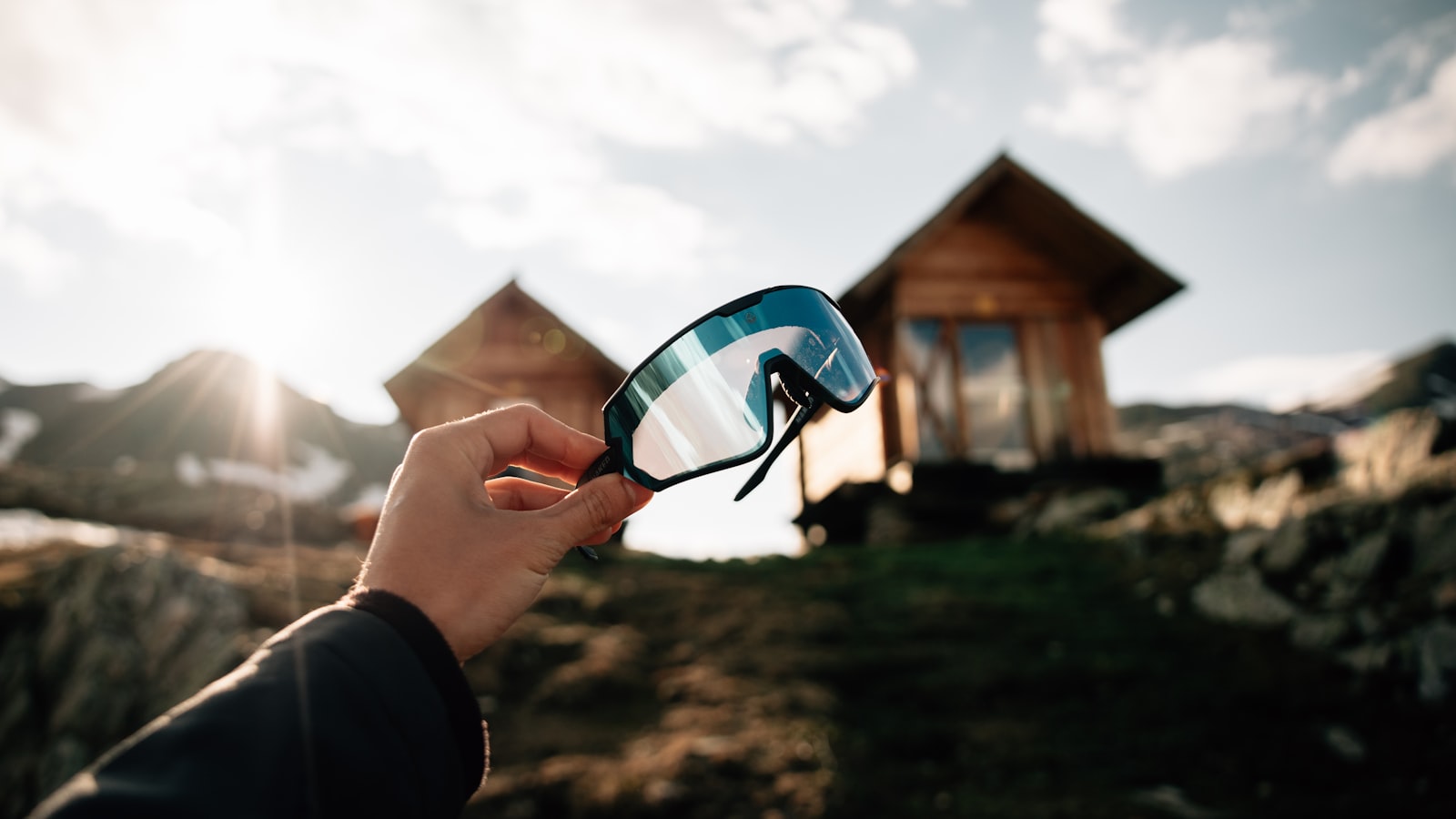
Sunglass categories 1–4, UV protection, polarisation, and when you need real glacier (bre) glasses. Snow blindness is real and serious — and easy to avoid.
Sunglasses on a tur are not an ornament. UV radiation from sun reflected off snow, water and glacier (bre) is what causes snow blindness — a painful and usually temporary burning of the cornea that appears 6–12 hours after exposure and can last a couple of 24-hour periods. It happens every year on Easter trips and glacier travel (brevandring), often on short outings where the glasses were left behind.
UV protection — the basics
All real sunglasses on the European market should block 100% UVA and UVB. Check the marking ‘UV400’ or ‘100% UV protection’ — without this filter, sunglasses are in fact worse than no glasses, because the pupil widens in the dark behind the lens and lets in more UV.
Price is not a good indicator. A pair of sunglasses from the off-licence for 200 kr that is CE-marked has the same UV protection as a pair costing 3000 kr. The difference lies in optical clarity, lens quality, frame durability and — importantly — that expensive glasses have proper nose and temple pads that actually keep them on when you move.
Sunglass categories (1–4)
The European standard EN ISO 12312-1 divides sunglasses into five categories (0–4) according to how much visible light the lens lets through:
- Category 0 (80–100% transmission) — clear or lightly tinted lens. Used indoors or in poor weather.
- Category 1 (43–80%) — lightly tinted glasses for cloudy weather or shade.
- Category 2 (18–43%) — ordinary everyday use, light to medium sun.
- Category 3 (8–18% transmission, i.e. 80–90% light blocking) — strong sun. Everyday summer use, sea, mountains.
- Category 4 (3–8% transmission, i.e. 92–97% light blocking) — glacier (bre), snow, high mountains and polar areas. Illegal for driving in Norway because they are too dark.
For Norwegian friluftsliv year-round, category 3 is the standard choice. Category 4 is needed on the glacier (bre), on a long winter expedition with strong reflection off snow, and in alpine conditions in summer where you walk high above snow.
When you need category 4
Snow reflects 80–90% of sunlight. Water reflects 5–10%, sand 15–20%, grass 3%. On a sunny day on a glacier (bre) or a large snowfield you therefore get almost twice as much light in your eyes as on a grass meadow in the sun — in addition to the thinner air letting through more UV.
Concrete category 4 use:
- Glacier travel (brevandring) in summer and winter.
- Ski touring in open mountain terrain (not forest).
- Easter trip on a vidde in full sunlight.
- Climbing on snow and ice routes, at high altitude.
In forest and lower mountains, category 3 is usually sufficient.
Polarised lenses
Polarisation filters out horizontally reflected light — the kind that makes sea, wet tarmac and snow ‘glitter’. With polarised glasses you see more clearly through the surface of the water and experience less glare from reflections. Good for fishing, paddling and driving.
The drawbacks: the polarising filter can make LCD screens (phone, GPS, camera display) flicker or become entirely invisible at certain angles. On the glacier (bre), polarisation can also make it harder to tell blue ice from wet snow — something glacier travellers sometimes mention. For most trips it is an advantage, but not a necessity.
Side protection and coverage
On the glacier (bre) and in the high mountains the glasses must cover from the side as well. The sun’s UV finds its way in around ordinary frames through reflection off the snow. Classic glacier glasses (Julbo Vermont Classic, Vuarnet Glacier) have leather sides or plastic panels that close off the gap. Sports models with large, curved lenses (Oakley, Smith Optics, Adidas Sport, Julbo Aero, Cébé) give similar coverage through their geometry.
Ordinary city glasses with flat, narrow lenses let light in from the side. Usable in the lowlands in summer, but not enough above 1500 m in snow.
Downhill goggles / ski goggles
When you are skiing downhill you do not need sunglasses — you need ski goggles. They give full face coverage, protect against snow and wind, and often come with interchangeable lenses for different light conditions. Sunglasses blow off, fog up, and give no protection against snow crystals at speed.
Many experienced skiers and mountain people therefore carry both in the pack: sunglasses (category 3 or 4) for the climb and breaks, goggles for the descent and hard weather.
The realistic base set
For Norwegian friluftsliv year-round:
- A pair of category 3 sunglasses with good coverage and UV400 (500–2000 kr new).
- A cheap spare pair in the pack (200–400 kr) — sunglasses get lost.
- For glacier travel (brevandring) and the Easter trip: a pair of category 4 glacier glasses with side coverage.
- For skiing: goggles in addition.
A cord or strap that hangs the glasses round your neck during a break is underrated kit — you lose glasses on a break more often than at speed.
Next steps
- Glacier travel (brevandring) — the classic category 4 situation, with strong reflection off snow and ice.
- Ski tour — open mountain terrain in sun is where snow blindness strikes Easter trips.
- Ski touring (topptur) — where goggles for the descent and sunglasses for the climb belong in the same pack.
- Headwear — sun hats and caps that shield the eyes in addition to the glasses.
Learn more
Sunscreen → · Headwear → · Winter clothing →
Text: Snuitide (2026).