Trip Planning
Safety on the trip and evaluation afterwards
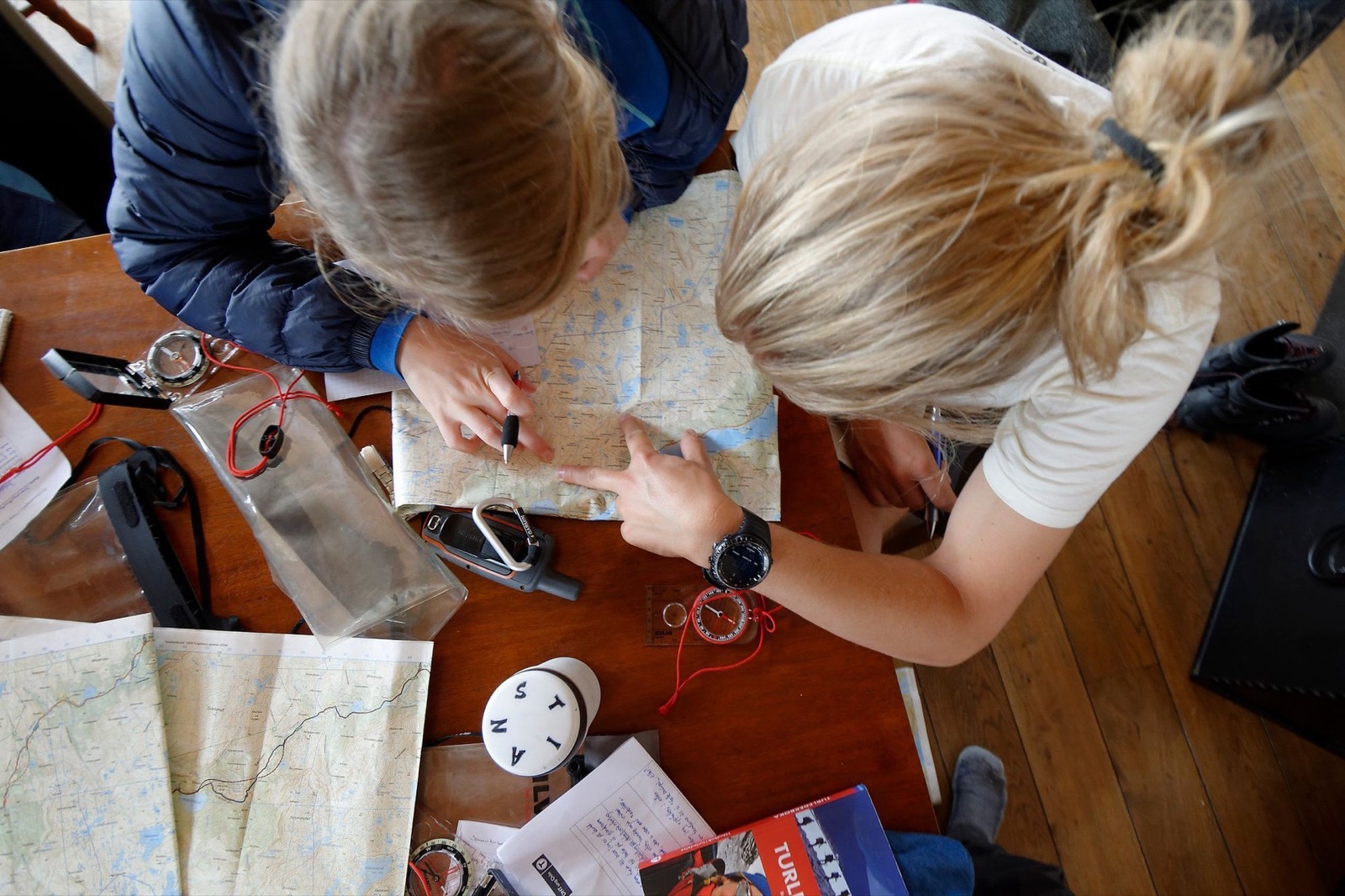
The filter model is a useful tool for assessing risk along the way. We look at the weather, the terrain and the group.
On the trip - be prepared
The filter model is a useful tool for assessing risk along the way. We look at the weather, the terrain and the group. Ask whether people are doing all right, keep an eye on the terrain and watch whether the weather is changing. Keep making fresh assessments of which hazards are most prominent at any given moment. Is it slipping? Avalanche? Cooling down? Stay focused on whatever is most ‘dangerous’ at the time and take risk-reducing measures.
Examples might be:
- A helmet on in loose scree.
- Avoiding terrain steeper than 30 degrees and run-out zones.
- Walking up a gentler slope because of a high risk of slipping.
- Standing in the river and supporting pupils crossing because of a strong current.
- Putting an alternative trip plan into effect because of poor conditions.
Ferdaråd
A ferdaråd is a gathering where everyone takes part and can contribute their own input. That way we get a sense of closeness and belonging within the group. The teacher has the chance to give information and answer any questions.
Before we set off on a trip we should always gather and talk together. Then we discuss what kind of trip we are going on, who is going and where we are headed. We also need to clarify what equipment we need and when the trip is to take place (Jakobsen og Pulli, 2021). The aim is for us to plan the trip within our ability.
On the trip itself we should also hold a ferdaråd. The aim is to include everyone who is coming along, to hear what experience people have and their ambitions for the trip. The ferdaråd helps secure the duty to inform under the produktkontrolloven and should be compulsory on every trip.
- Before we start walking the group gathers, and we can ask questions such as:
- How is everyone feeling?
- Has everyone slept well?
- Are the weather and the forecast as we had planned?
- Are there any new factors we need to take into account?
- Does everyone in the group know where we are going and how demanding the trip is?
- Has everyone brought the equipment they need?
- Is anyone familiar with the area and aware of particular things we should take into account?
- Should we carry out the trip as planned? Or make changes?
Safety equipment
- Medical equipment – first-aid kit
- Leatherman (or equivalent)
- Mobile phone
- Sleeping mat
- Emergency bivouac (bothy bag/Jerven Bag/bin bags)
- Warm clothing
Always bring warm clothing, a sleeping mat and an emergency bivouac to prevent serious cooling (hypothermia) in injured people. A mobile phone, satellite phone, SPOT, InReach or similar should also be carried so that injuries can be reported.
See also First-Aid Equipment for suggestions on what should be brought on a trip.
After the trip – evaluation
Evaluating a trip is important for learning and making any necessary adjustments. A trip evaluation should always be done by those who took part, and both teachers and pupils should be involved. It can be done both in writing and orally.
Examples of questions for the evaluation might be:
- Goals and expectations before the trip and how it went on the trip?
- Self-assessment after the trip (based on the competence aims and their learning objectives).
- Both what you did well and what you can improve.
- What experiences did you have on the trip?
- Did you learn anything new?
- What would you do differently next time?
- How did your equipment work?
- How did you contribute to the group?
Next steps
- Trip plan and risk assessment — planning
- Lifesaving first aid — emergency preparedness
- Alerting the emergency services — when something happens
- Turning back in good time — assessments along the way
Learn more
- DNT — the fjellvettreglene — nine rules to remember
- Varsom — hazard warnings for avalanches, floods and landslides
- UT.no — routes, cabins, warning data
- Yr.no — weather forecast