Paddling
Canoe
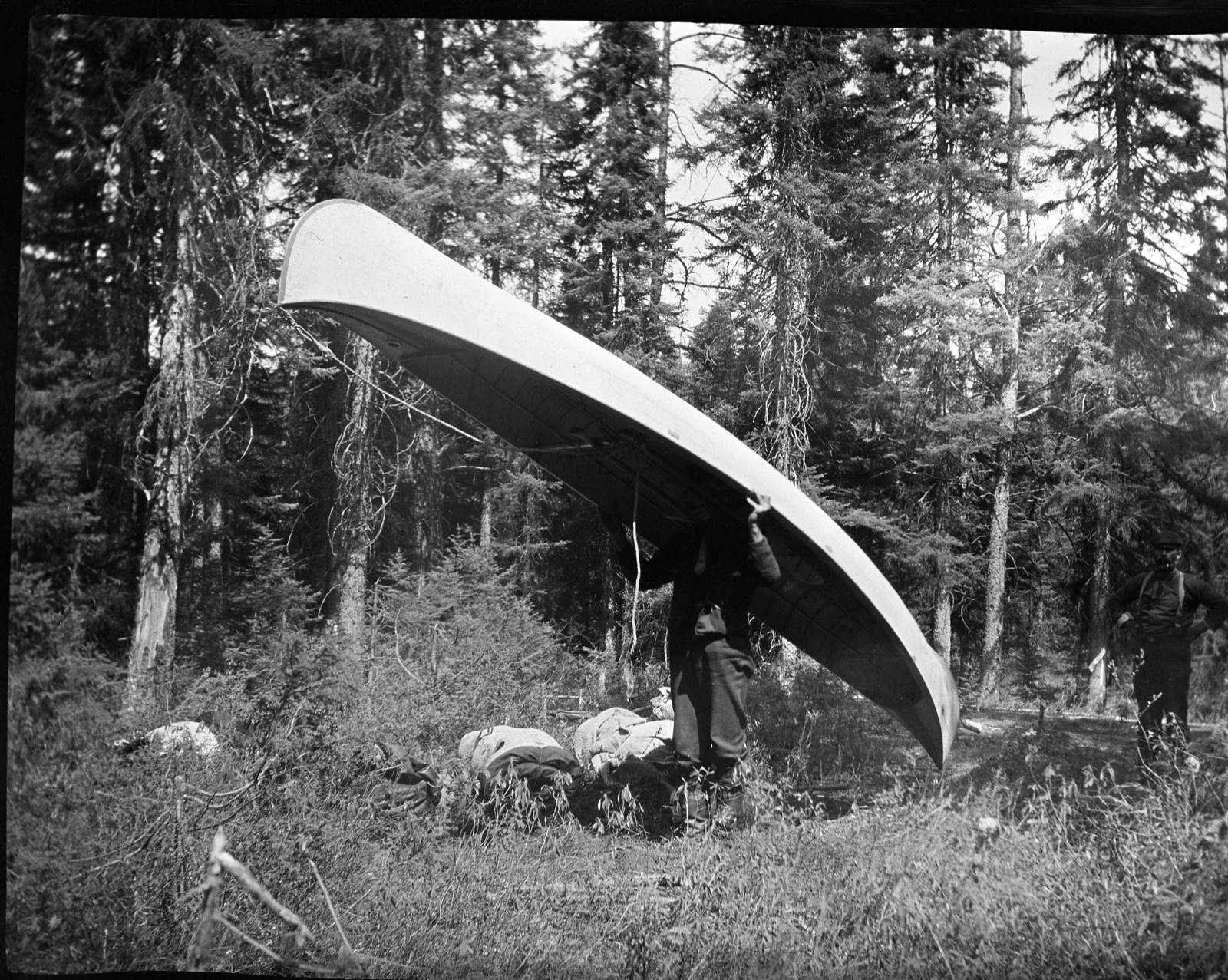
The open canoe is the simplest way into paddling, and perhaps the most family-friendly way to be on the water. Stable, able to carry a load, and it opens up a whole landscape of Norwegian lakes and calm rivers.
A canoe is an open paddle craft — one or two paddlers sit or kneel in a boat with an open deck and use a short, single-bladed paddle to drive themselves along. On a lake or calm river it is the simplest paddling activity to start with. It carries more load than a kayak, it is more stable, and it holds both gear and children in a way no closed craft does. Even so, the canoe is fairly quiet in the Norwegian outdoor consciousness — people know the kayak, but the canoe’s standing is underrated.
It does not deserve that. The canoe opens up a landscape the kayak cannot reach in the same way: thousands of lakes, calm rivers, and trips where food, tent, fishing gear and children all need to come along.
What a canoe is
The modern canoe — what we usually call a “kanadakano” (Canadian canoe) in Norwegian — has its roots in the North American fur trade and Indigenous tradition, and found its form through the nineteenth century. It is typically three to five metres long, has high sides, and is crewed by two paddlers sitting on thwart benches. Each paddler has their own paddle and paddles on their own side.
When there are two of you in a canoe, you each have your own role. In the bow sits the one who sets the pace and the line, and who watches for obstacles ahead. In the stern sits the one who steers the course and corrects the drift. A two-person canoe never becomes good until the two have practised a little together — it is a shared skill that nobody learns alone.
You can also paddle a canoe solo. Then you tend to sit in the middle of the boat or a little towards the stern to keep your balance, and you learn to paddle slightly off-line to hold your course. Many prefer it — one paddler, one line, no negotiations.
Quiet in Norwegian friluftsliv, but never gone
The canoe has never dominated Norwegian paddling the way the kayak has. Norges Padleforbund organises it, the Våttkort system has its own track for canoeing, and there are clubs and guiding firms that specialise in it. But the volume is smaller than for sea kayaking and river paddling.
One reason is that the canoe does not demand the same advanced skills. You do not need a rolling technique. A T-rescue at sea is a different matter from handling a capsize in a canoe on a lake — the canoe capsizes less often because it is wider and more stable, and when it does capsize, the procedure is simpler. The combination of a lower threshold and less technical focus has made the canoe “the quiet craft” in Norwegian paddling — without the support that the organised community gives the kayak.
But that is precisely its strength. If you want to start paddling and at the same time bring your family, food for several days, and perhaps a dog, the canoe is the choice.
Canoe types and materials
Within the canoe category there are several types for different purposes:
The recreation canoe (tur-kano) is the standard choice for most people. Three to four metres long, wide, and stable in flat water. It carries 200–300 kilos of load. Most family trips happen in this type.
The touring canoe (vandre-kano) is a little slimmer and longer, designed for longer trips over several days. More efficient in the water, but also a little less stable — it asks a bit more balance of the paddlers.
The expedition canoe is the largest and carries the most load. It is used for long trips over many days, often in the backcountry. Less common in Norway than in Canada and Sweden, but it exists.
The solo canoe is a short, narrower canoe designed for one paddler. Less common in Norway.
The materials vary:
- Royalex was the standard choice for a long time — strong, durable, able to take rocks. Production was discontinued in 2014, but used Royalex canoes still hold up.
- ABS composite is the modern replacement for Royalex — layered plastic with foam in between. A good balance between weight and strength.
- Polyethylene is inexpensive, robust and heavy. Much used in rentals and on courses.
- Aluminium was common before, less so now. Durable and inexpensive, but cold and noisy.
- Wood/canvas is the classic build. Beautiful, requiring annual maintenance with oil or varnish.
- Fibreglass, Kevlar or carbon are light and fast, but expensive and less robust against rock.
For a family trip and lake paddling, a used Royalex or ABS canoe from the 1990s or later is a good choice. Such canoes take decades of use.
Technique — the interplay in a two-person canoe
The underrated part of two-person canoe paddling is that it is a shared skill, not two individual ones. You can paddle technically correctly and still struggle in a canoe if the two of you have not practised the coordination.
The J-stroke is the bow paddler’s most important stroke. It is a paddle stroke that combines forward power with a small turn of the paddle blade at the end of the stroke — the movement that corrects the drift the canoe takes on when one paddler is paddling only on one side. Done correctly, the bow paddler can keep the canoe straight without the stern paddler having to do anything other than paddle on their own side.
The drag-stroke is the counterpart — the paddle is drawn sideways through the water to slow or turn the canoe quickly. It is used mostly by the stern paddler when you need to turn more sharply than a J-stroke gives.
Pry and draw are two more precise techniques for correcting the canoe’s line without losing speed. They are taught on introductory courses.
In practice, you use a lot of language on the first few trips: “pull in”, “straight ahead”, “left”. Gradually it goes quiet. The wordless conversation between bow and stern is part of what makes canoeing beautiful — it is an activity with two people moving as one, after a little practice.
Where in Norway
Norway is almost unfairly good canoeing geography. Some areas have a standing of their own:
Femundsmarka is the iconic Norwegian canoe destination. Femunden itself is Norway’s third-largest lake — around 60 kilometres long — and around it lies Femundsmarka national park with thousands of small lakes, short portages between them, and some of the most stable paddling conditions in the country. The classic week-long trip is from Synnervika or Elgå around part of Femunden, often combined with fishing.
Pasvik in Finnmark is a longer and calmer paddling route along the Russian border — more remote from people and infrastructure, a classic for expedition trips.
The Telemark Canal (Telemarkskanalen) is something else entirely — a historic canal with locks that links Skien and Dalen. Calmer paddling with an element of cultural history, more suited to day trips or shorter weekend trips.
Nordmarka and Lillomarka around Oslo, Bymarka around Trondheim, and the small lakes in many municipalities are good local areas. They are often the first places for people who are starting out with canoeing.
Valdresfjella and Hallingdal have lake systems suited to a trip over several days, often with a little portaging between lakes.
Family-friendliness
The canoe’s most important role in Norwegian friluftsliv is perhaps as a family activity. There are several practical reasons:
A recreation canoe carries 200–300 kilos of load. That means you can actually bring two adults, one or two children, a tent, sleeping bags, food for several days, fishing gear, and perhaps a dog. A kayak comes nowhere near that capacity.
The canoe is wider and more stable than most kayaks, especially when it is loaded. Children who are nervous about water or have little paddling experience often settle in a canoe. They can look around, rather than sit closed in, and communicate normally with the adults.
In practice: children can sit in the middle of the canoe and play, sleep, or simply come along, while the adults paddle. It is not a requirement that everyone be active the whole time. That means longer trips work for small children in a way kayak trips rarely do.
The combination of carrying capacity, stability, and the fact that children can be passive at times makes the canoe one of the few forms of paddling that actually works for families with children on a multi-day trip.
Safety on the water
Canoeing in cold water demands the same respect as any other paddling. Norwegian lakes can be under ten degrees even in summer — especially in the mountains and in the north.
A buoyancy aid is mandatory, for adults and children alike. It is not something negotiable, even on a summer evening on the local lake.
The choice of clothing matches the water temperature, not the air temperature. On a cold lake in the middle of summer, a wetsuit or drysuit is the right answer — not just a cotton shirt. More on this under clothing.
A capsize happens less often in a canoe than in a kayak because the canoe is wider, and because you sit higher and can see the imbalance coming. When it does capsize, the procedure is simpler: the canoe floats (an open boat with buoyancy), and you usually get yourselves to land or get it emptied and turned with your partner. It does not require a rolling technique or a T-rescue the way sea kayaking does.
Even so: in cold water and far from land, a capsize can become serious. Keep your distance from land moderate on the first few trips, paddle with a partner, and assess the conditions before you set out. Many of the same principles from rescue in a kayak apply, especially those about cold water and paddling with a partner.
Season
Lake canoeing in Norway follows the ice breaking up and the ice forming:
May–June opens the season in the south and the mountains. The water temperature is still low (5–10 degrees), but the days are long and the conditions often stable. Many prefer May–June for a trip, before the mosquitoes arrive in earnest.
July–August is the core season. The water warms up to 15–20 degrees in the south, and the days are long.
September is the colour season — still usable temperatures in the south, fewer people, and the most beautiful light. It asks a bit more thought for weather and daylight.
October and up to the ice forming can be used if you have the clothing and conditions for it. In the south, canoeing can carry on well into the autumn; in the mountains and the north the ice forms earlier.
Femundsmarka is a classic Easter-trip destination — people time the trip to just after the ice has gone, often at the start of June.
Next steps
If you have never paddled a canoe: take an introductory course through an NPF-affiliated club or a commercial operator. Grunnkurs Kano covers basic technique, the J-stroke, the drag-stroke, safe paddling, and simple handling of a capsize. More on the structure in the Våttkort system.
If you have the basics: rent or buy used before you invest in a new canoe. A good used Royalex or ABS canoe from 1990–2010 will last many more decades. Most areas with active paddling have both clubs and commercial rentals.
If lake paddling becomes your thing and you want to expand: river canoeing is a discipline of its own with its own courses and its own equipment. Or you can look at the packraft for combination trips where the canoe cannot reach.
General considerations that apply to all paddling — assessing conditions, how you build experience, and when to turn back — can be found in reading wind, waves and current and turning back in good time.