Gear
Hammock with mosquito net (tree tent)
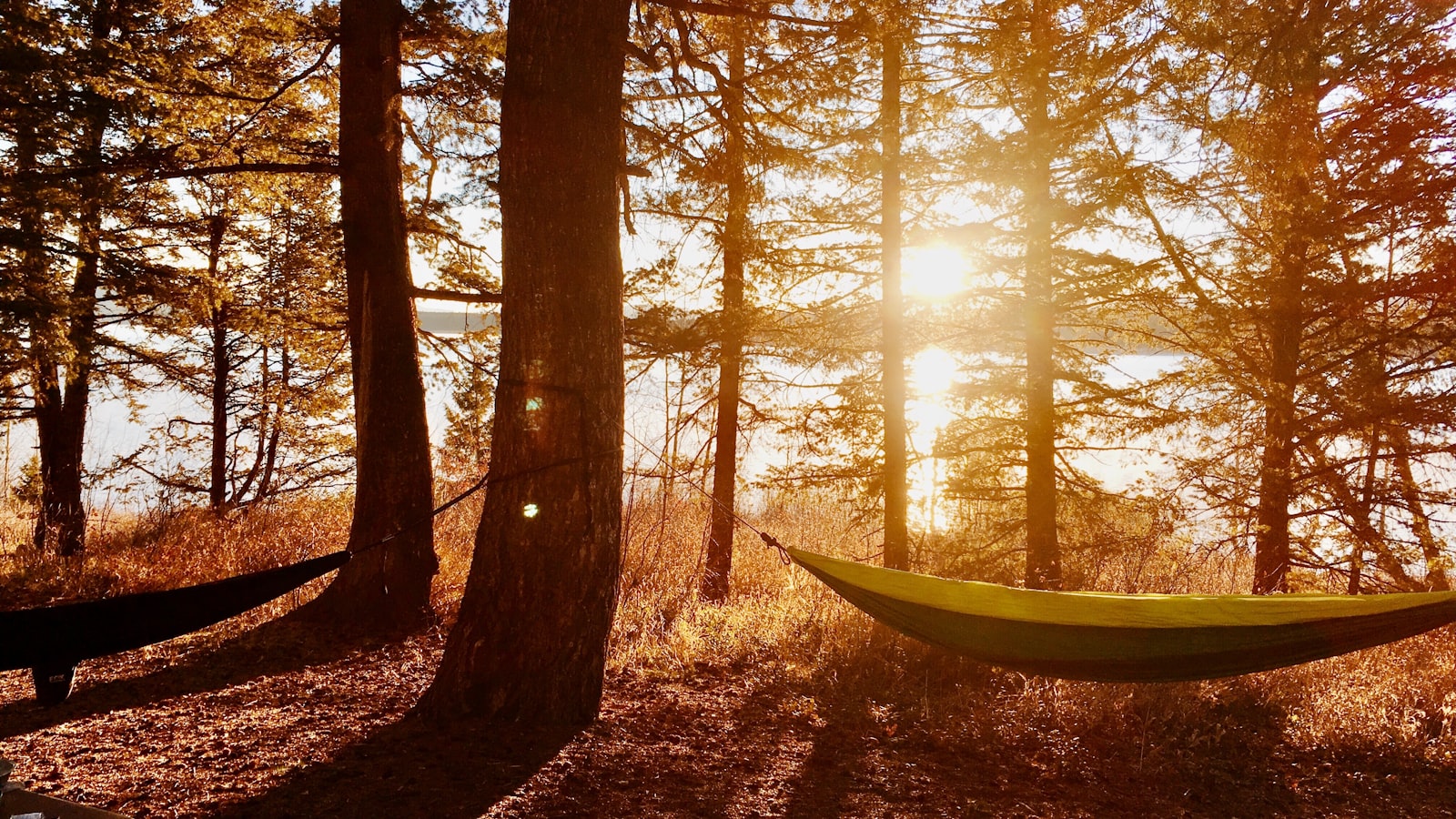
Sleep in a hammock between two trees with a tarp and mosquito net overhead. Comfortable on uneven ground, but it needs trees — the use case is forest terrain, not the mountains above the treeline.
A complete hammock system — also called a tree tent — has four parts: the hammock itself, a tarp (fluefly) overhead for rain, a mosquito net around it or built in, and something to keep you warm underneath (a sleeping bag plus an underquilt or a sleeping mat inside). It is an entirely different sleeping philosophy from a tent: instead of building a floor on the ground, you hang between two trees.
Why many people choose it
The ground does not need to be good. Stony surfaces, a cluttered forest floor, a slope, roots — all are problems for a tent and trivial for a hammock. You find two trees the right distance apart and hang up.
Comfortable sleep for many. Your weight is spread evenly along your spine; there is no stone under your hip and no pressure from a thin mat. People who struggle with a sore back in a tent often sleep better in a hammock.
Light and compact. A complete system weighs 700–1500 g — often less than a one-person tent with pegs and poles.
A dry camp. You are not sitting on damp ground when you wake. The rucksack can hang under the hammock, sheltered by the tarp.
The big limitation: trees
A hammock needs trees. Two trees, the right distance apart (3–5 m), the right size (at least 15 cm in diameter), and free of dead branches above the pitch. In the mountains above the treeline, a hammock is out. On open bogs, sandy beaches and high plateaus — out as well.
This means a hammock is rarely the only tent a Norwegian walker owns. It is a complement to forest trips, combined with a traditional tent or shelter for the mountains.
Warmth — the ground is not there
When you lie in a hammock the fill of your sleeping bag is pressed flat beneath you, just as in a tent. But in a tent you have a sleeping mat and the ground to stop the wind under you. In a hammock you have only air — and the air is often 5–10 °C colder than the air in a tent.
Two solutions:
Underquilt. An insulating bag hung beneath the hammock, on the outside of the fabric. It keeps the wind off and insulates where the bag cannot do the job. The preferred solution among hammock users.
Sleeping mat inside. A light self-inflating or foam mat is laid inside the hammock. It works, but it tends to slide to the side during the night. Easier to manage with a specially shaped mat (wing-shaped) that matches the hammock’s form.
For the Norwegian climate from May to September, an underquilt with a comfort temperature down to around 0 °C is enough on most trips.
Example brands
- Hennessy Hammock — Canadian maker, a classic. Asymmetric models with an integrated mosquito net and tarp.
- Warbonnet Outdoors — American, highly regarded in the hammock community.
- DD Hammocks — British, a broad range from affordable to premium.
- Amazonas — German, good starter systems.
- Eno (Eagles Nest Outfitters) — widely available, a good summer choice.
Who it suits
Forest walkers in southern and central Norway, summer and autumn trips in the lowlands, paddlers spending the night at the forest edge. People who sleep badly on uneven ground. Bikepacking in forest. Weekend trips in the local woods where a tent is overkill.
Where it falls short
The mountains above the treeline. Winter with strong wind (the airflow beneath you is very cold). A family holiday where children are to sleep together. A stony coast without forest. Areas where you have to use established pitches without trees of your own.
For anyone who wants the same approach without trees, see tarp and presenning. For other options, see the tent overview and hammock and tree-tent sleeping for the use itself.
Next steps
- Hammock and tree tent — the sleeping situation itself, not just the equipment
- Tarp (presenning) — the same groundless approach when there are no trees
- Tent — the option you need above the treeline
- Sleeping bag — the warmth beneath you is the critical part in a hammock
- Insect repellent and mosquito net — the mosquito net is one of the four parts of the system
Learn more
Text: Snuitide (2026).