Avalanches
The Human Factor
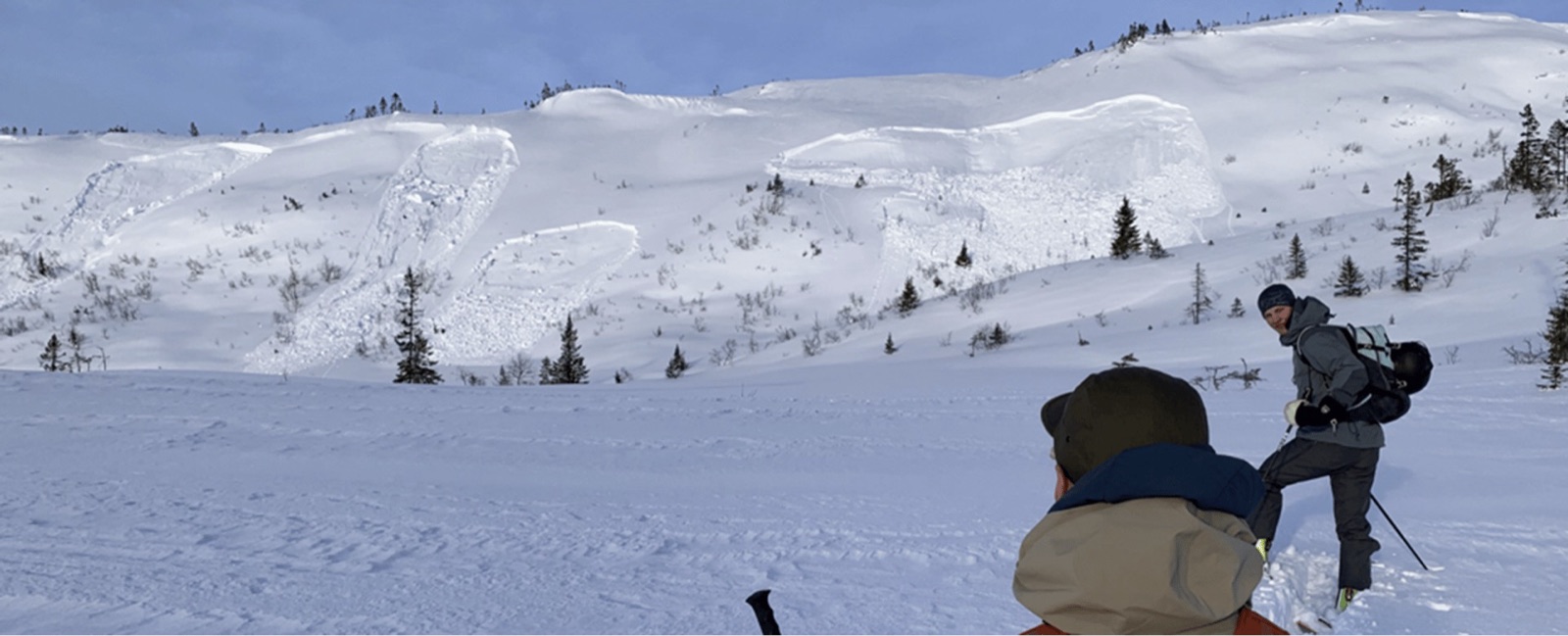
Well over 60% of avalanche accidents are caused by human failure in one way or another (Tremper, 2008). We will look at why we make mistakes, and how we can reduce these mistakes.
Contents
Well over 60% of avalanche accidents are caused by human failure in one way or another (Tremper, 2008). We will look at why we make mistakes, and how we can reduce these mistakes.
Shortcuts
People tend to take shortcuts so that we avoid working unnecessarily hard to achieve what we want.
Typical behavioural patterns in people.
We are all familiar with the sheep as a beloved farm animal. If you have studied sheep in the mountains, you will see that it is happiest in a flock (you rarely see a sheep on its own). We humans behave in much the same way. Have you ever been unsure which way to go to reach, for example, an event you know everyone around you is going to? It is very rare for us to choose to go the opposite way from the flock. The easiest thing is to follow the same route as everyone else. This is also typical of our judgements in the mountains. If we see tracks or a group ahead of us in the mountains, we follow on in the same tracks or behind the group in front of us. If we are out on a tur as a group and one person in the group takes responsibility for the judgements along the way, it is very rare for us to interfere or question those judgements. The conclusion is that we feel safe where others have gone or when we are together with others.
We can also compare ourselves to the horse. When the horse is out on the prairie and gets hungry, it runs home by the fastest route to get food as quickly as possible. The same is true if bad weather sets in while the horse is far from the stable. Then it gallops back home by the fastest route, because that is where it knows it is safe. The same goes for us humans. Have you ever been thirsty, hungry or cold? Certainly. And our instinct is then to find food, drink and warmth as quickly as possible. On a tur it is very important to make sure these needs are met at all times. This is to avoid taking shortcuts and making foolish judgements because we feel the urge for comfort as quickly as possible.
Next we will say a little about some typical shortcuts we humans have a tendency to use (McCammon, 2004).
-
Familiarity – you know the area and do as you usually do.
We humans feel safe and comfortable in familiar areas/terrain. We have been there many times before and nothing has ever happened in this area. Take a look at the map (use Temakart on Varsom) of an area you know well. Can you see various places that might be wise to avoid (for example release and runout zones)?
-
Acceptance – we want to do activities that earn us respect and ideally also raise our social status.
This shortcut concerns the fear of standing out. We go along with the judgement the majority of the group has decided on because we do not want to stand out. It is nevertheless wise to get the group to talk things over in such cases. Can the group together explain why the judgement is sound? Raise questions about the terrain, the snow and the weather. Can the group together give good answers as to why it is safe? If the group cannot do this, it is rarely wise to continue.
-
Consistency – we do as we have planned, and so we may overlook new information.
When we plan a tur that has a given objective, it can be wise to follow the three patterns we talked about in the section on trip planning. We have planned on the basis of the weather forecast/snowpack, the terrain and the group. If it turns out that we deviate from our plan, for example worse weather than planned, we must have the option to change the plan. Remember that the mountain will be there forever; we can go back another time, when conditions are better. Do not follow the plan slavishly if it turns out that conditions become different from what we had thought and planned.
-
Expert halo – we trust that the leader has the competence to make decisions, even though the leader is not always the most competent.
We have probably all experienced having a typical leader in the group? We listen to those in the group who speak loudest and make themselves noticed. It is not always wise to follow these people. Ask questions: Why do you think this is safe? If the ‘expert’ has no good answer to give, or gives an answer that concerns a feeling or that they know the area, you should not necessarily listen to/follow this person’s advice. Have you experienced someone passing themselves off as an ‘expert’?
-
Social facilitation – we gain higher self-confidence and are willing to take greater risk to gain social acceptance.
We humans are often preoccupied with being accepted by the group. And to gain that acceptance we do foolish things, which can sometimes lead to dangerous situations. For example, you are out on a tur and reach a summit. You want acceptance from the group and jump off a cornice instead of taking a safe route around. This can put a large additional load on the snowpack; the snowpack cannot bear your load, and you may trigger an avalanche.
-
Scarcity – willingness to take risk to gain an advantage. Laying the first track in powder snow.
You are at a ski resort, and the urge to ski in untouched snow is strong. The snow nearest the lift is full of tracks, and you and your group naturally want to go further out into the resort where the snow is untracked. Have you made a judgement about whether, for example, it is steeper in this area? Look at the terrain above and around you. Are there potential release zones or runout zones?
Reducing human error
To avoid shortcuts, there are a number of measures we can take.
Acquire knowledge, experience and good attitudes
The most important thing is that you can make a judgement of the terrain (release zones and runout zones), know where you are at all times and that you can navigate using map and compass, in poor visibility for example. Experience comes with more time outdoors under different conditions, in different areas and a quantity of practice. Knowledge and experience go together. One without the other is not enough. We sometimes read in the media that ‘an experienced skier died in an avalanche’; the question then is, did this experienced skier have much knowledge? Good attitudes include how we deal with nature. If we are caught out by bad weather, work with the weather, go into the nearest hytte, turn back and head home, dig yourself in or pitch a tent. These are examples of good attitudes in the mountains.
Recognise avalanche terrain where you travel
This goes together with acquiring knowledge, which we touched on in the previous section.
Always carry the necessary equipment
In avalanche terrain, take a transceiver, shovel and probe and know how to use this equipment. If we know that we are not going to be in avalanche terrain, it is important that we know where we are at all times. Use map and compass and make sure the group is in the terrain you had planned for. Bring enough food, drink and warm clothing for the tur you have planned, so that we avoid taking shortcuts to reach warm and safe surroundings.
Avoid injuries on a tur
Things can become critical when we are in the mountains. The combination of a long way to the nearest help, no mobile coverage and poor equipment for managing injuries gives poor odds for handling an injury. Fractures and internal bleeding lead to rapid cooling whether we are in the mountains or not. And in the mountains it takes a great deal to avoid deterioration if an accident occurs.
Plan well
Read and understand the avalanche forecast, the weather forecast, make good terrain assessments and know the group you are out on a tur with.
Before the tur the group must clarify expectations.
- Experience and knowledge in the group
- The group’s objective for this tur
- What does the group want to learn on this tur?
- What is the motivation in the group, and what form does it take?
- Has everyone slept well, is everyone fit and healthy, any injuries in the group?
- Are there any allergies or illnesses the group should be aware of?
If we carry out thorough trip planning before the tur and keep an open dialogue and communication along the way, we will be able to complete a safe and good tur for all members of the group. Unforeseen events and accidents are reduced with good preparation and open communication.
Next steps
- Avalanches — the hub
- Turning back in good time — the basis for decisions
- Terrain — the objective corner
- Reading the avalanche forecast — the tool for advance assessment
Learn more
- Varsom — avalanche forecast — regional avalanche forecasts and the avalanche school
- NVE slope-angle map — slope angle ≥30°
- NGI — avalanches — research
- Norsk Fjellsportforum — course standard
Text
- Linda Hallandvik, Snuitide (2022)
- Where not otherwise stated, all images and films come from Varsom.no’s website.