Avalanches
Wet snow
The wet-snow avalanche problem arises when high temperatures or rain soak the snowpack. We can get both loose-snow avalanches and slab avalanches — the slab avalanches often release naturally.
Both high temperatures and rain can lead to the avalanche problem wet snow. Depending on the snowpack, we can get both loose-snow avalanches and slab avalanches in wet snow.
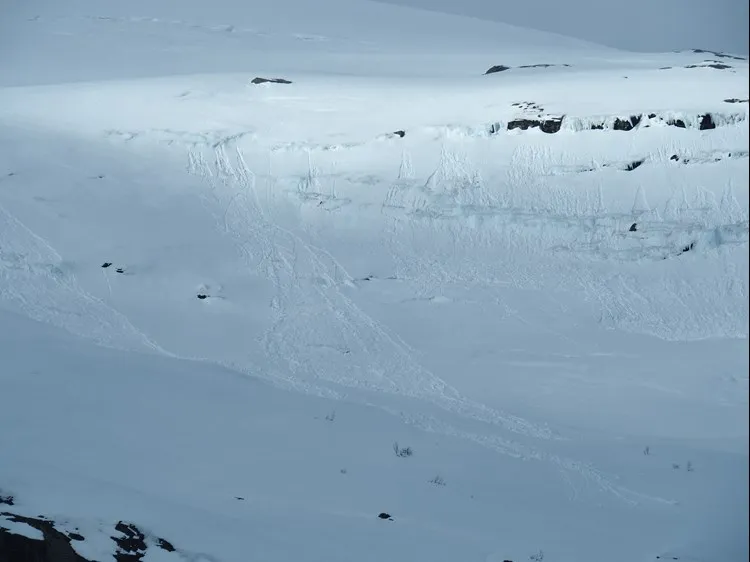
Wet snow (loose-snow avalanche). Photo: Varsom.
Wet snow — loose-snow avalanche
The avalanche problem arises when the snow surface becomes wet and soft. The avalanches are typically shallow, wide and follow the fall line.
Wet snow — slab avalanche
The avalanche problem is most relevant where we get the first soaking of a snowpack that is layered. Slab avalanches in wet snow usually release on their own (naturally triggered).
More on avalanche problems and danger signs
Wind slab · A lot of water in the snow · Rapid rise in temperature · Shooting cracks
Sources: Varsom.no — NVE’s avalanche warning service.