Avalanches
Rapid temperature rise
Avalanche danger signs: a rapid temperature rise of 5°C or more within 3 hours increases the stress in the snowpack and can trigger wet slab avalanches.
How mild is it today compared with yesterday?
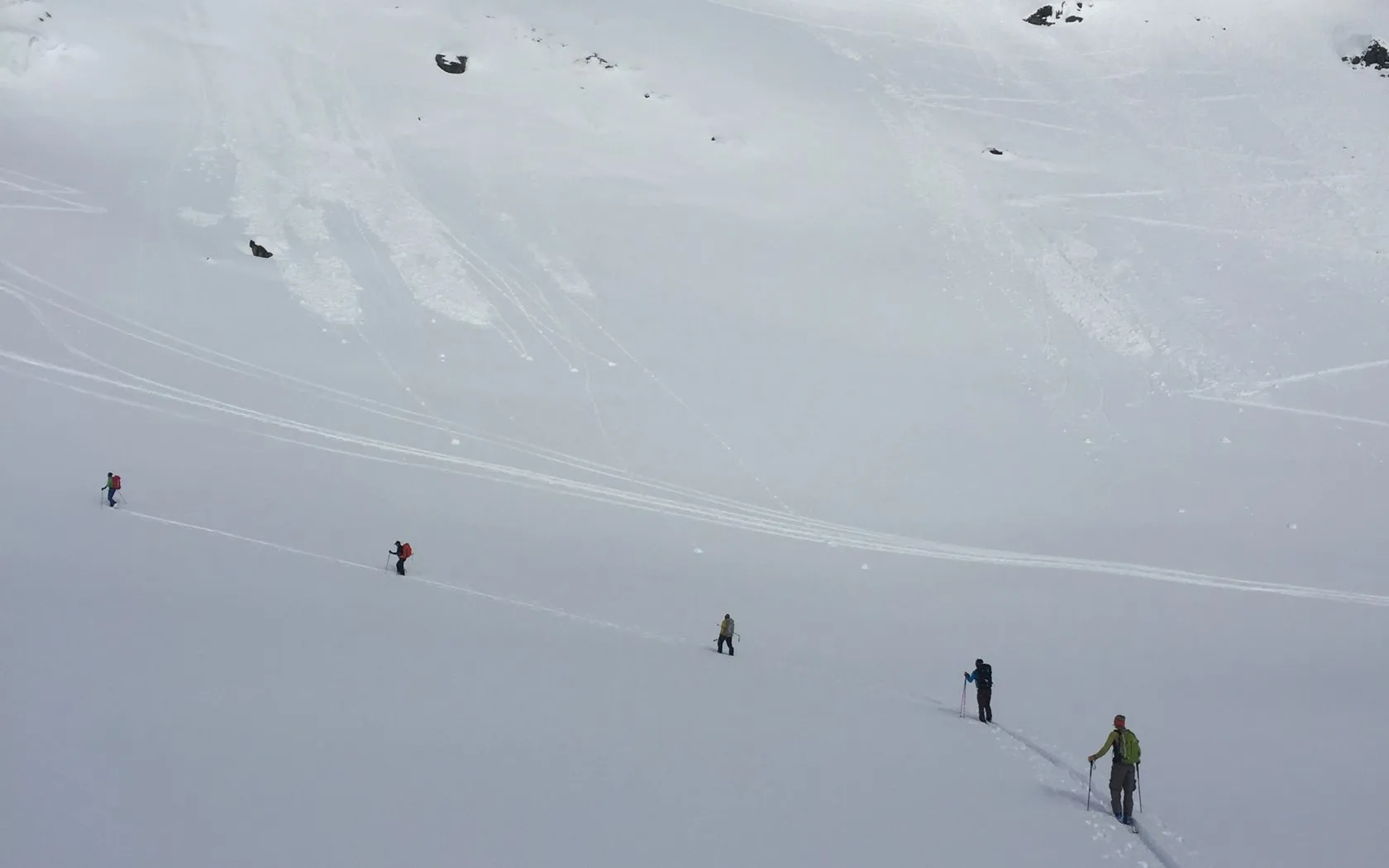
Fresh ‘slush’ avalanches. Photo: Varsom.
When the temperature rises by more than 5 °C within 3 hours, or the snow becomes sun-affected in late winter or spring, we can get a rapid temperature rise. The temperature rise leads to a rapid warming of the uppermost layers of the snow (down to about 50 cm). The warming creates a difference in speed between the snow layers and leads to increased stress in the snowpack.
Rain in addition to a temperature rise will increase the avalanche danger even more — the rain makes the snow heavier and increases the downward movement (the creep) within the snow.
More about avalanche problems and danger signs
Wind slab · Wet snow · Plenty of water in the snow · Shooting cracks
Sources: Varsom.no — NVE’s avalanche warning.