Fishing as an outdoor activity is one of the oldest Norwegian traditions — coastal fishing, fjord fishing and inland fishing were a livelihood for a thousand years before they became recreation. Modern sport fishing came to Norway with wealthy British businessmen in the 1820s and 1830s. Sir Hyde Parker and Colonel Eyres are documented at the Namsen as early as 1827 — a proud British ‘salmon lord’ tradition that still shapes much of Norwegian salmon-fishing culture.
Today, Norwegian fishing has undergone dramatic changes. Participation in recreational fishing has fallen from 59 per cent of the population in 1997 to 43 per cent in 2014 (SSB, the Survey on Living Conditions / Levekårsundersøkelsen). The wild salmon stock has fallen from over one million animals in the 1980s to around 323,000 in 2024 — the weakest year ever recorded. In the summer of 2024, the Norwegian Environment Agency (Miljødirektoratet) closed 33 salmon rivers because of insufficient runs. Even so, fishing remains one of the largest outdoor activities in Norway, with around 65,000–75,000 anglers registered for anadromous salmonids each year and an NJFF membership of around 120,000.
For someone new to fishing, it is an activity with many points of entry. Sea fishing is part of the right to roam — you can fish from a boat or from shore with a rod and handline without a permit or registration. Inland fishing requires a fishing permit (fiskekort) from the landowner or the fjellstyre (mountain board). Salmon fishing requires the state fishing fee (statlig fiskeravgift) (NOK 338 in 2025) in addition to a local permit. The threshold rises gradually: free coastal fishing with a mackerel spinner requires nothing, whereas salmon fishing in a classic river requires the fee, a permit and often advance booking.
The sub-disciplines
Norwegian fishing splits across several distinct activities:
Sport fishing / inland fishing covers fishing in lakes and rivers for brown trout, Arctic char, perch, pike, whitefish and grayling. The common form of inland fishing across the country, with a combined catch of around 10,000 tonnes a year. It requires a fishing permit (fiskekort), but not the state fishing fee (except for anadromous species).
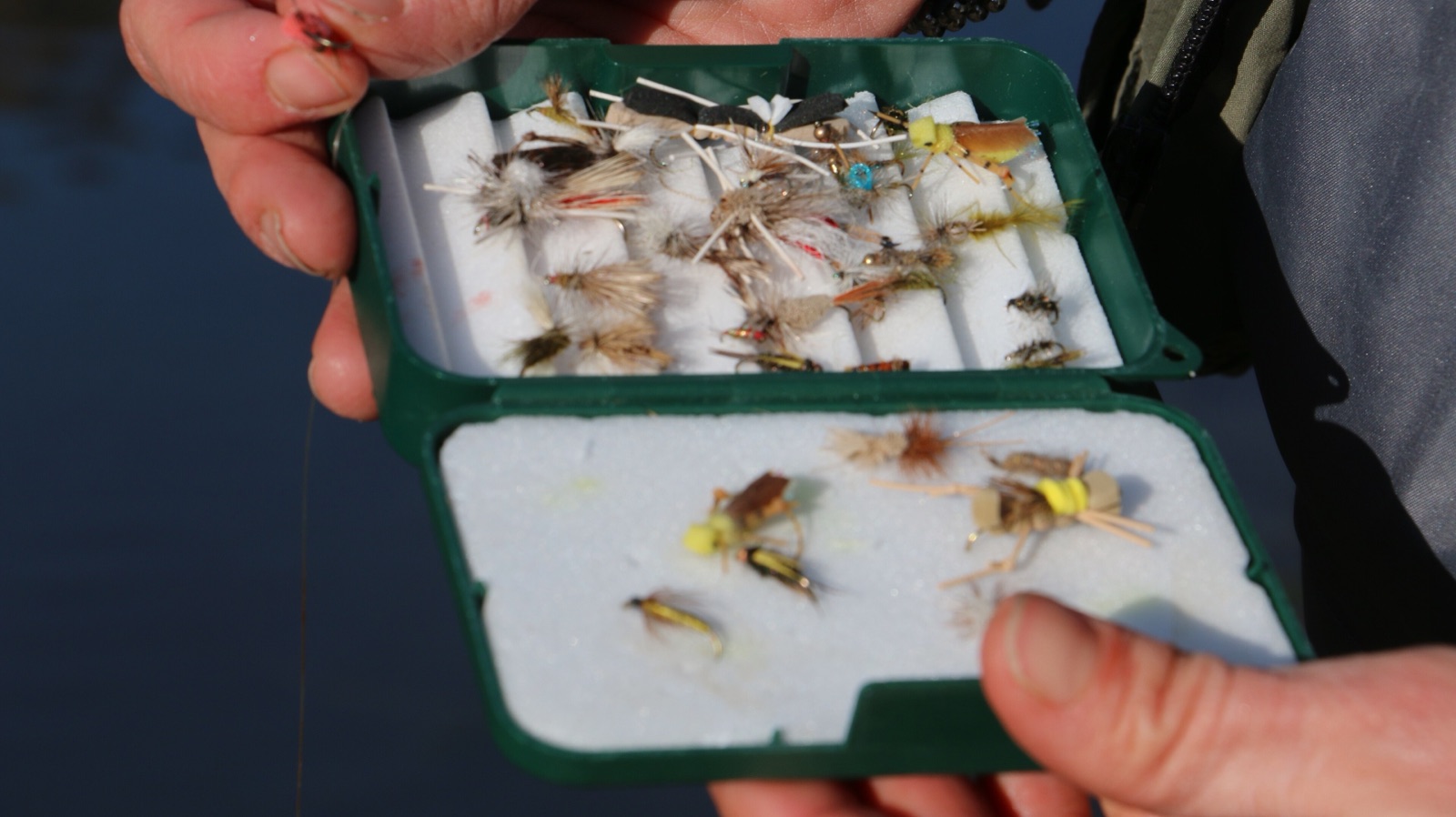
Fly fishing came to Norway from Britain in the 1820s and 1830s. Johan Widerøe Thoning Owesen is regarded as the first Norwegian to fish with an artificial fly in a Norwegian river — the Nidelva by Trondheim, shortly after 1820. It is used for salmon, sea trout, brown trout and grayling alike. Classic techniques: dry fly, wet fly, nymph, stripping. A discipline of its own, with a deep vocabulary.
Salmon fishing — the king discipline of Norwegian fishing. Atlantic salmon (Salmo salar) is anadromous — it spawns in fresh water and grows in the sea. Norwegian salmon rivers are internationally renowned: the Namsen (‘Queen of Rivers’) averaged 6,890 salmon in 2016–2020, the Gaula takes a good 4,000 fish per season in a good year, the Orkla around 3,600. Salmon fishing requires the state fishing fee (statlig fiskeravgift), a local permit, and often advance booking in popular rivers.
Sea fishing for cod, saithe, mackerel, pollack, haddock, halibut, ling and tusk. The largest seasonal human fishery in the world is the skrei fishery — migratory cod travelling from the Barents Sea to spawning grounds off Lofoten, Senja and Vesterålen, the season running from late February to April. Part of the right to roam for rod and handline from shore, from a boat or from a breakwater.
Ice fishing — jigging through holes in the ice for whitefish, Arctic char, brown trout, perch and burbot. The season typically runs from December to April, depending on ice. Classic on the Mjøsa, Femund, Tyrifjorden and mountain lakes.
Sea-trout fishing — coastal fishing for sea trout, an anadromous form of brown trout. It migrates between sea and rivers. Classic spring and autumn fishing along the whole Norwegian coast.
Trolling — fishing for large trout behind a boat, especially on the big inland lakes. On the Mjøsa and Randsfjorden, up to four rods are permitted; on Tyrifjorden, five. The usual trolling speed is 1.9–2.8 knots. The large trout in the Mjøsa can exceed 15 kg — they feed on smelt and whitefish.
Roots and the present situation
The Norwegian history of sport fishing began with British visitors in the 1820s. NJFF (the Norwegian Association of Hunters and Anglers / Norges Jeger- og Fiskerforbund) was founded on 10 February 1871 in Christiania as ‘Norsk Jæger- og Fiskerforening’ — one of Europe’s oldest nationwide hunting and angling associations. Later mergers with the Workers’ Hunting and Fishing Association (Arbeidernes Jeger- og Fiskerforbund, 1932) in 1960, and with the Norwegian Sport Fishing Federation (Norges Sportsfiskerforbund, 1936) in 1963, made NJFF the dominant organisation for recreational fishing and hunting — today with around 120,000 members in 550 local branches and 19 county organisations.
The Salmon and Inland Fisheries Act (lakse- og innlandsfiskloven) of 15 May 1992 (Act 1992-05-15 no. 47) is the modern legislation that governs fishing in fresh water. It replaced older laws and brought management under the Norwegian Environment Agency (Miljødirektoratet). Norske Lakseelver was founded on 6 June 1992 in Stjørdal as an interest organisation for river-owners’ associations (elveeierlag) — an initiative of the Norwegian Farmers’ Union (Norges Bondelag) and the Norwegian Forest Owners’ Federation (Norges Skogeierforbund).
Modern fishing stands in a demanding situation. The wild salmon stock is in a critical state. The run in 2024 was around 323,000 — against over one million in the 1980s. In the summer of 2024, the Norwegian Environment Agency (Miljødirektoratet) closed 33 salmon rivers. The main factors are combined: sea lice from the aquaculture industry (regarded as the largest human-made threat by the Scientific Advisory Committee for Atlantic Salmon Management / Vitenskapelig råd for lakseforvaltning), the Gyrodactylus salaris parasite, climate change, and the pink-salmon invasion from Russia.
For anyone fishing recreationally in 2026, it remains a vital activity, but with stricter regulation, shorter seasons, and considerable attention to disease prevention and stock protection.
Where in Norway
Norwegian fishing areas split by species and habitat:
The salmon rivers
The Trøndelag rivers dominate Norwegian salmon fishing, both historically and statistically. The Namsen is the classic — British ‘salmon lords’ came there as early as 1827, and the river averaged 6,890 salmon in 2016–2020 — the highest landing figure in Norway. The Gaula, the Orkla and the Stjørdalselva are other Trøndelag rivers with solid stocks and infrastructure for anglers. Trøndelag as a whole landed 15,800 Atlantic salmon in 2023.
The Møre rivers Driva and Surna are classics, but have been under treatment against Gyrodactylus salaris. The Driva region is most recently under intensive treatment — the Norwegian Environment Agency (Miljødirektoratet) described it in August 2025 as ‘the final decisive battle’.
Other salmon rivers with significant catches include the Numedalslågen, the Otra, the Lakselva in Finnmark, and the Tana — the last with a significant Sámi and Finnish border-river tradition.
Inland waters
The Mjøsa — Norway’s largest lake. Large trout that feed on smelt and whitefish can exceed 15 kg. A trolling tradition, ice fishing for whitefish and vendace.
Femund — Norway’s third-largest lake (and largest unregulated one), over 200 km². Whitefish dominate; classic wilderness fishing.
Tyrifjorden and Randsfjorden — trolling for large trout, the season starting with the smelt run.
Hardangervidda — Northern Europe’s largest high-mountain plateau, with brown trout as the main species, some Arctic char. Classic mountain fishing from DNT cabins.
Femundsmarka national park — brown trout, Arctic char and grayling as the main species. Classic wilderness fishing.
Coast and sea
Lofoten, Vesterålen, Senja — skrei fishing from January to April. The world’s largest seasonal human fishery.
The southern coast — mackerel in summer and autumn, sea fishing generally.
Western Norway — coastal fishing with deeper fjords, varied species.
The Trondheimsfjord — a combination of coastal cod and the approaches to the salmon rivers.
The Oslofjord and Skagerrak — under special restrictions. Cod fishing is prohibited inside the baseline (grunnlinja) from Vestfold/Telemark to the Swedish border, and there is a total ban in 14 defined spawning areas from 1 January to 30 April.
Fishing rights and permits
Fishing rights (fiskerett) are a matter of private law — they follow the right of ownership. That means four main forms of access:
Sea fishing with a rod and handline is part of the right to roam. You can fish freely from a boat or from shore along the whole coast. Fixed gear (nets, traps, longlines) requires the landowner’s permission and registration.
Inland fishing and salmon fishing require a fishing permit (fiskekort) from the landowner, the river-owners’ association (elveeierlag), the fjellstyre (mountain board) or Statskog. Inatur.no is the dominant website for buying fishing permits across the country. Local permits are often obtained directly from landowners’ associations (grunneierlag) or tourist information offices.
Statskog manages large parts of state land and offers a Norway-wide permit for inland fishing plus local permits. People under 20 and over 67 (resident in Norway) have free rod fishing on Statskog land.
The fjellstyrer (mountain boards) manage the state commons (statsallmenning) and sell local fishing permits. Equal fishing rights for all residents of Norway on common land.
For salmon, sea-trout and sea-char fishing you must also pay the state fishing fee (statlig fiskeravgift) — NOK 338 for 2025. The fee goes to the State Fishing Fund (Statens fiskefond), which finances the protection and development of anadromous stocks. People under 18 are exempt.
For those who want to take it further: join a local NJFF branch or angling club. Many clubs have their own fishing rights or negotiate with landowners on members’ behalf.
Key challenges for wild salmon
Norwegian wild salmon is in a critical state. Three main factors:
Sea lice from the aquaculture industry — regarded as the ‘largest human-made threat’ by the Scientific Advisory Committee for Atlantic Salmon Management (Vitenskapelig råd for lakseforvaltning). The fish farms along the coast produce enormous quantities of sea lice that transfer to wild-salmon post-smolts during their seaward migration. Norway has introduced a traffic-light system (adopted in 2017) in which the coast is divided into 13 production areas — a red light at over 30 per cent mortality of wild-salmon post-smolts from sea lice, yellow at 10–30 per cent, green under 10 per cent.
Gyrodactylus salaris is a parasite that attacks salmon fry and kills them. It was first detected in Norway in 1975 in the salmon river at Misvær — it arrived with smolt from Sweden. Today it has been detected in 17 regions and 53 watercourses in total; 43 have been declared clear after treatment. The main method: rotenone treatment (chemical); newer methods use aluminium and chlorine.
Pink salmon (Oncorhynchus gorbuscha) is an invasive species from Russia. It has a two-year life cycle, with a massive arrival in odd-numbered years. The numbers have exploded: 6,594 caught in 2017, 20,029 in 2019, and 481,463 caught or observed in Norwegian rivers in 2023. A working group on countermeasures was set up in February 2022, but the problem is growing.
Climate change — warmer sea water and altered migration patterns also affect the stock. 2024 was the historically poorest year on record: a wild-salmon run of around 323,000 (the lowest ever). Western Norway: 44 per cent of stocks with no harvestable surplus. Central Norway: 52 per cent.
For anyone wanting to fish for salmon in 2026, this means the practice has changed. Catch and release has been introduced in many rivers. Seasons are shorter. There are strict rules on disinfecting fishing gear — required when used across county boundaries, after use abroad, or after use in Gyrodactylus-infected watercourses.
Inland fishing — typically open from May to September, varying by species and local regulation
Salmon fishing — classically 1 June to 31 August in southern and central Norway. Northern Norway starts later; Troms and Finnmark have their best periods in July and August
Skrei fishing — late February to April
Sea fishing — year-round, but mackerel is best in June–October, cod in winter and spring
Ice fishing — December to April, depending on ice
For 2026, it is important to check the specific rules for each river or area — several salmon rivers are temporarily closed or have strict catch quotas. Norske Lakseelver publishes fishing regulations for each season.
Ethics and disease prevention
Norwegian fishing ethics are about animal welfare, disease prevention and stock considerations:
Catch and release — catch and release has been introduced as a management tool in many salmon rivers. It requires gentle handling and the right hook types (no barbs, or minimal ones).
Gentle handling — wet hands when handling, a short time out of the water, do not press hard on the fish.
Killing the fish — if you keep the fish, killing must be quick and humane. Strike it hard on the head with a stone or club, or cut the gill arches for rapid blood loss. Gut it quickly.
Disinfecting gear — required when used across county boundaries or after use in Gyrodactylus areas. Air-drying for at least two 24-hour periods at over 20 °C, or heat treatment for one hour at over 60 °C, is acceptable for gear not used in restricted zones. More thorough disinfection, with a certificate, may be required.
Using the catch — fish that are taken should be used. Sport fishing has a strong tradition that fish are not left unused.
Mattilsynet has official guidelines for disinfection and disease prevention.
Safety
Fishing safety is primarily about water safety and gear:
Boat safety — a life jacket is mandatory on a boat under 8 metres when under way. Also consider a life jacket when fishing from exposed spots or in a strong current.
Waders — for river fishing, waders are almost standard. Make sure they are properly fastened and that you have a belt on the outside that prevents them filling with water if you fall. They should never be used alone in a strong current.
Removing hooks — a serious risk if handled wrongly. A hook in a finger or hand is a classic injury. Learn the correct method for removal (push-through-and-clip), or carry pliers to cut the hook and pull it out.
Hypothermia risk — the water is cold for most of the year. The combination of wet fishing clothes and a low level of activity (you stand still for hours) gives a hypothermia risk you do not have when walking.
Assessing the weather — particularly on the coast and on open mountain lakes. Check the weather before you set out, and consider your snutid (turnaround time) if the weather turns.
Next steps
If fishing is new to you: try sea fishing for one weekend. It is part of the right to roam, with no permit or fee, and you quickly find out whether the activity suits you.
If you have done some sea fishing and want to go further: join a local NJFF or angling club, and try inland fishing with a fishing permit (fiskekort). Inatur is the easiest point of entry for buying local permits.
For those who want to build up to salmon fishing: pay the state fishing fee (statlig fiskeravgift), buy a local permit in one of the less popular rivers first, and consider fly fishing as a technique. NJFF runs fly-casting courses throughout the season.
For gear choices, disease prevention and species-specific details, we have separate sub-articles under the fishing category.