Gear
Ski gear and snowshoes
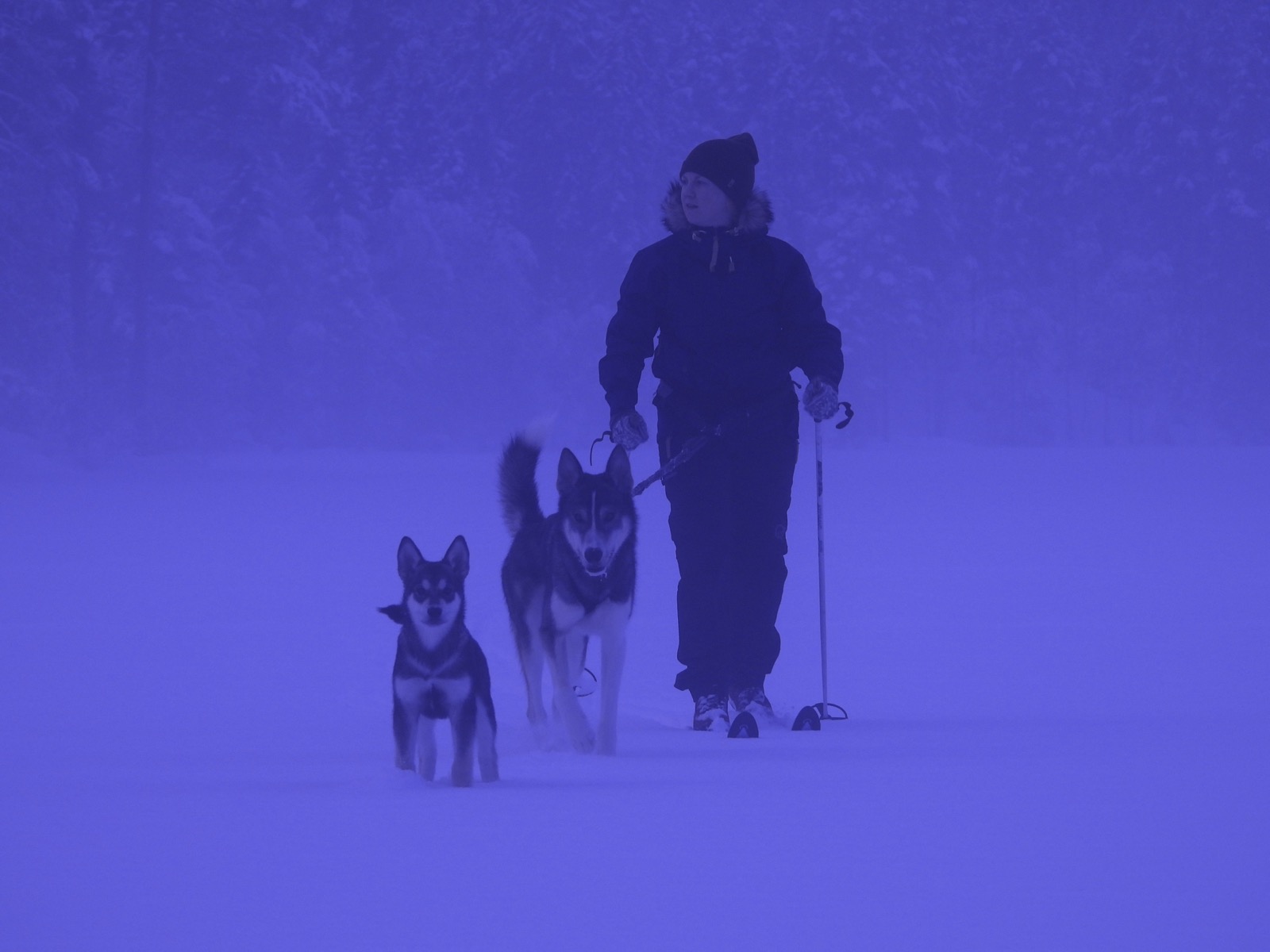
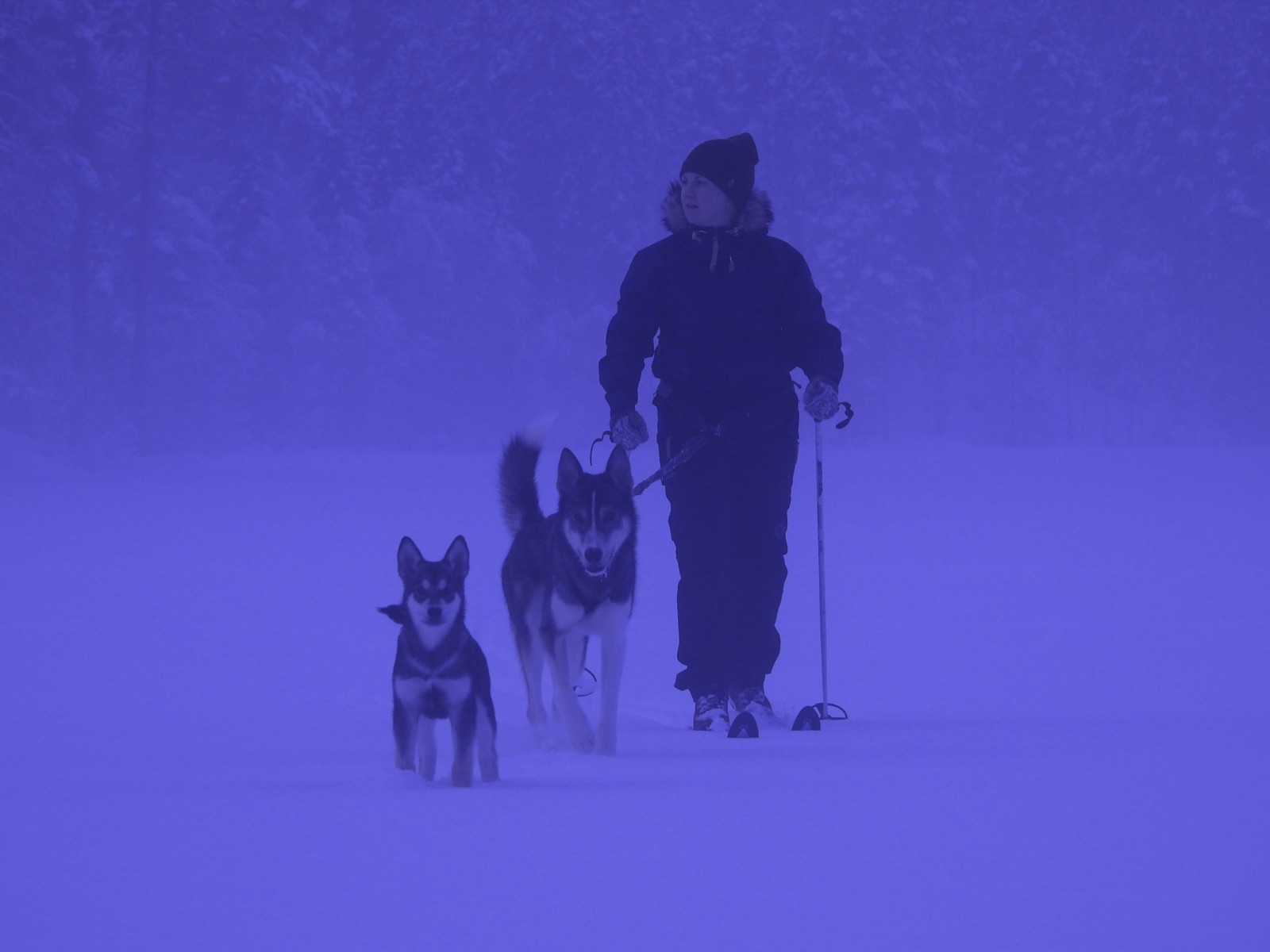
How to choose skis for travel off prepared trails: ski types, bindings, skins, poles — and when snowshoes beat skis.
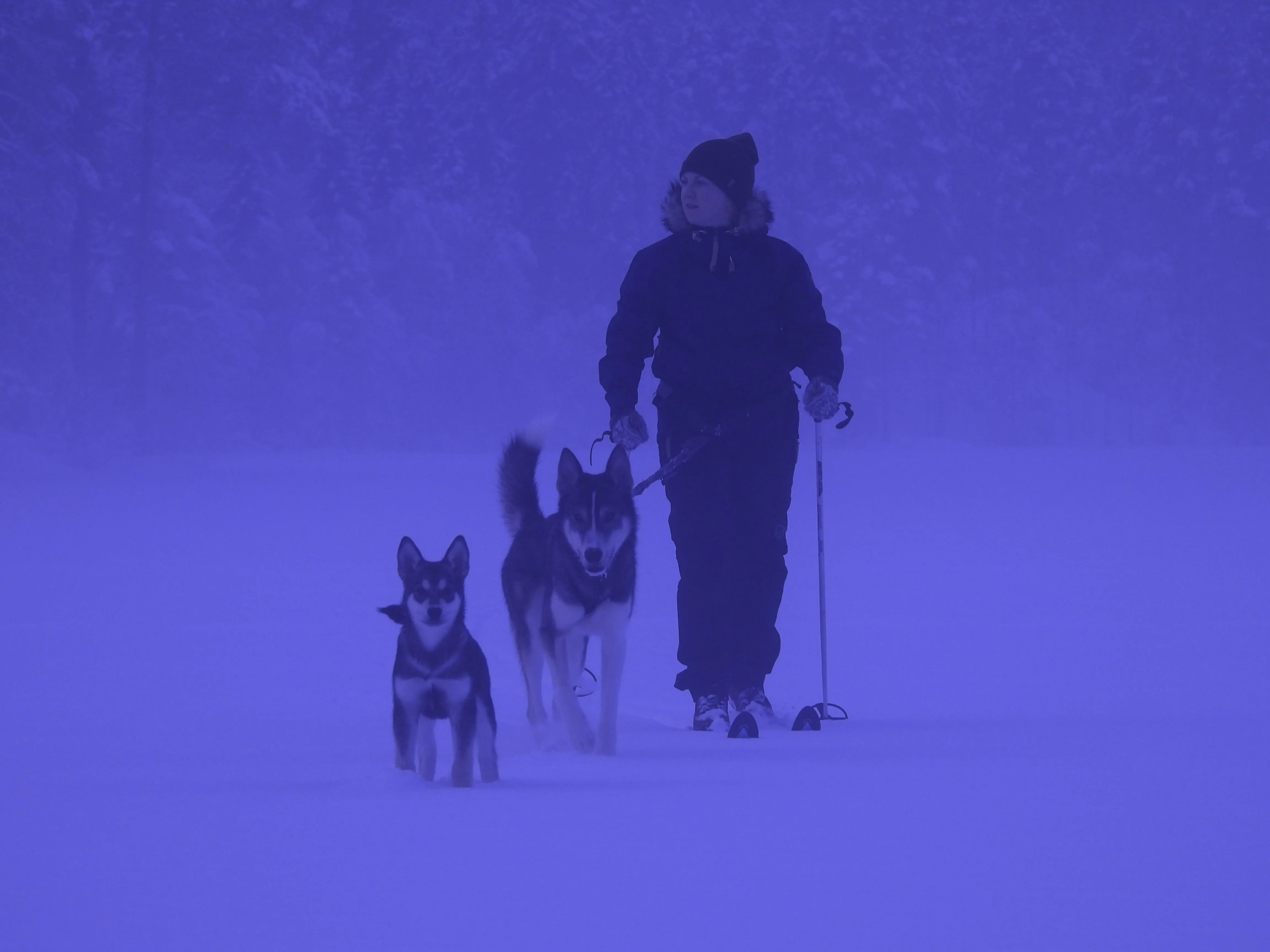
If you are going ski touring off prepared trails, you need skis that are considerably wider than ordinary cross-country skis. There is a wide variety on the market, but they fall mainly into two categories — fjellski and jaktski.
Skis
The difference between the two types comes down to how far you go, how much you carry, and how loose the snow is. The fjellski is the all-round option for most people; the jaktski is for extreme carrying needs.
Backcountry cross-country skis (fjellski)
Wide skis for travel off prepared tracks. The most common type for longer mountain trips — flotation without being too heavy to travel on.
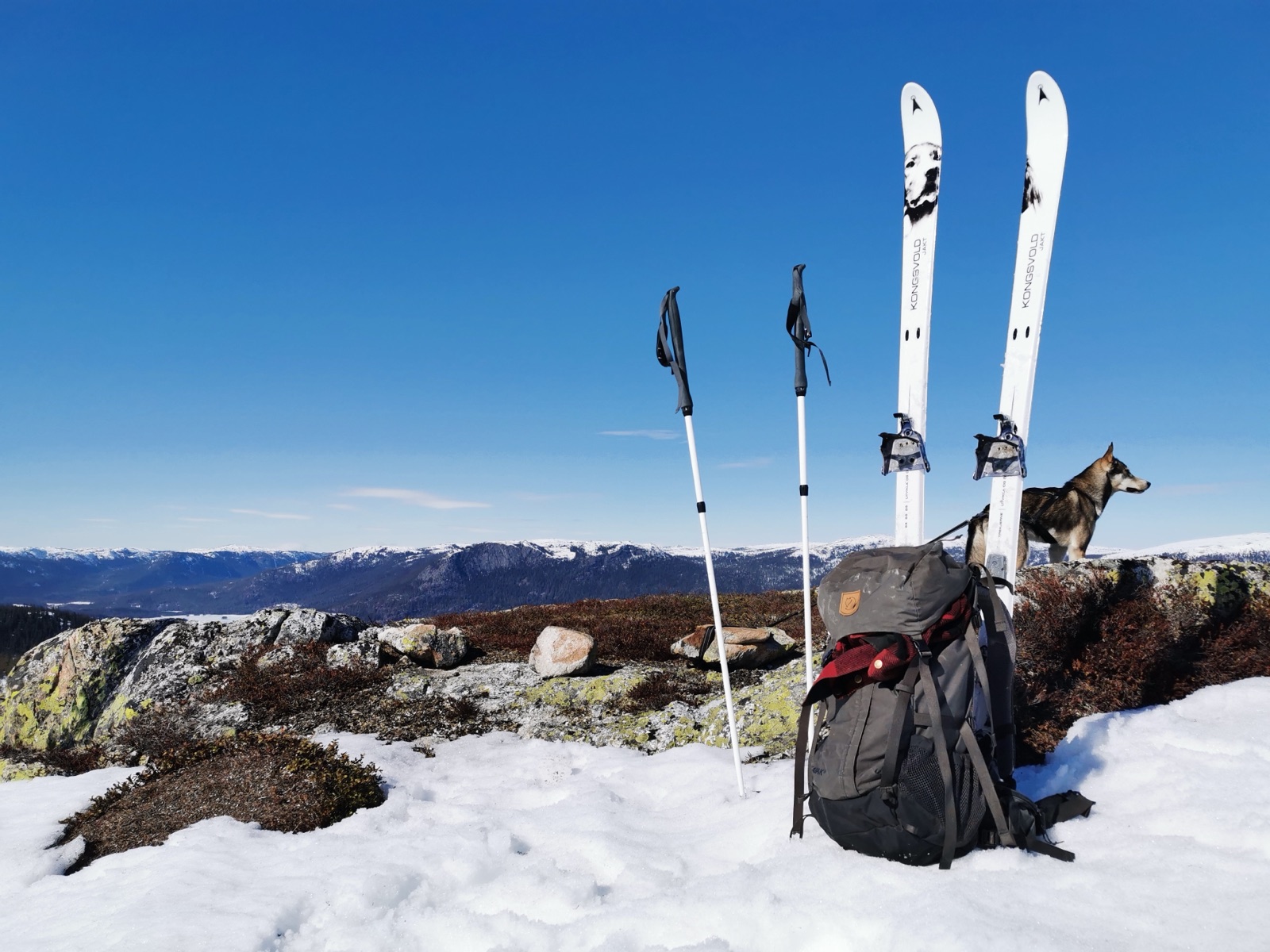
Wide forest skis (jaktski)
A wide, stiff ski with a deep sidecut — the carrying qualities taken to the extreme. Best for heavy loads and deep loose snow, but less flexible than fjellski.
Skins — recommended in broken terrain
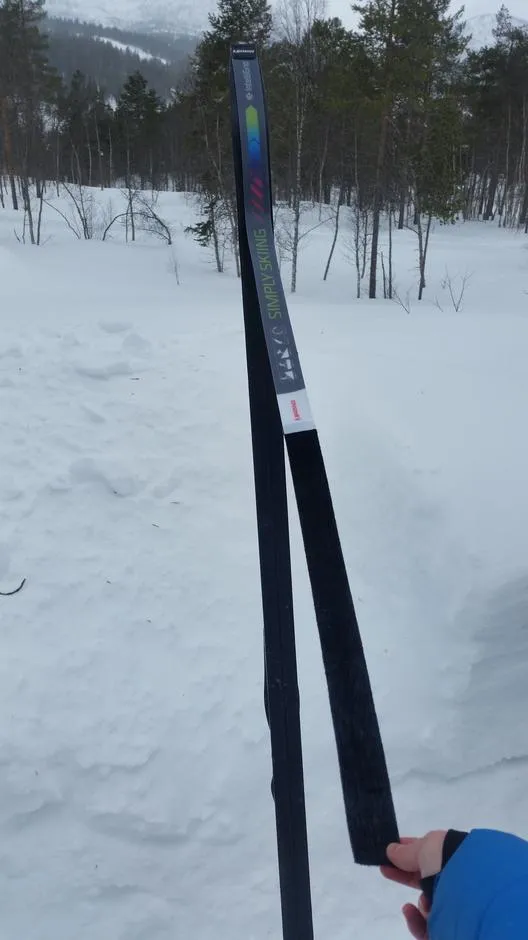
It is recommended to use climbing skins (feller) when going uphill, especially if your skiing skills are not the best. There are two types:
- Full-length skins attach at the tip of the skis and are glued the whole way to the back end. No glide, but unrivalled grip. They attach independently of the make of the skis.
- Short skins sit in the wax pocket — you keep the glide and get good grip on climbs. The attachments vary between manufacturers, so short skins must be bought to match the same make as the skis. Alternatively, there are versions that attach at the front with a smooth section before the skin itself.
Bindings
Two types dominate the market today — the BC binding and the 75 mm 3-pin. The choice is governed by whether you want mobility (BC) or solid control on slopes (75 mm), and which selection of boots you have access to.
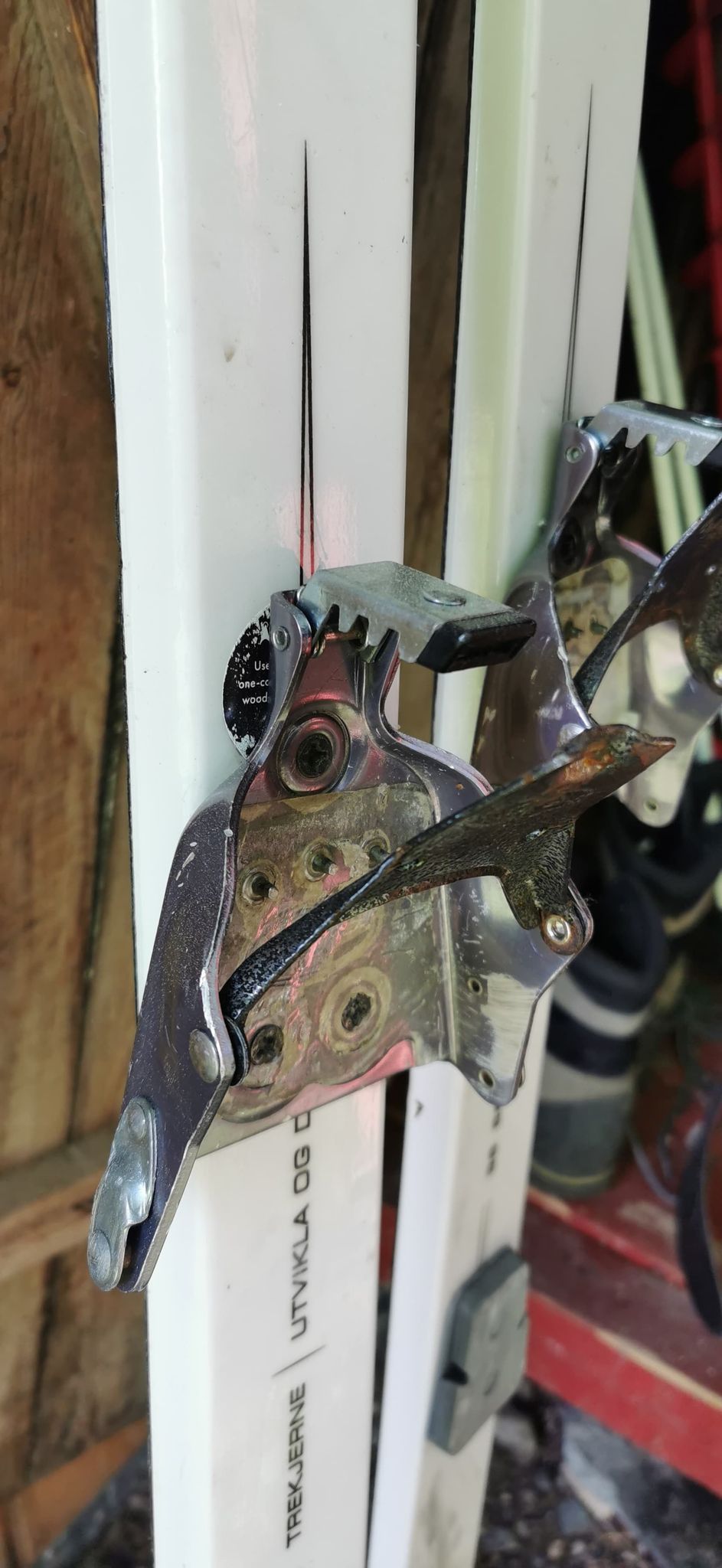
75 mm 3-pin binding
Classic, solid binding with three pins that lock the boot toe. Best control on slopes, less flex on the flat — particularly good with a cable (telemark binding).
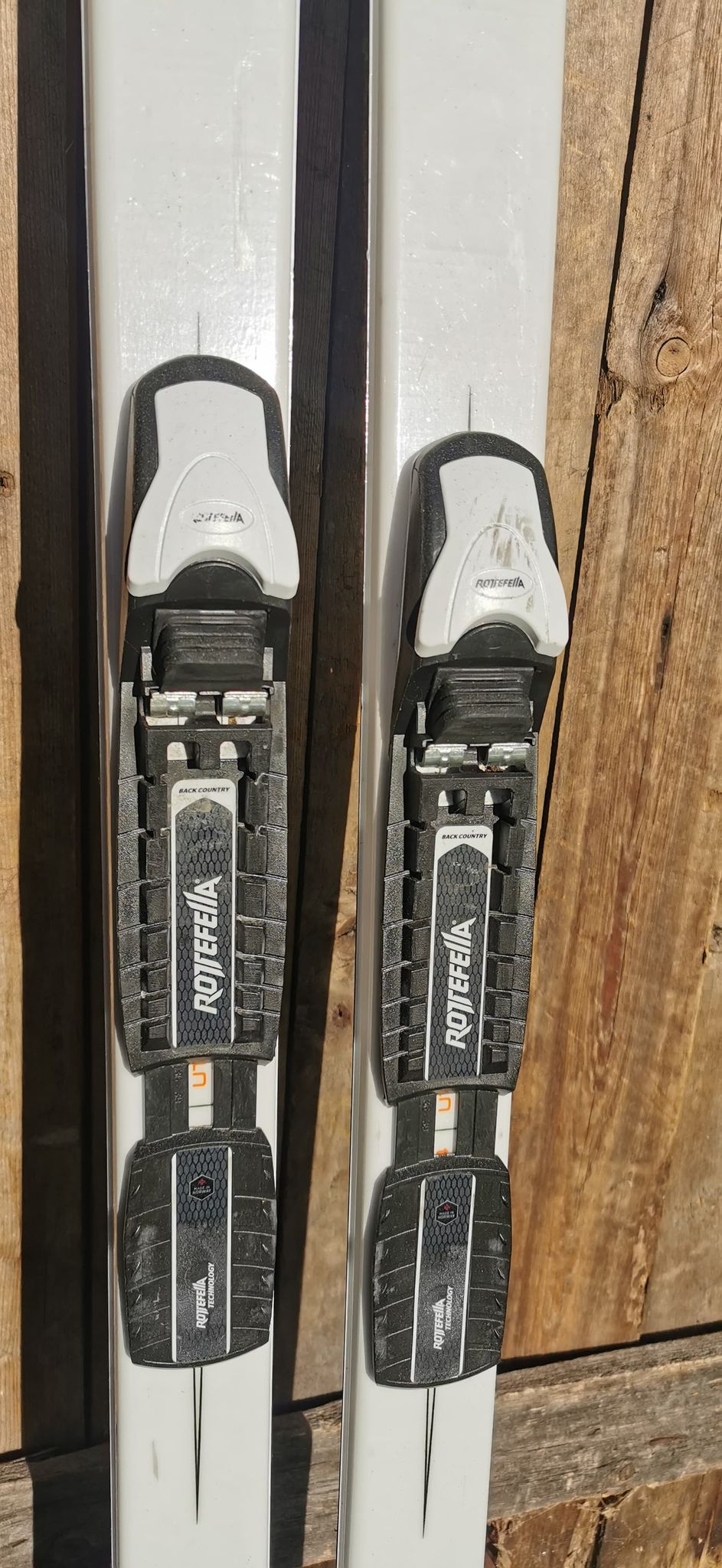
BC binding
The most common ski binding — a steel pin in the boot toe is clipped in. Good freedom of movement in the foot, less control on the descent. Plastic can crack in severe cold.
Ski poles
Ordinary cross-country poles are poorly suited to travel off prepared trails. Large, hinged baskets are best for loose snow and varied terrain — these are often called fjellski poles.
Length
Adjust to the person and the conditions. The rule of thumb: the poles should reach the armpit. Many poles today are adjustable — useful when the snow depth and the gradient vary along the way. There are two locking systems:
- Twist locks hold very well and do not get in the way — but are prone to freezing up. You then have to thaw them before you can adjust.
- Lever locks with a small handle do not freeze up — but are more prone to catching on bushes and opening by accident.
Baskets
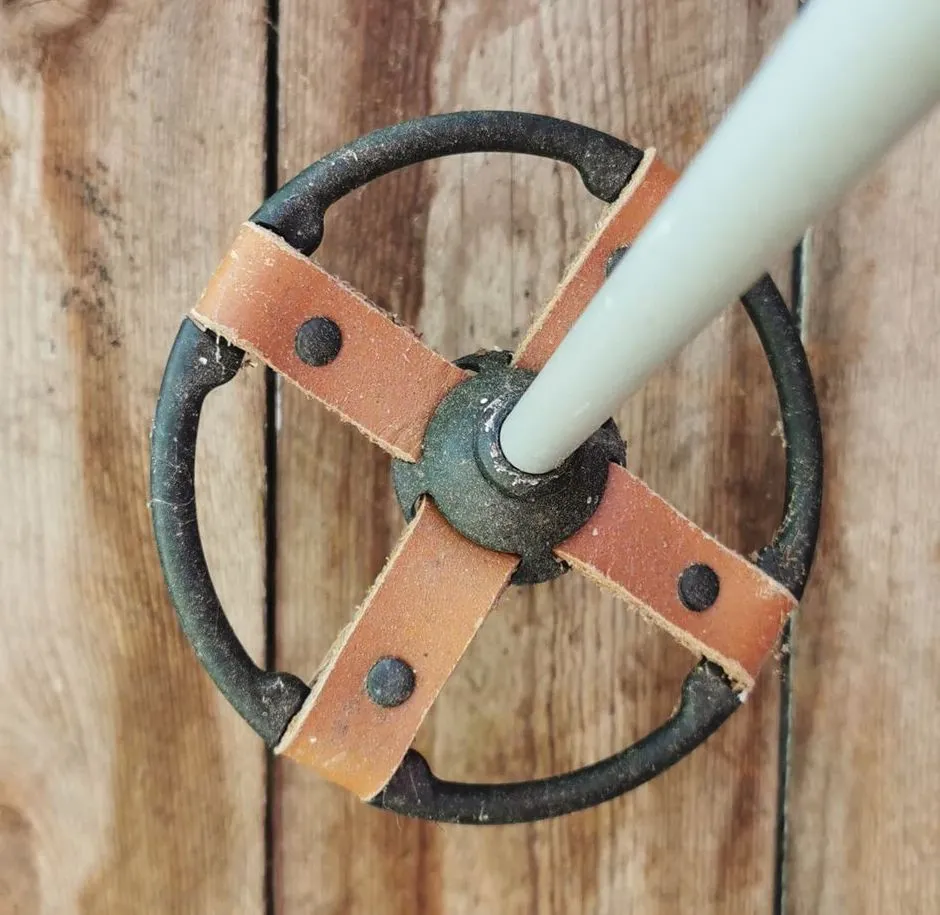
The baskets should be large and provide good flotation. The most common are round baskets with a cross of leather or nylon. Some poles have an outer basket ring in metal — extra sturdy, but more prone to icing up.
Grips
The pole grip should give a good hold and fit the hand. Long grips let you change your hold to suit the conditions — a quick way to adjust the effective length in varied terrain. An adjustable wrist strap is then important. Many straps are shaped for the right or left hand; for varied grip, a simple straight strap is more versatile.
Folding poles
The poles can be folded like a tent pole, or pushed telescopically into one another. Most popular for trips where you alternate between travelling on foot and on skis — typically randonee.
Snowshoes
Under some conditions, skis are not practical: the snow is too loose and deep, the terrain too broken, or the vegetation too dense. Snowshoes are then a good alternative.
Size is decisive. Larger snowshoes have better flotation because the ground pressure is spread over a larger surface — the same principle as with skis. The heavier you are and the looser the snow, the larger the snowshoe needs to be. Better too large than too small.
Snowshoes for friluftsliv are characterised by:
- At least 25 inches for women and 30 inches for men
- Sturdy crampons for good grip
- Heel lifts — a bar you flip up under the heel on steep climbs
Small snowshoes of 15–25 inches are cabin snowshoes. They work on trails and out to the outdoor toilet — not in terrain off the paths.
Tekst og bilder: Bjørn Henrik Stavdal Johansen, Snuitide (2022)
Next steps
- Backcountry cross-country skis — a specific ski type
- 75 mm 3-pin binding — a specific binding
- Ski touring — activity hub
- Avalanches — winter safety gear
Learn more
- DNT — gear — recommendations and courses
- Friluftsmagasinet Fri Flyt — tests and specialist content
- Klepp & Tobiasson — Lettkledd — sustainable gear thinking