Repair & Maintenance
Resewing a blown seam
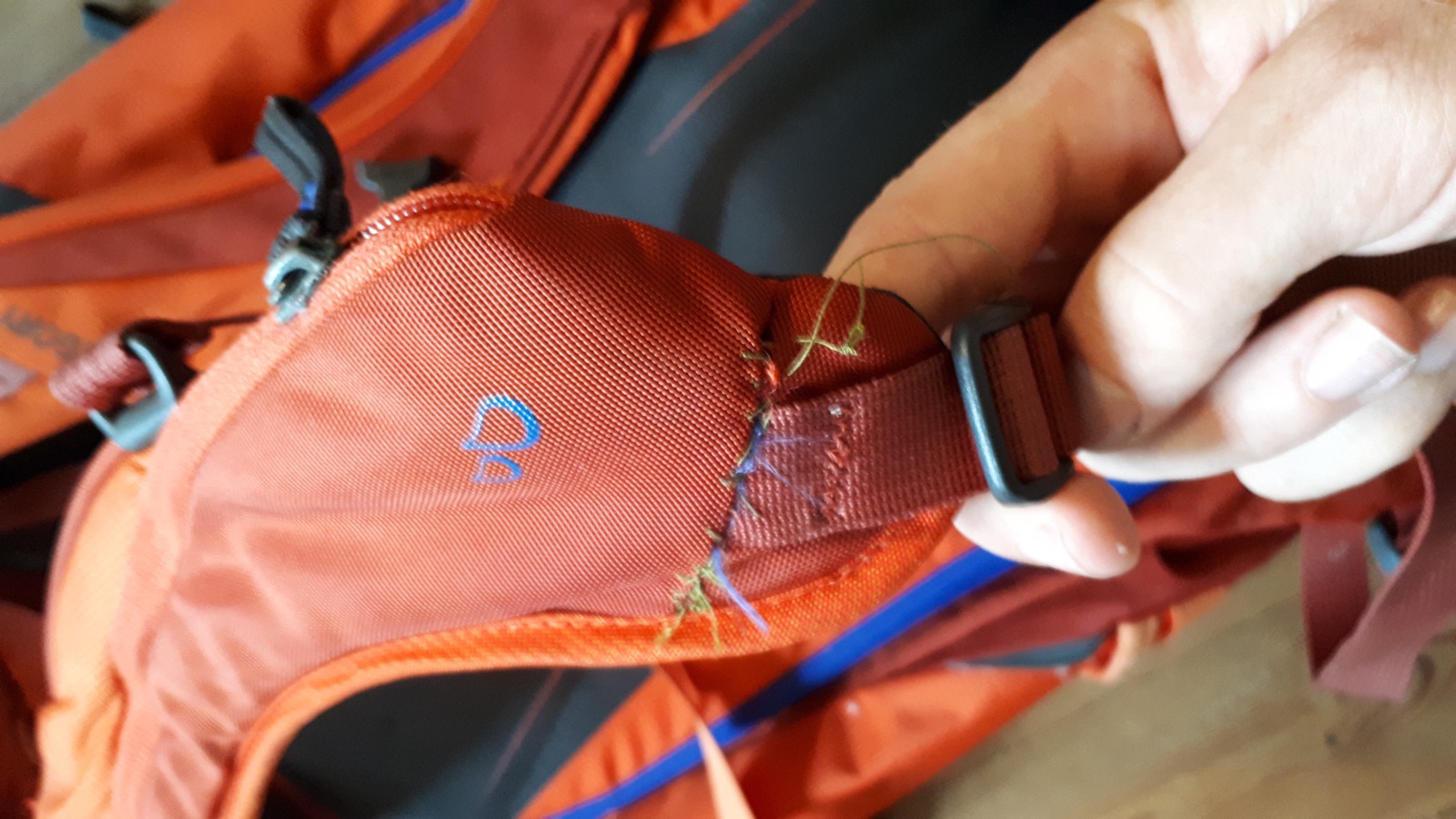
An open seam grows fast if you do not catch it. Here is how to sew over a blown seam with straight stitch — the simplest repair and one of the most necessary.
Seams take much of the strain on clothing and equipment — and they are worn down by sun, weather and mechanical chafing against rock and branch. If the thread in the seam wears through, the opening grows fast. A small opening turns into a large hole before the next trip is over.
Catch it early: as soon as you see an open seam or a thread that has broken, sew over it.
Materials
- Sewing machine with straight stitch
- Sewing thread in a matching colour — preferably polyester for longer durability than cotton
- Pins
How to do it
- Lay the work flat on the sewing table — do not let it hang down and pull on the fabric
- Bring the seam together so the sides lie as before
- For folded seams (such as tent seams) — fold them evenly and use pins to hold the layers
- Sew with straight stitch where the seam was before:
- Stitch length 1.5-2.5 on light fabrics
- Stitch length 2.5-4 on heavier fabrics
- Start and finish 1 cm beyond the opened part — on the seam that is still intact
- Sew back and forth ~1 cm at the start and finish to lock the seam
- Remove pins as you sew
Tips
- Match the thread to the original — or a similar colour. It shows less.
- Thinner needle for thin fabrics — particularly waterproof shell garments. A large needle makes unnecessary holes.
- Clean away old rotted thread before you sew new — it gives a neater result and a better hold
By hand
If you do not have a sewing machine, you can sew by hand. Use back stitch — stronger than ordinary running stitch. A little slower but it holds.
On the trip — temporary
If the seam blows mid-trip:
- Sew by hand with the thread you have in your first-aid kit
- Or use canvas tape (gaffer) as a temporary solution
- When you get home: clean away the tape and sew over it properly
Back to Repair → · Sewing holes and tears → · Repair on the trip →
Text: Lars Peters and Snuitide (2022), revised 2026.